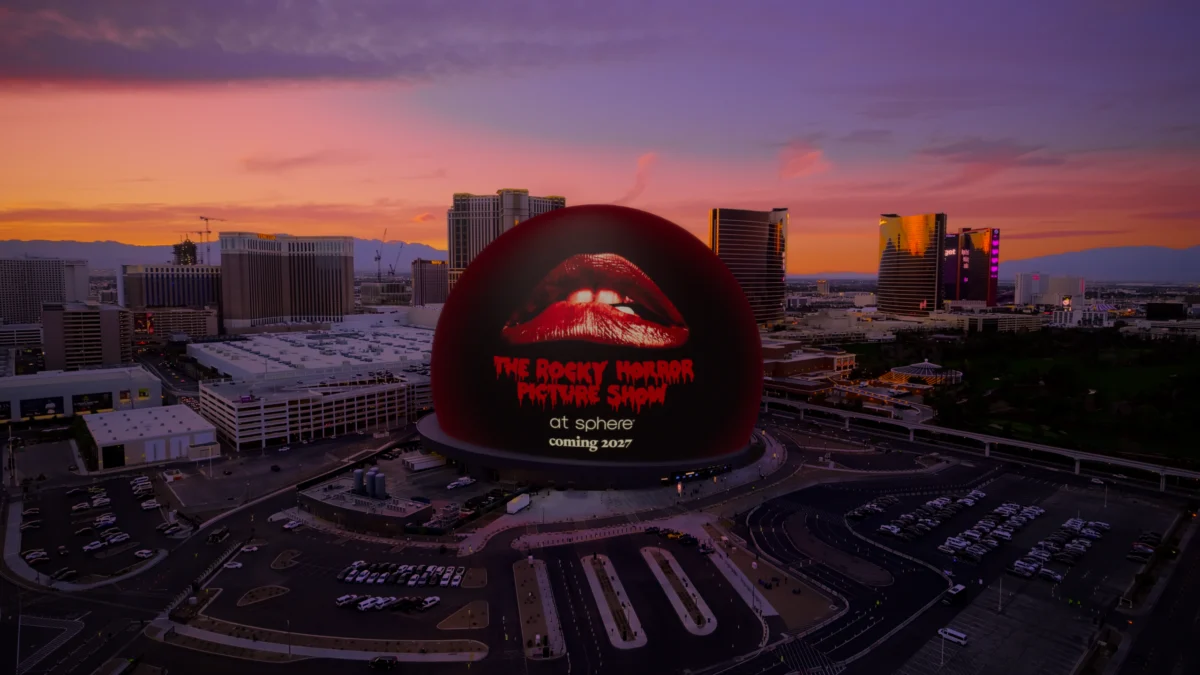
Following a period of significant professional milestones, including a long-awaited championship victory for his New York Knicks, billionaire mogul James Dolan is shifting his focus back to the high-stakes world of immersive entertainment. Sphere Entertainment Co. has officially announced that the next major cinematic project for its groundbreaking Las Vegas venue will be an experiential reimagining of the 1975 cult classic, The Rocky Horror Picture Show. Scheduled to premiere in 2027, the production aims to leverage the unique technological capabilities of the 17,600-seat orb-shaped venue to transform the iconic musical into a multi-sensory event.
The project is being developed through a strategic partnership between Sphere Studios, Primary Wave Music, and 20th Century Studios. By securing the rights to this specific intellectual property (IP), Dolan is doubling down on a business model that prioritizes "eventized" cinema—repurposing legendary film properties into immersive experiences that cannot be replicated in traditional movie theaters or home environments.
The Cultural Legacy and Immersive Potential of Rocky Horror
The Rocky Horror Picture Show, directed by Jim Sharman and starring Tim Curry, Susan Sarandon, and Barry Bostwick, is widely considered the ultimate "participation" film. Since its debut nearly five decades ago, it has maintained a continuous presence in global pop culture through midnight screenings characterized by shadow casts, prop-wielding audiences, and shouted callbacks.
In a statement regarding the acquisition, Dolan emphasized that the film’s history of audience engagement makes it the ideal candidate for the Sphere’s technology. "Through Sphere Studios, we are building a slate of original experiences that push the boundaries of technology and storytelling for this new medium, while always keeping the audience at the center of the experience," Dolan stated. He noted that since its 1975 premiere, the film has redefined audience participation. "With Sphere, we have the opportunity to take that spirit of immersion to an entirely new level."
The Sphere’s version of the film is expected to move beyond the traditional "shadow cast" model. Utilizing the venue’s 160,000-square-foot interior LED display—the highest-resolution screen in the world—and its proprietary Sphere Immersive Sound system, the production is likely to envelop the audience in the world of Dr. Frank-N-Furter. While specific creative details remain under wraps, industry analysts expect the production to utilize the venue’s haptic seating and atmospheric effects to simulate the film’s stormy setting and eccentric laboratory environments.
The Financial Success of The Wizard of Oz Template
The announcement of The Rocky Horror Picture Show follows the massive commercial success of the Sphere’s first major film adaptation, The Wizard of Oz. Premiering on August 28 of last year, the immersive take on the 1939 Judy Garland classic served as a proof of concept for Dolan’s vision of experiential cinema.
According to recent financial disclosures, The Wizard of Oz has generated $400 million in ticket sales to date, with approximately 3 million tickets sold. This figure represents a $30 million increase since the company’s earnings report on May 5, indicating sustained demand for the attraction nearly a year after its debut.
The financial metrics of the Oz experience provide a stark contrast to traditional theatrical distribution. With an average ticket price of approximately $133, the Sphere is able to generate blockbuster-level revenue with a fraction of the attendance required for a standard film release. To put this in perspective, only one film in 2024, Universal and Illumination’s The Super Mario Galaxy Movie, has surpassed the $400 million mark at the domestic box office. The Sphere’s ability to reach these numbers within a single venue highlights the premium value of the "Sphere Experience."
The budget for The Wizard of Oz was estimated at $100 million, a figure that covered the high-resolution remastering of the film and the creation of physical effects, such as simulated tornadoes and scents within the venue. While a Sphere representative declined to comment on the specific budget for The Rocky Horror Picture Show, the complexity of the source material suggests a similar, if not larger, investment in production and technology.
A Timeline of Innovation: From Concerts to Original Features
The Sphere has rapidly evolved since its opening in September 2023. Initially known for its residency model for musical acts, the venue has hosted high-profile runs by U2, the Eagles, Dead & Company, and Phish. However, the long-term sustainability of the venue relies on a diversified content slate that includes both live performances and programmed cinematic experiences.

The current timeline for Sphere’s cinematic expansion includes:
- August 2023: Launch of The Wizard of Oz, establishing the "experiential film" category.
- May 2024: Dolan confirms to analysts that the venue can successfully run multiple types of shows—concerts and features—within the same day.
- Late 2024/2025: Expected release of From The Edge, an original extreme sports film co-directed by Academy Award winners Elizabeth Chai Vasarhelyi and Jimmy Chin (Free Solo).
- 2027: Scheduled premiere of The Rocky Horror Picture Show.
Dolan’s strategy involves utilizing the venue’s downtime between major concert residencies to run "The Sphere Experience," which currently includes the Darren Aronofsky film Postcard from Earth and The Wizard of Oz. This approach ensures the building remains a revenue-generating asset 365 days a year, regardless of whether a major band is in residence.
Technical Specifications and Creative Talent
One of the primary drivers of the Sphere’s success is its unprecedented technical infrastructure. The interior of the venue features a 16K by 16K LED screen that wraps over and around the audience. The audio system uses 167,000 speaker drivers and "beamforming" technology to deliver targeted, crystal-clear sound to every seat. Additionally, 10,000 of the venue’s seats are equipped with haptics that vibrate in sync with the on-screen action.
The Wizard of Oz benefited from top-tier Hollywood talent, including producer Jane Rosenthal, VFX expert Ben Grossmann, and Oppenheimer editor Jennifer Lame. This level of craftsmanship was necessary to upscale 1930s film stock for a screen the size of several football fields. For Rocky Horror, the creative team has not yet been named, but the project will likely require similar expertise in visual effects and sound design to modernize the 1975 assets for the 16K medium.
Strategic Market Position and Global Expansion
During a May call with financial analysts, Dolan addressed the competitive landscape of the immersive entertainment market. He noted that Sphere Entertainment Co. holds a unique position because of its proprietary technology and the physical scale of the venue. "The leverage is that we’re the only venue that does this," Dolan said. "It’s not like somebody else can take that product and go put it into a big immersive environment like a Sphere. So it’s really up to us which ones we choose."
This "moat" around the Sphere’s business model has allowed the company to negotiate favorable deals with major studios like 20th Century Studios (a subsidiary of Disney) and music rights holders like Primary Wave. For the studios, the Sphere represents a new revenue stream for legacy titles that have already exhausted traditional home video and streaming windows.
Looking beyond Las Vegas, Dolan has expressed a desire to scale the Sphere concept globally. Earlier this year, the company signed a deal to develop a smaller-scale Sphere in the Washington, D.C., metropolitan area. These "satellite" Spheres would likely share content developed at Sphere Studios in Burbank, California, allowing the company to amortize the high production costs of shows like Rocky Horror across multiple locations.
Implications for the Future of Cinema
The announcement of The Rocky Horror Picture Show at the Sphere signifies a shift in how "cult" media is consumed. For decades, the Rocky Horror experience was defined by its grassroots, low-budget, and somewhat chaotic nature in local theaters. The transition to a $2.3 billion high-tech venue suggests a "Disney-fication" or premiumization of the cult experience.
While some purists may question whether the polished, high-resolution environment of the Sphere can capture the gritty, underground spirit of the original film, the financial data suggests that audiences are willing to pay a premium for the upgrade. If the 2027 launch of Rocky Horror mirrors the success of Oz, it will further solidify the Sphere’s role as a dominant force in the "out-of-home" entertainment sector, potentially changing how Hollywood studios think about their back catalogs.
As the 2027 premiere approaches, the industry will be watching closely to see how Sphere Studios handles the unique challenges of the film’s interactive elements. If successful, it could pave the way for other cult classics—such as Pink Floyd’s The Wall or Blade Runner—to receive the immersive treatment, further cementing Jim Dolan’s gamble on the "orb" as one of the most significant shifts in the history of theatrical exhibition.