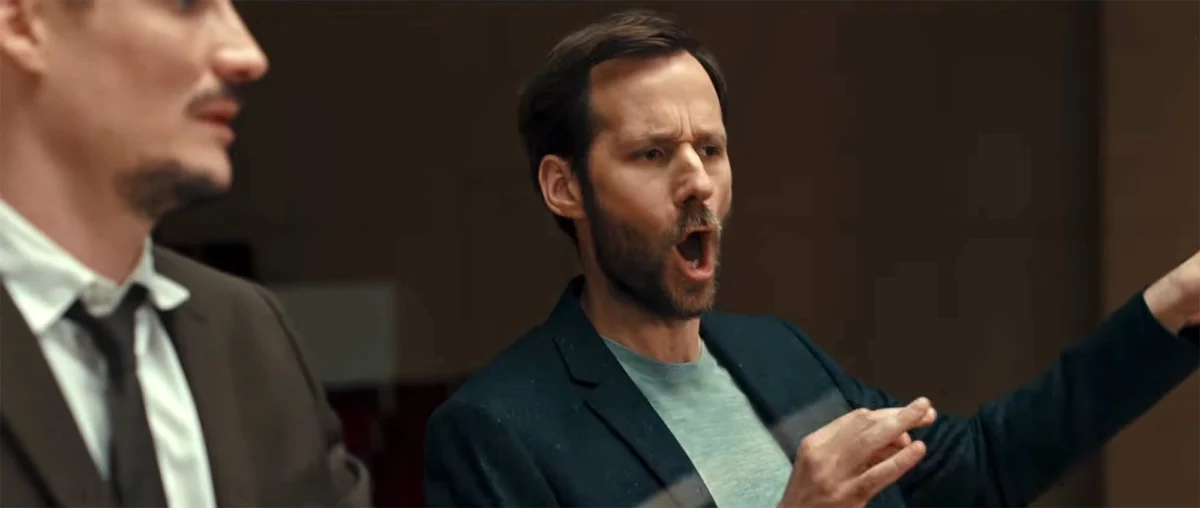
Greenwich Entertainment has officially unveiled the North American trailer for Emmanuel Courcol’s acclaimed French dramedy, The Marching Band, signaling the final stretch of the film’s multi-year journey from its prestigious festival debut to its upcoming domestic theatrical run. Titled En Fanfare in its native France, the film is scheduled to arrive in select United States theaters on August 21, 2026, following a highly successful international rollout that solidified its status as one of the most resonant European exports of the mid-2020s. The film, which blends the high-stakes world of classical music with the gritty, communal spirit of industrial brass bands, represents a significant acquisition for Greenwich Entertainment, a distributor known for championing high-quality independent and foreign-language cinema.
The Marching Band tells the poignant story of Thibaut, an internationally renowned conductor whose life is upended by a dual revelation. After being diagnosed with leukemia, Thibaut discovers that he was adopted and that his biological brother, Jimmy, lives in a small working-class town in Northern France. While Thibaut has achieved the pinnacle of musical prestige, Jimmy works in a school cafeteria and plays the trombone in a local factory brass band. The narrative follows their tentative reunion, driven by a desperate search for a bone marrow donor and a shared, though vastly different, passion for music. As Thibaut attempts to mentor his brother and elevate the local band, the film explores themes of class disparity, familial obligation, and the transformative power of art in the face of economic hardship.
Narrative Architecture and Thematic Depth
The screenplay, penned by Emmanuel Courcol and Irène Muscari in collaboration with Oriane Bonduel and Marianne Tomersy, intentionally juxtaposes two distinct worlds. On one side is the sterile, disciplined, and often lonely environment of the global classical music circuit. On the other is the boisterous, community-focused, yet economically precarious world of the "fanfare" (brass band) culture in Northern France. This region, historically the heart of French industry, provides a backdrop of factory closures and social unrest, which Courcol uses to ground the film’s more sentimental elements.
The central conflict transcends the medical emergency of Thibaut’s illness. It delves into the "injustice of fate," a phrase used by Courcol to describe the divergent paths the two brothers took. While one was afforded the resources to become a prodigy, the other’s talent remained a hobby in a town struggling for survival. The film’s emotional core lies in Thibaut’s realization that his brother possesses an innate musicality that matches his own, leading to a mission of "remedying fate" by bringing Jimmy’s talent to the forefront.

Production History and Global Timeline
The journey of The Marching Band to American shores has been a deliberate and strategic process. The film first gained international attention during its world premiere at the 2024 Cannes Film Festival, where it was featured in the Cannes Premiere section. This non-competitive category is reserved for established filmmakers whose work merits the festival’s highest platform, and it served as a launchpad for the film’s critical and commercial success in Europe.
Following its Cannes debut, the film was released in French cinemas in late 2024, where it became a genuine sleeper hit. During its initial domestic run, it grossed approximately €18 million, an impressive figure for a mid-budget dramedy. Its success was further bolstered by the 2025 awards season, where it garnered seven César Award nominations, including nods for Best Film and Best Actor for Benjamin Lavernhe. The film then transitioned to the United Kingdom and other European territories throughout 2025, building a reputation as a "feel-good" crowd-pleaser before Greenwich Entertainment finalized the US distribution rights for the 2026 summer window.
Profile of the Creative Team
Director Emmanuel Courcol is no stranger to stories that find humanity in unexpected places. A seasoned actor and writer, Courcol previously directed The Big Hit (Un Triomphe), which won the European Comedy of the Year at the European Film Awards. His work often focuses on the intersection of culture and marginalized communities, a theme that continues in The Marching Band. By casting Benjamin Lavernhe as Thibaut, Courcol secured one of France’s most versatile actors. A member of the prestigious Comédie-Française, Lavernhe has received multiple César nominations and is known for his ability to balance technical precision with deep emotional vulnerability.
Opposite Lavernhe is Pierre Lottin, who portrays Jimmy. Lottin’s performance has been singled out by critics for its authenticity, capturing the rugged charm and underlying frustration of a man whose potential was limited by his environment. The supporting cast, including Sarah Suco and Jacques Bonnaffé, provides a rich ensemble that fills out the community of the northern town, ensuring the film feels like a lived-in portrait of a specific culture rather than a mere backdrop for the lead actors.
Box Office Performance and Critical Reception
The financial success of En Fanfare in France—surpassing the €18 million mark—places it among the top-performing domestic films of its year. This commercial viability is often a prerequisite for successful US distribution of foreign-language titles. In a market where subtitled films face stiff competition from domestic blockbusters, the "feel-good" pedigree of The Marching Band offers a marketable hook for American arthouse audiences.

Critical reception has been overwhelmingly positive, with reviewers praising the film’s avoidance of easy melodrama. While the premise of a long-lost brother and a life-threatening illness could lean into cliché, Courcol’s direction is noted for its restraint and its focus on the technicalities of music. The "marching band" of the title is not just a metaphor; the film features extensive musical sequences that highlight the specific traditions of French brass music, providing a rhythmic and auditory energy that translates well to the big screen.
Socio-Economic Context: The French "Fanfare" Tradition
A significant element of the film’s depth is its exploration of the "fanfare" culture. In many parts of Northern France, these bands were historically tied to specific mines or factories. They served as a source of local pride and a social glue for the working class. As these industries declined, many bands disappeared, taking a piece of regional identity with them.
The Marching Band captures a moment where the local factory is facing closure, threatening the existence of the band that Jimmy loves. By bringing a world-class conductor into this environment, Courcol highlights the cultural value of these local institutions. The film argues that the music played in a town square is no less vital or "artistic" than the music played in a metropolitan concert hall. This social commentary provides a layer of substance that elevates the film above standard family reunion narratives.
Implications for the US Arthouse Market
The release of The Marching Band on August 21, 2026, places it at the end of the summer season, a traditional slot for "prestige" titles looking to build momentum heading into the autumn. For Greenwich Entertainment, the film represents a bridge between high-brow festival cinema and accessible entertainment. The success of similar French titles in the US, such as The Intouchables or C’est la Vie!, suggests there is a consistent appetite for stories that combine humor with genuine pathos.
The US trailer emphasizes these universal themes, focusing on the chemistry between Lavernhe and Lottin and the uplifting nature of their musical collaboration. By highlighting the film’s award-winning pedigree and its box office success abroad, the marketing campaign aims to attract both Francophiles and general independent film enthusiasts.

Conclusion and Future Outlook
As the US premiere approaches, The Marching Band stands as a testament to the enduring appeal of human-centric storytelling. In an era dominated by franchise filmmaking, Emmanuel Courcol’s work serves as a reminder of the power of original scripts and character-driven drama. The film’s exploration of how art can bridge the gap between disparate social classes and heal long-standing familial wounds is expected to resonate with American audiences facing their own versions of economic and social division.
With its August 21 release date, The Marching Band will likely be a centerpiece of late-summer cinema discussions. Its combination of musical excellence, strong performances, and social relevance ensures that it will be more than just a seasonal offering; it is poised to be a lasting entry in the canon of contemporary French cinema. As the final notes of the US trailer suggest, the film is an invitation to witness a "fraternal, musical journey" that celebrates the resilience of the human spirit through the universal language of melody.