On a recent Sunday at 5 p.m., the vibrant red signage of Little Toni’s, an Italian restaurant in North Hollywood boasting a history dating back to 1956, stood witness to an extraordinary scene: a waitlist already stretching to an hour and growing by the minute. Families, friend groups, and couples coalesced in buzzing clusters outside the establishment on the triangular lot where Lankershim Boulevard converges with Vineland Avenue. Many were engrossed in their phones, while others captured images of the iconic façade, a clear sign of a pilgrimage rather than a casual meal. The overwhelming majority had converged upon this venerable eatery for a singular, contemporary reason, one utterly unknown to long-time regulars like Trisha, a woman in her sixties, and her husband, who have frequented Little Toni’s for three decades. “The food is good, but we were sitting here wondering, ‘Dang, what’s going on here?’” Trisha recounted, only to learn in real-time that her cherished NoHo spot had transformed into one of the San Fernando Valley’s most unexpected tourist attractions. This newfound fame is a direct consequence of its prominent feature in Curry Barker’s independent horror film, Obsession.
The Unprecedented Success of Obsession
Released on May 15, Obsession has become a cinematic anomaly, shocking Hollywood with its monumental financial triumph. Produced on a shoestring budget of merely $750,000, the film has astoundingly raked in nearly $300 million globally, cementing its status as the most successful release in Focus Features’ history. This unprecedented return on investment (ROI) of over 39,900% places Obsession in an elite category of low-budget horror films that have achieved cult status and massive box office success, reminiscent of phenomena like The Blair Witch Project (1999), Paranormal Activity (2007), and Get Out (2017). Such films demonstrate that compelling storytelling and effective marketing, even without A-list stars—a fact that surprised Trisha, who asked, “Is there anyone famous in it?”—can captivate audiences worldwide. The film’s narrative, crafted by writer-director Curry Barker, centers on Bear (Michael Johnston), a music store employee and hopeless romantic, who, desperate to win over his co-worker Nikki (Inde Navarrette), purchases a mystical "One Wish Willow" from The Green Man, a metaphysical shop in Burbank. His wish for Nikki to love him above all others quickly devolves into a violent nightmare, a classic "monkey’s paw" cautionary tale.

Little Toni’s: From Local Gem to Cinematic Landmark
The impact on Little Toni’s has been immediate and profound. A staffer, barely catching her breath between answering phones and managing the ever-growing waitlist, succinctly described the situation: “It’s been like this since the movie came out. It’s been both a blessing and a curse, if you ask me.” The restaurant, a beloved fixture in North Hollywood for decades, known for its pizza — once cited by both the Los Angeles Times and Los Angeles Magazine as the best in the San Fernando Valley — now sees its historic appeal amplified by a chilling scene from Obsession. During Bear and Nikki’s ill-fated first date, Little Toni’s serves as the backdrop for a spine-tingling moment when Nikki, unnerved by Bear’s line of questioning, dramatically rises from their booth, repeatedly shouting “no” in distress. This specific booth has now become the most coveted seat in the entire restaurant, with patrons willingly enduring extended waits to sit precisely where the on-screen drama unfolded. Actor Cooper Tomlinson, who plays Bear’s best friend Ian, recalled the filming experience fondly, noting, “They were so great to us for the day we filmed there. Fun fact: It was the last day of filming.” The surge in customers has led to logistical challenges, including increased staffing needs and managing the expectations of film tourists eager to recreate movie moments.
The Green Man: A Hub of Mystical Merchandise
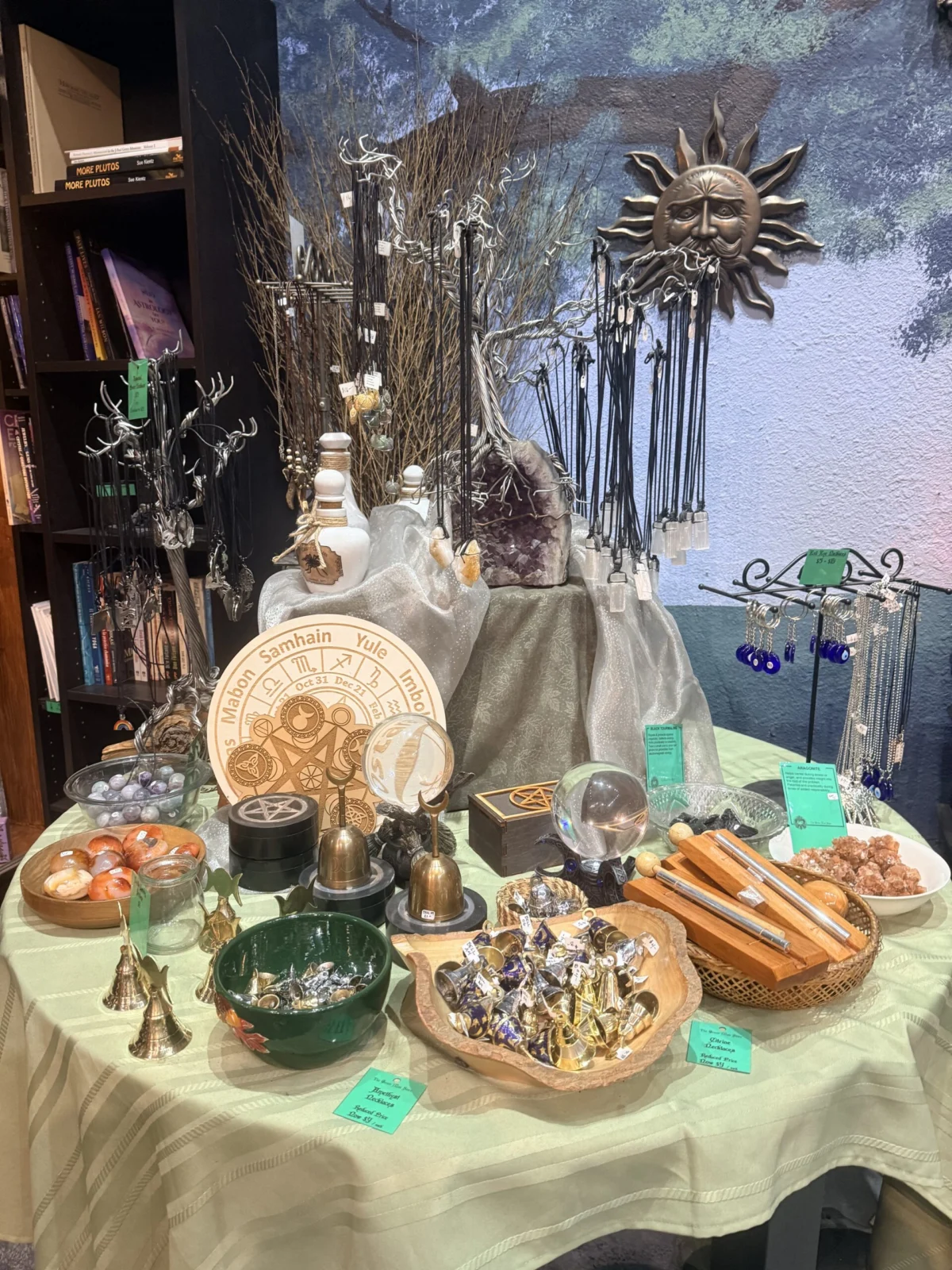
Less than two miles away, a mere seven-minute drive from Little Toni’s, The Green Man in Burbank has experienced a similar, if not more intense, transformation. This mystical shop and apothecary, renowned for its array of services including magical advice, custom spell crafting, psychic readings, and healing sessions, has seen its business triple since Obsession‘s release. The primary driver of this demand is the "One Wish Willow," the novelty item central to the film’s plot. Fans have been flocking to the store, eager to acquire their own piece of the cinematic magic. Linda Snovak, The Green Man’s store manager, described the frenetic scene: “We had the final batch for sale on Friday, and there was a line around the corner by the time we opened. That is not something we’ve seen since our grand opening in 2023.”

While Focus Features had its own limited inventory of One Wish Willows, selling them online for $6.99 each in batches that sold out within 12 hours, the demand at The Green Man has been relentless. Although official restocks remain unconfirmed, the phenomenon has propelled sales of other items featured in the film. Citrine necklaces, which Bear almost buys for Nikki, and tigereye stones, which Nikki purchases for Bear, are now top sellers. Snovak added, “People are buying a lot of little trinkets like keys, candles, spell kits, conjure oils and other items.” To further cater to the film’s devotees, The Green Man has established a permanent display case, mirroring the one from the movie and featuring a One Wish Willow and the necklace, providing a dedicated photo opportunity for visitors.
However, this sudden surge in popularity has not been without its challenges. The Green Man’s website, overwhelmed by traffic, fell victim to a bot attack. “The website traffic is crazy, and we had to expand our server to allow for the extra flow. One IP address got hit 58,000 times in five hours, and that led to a bot attack that took our website down,” Snovak explained. The store quickly adapted, switching servers to better manage the intense online interest.
The Digital Catalyst: Social Media’s Role in Screen Tourism
The meteoric rise of Obsession‘s filming locations into tourist hotspots is a testament to the unparalleled power of social media in contemporary culture. Within days of the film catching fire at the box office, lines began forming at both Little Toni’s and The Green Man, fueled initially by discussions on Reddit and rapidly amplified by viral clips on Instagram and TikTok. These platforms served as virtual tour guides, transforming fleeting movie moments into real-world destinations. Fans like Fik, 32, who convinced his buddy Eugene, 24, to make the trek from south of Torrance, discovered the locations through social media. “I saw it the night after it premiered and loved it,” Fik stated, having seen the film twice. “Then one day I was scrolling Instagram and found out that the locations in the movie are actually here. I went over to The Green Man to buy a One Wish Willow but they were out of stock. Then because the restaurant is here, too, I was, like, I got to come down and check it out.”

Similarly, Maya, a 17-year-old Obsession enthusiast from Palmdale, orchestrated a family road trip to North Hollywood after seeing a TikTok video showcasing Little Toni’s. “I really liked the movie and saw a TikTok about [Little Toni’s] that showed the food and, to be honest, the cannolis looked really good,” Maya noted. Her father, swayed by the visual appeal of the pizza, quickly agreed to the hour-and-fifteen-minute drive. This pattern of online discovery translating into physical visits highlights the profound influence of user-generated content and short-form video platforms in driving cultural trends and consumer behavior. The immediacy and visual nature of these platforms create an immersive experience that encourages active participation, turning passive viewers into enthusiastic pilgrims.
L.A.’s Enduring Allure: A New Chapter in Location Tourism
Location tourism, or "set-jetting," is a well-established phenomenon in Los Angeles, a city synonymous with the film industry. Iconic landmarks such as Musso & Frank (featured in Once Upon a Time in Hollywood), The Formosa Café (L.A. Confidential), Venice High School (Grease), Randy’s Donuts (Iron Man 2), and the Pasadena houses from Halloween and Back to the Future have long drawn tourists and locals alike. However, the Obsession phenomenon represents a unique iteration of this trend. Unlike many of its predecessors, Obsession is a low-budget horror film without a star-studded cast, yet its locations have garnered an equivalent, if not greater, level of dedicated fan engagement.
This surge in visitors for Little Toni’s and The Green Man is particularly significant given the recent production downturn in Los Angeles. The industry has faced challenges from labor disputes, the rise of streaming services altering production models, and increased runaway production to other states and countries. In this context, the "Obsession effect" stands out as a bright spot, offering a tangible economic boost to local businesses and communities. It demonstrates that even smaller, independent films can generate substantial cultural and economic ripple effects, providing a much-needed lifeline to local economies heavily reliant on the entertainment industry.

Fan Engagement and Ethical Echoes
The diverse demographic of Obsession fans undertaking these pilgrimages underscores the film’s broad appeal. From young adults like Axel and Daniel, both 21, who drove from South Orange County, praising the movie as “a 10 out of 10,” to sisters Christian, 33, and Haley, 25, from Inglewood, eager to try the Italian fare, the motivations are varied. Bobby, 40, and Julie, 33, who visited The Green Man first, articulated the prevailing sentiment: “The fact that this small-budgeted film has been able to have such a huge impact in Hollywood is amazing. Any time you see something go viral like that, you obviously want to kind of see what the buzz is about.” Pedro Sanchez and Janetidaly Vasquez, both 26, drove over an hour from Perris, California, not just for the food but specifically to “see the booth where Nikki stands up and says, ‘No, no, no, no, no,’ as she freaks out.”
Beyond the excitement of visiting film locations, the movie has also sparked deeper conversations among fans. Fik and Eugene, while waiting for their table, found themselves debating their own hypothetical "one wishes," reflecting the film’s central theme. “I wish I was the luckiest person at all times,” Fik mused, “But then one of my friends said, ‘What if you’re the luckiest person in a plane crash?’ It changes how you look at it.”
The Green Man’s Linda Snovak has embraced this newfound spotlight as an opportunity to educate “new friends” about the power and peril of magic, both on and off-screen. Directly addressing the film’s premise, Snovak advises caution regarding "love magic." “We always warn people when they try to do love magic like what’s featured in the film. Don’t name somebody directly because that usurps their free will. We don’t do that. It’s against store policy and our ethics and codes,” she explained. “If you really want somebody to love you, and you try to force them with magic, you will end up with an undesired result, like an obsession.” This ethical stance not only reinforces the thematic warnings of Obsession but also positions The Green Man as a responsible purveyor of mystical practices, distinguishing cinematic fantasy from real-world magical principles.

Economic Ripple Effects and Future Outlook
The "Obsession effect" extends beyond the direct beneficiaries of Little Toni’s and The Green Man. The influx of visitors from across Southern California and potentially further afield creates a ripple effect on the broader local economies of North Hollywood and Burbank. Increased foot traffic benefits nearby parking facilities, gas stations, convenience stores, and other auxiliary businesses. This micro-boom serves as a valuable case study for city tourism boards and film commissions, illustrating the tangible economic benefits that even independent, low-budget productions can bring to local communities when they achieve viral success.
The phenomenon also offers insights into the evolving landscape of film marketing and audience engagement. The organic, social media-driven spread of Obsession‘s popularity demonstrates a powerful alternative to traditional, high-cost advertising campaigns. For filmmakers and studios, it underscores the importance of identifying and utilizing unique, relatable locations that can become destinations in themselves. The ability to create merchandise, like the One Wish Willows, that directly ties into the film’s narrative and locations, further capitalizes on fan enthusiasm and extends the film’s commercial lifespan beyond its theatrical run.
Conclusion

Obsession has not only defied box office expectations but has also forged an unexpected and vibrant connection between cinematic storytelling and local commerce. The bustling scenes at Little Toni’s and The Green Man represent a unique confluence of independent filmmaking prowess, the pervasive influence of social media, and the enduring allure of Hollywood’s physical landscape. This narrative of a small film generating a massive cultural and economic footprint serves as a compelling testament to the unpredictable magic of cinema and the powerful, sometimes overwhelming, ways in which it can shape the real world.