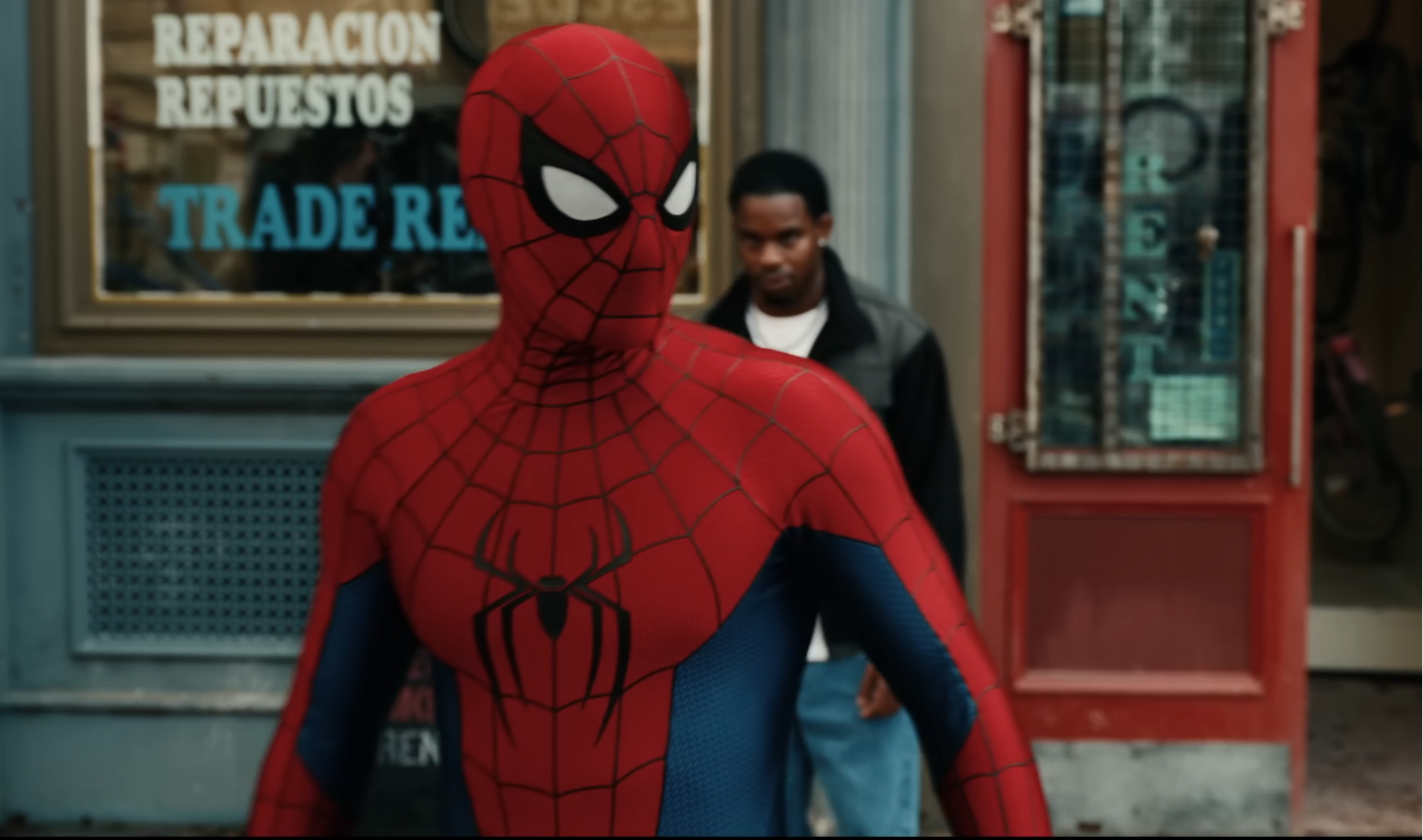
The upcoming cinematic release of Spider-Man: Brand New Day is generating significant buzz, not just for its reported abundance of antagonists, but more crucially, for the strategic deployment of a diverse array of "lesser-known" villains. This approach appears to be a deliberate narrative choice, designed to underscore the film’s purported focus on street-level conflicts and the everyday struggles of Peter Parker. Such a comprehensive assembly of antagonists, even for brief appearances, evokes memories of the expansive villain rosters seen in past animated iterations of the Spider-Man saga, a feat rarely replicated in live-action cinema. The exact number of villains slated to appear remains a subject of speculation, with recent trailer releases offering tantalizing glimpses rather than definitive counts.
The latest trailer for Brand New Day has notably shifted its emphasis from a mere showcase of villainous quantity to a more focused, and indeed more intriguing, exploration of an insidious, unseen, and unnamed threat. This malevolent entity possesses a disquieting ability to traverse between different host bodies, leaving audiences and critics alike pondering its true identity. Marvel Studios has remained tight-lipped regarding the nature of this mysterious force, adding another layer of intrigue to the film’s unfolding narrative. While speculation is rife, a careful examination of the cinematic universe’s established lore and character capabilities narrows the field of potential candidates considerably. Unless the studio intends a significant departure from established patterns, the following are the most plausible identities for this new, elusive antagonist.
The Enigmatic Entity: Unraveling the Candidates
The central mystery surrounding the unnamed threat in Spider-Man: Brand New Day has ignited a flurry of fan theories and analytical discussions. The ability to seamlessly inhabit and control multiple bodies points towards entities with potent psionic, mystical, or even technologically-driven means of transference. The trailer’s visual cues, while intentionally obscured, offer subtle hints that, when combined with knowledge of Spider-Man’s extensive rogues’ gallery and the broader Marvel Cinematic Universe (MCU) canon, allow for an educated assessment of the most likely culprits.
Jean Grey: A Misunderstood Mutant or a Covert Menace?
One of the most prominent and widely discussed theories posits that the "villain" observed shifting between bodies in the Brand New Day trailer is, in fact, Jean Grey, a foundational member of the X-Men. This interpretation suggests that the narrative may frame Jean as an antagonist through the machims of Damage Control, a fictional organization tasked with cleaning up after superhero battles. In this scenario, Damage Control might be attempting to apprehend Jean, perceiving her as a rogue mutant rather than a genuine villain. The trailer’s editing could then be strategically employed to amplify her actions, presenting a misleadingly malevolent portrayal.
While seemingly a "stretch" to some, this theory holds considerable weight due to several factors. Firstly, Jean Grey’s immense telepathic and telekinetic powers, particularly her Phoenix Force abilities, certainly encompass the capacity for body or mind transference, or at the very least, sophisticated manipulation that could appear as such. Secondly, persistent rumors and leaks have long indicated Jean Grey’s impending MCU debut, with actress Sadie Sink reportedly cast in the role. Furthermore, these reports have consistently suggested an initial antagonistic dynamic between Jean and Spider-Man, stemming from her perception of him as a potential threat or a pawn of Damage Control. This narrative arc aligns with the trailer’s implication of conflict and misdirection. The possibility exists that Jean, perhaps dealing with a resurgence of her darker persona or a manipulation by an external force, is acting erratically, leading to her being misidentified as the primary threat.
Mister Negative: The Corrupting Influence of Martin Li
Should the Jean Grey theory prove incorrect, attention naturally turns to Spider-Man’s own formidable roster of adversaries. Martin Li, also known as Mister Negative, emerges as a compelling candidate. His dual nature as a respected philanthropist and a ruthless crime lord, coupled with his ability to corrupt individuals and bend them to his will through his dark energy powers, makes him a fitting choice for a street-level narrative. His influence could manifest as a pervasive, unseen force, manipulating individuals to act as his puppets.
Mister Negative’s popularity has surged in recent years, significantly bolstered by his memorable portrayal in Insomniac’s Marvel’s Spider-Man video game series. This heightened profile makes his inclusion in a major Spider-Man film a logical progression. The "Jekyll and Hyde" persona is particularly well-suited to the complex moral landscape often explored in Spider-Man’s stories. However, a significant hurdle for this theory lies in the visual distinctiveness of Mister Negative’s powers. The stark black-and-white duality and the distinctive energy manifestations he employs are notably absent from the trailer footage. While trailers can be adept at obscuring details, the complete omission of such a signature visual element raises questions about the plausibility of this identification, though it cannot be entirely ruled out.
Shadow King: A Psychic Menace from the X-Men Universe
Similar to Mister Negative, the Shadow King’s primary strength lies in his formidable abilities, making him a viable contender. As one of the most powerful telepaths within the X-Men lore, Amahl Farouk, the Shadow King, possesses the capability to possess and control others, a trait that directly aligns with the body-hopping observed in the trailer. His introduction could also serve as a strategic entry point for other X-Men characters into the MCU, a long-anticipated development for many fans.
Despite the thematic resonance, the Shadow King’s inclusion appears less probable given the already packed narrative of Spider-Man: Brand New Day. Introducing such a potent and complex villain, especially one with deep ties to the X-Men, might introduce a level of complexity that strains the film’s already established plot threads. However, the potential for a connection with the Jean Grey theory cannot be ignored. It’s conceivable that Jean Grey could be erroneously blamed for the Shadow King’s actions, creating a narrative link and an indirect X-Men presence. This layered possibility keeps the Shadow King on the fringes of speculative consideration.
Krahllak: The Demonic Architect of The Hand
Moving into more esoteric territory, Krahllak presents a unique, albeit less conventional, candidate. The most significant argument against Krahllak’s prominence is his relative obscurity within mainstream Marvel comics, especially concerning his direct confrontations with Spider-Man. An ancient demonic entity rarely associated with the wall-crawler would indeed be an unexpected primary antagonist for a flagship Spider-Man film.
However, Krahllak’s significance stems from his role as the driving demonic force behind The Hand, the shadowy ninja organization prominently featured in the Brand New Day trailers. This direct connection to a visually established faction within the film immediately elevates his potential relevance. Furthermore, Krahllak’s historical encounters with Daredevil and the Punisher are noteworthy, particularly considering the confirmed or heavily rumored appearances of these characters in Brand New Day. Their integral roles in the narrative’s build-up suggest a deeper connection to the film’s overarching conflict. While Krahllak is capable of possession, his modus operandi typically differs from the free-wheeling, body-hopping style depicted in the trailer, which might indicate a nuanced or adapted portrayal for the film.
Madelyne Pryor: A Twisted Reflection of a Familiar Face
A more speculative, yet intriguing, possibility is Madelyne Pryor. Acknowledging her origin as a clone of Jean Grey, her inclusion inherently ties back to the X-Men and potentially Jean Grey herself. The considerable challenge here lies in integrating Madelyne’s complex backstory and established connections within the MCU, especially given the nascent X-Men presence in the current cinematic landscape.
However, if the MCU is willing to significantly re-imagine her origin story—a practice not uncommon in adaptations—Madelyne Pryor could emerge as a formidable and thematically resonant antagonist. A reimagined "evil Jean Grey," perhaps the result of experimental manipulation or a dark echo of the Phoenix Force, could offer a compelling explanation for the trailer’s enigmatic visuals. The conspiracy-laden aspect of this theory could also potentially explain some of the coy statements made by Sadie Sink regarding her upcoming role, adding another layer of intrigue to the ongoing speculation.
The Broader Context: Street-Level Heroes and Cosmic Threads
The deliberate emphasis on street-level villains in Spider-Man: Brand New Day signals a potential return to the core tenets of the character’s origins. For decades, Spider-Man has been celebrated for his relatable struggles, balancing extraordinary powers with ordinary life challenges. A narrative that grounds itself in the gritty realities of New York City’s underbelly, featuring antagonists who operate within this sphere, allows for a deeper exploration of Peter Parker’s character and his commitment to protecting the innocent. This approach contrasts with recent cinematic trends that have leaned heavily into cosmic threats and universe-altering stakes, potentially offering audiences a refreshing and more intimate Spider-Man experience.
The inclusion of characters like Daredevil and the Punisher, known for their own morally ambiguous and often brutal methods of crime-fighting, further solidifies this street-level focus. Their presence suggests a world where the lines between hero and anti-hero are blurred, and where the fight against crime is a messy, ongoing battle rather than a series of clear-cut victories. This could lead to complex character interactions and moral quandaries that resonate with the philosophical underpinnings of Spider-Man’s mythos.
Timeline and Anticipation: A Carefully Orchestrated Unveiling
The rollout of promotional materials for Spider-Man: Brand New Day has been a masterclass in controlled information release. Initial teasers and trailers focused on establishing the film’s aesthetic and hinting at the broader narrative scope. Subsequent releases, particularly the latest trailer, have strategically introduced elements of mystery, most notably the body-hopping antagonist. This approach aims to build sustained audience engagement and anticipation, encouraging active participation in deciphering the film’s secrets.
The reported involvement of Damage Control, a recurring element in Marvel’s multiverse narratives that deals with the aftermath of superhero activities, suggests a potential timeline where the film’s events are triggered by or interact with the broader consequences of superhero existence. This could place Brand New Day at a pivotal moment in the MCU’s evolving chronology, where the actions of heroes have tangible repercussions on the civilian populace and the organizations tasked with managing them.
The Implications: A New Era for Spider-Man Cinema
The strategic selection of villains and the emphasis on street-level themes have significant implications for the future of Spider-Man films. If successful, this approach could establish a blueprint for future installments, prioritizing character-driven narratives and grounded conflicts over spectacle alone. The potential integration of characters from the X-Men universe, even indirectly, also signals a growing interconnectedness within the broader Marvel cinematic landscape, hinting at a future where the lines between different superhero factions continue to blur.
The success of Spider-Man: Brand New Day hinges not only on its action sequences and visual effects but also on its ability to deliver a compelling narrative that resonates with audiences. By focusing on a diverse cast of villains, both familiar and enigmatic, and grounding the story in relatable, street-level stakes, the film has the potential to redefine expectations for superhero cinema and offer a fresh perspective on one of Marvel’s most beloved heroes. The continued mystery surrounding the film’s central antagonist only serves to heighten the anticipation for its eventual release, promising a cinematic experience that is both thrilling and thought-provoking.