The cinematic landscape often serves as a powerful mirror reflecting societal complexities, and filmmaker Claudia Tuyet Scheffel stands at the forefront of this tradition with her evocative new feature, "Lonig & Havendel." Set for a prominent screening at the Montreal Asian International Film Festival (MAIFF), the 2025 production delves into themes of migration, intergenerational identity, and the intricate relationship individuals forge with their homeland, particularly within the often-misunderstood context of Eastern Germany. Scheffel, known for her earlier work "Amputierte Arschbacken" (2020), brings a deeply personal yet universally resonant narrative to the screen, drawing from her unique upbringing as the daughter of a Vietnamese contract worker and an East German father in the picturesque Erz Mountains.
A Personal Journey Translated to the Screen
Claudia Tuyet Scheffel’s trajectory into filmmaking is as compelling as her narratives. Born and raised in the Erz Mountains, a region steeped in history and distinct cultural identity, Scheffel’s bicultural heritage provided a fertile ground for artistic exploration. Her mother, a Vietnamese contract worker, arrived in East Germany during a period of significant geopolitical flux, a historical reality that profoundly shaped the region’s demographic and cultural fabric. Her father, an East German, further grounded her in the local experience. This unique confluence of East German and Vietnamese heritage forms the bedrock of her artistic perspective.
Her formal education at the prestigious University of Fine Arts Hamburg honed her craft, allowing her to translate her lived experiences and keen observations into visual storytelling. "Lonig & Havendel" emerged from this academic environment, initially conceived as her graduation project. Scheffel notes the unconventional genesis of the film’s title, which predated the narrative itself. Inspired by her allergies to honey and lavender, she deliberately altered the words to "Lonig & Havendel," a subtle phonetic shift that immediately introduced the concept of duality, a central motif in the film. This duality permeates every aspect of the story, as it navigates between different worlds, perspectives, and realities, a reflection of the multifaceted identities explored within. The development process, spanning her bachelor’s and master’s degrees, benefited from the "safety net" provided by the university system, granting her the freedom to experiment with a feature-length film without the typical commercial pressures. This academic incubation allowed for a meticulous and uncompromised artistic vision to flourish.
"Lonig & Havendel": Exploring Migration and Belonging
At its core, "Lonig & Havendel" is a profoundly personal film, yet it skillfully transcends autobiography to address larger societal and political questions pertinent to contemporary Germany and the broader global discourse on migration. The narrative unfolds in the familiar landscapes of Scheffel’s childhood, the Erz Mountains, imbuing the setting with an authentic sense of place. The film features an ensemble of characters representing diverse migration experiences, each grappling with their sense of belonging.
One such character is Duc, who, like Scheffel, grew up in Germany and possesses a deep attachment to the region, even as many of his peers seek opportunities elsewhere. In contrast, Truc Lam embodies the experience of migrants still actively seeking their place, navigating the complexities of integration and cultural adaptation. Adding another layer of authenticity, Scheffel cast several of her own family members in pivotal roles: her aunt portrays Duc’s mother, her mother lends her voice to Truc Lam’s mother in a poignant phone conversation, and her father appears as a guide in a mine, symbolically leading characters through subterranean passages mirroring their emotional journeys. This familial involvement not only grounds the film in genuine experience but also underscores the deeply personal commitment Scheffel has to her narrative.
The film critically examines the often-oversimplified portrayal of Eastern Germany in mainstream media, which frequently focuses on narratives of right-wing extremism and social challenges. Scheffel, having experienced the region firsthand, felt compelled to present a more nuanced and intricate picture. She recounts how, after moving to Hamburg for her studies, she encountered a limited and often stereotypical view of Eastern Germany from those in the western part of the country. Her film challenges these preconceived notions by offering a migrant perspective from Eastern Germany, asserting that a place, despite its flaws, can still profoundly feel like home. This sentiment resonates with many who feel a deep connection to their origins, understanding that criticism of one’s home can be an act of love, distinct from external denigration. The film argues that a true understanding of such complexities can only be achieved through direct experience.
Artistic Choices and Symbolism
The aesthetic of "Lonig & Havendel" is as meticulously crafted as its narrative. Scheffel’s collaboration with cinematographer Yunus Koylu, a long-time colleague from film school, resulted in a visually distinct and evocative style. Their shared artistic sensibilities fostered a seamless partnership, particularly in their approach to color. Specific characters are subtly linked to particular colors, establishing emotional connections even when they do not share direct screen time.
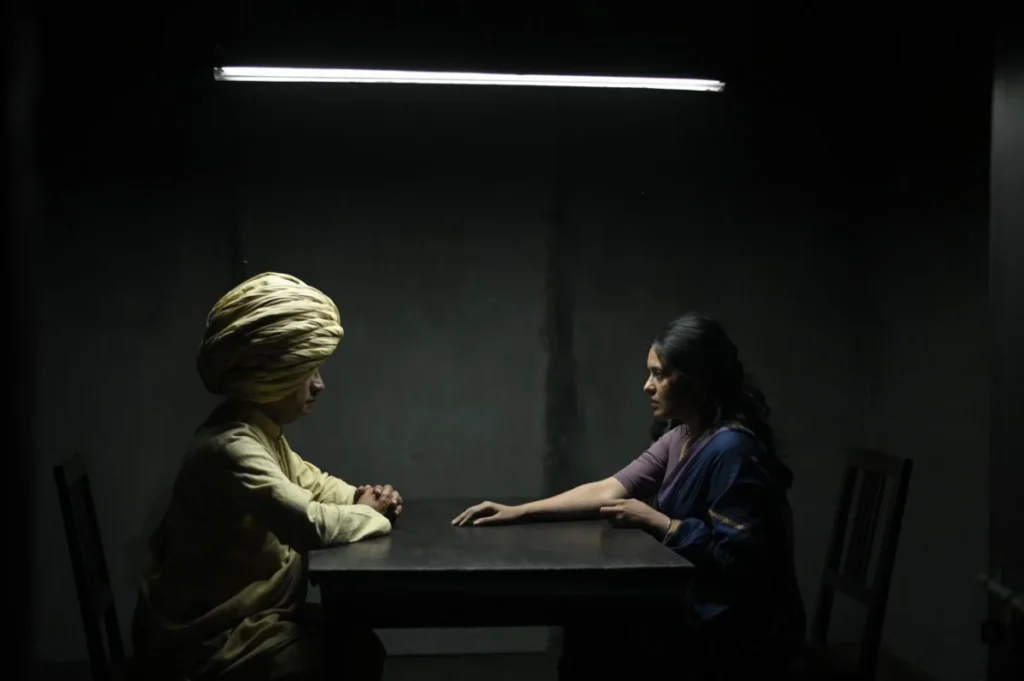
The film draws significant inspiration from the dark romance genre, incorporating elements such as sprawling forests, reflective mirrors, mysterious figures, and recurring imagery of death. These motifs, present from the screenplay stage, were visually translated to create an atmosphere of ethereal beauty and underlying tension. An unusual aspect ratio of 14:9 was deliberately chosen to evoke the framing of older landscape paintings, further enhancing the film’s artistic depth and timeless quality.
Scheffel identifies literature as a more profound influence on her work than cinema, describing "Lonig & Havendel" as an example of magical realism – where magical occurrences seamlessly integrate into an otherwise realistic world. This approach has led many viewers to draw parallels with the works of celebrated authors like Haruki Murakami or the acclaimed Studio Ghibli films, such as "Spirited Away," which often feature narratives spanning two distinct worlds. Scheffel also cites the Japanese writer Yoko Tawada, known for her German-language explorations of language and identity, as a significant influence. Other literary inspirations include Georgian literature, Hiroko Oyamada’s "The Hole," and Elisa Shua Dusapin’s "Winter in Sokcho," all of whom excel at creating strange, mysterious atmospheres without resorting to overt fantasy elements. This rich literary background underscores the depth of thought and artistic intention behind Scheffel’s filmmaking.
A particularly potent symbol in the film is the wolf, which functions as both a political and mythical entity. In Germany, debates surrounding the reintroduction and management of wolf populations frequently become symbolic discussions about migration, with proponents advocating for protection and opponents demanding their removal. Scheffel masterfully employs the wolf as a metaphor for these social tensions. Simultaneously, wolves hold a significant place in fairy tales, often appearing as frightening figures yet also serving as guides. In earlier iterations of the screenplay, a wolf was intended to literally guide Truc Lam at the film’s conclusion, a scene ultimately removed for practical reasons but retaining its symbolic weight within the narrative.
Technology, Generations, and Societal Reflection
One striking detail in "Lonig & Havendel" is its portrayal of technology, particularly smartphones. The film subtly reverses the common stereotype of young people being perpetually online, depicting adults, specifically Duc’s family, as far more attached to their phones than Duc himself, who does not even own one. This observation stems directly from Scheffel’s own experiences, where she often notes individuals over fifty engaging more intensely with their devices than younger generations, humorously pointing out the widespread addiction to mobile games like Candy Crush among older adults.
This portrayal serves as a commentary on the evolving relationship between humans and digital technology. While technology undoubtedly facilitates connection, particularly across geographical distances, as exemplified by Scheffel’s mother frequently communicating with family in Vietnam, it also introduces new dynamics into personal interactions. The scene where her mother, engrossed in a phone conversation, asks her family to lower their voices during a meal, highlights the complex interplay between virtual and real-world connections. This nuanced depiction challenges mainstream media’s tendency to solely frame smartphone addiction as a youth phenomenon, suggesting a broader, intergenerational engagement with digital devices.
Festival Acclaim and Community Engagement
The selection of "Lonig & Havendel" for the Montreal Asian International Film Festival underscores its relevance and artistic merit. MAIFF, a significant platform for showcasing the diverse voices and stories of Asian and diasporic filmmakers, provides an ideal venue for Scheffel’s work to reach an international audience. Festivals like MAIFF play a crucial role in promoting cultural exchange and challenging conventional narratives by presenting unique perspectives.
The film’s reception has been notably polarizing, a testament to its distinctive artistic vision and thematic depth. Scheffel observes that audiences either deeply connect with the film or find it challenging, but when it resonates, viewers often report being left with a lasting impression of its mood and imagery. This lingering atmospheric impact is precisely what Scheffel hopes audiences take away from the film, more so than a direct call for political change.
Beyond the cinematic experience, Scheffel’s commitment to fostering connection and nuanced understanding extends into tangible community initiatives. Following the film’s shoot, her team organized a series of intercultural workshops in the Erz Mountains, the very region depicted in the film. These workshops, ranging from sound design and graphic design to karaoke events, brought together German and Vietnamese participants, creating spaces for shared experience and dialogue. Scheffel fondly recalls a moment where strangers from both communities stood side-by-side, singing German and Vietnamese songs together, embodying the spirit of connection that lies at the heart of "Lonig & Havendel." This outreach exemplifies the broader impact Scheffel envisions for her work: to encourage empathy, bridge cultural divides, and promote a more nuanced understanding of complex social realities.
In essence, "Lonig & Havendel" is more than just a film; it is an invitation to explore the intricate layers of identity, migration, and belonging through a uniquely personal yet universally relatable lens. Claudia Tuyet Scheffel’s artistry not only entertains but also enriches public discourse, prompting viewers to reconsider their perceptions of home, heritage, and the evolving tapestry of contemporary society.