Chie Hayakawa’s latest cinematic offering, Renoir (2026), is a poignant exploration of childhood grief and burgeoning self-awareness, masterfully set against the vibrant, yet ultimately precarious, backdrop of Japan’s 1987 "bubble economy." The film, currently enchanting audiences at the IFC Center in New York and soon opening at the NuArt in Los Angeles before a wider release through Film Movement, centers on Fuki (portrayed with remarkable depth by Yui Suzuki), a preteen girl whose perception of the world undergoes a profound darkening and complication as her father grapples with a terminal illness. This narrative marks a distinct, yet thematically resonant, departure from Hayakawa’s critically acclaimed debut, Plan 75 (2022), offering a more mysterious and inwardly focused examination of human suffering and empathy.
The Narrative Heart of "Renoir": A Girl’s Awakening in a Booming Era
At its core, Renoir is an intimate character study, told entirely from Fuki’s perspective. The film skillfully contrasts her rich inner life, which includes an unmistakable fascination with the macabre, against the mundane daily rituals and the pervasive societal expectations placed upon an 11-year-old. This internal world is deeply impacted by the looming shadow of her father’s illness, forcing Fuki to confront mortality and the complexities of human emotion at a tender age.
The setting of 1987 is far from incidental; it places Fuki’s personal turmoil amidst a period of unprecedented economic exuberance in Japan. Known as the "bubble period," this era, spanning from the mid-1980s to the early 1990s, saw rampant financial and real-estate speculation radically reshape the country’s economy, barely a generation after its "miraculous" post-war recovery. During this time, asset prices, particularly in stocks and real estate, inflated dramatically. The Nikkei 225 stock index soared to an all-time high of nearly 39,000 yen in December 1989, and urban land values skyrocketed, making Tokyo real estate reportedly worth more than all of California. This boom time, characterized by widespread optimism, conspicuous consumption, and a sense of limitless possibility, paradoxically becomes the stage for Fuki’s nascent awareness of the people around her and the far-reaching consequences of her actions. A serendipitous encounter with a reproduction of Auguste Renoir’s 1880 oil portrait of the eight-year-old Irène Cahen d’Anvers provides Fuki with a crucial clue into her own developing taste and, more broadly, how she wishes to navigate the world. The painting serves not merely as a title device but as a potent symbol of aspiration and identity in a rapidly changing nation.
Hayakawa’s Artistic Vision and Influences
Director Chie Hayakawa reveals that Renoir is deeply personal, stemming from her own experiences at Fuki’s age. This autobiographical foundation imbues the film with an authentic emotional resonance, allowing Hayakawa to revisit and reinterpret the complexities of her own childhood through a cinematic lens. Beyond her personal history, Hayakawa cites esteemed filmmakers Shinji Somai and Edward Yang as significant influences. Somai’s 1993 film Moving, which similarly explores a young girl’s coming-of-age amidst family upheaval and parental separation, and Yang’s 2000 masterpiece Yi Yi, renowned for its profound depiction of familial life and the passage of time in Taiwan, resonate clearly within Renoir‘s contemplative pacing and empathetic characterizations. These influences underscore Hayakawa’s commitment to nuanced storytelling and a deep understanding of the human condition, often focusing on the quiet dramas of everyday life.
The casting of Yui Suzuki as Fuki is a testament to Hayakawa’s keen directorial eye. Despite being the very first candidate in a potentially extensive audition process, Suzuki immediately captivated the director. Hayakawa noted Suzuki’s unique ability to interpret the character in ways slightly different from her own initial imaginings, delivering lines and movements with unexpected expressions. Her complete lack of camera shyness and a captivating blend of childlike essence and mature sensibility sealed her role. A memorable moment during the audition, where Suzuki performed a horse imitation—a detail Hayakawa promptly incorporated into the script—highlighted the young actress’s natural charisma and improvisational talent, ultimately "stealing her heart." Critics who have seen early screenings of Renoir have widely praised Suzuki’s performance, often noting its profound authenticity and emotional depth, placing it among the most memorable child performances in recent memory.
A Window into 1980s Japan: The "Bubble Period" and Societal Optimism
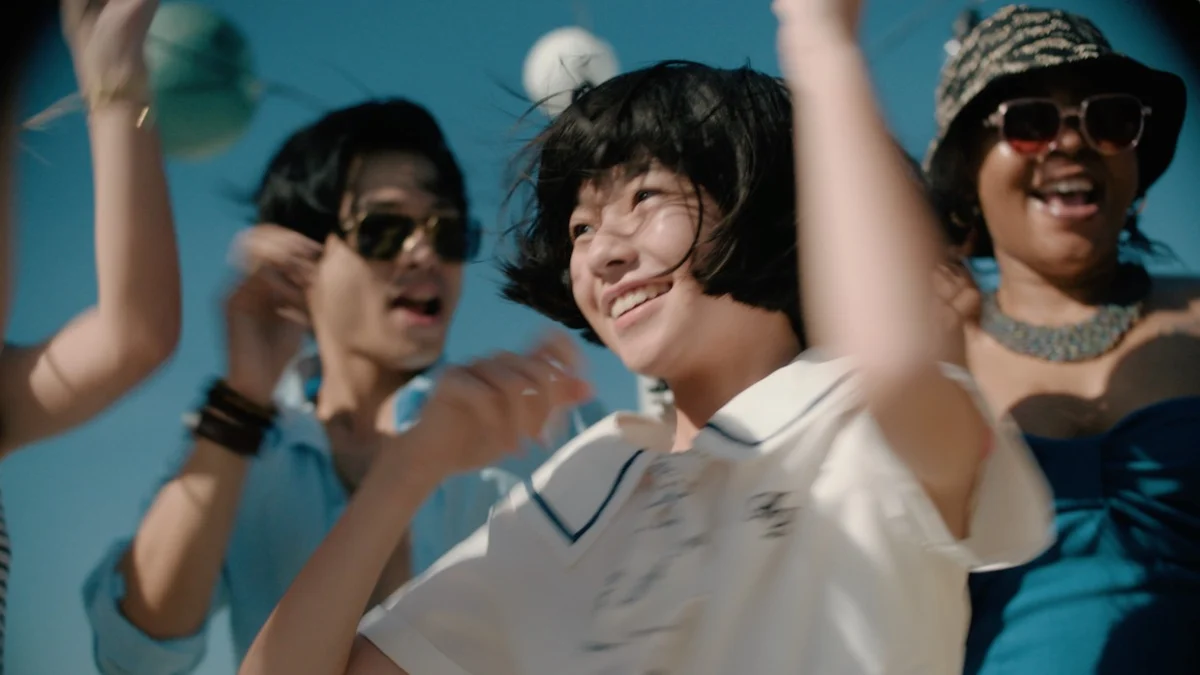
Renoir subtly yet effectively situates itself in 1980s Japan, employing carefully chosen cultural signifiers that evoke the era without overt exposition. The film showcases children dancing to a Yellow Magic Orchestra song at a summer camp, a nod to the iconic electronic music band that epitomized a certain cultural sophistication and technological optimism of the period. Yellow Magic Orchestra, formed in 1978, pioneered electronic music and synth-pop, achieving international acclaim and becoming a symbol of Japan’s technological prowess and emerging cultural influence. A nerve-wracking subplot involving Fuki’s "friendship" developed over a rudimentary phone chat service highlights the nascent stages of digital communication, predating the internet’s ubiquity and the era of social media. The frequent depiction of Fuki watching VHS tapes further grounds the narrative in a time before streaming services, emphasizing a different mode of media consumption and communal experience, where shared television programs and movie rentals fostered a collective cultural understanding.
Hayakawa expresses gratitude for having grown up without the pervasive influence of smartphones and the internet, suggesting that the contemporary digital landscape complicates personal relationships and a connection to "what’s real." The 1980s, in contrast, represented a time when the world abroad felt more distant and mysterious. Programs featuring psychics on television were widely popular, and a shared consumption of media fostered a sense of collective experience. Hayakawa describes a "carefree quality" in people’s willingness to believe in such phenomena, rooted in a period when the world outside Japan was viewed with immense admiration yet remained largely enigmatic. Crucially, it was an optimistic time; despite the lingering shadows of World War II, the rapid economic ascent had instilled in the general populace a genuine belief that the future would inevitably be brighter, a stark contrast to the anxieties that would later grip the nation as the bubble burst and the "lost decades" ensued.
This optimism also extended to the depiction of Fuki’s mother, who grapples with her husband’s impending death and the societal pressures of managing her anger, which she often directs at those around her. Her obligation to attend a corporate course on coworker interaction reflects a nascent trend influenced by Western management practices, particularly from the United States. Hayakawa reveals this subplot is deeply personal, drawing from her own mother’s struggles with anger. While as a child she was upset by it, maturity brought an understanding of the profound isolation her mother experienced, recognizing that constant anger often stems from deep-seated loneliness. The anger management course, humiliating as it might be, becomes a vehicle for depicting this loneliness and even a place where her mother finds an unexpected connection, highlighting the complex human need for understanding and acceptance. Furthermore, Hayakawa notes that the very concept of such courses, originating from the United States, reflected a broader 1980s Japanese tendency to view Western ideas and methods as inherently superior, part of the nation’s drive to modernize and align with global economic and cultural leaders.
The Symbolism of Renoir’s "Irène Cahen d’Anvers"
The film’s title, and Fuki’s fixation, stems from a reproduction of Pierre-Auguste Renoir’s 1880 portrait, Irène Cahen d’Anvers. This choice is steeped in historical and cultural significance. Following Japan’s rapid post-war economic growth and its subsequent "economic miracle" (roughly 1950s-1970s), there was a strong collective desire to "catch up" with the First World, particularly in cultural and lifestyle aspects. This manifested as immense admiration for Western culture, art, and history, particularly from America and Europe. A prevalent trend during this period was the widespread purchase of replicas of European masterworks, including famous paintings like the Renoir portrait. These "fake paintings" were common in Japanese homes, often displayed in "gaudy, Gothic frames" that contrasted sharply with the typically modest dimensions and minimalist aesthetic of traditional Japanese residences.
Hayakawa herself harbored such a painting in her childhood home, having convinced her parents to buy it from a newspaper advertisement. She finds this phenomenon "fascinating" and representative of an "innocence" in the Japanese outlook of that time—a sincere, almost naive, aspiration towards global cultural participation and an absorption of Western aesthetic values. The painting, therefore, symbolizes not just Fuki’s burgeoning aesthetic sensibilities but also a broader national yearning and a specific historical moment when Japan was navigating its identity on the world stage, blending traditional values with an eagerness to embrace Western influences. The director notes that her own childhood replica was much larger than the one seen in the film, likely now residing in her parents’ storage, a tangible relic of that bygone era, hinting at the ephemeral nature of such trends once the initial novelty or aspiration fades.
Japan’s Evolving Landscape: From Bubble to Anxiety
Hayakawa offers a somber reflection on how Japan has transformed since the optimistic "bubble period." While globalization and technological advancements, such as smartphones and the internet, have impacted societies worldwide, Hayakawa observes a distinct shift in Japanese attitudes. Today, a pervasive concern about the future grips the nation. Japan’s rapidly aging society and declining population are leading to widespread anticipation of societal collapse, distinct from purely economic decline. Current statistics indicate that nearly 30% of Japan’s population is over 65, one of the highest proportions globally, with projections suggesting this figure could reach one-third by 2050, as mentioned by Hayakawa. This demographic shift creates immense pressures on social welfare, healthcare, pensions, and the workforce, threatening the nation’s long-term economic stability and social cohesion.
The older generation, holding memories of the "bubble period" when prosperity seemed limitless, often clings to "the old ways," exhibiting an unwillingness to accept change or innovate. This resistance, spanning decades, has contributed to a general feeling of helplessness among Japanese people. Hayakawa notes a sense of being unable to "fight or resist the various problems of the country," resulting in a pervasive feeling of "giving up." This societal malaise forms a crucial undercurrent in Hayakawa’s cinematic philosophy, connecting Renoir‘s historical introspection with the contemporary social commentary of Plan 75, revealing a consistent thread of concern for Japan’s future.
A Diptych on Mortality: "Renoir" and "Plan 75"
Thematically, Renoir forms a fascinating diptych with Hayakawa’s breakout debut,