The Welcome Table Official Trailer Released for Josh Fox’s Documentary on Climate Migration serves as a stark introduction to a cinematic exploration of one of the most pressing humanitarian issues of the modern era. Released on June 18, 2026, by HBO Max, the trailer offers a first look at the latest project from Academy Award-nominated and Emmy-winning filmmaker Josh Fox. The documentary, which is scheduled to premiere on the streaming platform on June 23, 2026, pivots away from the traditional alarmist tropes of climate cinema to focus instead on human resilience, mutual aid, and the stories of those already displaced by environmental degradation.
As the global community faces what experts describe as the largest mass migration in human history, The Welcome Table positions itself as a vital testimony to the lived experiences of survivors across six continents. The film arrives at a time when climate displacement has shifted from a theoretical future risk to an immediate reality for millions. By centering the narrative on a massive, symbolic gathering in New Orleans, Fox attempts to bridge the gap between abstract climate statistics and the visceral reality of losing one’s home.
Overview of The Welcome Table and the New Orleans Gathering
The documentary’s central motif is a 1,000-foot-long table situated on a levee in New Orleans. This location was chosen for its deep historical and symbolic resonance; as a city that has faced catastrophic flooding and continues to battle sea-level rise, New Orleans serves as a "canary in the coal mine" for coastal communities worldwide. The film documents an event where climate-displaced individuals from around the globe were invited to sit together, share a meal, and exchange their stories of survival and displacement.
According to the production notes, the "welcome table" is intended to be a testament to mutual aid—the voluntary reciprocal exchange of resources and services for mutual benefit. In a world where political responses to migration often involve the construction of borders and "walls of exclusion," the film highlights the grassroots efforts of communities to care for one another. The gathering in New Orleans culminates in a large-scale singing celebration, emphasizing the role of culture and communal healing in the face of environmental upheaval.

The Vision of Josh Fox: A Career Defined by Environmental Advocacy
Josh Fox has spent nearly two decades at the intersection of filmmaking and environmental activism. The Welcome Table represents the latest chapter in a body of work that has consistently challenged industrial practices and documented the human cost of ecological neglect.
Fox first gained international prominence with the 2010 documentary Gasland, which investigated the impact of hydraulic fracturing (fracking) on local water supplies. The film was nominated for an Academy Award and was instrumental in sparking a global conversation about energy extraction. He followed this with Gasland Part II and later shifted his focus toward the broader implications of the climate crisis in How to Let Go of the World: and Love All the Things Climate Can’t Change (2016). In that film, Fox traveled to 12 countries to identify the human qualities—such as community, creativity, and resilience—that remain resilient even as the physical environment collapses.
His more recent works, including Awake: A Dream from Standing Rock and The Edge of Nature, have continued to explore the relationship between indigenous rights, environmental protection, and psychological well-being. The Welcome Table is framed as a spiritual and thematic successor to these projects, focusing specifically on the human movement necessitated by the "tipping points" Fox has long warned about.
Climate Migration: Supporting Data and the Defining Crisis of the 21st Century
The premise of The Welcome Table is supported by increasingly dire projections from international organizations. The film notes that approximately one out of every three people globally may eventually lose their homes due to climate change. While this figure represents the higher end of statistical models, the underlying trend is well-documented by groups such as the World Bank and the United Nations High Commissioner for Refugees (UNHCR).
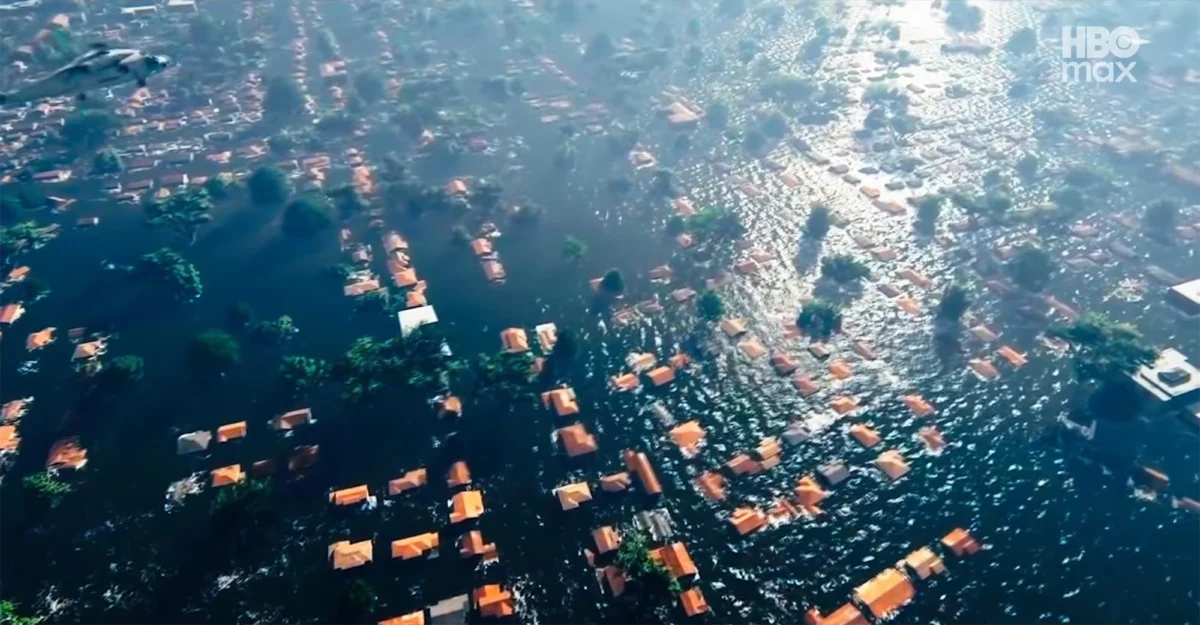
In its "Groundswell" report, the World Bank estimated that climate change could force up to 216 million people to move within their own countries by 2050. These "internal climate migrants" are driven by factors such as water scarcity, decreasing crop productivity, and sea-level rise. When accounting for cross-border migration necessitated by extreme weather events—such as the cyclones in Southeast Asia or the prolonged droughts in the Horn of Africa—the numbers escalate significantly.

The documentary highlights that climate displacement is not a future threat but a present-day crisis. The Internal Displacement Monitoring Centre (IDMC) has reported that in recent years, weather-related disasters have triggered more internal displacements than conflict and violence combined. The Welcome Table seeks to humanize these statistics by introducing audiences to individuals who have lived through these transitions.
Voices from the Frontlines: Survivors and Activists
The documentary features a diverse array of contributors, ranging from frontline survivors to community organizers and aid workers. Among those highlighted are:
- Leo Farah: An expert in disaster response and humanitarian aid.
- Chris Achilo and Nelton Yankur: Activists working within displaced communities to secure land rights and resources.
- Allie Stratta and Chris Obehi: Individuals whose personal histories of movement reflect the intersection of economic necessity and environmental pressure.
- Pauleteh Araújo: A voice for indigenous communities facing the loss of ancestral lands.
By bringing these individuals to New Orleans, the film creates a cross-cultural dialogue. The participants find common ground in the shared experience of "solastalgia"—the distress caused by environmental change in one’s home environment. The film’s focus on healing suggests that while the physical loss of a home is permanent, the restoration of community identity is a critical component of climate adaptation.
Production and Musical Elements
A significant component of The Welcome Table is its use of music as a narrative tool. The film features live performances by John Boutté, a legendary New Orleans musician known for his blend of jazz, gospel, and R&B. Boutté also serves as an executive producer on the project. The inclusion of music from New Orleans artists serves to ground the film in a specific cultural tradition of resilience; New Orleans’ musical heritage has long been a means of processing collective grief and celebrating survival.
The production team includes experienced documentary filmmakers Gabrielle Alicino, Doug Chapman, Molly Gander, and Darren Dean. Their collaborative effort has resulted in a film that balances high-stakes global reporting with intimate, character-driven storytelling. The visual language of the trailer suggests a mixture of cinematic landscape photography and raw, handheld footage from disaster zones, creating a contrast between the beauty of the planet and the devastation of the crisis.

Chronology of the Project and Release
Unlike many high-profile documentaries, The Welcome Table did not follow the traditional film festival circuit of Sundance or Cannes. Instead, the film has been positioned for a direct-to-streaming launch on HBO Max, a move that reflects the urgency of the subject matter and a desire to reach a broad global audience simultaneously.
- Pre-Production (2023–2024): Josh Fox and his team began identifying and contacting climate refugees and activists across six continents.
- Principal Photography (2025): Filming took place on location in various disaster-affected regions, culminating in the "Welcome Table" event in New Orleans.
- Post-Production (Late 2025 – Early 2026): Editing and scoring, with a focus on integrating the live musical performances from the New Orleans levee.
- June 18, 2026: Official trailer and poster release via HBO and YouTube.
- June 23, 2026: Global premiere on HBO Max.
Broader Impact and Implications
The release of The Welcome Table comes at a critical juncture in international climate policy. As nations struggle to meet the goals of the Paris Agreement, the issue of "Loss and Damage"—financial compensation for the unavoidable impacts of climate change—has become a central point of contention in global negotiations.
The film’s focus on climate refugees highlights a significant gap in international law: the 1951 Refugee Convention does not currently recognize "climate" as a grounds for seeking asylum. This leaves millions of people in a state of legal limbo, without the protections afforded to those fleeing political or religious persecution. By emphasizing the scale of the displacement and the humanity of those affected, The Welcome Table may serve as a cultural catalyst for legal and policy reform.
Furthermore, the documentary challenges the prevailing "fortress mentality" of many developed nations. By showcasing the 1,000-foot table as a "powerful expression of connection and resistance," Fox argues that the only viable path through the climate crisis is one of radical inclusion and international cooperation. The film posits that as the effects of climate change become increasingly dire, the strength of human "mutual aid" networks will determine the survival of global society.
The Welcome Table is not merely a chronicle of loss; it is a call for a fundamental shift in how the world perceives migration. As the trailer concludes, it leaves the audience with a central, haunting question: "How do we welcome those with nowhere left to go?" The documentary seeks to provide the answer through the voices of those who are already leading the way.