Toho Co., Ltd. has officially released a high-definition 4K trailer for the upcoming theatrical re-release of Kazuhiko Hasegawa’s seminal 1979 cinematic masterpiece, The Man Who Stole the Sun (Taiyo o Nusunda Otoko). Marking precisely 47 years since its original premiere on October 6, 1979, the newly minted 4K digital restoration is scheduled to hit Japanese screens in October 2026. This cinematic event provides contemporary audiences with a rare opportunity to experience one of the most subversive, audacious, and structurally unique thrillers born out of the Japanese New Wave movement.
The announcement of the 4K restoration has immediately energized cinephiles, international film preservationists, and scholars of Japanese cinema. Often cited as a film of extraordinary passion, technical audacity, and narrative madness, the feature has long retained a near-mythic status among underground film enthusiasts. With Toho spearheading this extensive visual overhaul, the studio hopes to introduce a landmark piece of anti-establishment filmmaking to Reiwa-era audiences, utilizing modern projection standards to highlight the gritty texture and chaotic energy of late-1970s Tokyo.
Synopsis and Core Narrative
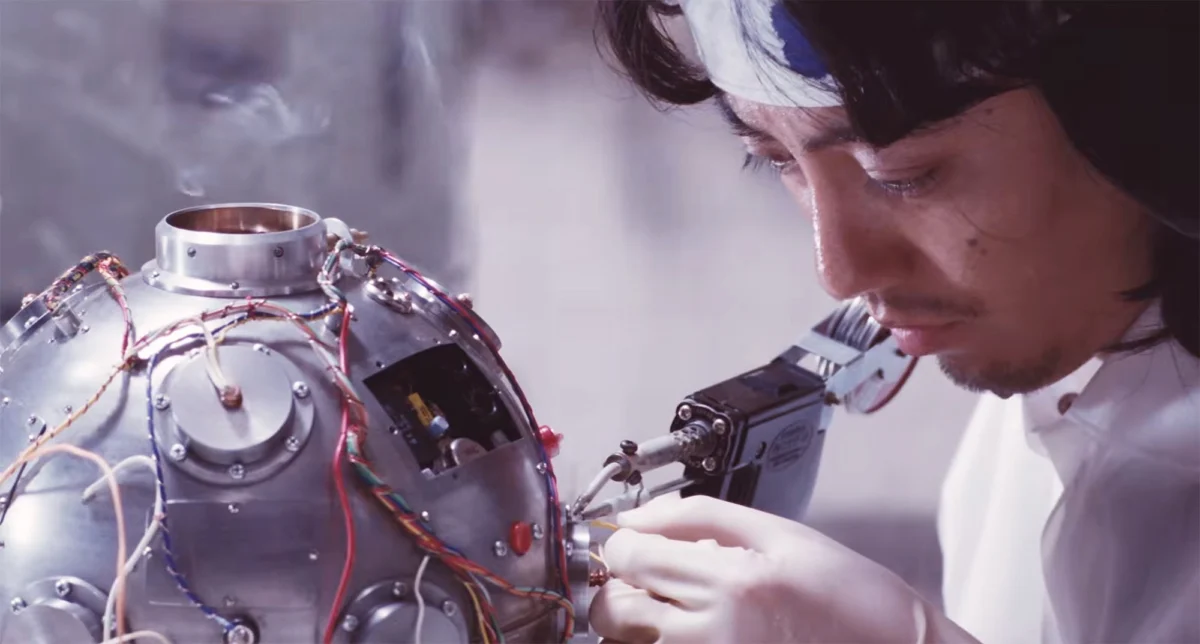
At the heart of The Man Who Stole the Sun is a premise that remains as audacious today as it was in the late 1970s. The story follows Makoto Kido, played with frantic intensity by superstar Kenji Sawada. Kido is a disillusioned, apathetic high school science teacher who is routinely marginalized and treated as the butt of jokes by his unruly students. However, Kido’s seemingly mundane existence is a thin facade. Beneath the surface of his ordinary life, he harbors a catastrophic secret: utilizing stolen materials, smuggled atomic secrets, and illicitly acquired fissile material, he has successfully constructed a functional plutonium-based atomic bomb inside his cramped urban apartment.

Instead of seeking financial ransom or ideological revolution, Kido leverages his weapon to wage a bizarre, high-stakes psychological war against the Japanese state. His demands are absurdly mundane yet terrifyingly disproportionate—ranging from demanding that a popular rock concert be broadcast uninterrupted on television to forcing the government to meet his whims under the threat of nuclear devastation. Standing in his way is Inspector Yamashita, portrayed by acclaimed veteran actor Bunta Sugawara. Yamashita is a weary, relentless police detective tasked with tracking down the elusive mastermind before he can detonate the device. The ensuing cat-and-mouse game evolves into a dark, psychological thriller that examines institutional complacency, individual alienation, and the horrifying implications of nuclear proliferation at a grassroots level.
Production Background and the Japanese New Wave
The historical context surrounding the creation of The Man Who Stole the Sun is crucial to understanding its enduring legacy. Directed by Kazuhiko Hasegawa—who sadly passed away in January 2025—the film stands as only the second theatrical feature and the final directorial effort of Hasegawa’s career, following his acclaimed 1976 debut, The Youth Killer. Hasegawa was a prominent figure within the Japanese New Wave, a movement characterized by its aggressive rejection of traditional studio conventions, exploration of taboo subjects, and sharp critiques of post-war Japanese society.
The screenplay was co-written by Hasegawa and screenwriter Leonard Schrader (credited under the pseudonym Rēdo Shureidō), drawing from a story developed by Schrader. Leonard Schrader, the brother of renowned American screenwriter and director Paul Schrader (Taxi Driver, Mishima: A Life in Four Chapters), brought a distinct outsider’s perspective to the script, blending American thriller pacing with distinctly Japanese anxieties regarding state authority, authority figures, and the psychological shadow of the atomic bomb. Produced by Mataichiro Yamamoto and Kei Ijichi, the production relied heavily on daring, guerrilla-style filmmaking techniques. Cast and crew members frequently shot on location in the crowded streets of Tokyo without official permits—a methodology that industry experts note would be virtually impossible to replicate under contemporary regulatory and safety frameworks.
Chronology of the Re-Release and Legacy
The journey of The Man Who Stole the Sun from a controversial 1970s box-office anomaly to a celebrated cultural artifact spans nearly five decades.

- October 6, 1979: The film officially premieres in Japanese cinemas, distributed by Toho. While it achieves critical acclaim and earns a dedicated following, its provocative themes and subversive narrative prevent it from becoming a mainstream commercial blockbuster.
- Decades Following (1980s–2010s): Due to limited international distribution and licensing complexities, the film achieves legendary status primarily through bootleg VHS tapes, rare retrospective screenings at international film festivals, and critical essays celebrating its unique tonal shifts.
- January 2025: Director Kazuhiko Hasegawa passes away, prompting renewed global retrospectives on his remarkably brief but impactful filmography.
- September 2026: Toho officially announces the 4K digital restoration, launching a dedicated promotional website and releasing the brand-new 4K trailer to drum up domestic anticipation.
- October 16, 2026: The digitally restored 4K version of The Man Who Stole the Sun is slated to open in Japanese theaters, exactly 47 years and ten days after its original theatrical run. As of writing, no official North American or international theatrical distribution dates have been confirmed by Toho.
Critical Analysis and Cultural Implications
Film historians and cultural analysts have long pointed to The Man Who Stole the Sun as a prescient text that anticipated modern anxieties regarding radicalization, urban alienation, and domestic terrorism. Unlike traditional Cold War cinematic narratives that framed the nuclear threat as a geopolitical standoff between superpowers, Hasegawa’s film localizes the existential dread of the atomic age, placing weapons-grade destructive power directly into the hands of a disenfranchised individual.
Furthermore, the film’s tonal volatility—shifting effortlessly between slapstick comedy, social satire, gritty police procedural, and existential tragedy—exemplifies the stylistic boundary-pushing of the Japanese New Wave. The performances of Kenji Sawada and Bunta Sugawara anchor this tonal tightrope walk. Sawada’s transition from a pathetic, overlooked educator to a manic, untouchable terrorist avoids simplistic villainy, instead framing Kido as a symptom of a rigid societal structure that fails to accommodate the disillusioned youth. Sugawara’s Inspector Yamashita serves as a grounded counterweight, representing a weary societal order attempting to maintain institutional stability against an incomprehensible threat.
Industry observers note that the decision by Toho to invest in a 4K restoration reflects a broader global trend among major studios to preserve and monetize archival catalog titles through high-end digital formats. With physical media collectors and revival art-house cinemas driving demand for rare international classics, the re-release of The Man Who Stole the Sun capitalizes on a growing appetite for boundary-pushing historical cinema.
While international audiences await news of a potential overseas theatrical rollout or physical media release, the domestic launch in October 2026 ensures that a new generation of viewers will experience Kazuhiko Hasegawa’s explosive vision. As the tagline on Toho’s promotional material asserts, this legendary masterpiece of passion and madness remains a cinematic anomaly—a lightning-in-a-bottle achievement that captures a moment in filmmaking history that truly will never be repeated.