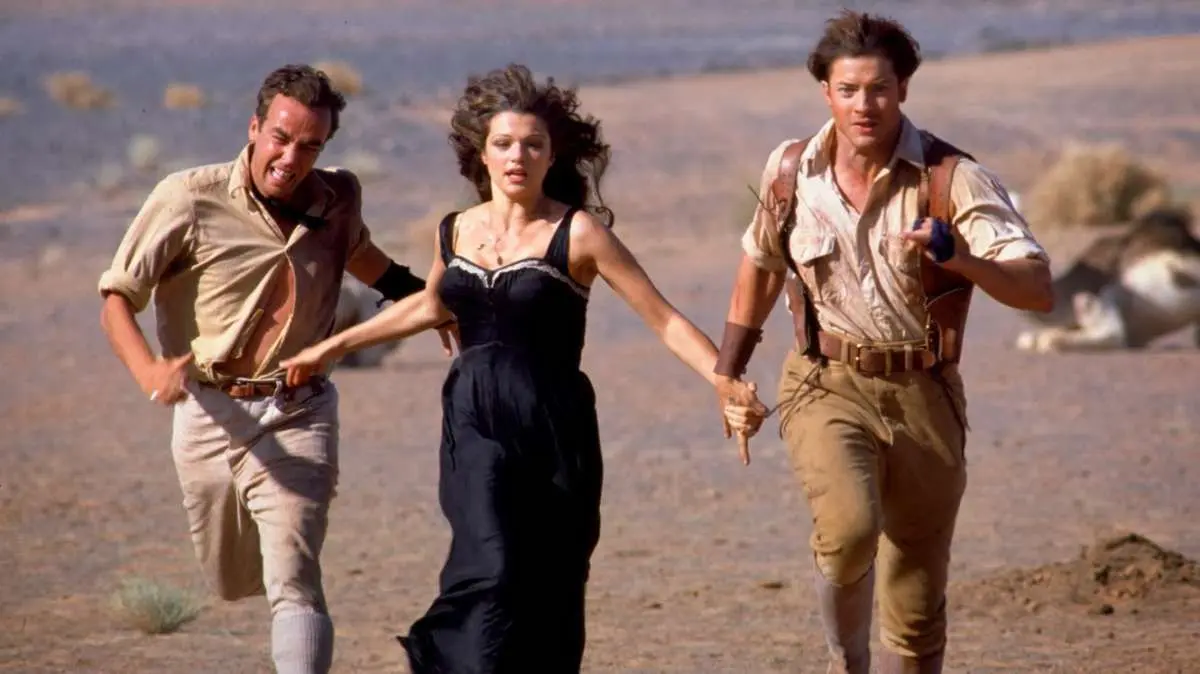
Production is officially underway for The Mummy: The Book of the Dead, marking the highly anticipated fourth installment of Universal Pictures’ iconic adventure-fantasy franchise. Fans of the late-1990s and early-2000s cinematic blockbusters received confirmation that original franchise leads Brendan Fraser and Rachel Weisz will return to their defining roles as Rick O’Connell and Evelyn Carnahan-O’Connell, respectively. While early casting announcements established the return of the central dynamic duo, recent updates from the production set have clarified the full scope of the returning ensemble.
The project has generated significant industry interest, not only due to the enduring popularity of the original trilogy but also because of the creative trajectory chosen by the studio. Slated for a theatrical release on October 17, 2027, the upcoming film aims to recapture the swashbuckling tone and practical aesthetic that made the original 1999 feature an enduring pop culture touchstone.
Main Facts and Core Cast Confirmations
As cameras roll on the ambitious sequel, studio representatives and production insiders have gradually unveiled the roster of talent attached to the project. Alongside Fraser and Weisz, several key actors from the original films are officially confirmed to reprise their roles, establishing a strong sense of continuity within the fictional universe.
Kevin J. O’Connor is set to return as the notoriously shifty Beni Gabor. In the 1999 original film, Beni famously betrayed Rick O’Connell before meeting a grim fate at the hands of a swarm of flesh-eating scarabs within the lost city of Hamunaptra. How the production intends to reintroduce a character seemingly consumed by sacred insects remains one of the primary narrative mysteries surrounding the upcoming release.
Oded Fehr, widely recognized by audiences for his commanding portrayal of the stoic Medjai warrior Ardeth Bay—and more recently for his work in the later seasons of Star Trek: Discovery—is also returning to the fold. Ardeth Bay served as an essential ally to Rick and Evy in their battles against the reanimated high priest Imhotep, and subsequently attempted to thwart the emergence of the Scorpion King in the 2001 sequel.
No entry in the core Mummy continuity would be complete without the titular antagonist. Arnold Vosloo is officially slated to resume his role as Imhotep, bringing his formidable presence back to the silver screen. Rounding out the returning legacy cast is John Hannah, who will once again provide comedic relief and chaotic charm as Evelyn’s bumbling yet endearing brother, Jonathan Carnahan.
In addition to the legacy cast, the production has expanded its ensemble to include new talent. Reports indicate that Michael Johnston, Numan Acar, and acclaimed Egyptian actress Tara Emad have been cast in undisclosed roles, suggesting an expansion of the franchise’s global scope and a potential return to authentic Middle Eastern representation within the narrative framework.
Chronology and Franchise Background
The development of The Mummy: The Book of the Dead represents a major strategic pivot for Universal Pictures, arriving nearly two decades after the franchise’s last major entry. To understand the significance of this upcoming release, it is necessary to examine the chronology of the property.
Universal Pictures launched the modern incarnation of the franchise in 1999 with The Mummy, directed by Stephen Sommers. Merging elements of Universal’s classic monster movies with the high-octane adventure style of Indiana Jones, the film became an unexpected box-office powerhouse, grossing over $416 million worldwide against a budget of approximately $80 million.
The financial success of the original prompted the rapid development of a direct sequel, The Mummy Returns, released in May 2001. The second installment expanded the mythology, introduced Dwayne Johnson in his breakout cinematic role as the Scorpion King, and further solidified the chemistry between Fraser and Weisz. The film surpassed its predecessor commercially, pulling in roughly $433 million globally.
A significant creative shift occurred ahead of the third film, The Mummy: Tomb of the Dragon Emperor, released in July 2008. Directed by Rob Cohen and set in China rather than Egypt, the film notably lacked Rachel Weisz in the role of Evelyn, with Maria Bello assuming the part. While the film performed adequately at the global box office—grossing over $401 million—it received a polarized reception from critics and fans alike, leading to a prolonged dormancy for the franchise. Attempts to reboot the property in 2017 with Tom Cruise failed to launch a planned interconnected monster cinematic universe, steering the studio back toward nostalgia-driven legacy sequels.
Narrative Direction and Retconning the Timeline
One of the most consequential decisions made by the creative team behind The Mummy: The Book of the Dead involves its place within the franchise timeline. Industry insiders have confirmed that the new film will deliberately pivot away from the events of the 2008 installment, effectively treating Tomb of the Dragon Emperor as non-canon.
By refocusing the narrative continuity strictly around the mythology established in the first two films, the production aims to honor the dynamic between the original characters without the narrative baggage of subsequent spin-offs. While specific plot details remain closely guarded, the working title, The Book of the Dead, strongly hints at a return to ancient Egyptian lore, mystical artifacts, and the high-stakes archaeological expeditions that defined the series’ early success.
This narrative strategy aligns with contemporary Hollywood trends, where studios increasingly leverage nostalgia by bypassing poorly received sequels to deliver direct continuations of beloved original works.
Supporting Data and Production Metrics
The greenlighting of The Mummy: The Book of the Dead underscores the enduring commercial viability of legacy intellectual property in the modern theatrical landscape. Over the past decade, studios have increasingly relied on established franchises from the 1980s, 1990s, and 2000s to drive ticket sales, mitigating the financial risks associated with original screenplays.
- Franchise Box Office History: The first three films collectively grossed over $1.2 billion worldwide unadjusted for inflation, demonstrating a consistent baseline audience appeal.
- Theatrical Window: Universal Pictures has scheduled the film for an exclusive theatrical window on October 17, 2027, rejecting hybrid streaming releases to maximize box-office potential during the lucrative autumn movie season.
- Production Scale: Pre-production logistics reflect a major studio expenditure, incorporating international location scouting and advanced practical visual effects combined with modern CGI to maintain the visual language established by the 1999 original.
Broader Impact and Industry Implications
The return of Brendan Fraser to leading-blockbuster status represents a notable cultural moment, coinciding with a broader resurgence in the actor’s career following widespread public support. For Universal Pictures, the success of The Mummy: The Book of the Dead could serve as a blueprint for reviving classic adventure properties without resorting to complete reboots.
Furthermore, the film’s deliberate dismissal of the 2008 sequel establishes an interesting precedent for franchise management. By acknowledging fan sentiment and course-correcting the timeline, studios demonstrate a growing willingness to listen to audience consensus regarding canon and continuity.
As production continues toward its late-2027 premiere date, anticipation will undoubtedly mount. Whether The Book of the Dead can successfully recapture the lightning-in-a-bottle magic of the 1999 original remains to be seen, but the return of the original creative ensemble ensures that the cinematic homecoming will be one of the most closely watched releases of the decade.