One Tree Entertainment has officially debuted the trailer and promotional poster for Jack & Lou: A Gangster Love Story, an ambitious independent feature film born out of a unique academic collaboration at the prestigious University of Southern California (USC) School of Cinematic Arts. Set for a select United States theatrical rollout this fall, the film bridges generations of cinematic talent by pairing Hollywood veteran Linda Hamilton with an ensemble of emerging filmmakers and student creators. The project, which first made its festival circuit rounds starting with a premiere at the Cambria Film Festival, represents an unorthodox production model that functioned more like a traditional television writer’s room and episodic crew rotation than a standard student short.
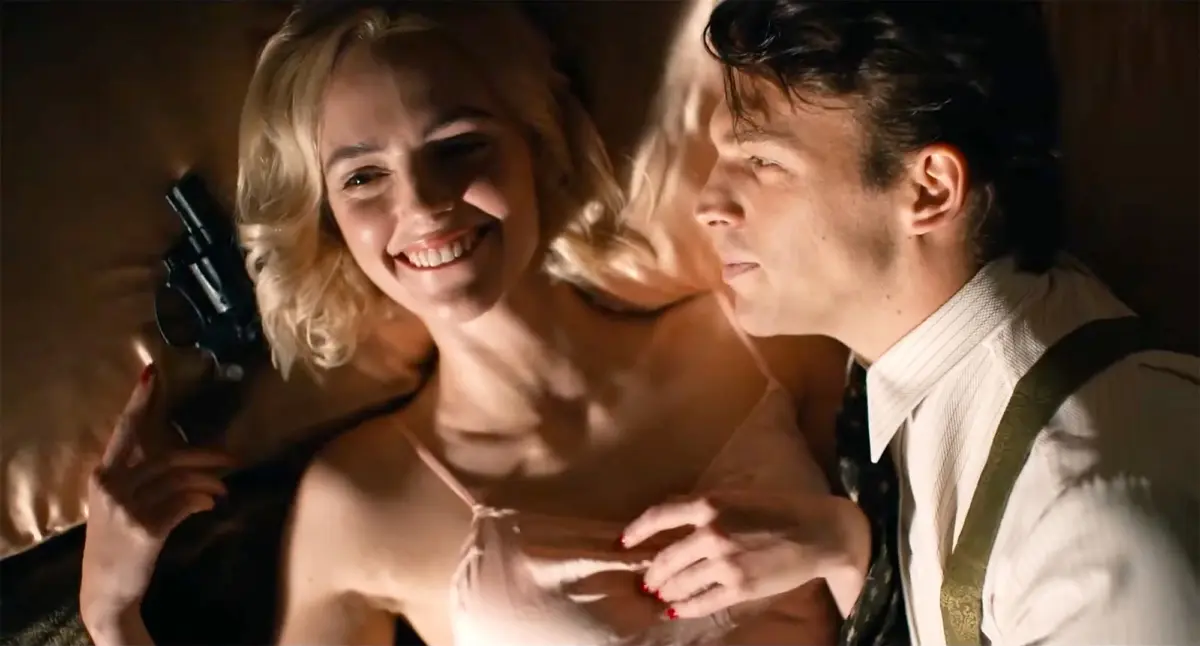
The narrative framework of Jack & Lou: A Gangster Love Story is anchored in a dual-timeline structure. In the framing narrative set during the 1970s, an aging Louise "Lou" Rolfe—portrayed by Linda Hamilton—is forced to reckon with the long-shadowed ghosts of her past. Rolfe must confront her direct and indirect involvement in one of the most notorious execution-style slaughters in organized crime history: the infamous St. Valentine’s Day Massacre of 1929. The historical bloodshed was masterminded by her former husband, Jack "Machine Gun" McGurn, a primary hit-man and enforcer for notorious Chicago crime boss Al Capone. Sebastiano Pigazzi and Natalie Shinnick bring the volatile, star-crossed relationship of Jack and a younger Lou to life in the 1920s flashback sequences, supported by a cast that includes Sam Abraham and Greg Roman.
An Unprecedented Collaborative Production Model
What sets Jack & Lou: A Gangster Love Story apart from conventional indie cinema is its unique genesis within the halls of the USC School of Cinematic Arts. Rather than relying on a single auteur director, the feature film was a collective effort helmed by a rotating team of eleven student directors. This cohort included Nancy Boyd, Itchy Yang, Lorenzo Mendoza, Alexis Patton, Grace Park, Robin Wang, Aslan Dalgic, Jocelyn Koo, David Willner, Sabatino Ciatti Jr., and Lilith Mo.

Operating similarly to a television series production, the eleven directors divided the script’s segments, each taking the helm of specific sequences while striving to maintain a unified visual and tonal vocabulary. Early critical responses, such as reviews emerging from preview screenings logged on platforms like Letterboxd, have highlighted this specific achievement. Observers have noted that the seamless blending of eleven distinct directorial styles into a cohesive feature-length narrative is arguably the most impressive technical and artistic feat of the production.
The script itself was developed through a dedicated writers’ room format by a separate contingent of USC student screenwriters, including R.S.T. Davis, Becca Suh-Hee Han, Yeon Jin Lee, Craig Lief, Mason Jason Orfalea, Joshua Powell, and Sophia Ungaro, working from an original story by John Watson. Production duties were likewise shared among student producers Maria Sara Santoro, Max Pearce, and Hatuey Rodriguez.
Historical Context: The St. Valentine’s Day Massacre and Jack McGurn
To fully appreciate the narrative tension driving Jack & Lou: A Gangster Love Story, it is essential to examine the historical reality of the events depicted. The St. Valentine’s Day Massacre occurred on February 14, 1929, inside a North Side garage in Chicago, Illinois. Seven members and associates of George "Bugs" Moran’s North Side Irish gang were lined up against a brick wall and executed by rival gunmen dressed in police uniforms.
The slaughter was widely attributed to Al Capone’s Chicago Outfit, who sought absolute dominance over the city’s lucrative bootlegging operations during the Prohibition era. Jack "Machine Gun" McGurn, a fierce loyalist and top-tier enforcer for Capone, was heavily implicated as the principal architect who planned and coordinated the logistics of the hit. Despite intense pressure from law enforcement, McGurn was never legally convicted of the murders, largely due to a lack of cooperating witnesses and airtight alibis provided by associates, including his then-girlfriend and later wife, Louise Rolfe.

Rolfe, famously dubbed a "gangster moll" by the sensationalist press of the era, was riding in a car with McGurn when police attempted to question them in the wake of the massacre. Her subsequent legal battles, public scrutiny, and the psychological burden of living in the orbit of organized crime form the emotional core of the film’s 1970s framing sequences. By examining the historical event through the lens of a romance that soured under the weight of violence and historical infamy, the filmmakers offer a character study rarely explored in traditional gangster biographies that focus strictly on the mob bosses.
Chronology of Production, Festivals, and Distribution
The path of Jack & Lou: A Gangster Love Story from a classroom experiment to a commercially distributed feature film spans several years of careful coordination, post-production refinement, and festival circuit testing.
- Early Development and Principle Photography: Conceived within the curriculum of the USC School of Cinematic Arts, the project moved through intensive development phases, utilizing university resources and student labor pools to mimic professional studio pipelines.
- Festival Circuit Debut (2025): The completed feature completed its post-production cycle and secured its world premiere at the Cambria Film Festival, where it was evaluated by independent film critics and festival programmers. Subsequent regional festival screenings allowed the creative team to gauge audience reception and refine final edits.
- Acquisition and Distribution Announcement (Fall 2026): One Tree Entertainment stepped in to secure distribution rights for the indie project, positioning the film for a targeted theatrical release in select United States markets.
- Official Trailer Release (November 17, 2026): The public-facing marketing campaign officially commenced with the release of the comprehensive trailer via YouTube, alongside the unveiling of the official theatrical poster featuring Linda Hamilton.
Industry Implications and Academic Precedents
The commercial distribution of Jack & Lou: A Gangster Love Story by One Tree Entertainment highlights a growing appetite within the independent film market for innovative production models originating from academic incubators. Historically, student thesis films have been relegated to the short film format, making the successful execution and distribution of a multi-director feature-length narrative a notable milestone for the USC School of Cinematic Arts.
Film industry analysts note that collaborations of this scale serve a dual purpose. For the students involved, working within a structured collective provides an invaluable bridge to the realities of commercial filmmaking, teaching them the art of compromise, continuity management, and cross-departmental communication. For independent distributors, backing student-originated features offers access to fresh creative perspectives, risk-taking storytelling, and built-in promotional momentum driven by the academic institutions and alumni networks.

Furthermore, the casting of established, recognizable talent such as Linda Hamilton—best known for her iconic portrayal of Sarah Connor in the Terminator franchise—lends immediate commercial viability and critical gravity to an otherwise unheralded indie project. Hamilton’s involvement signals a willingness among seasoned Hollywood veterans to support emerging cinematic voices, a trend that has increasingly revitalized the micro-budget and mid-tier independent film sectors.
As
Jack & Lou: A Gangster Love Story prepares for its theatrical rollout this fall, industry observers will be closely monitoring its box office performance and critical reception. The film stands as a test case for whether a fragmented directorial approach can successfully sustain viewer engagement across a feature-length dramatic narrative, potentially paving the way for similar collaborative experiments in future academic and independent filmmaking cycles.