The 2026 Shanghai International Film Festival (SIFF) concluded its prestigious Golden Goblet Awards ceremony on Saturday night, delivering a resounding endorsement for audacious independent filmmaking as it bestowed its highest honor, the Golden Goblet for Best Feature Film, upon first-time director Zhong Kaifeng’s "Atlantic Rhapsody." The decision by the festival’s main jury, chaired by Hong Kong cinematic icon Tony Leung Chiu-wai, was a powerful statement, with jury members collectively revealing their "captivation and impression" by the 29-year-old director’s distinctive and experimental approach to moviemaking. This win not only elevates a promising new voice in Chinese cinema but also underscores SIFF’s commitment to fostering artistic innovation on an international stage, reflecting a deliberate quest for "surprises" articulated by the jury president at the outset of the festival.
A Festival of Discovery: The 2026 Shanghai International Film Festival Timeline
The 29th edition of the Shanghai International Film Festival, a Category A event recognized by the International Federation of Film Producers Associations (FIAPF), commenced on June 12th and ran through June 21st, 2026. As one of Asia’s most significant and longest-running film festivals, SIFF has consistently served as a vital platform for showcasing global cinematic achievements and nurturing emerging talent, particularly within the burgeoning Asian film industry. This year’s festival continued that tradition, featuring an extensive program that included competitive sections like the Golden Goblet Awards, the Asian New Talent Awards, film screenings across various venues in Shanghai, industry forums, and a vibrant film market.
The selection process for the Golden Goblet competition is rigorous, with hundreds of submissions from around the world vying for a coveted spot among the finalists. For the 2026 edition, a total of 12 films, representing 15 countries and territories, were chosen to compete for the main awards. These films underwent intense scrutiny from the main jury, whose discussions, as revealed by Tony Leung, were guided by a collective desire to seek out films that offered unique perspectives and challenged conventional narrative structures. The jury itself was a formidable assembly of international cinematic expertise, including acclaimed directors Guan Hu (China), Aktan Arym Kubat (Kyrgyzstan), Déa Kulumbegashvili (Georgia), and Fernanda Valadez (Mexico), alongside Tunisian producer Dora Bouchoucha and Chinese actress Xin Zhilei. Their diverse backgrounds and artistic sensibilities undoubtedly contributed to the nuanced and bold choices made during the deliberation process.
"Atlantic Rhapsody": A Deep Dive into a Golden Goblet Winner
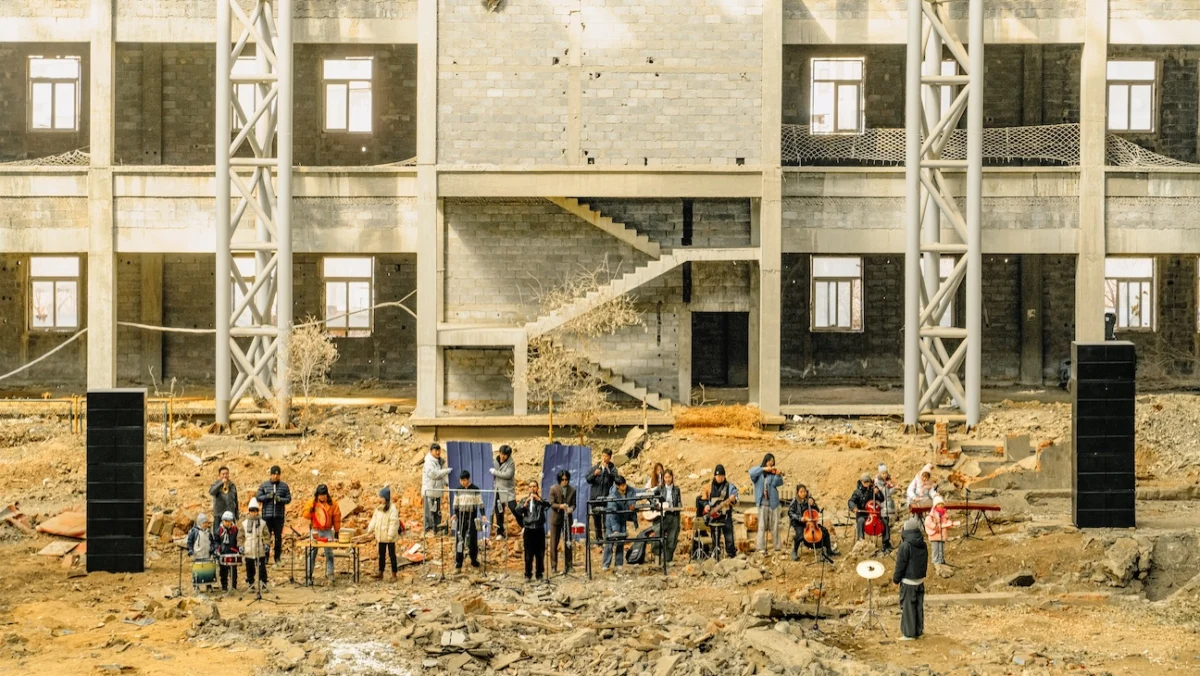
Zhong Kaifeng’s debut feature, "Atlantic Rhapsody," quickly emerged as a film that defied easy categorization and sparked considerable debate among critics during the festival. Its narrative centers on a young man, portrayed by Wang Yitong, embarking on a poignant quest to find his estranged father. The father had left their home in China’s far north in the early 2000s, drawn by the irresistible promise of wealth and opportunity offered by the industrial boom sweeping through the southern regions of the country. This generational odyssey serves as a canvas for the film’s ambitious exploration of memory, time, and the elusive search for meaning in a rapidly changing society.
What distinguished "Atlantic Rhapsody" and ultimately captivated the jury was its "bold experimental approach." The film eschews linear storytelling in favor of a fragmented, dreamlike structure, weaving together past and present, reality and recollection, to create a deeply immersive and often disorienting experience. Critics were divided, with some finding its non-traditional narrative challenging, while others lauded its artistic courage and emotional resonance. The jury, however, was unequivocal in its praise, highlighting how the director "explores the absurdity of human life" through this unconventional lens. Their official statement further commended the film’s technical prowess, noting that "the outstanding cinematography and editing create a uniquely compelling visual experience."
The film’s visual language, meticulously crafted by cinematographer Hao Jiayue, played a crucial role in conveying its complex themes. The imagery is often stark, evoking the vastness of the landscapes and the emotional distances between characters, yet it also possesses a delicate intimacy that draws the viewer into the protagonist’s internal world. This artistic synergy between direction and cinematography was recognized with a double triumph for the film and its crew, as Hao Jiayue also received the Best Cinematography award, solidifying "Atlantic Rhapsody’s" status as a visually and narratively innovative work.
Zhong Kaifeng’s Emotional Acceptance and the Implications of His Win
The announcement of "Atlantic Rhapsody" as the Best Feature Film elicited an overwhelmed reaction from Zhong Kaifeng at the illustrious Shanghai Grand Theatre. His acceptance speech was a deeply personal and moving testament to the arduous journey of independent filmmaking. "Thank you very much to parents, to my wife," Zhong began, his voice thick with emotion. He candidly acknowledged the significant personal sacrifices involved, stating, "Since I started making movies, I haven’t had any income for many years. It has been you who kept me going." This poignant admission underscored the dedication and perseverance required to pursue an artistic vision outside of mainstream commercial pressures.
Zhong’s reflection on the film’s title, "Atlantic," was equally profound. He explained, "I want to say that Atlantic is not a definition, it does not provide answers, but today it seems to have given me an answer, and that answer is to persist, to love, to work hard, and then to believe." This statement not only encapsulated the film’s philosophical core – the search for meaning rather than definitive answers – but also served as an inspiring message for aspiring filmmakers grappling with the challenges of artistic creation.
The Golden Goblet for "Atlantic Rhapsody" carries significant implications for Zhong Kaifeng and the broader landscape of Chinese cinema. For Zhong, it catapults him onto the international stage, providing immediate recognition and credibility that can be instrumental in securing future funding and distribution for his projects. This prestigious award from a Category A festival often serves as a powerful launchpad for debut directors, opening doors to other major festivals and attracting global industry attention.
For Chinese cinema, the win signals a potential shift towards greater acceptance and celebration of experimental and introspective narratives. While commercial blockbusters and state-backed productions often dominate the domestic market, SIFF’s embrace of a film like "Atlantic Rhapsody" reinforces the festival’s role in championing artistic freedom and diversity within the industry. It encourages emerging filmmakers to explore unconventional storytelling techniques and personal themes, potentially fostering a new wave of artistically driven Chinese cinema that resonates with global audiences. The jury’s explicit search for "surprises" indicates a desire to move beyond predictable narratives, suggesting a healthy evolution in critical appreciation.
A Global Showcase: Other Golden Goblet Laureates
While "Atlantic Rhapsody" took the top honor, the 2026 Golden Goblet Awards celebrated a diverse array of international talent, reflecting the festival’s global reach and its commitment to recognizing cinematic excellence across various genres and cultural contexts. The jury’s selections demonstrated a broad appreciation for storytelling that spans continents and human experiences.
The Jury Grand Prix, the second-highest award, was presented to Colombian director Nicolás Rincón Gille for his Belgian co-production, "Iluminada." This film was praised as a "heartfelt and ultimately life-affirming tale" depicting a young woman’s struggles and resilience amidst the trials of life in the Bogota slums. The award for "Iluminada" highlights SIFF’s dedication to spotlighting social realism and narratives that offer intimate glimpses into challenging human conditions, often from regions less frequently represented in mainstream cinema.
Morocco’s Yassine El Idrissi earned the Best Director award for "Halima," a film characterized by its "darkly amusing" tone. The recognition of El Idrissi underscores the growing prominence of North African cinema on the global stage, known for its unique blend of cultural commentary and engaging narratives. Adding to "Halima’s" success, its star, Khadija Amari, captivated the jury with her "compelling, often hilarious turn" as an aging widow navigating life’s complexities, earning her the Best Actress award. Amari’s performance was lauded for its nuanced portrayal of resilience and humor in the face of adversity, resonating deeply with the jury’s appreciation for authentic character development.
Local audiences erupted in cheers for Chinese actor Zhang Songwen, who secured the Best Actor award for his performance in the Hong Kong-set "Secret in the Box" (a China/Hong Kong co-production). Directed by Frankie Tam Kwong Yuen, the film features Zhang as a "puzzled (and quite often puzzling) man accused of murder." The jury commended his performance, stating, "The gradual build of this intensity is difficult to achieve. The actor’s accomplished performance further elevates the film’s literary depth." Zhang Songwen’s win not only celebrated his acting prowess but also reinforced the strong cinematic ties between mainland China and Hong Kong, highlighting collaborative efforts within the broader Chinese film industry.
Other notable awards included:
- Best Screenplay: Reis Çelik for "Night of Blindness" (Turkey/Germany), recognized for its compelling narrative structure and thematic depth.
- Outstanding Artistic Achievement: "The Miserable Mother" (Germany/France), directed by Susanne Heinrich, which was lauded for its exceptional visual style, innovative narrative, or profound thematic exploration that pushed artistic boundaries.
SIFF’s Enduring Legacy and Future Outlook
The Shanghai International Film Festival, since its inception in 1993, has grown exponentially in stature and influence. It is one of only 15 film festivals worldwide to hold FIAPF accreditation for competitive feature films, placing it alongside venerated events like Cannes, Berlin, and Venice. This status empowers SIFF to attract high-caliber films, industry professionals, and international media, making it a crucial bridge between Eastern and Western cinematic traditions.
Beyond the glitz of the awards ceremony, SIFF functions as a comprehensive ecosystem for the film industry. Its film market provides a vital platform for film rights trading, project financing, and industry networking, attracting hundreds of production companies, distributors, and investors each year. The accompanying film forums and masterclasses offer invaluable opportunities for intellectual exchange, allowing filmmakers and critics to discuss trends, challenges, and the future direction of global cinema.
The 2026 edition, with its bold choices and celebration of diverse international talent, further solidified SIFF’s reputation as a progressive and influential festival. The triumph of a debut, experimental film like "Atlantic Rhapsody" sends a clear message to filmmakers worldwide: SIFF values artistic integrity, innovation, and fresh perspectives. This commitment not only enriches the festival’s own programming but also contributes significantly to the global conversation about the evolving art form of cinema, ensuring that emerging voices and challenging narratives continue to find a prominent stage. As the curtains close on another successful edition, the ripple effects of the Golden Goblet decisions are expected to resonate throughout the international film community, inspiring new generations of storytellers to persist, to love, to work hard, and above all, to believe in the power of their unique artistic visions.