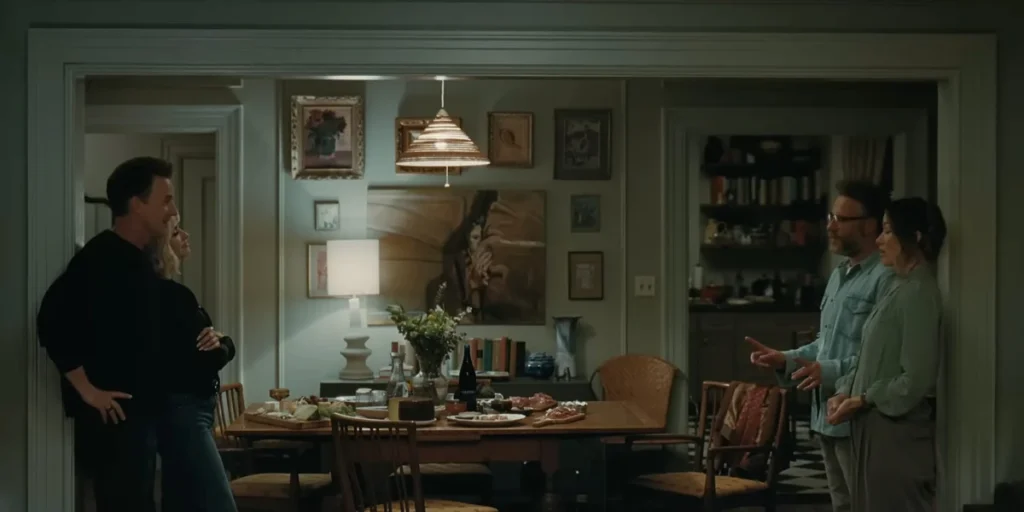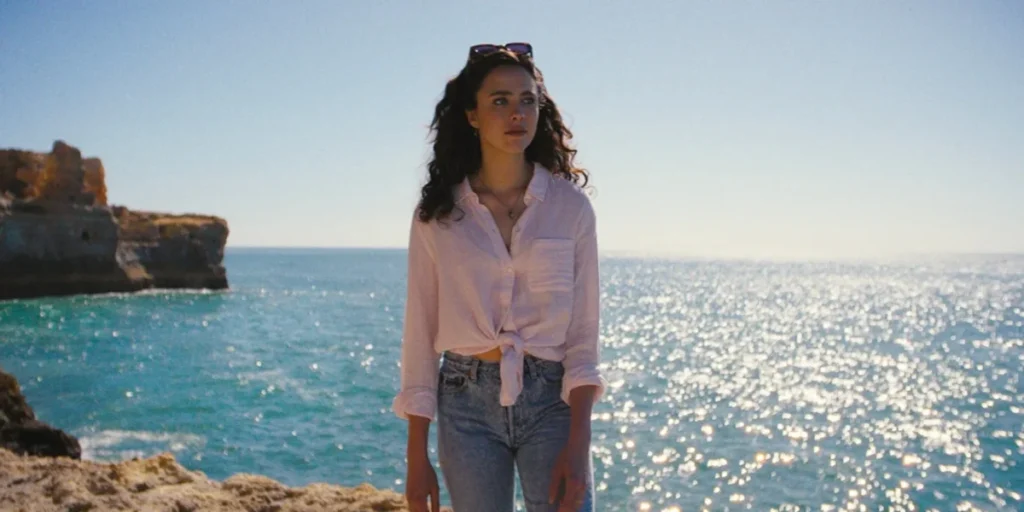
Sony Pictures has officially unveiled the first trailer for "Klara and the Sun," the highly anticipated cinematic adaptation of the bestselling novel by Nobel Prize-winning author Kazuo Ishiguro. Directed by Academy Award winner Taika Waititi, the film features a high-profile ensemble cast led by Jenna Ortega and Amy Adams. Scheduled for a theatrical release on October 23, the production represents a significant collaboration between Sony’s 3000 Pictures and Waititi’s own production banners, aiming to bring one of the most celebrated literary works of the early 2020s to a global audience.
The film follows the journey of Klara, portrayed by Jenna Ortega, an "Artificial Friend" (AF) designed to provide companionship to teenagers in a near-future society. The narrative centers on Klara’s efforts to find a permanent home and her eventual placement with a young girl named Josie, played by newcomer Mia Tharia. As Klara observes the intricacies of human emotion and the fraught relationship between Josie and her mother, played by Amy Adams, the story delves into themes of love, sacrifice, and the definition of the human soul.
Narrative Architecture and Plot Dynamics
"Klara and the Sun" is set in a speculative future where social hierarchy and academic success are increasingly tied to technological intervention. Klara, an observational and highly empathetic AI, spends her days in a storefront window, watching the outside world and waiting for a customer to select her. Unlike other AF units, Klara possesses an unusual degree of curiosity and a spiritual-like reverence for the Sun, which she perceives as a sentient entity capable of providing nourishment and "special nourishment" to both humans and machines.
When she is purchased by Josie, Klara is thrust into a domestic environment characterized by both deep affection and underlying tragedy. Josie suffers from a mysterious, debilitating illness—a consequence of a medical procedure known as "lifting," which is intended to enhance children’s cognitive abilities but carries significant physical risks. As Josie’s health fluctuates, Klara becomes a pivotal figure in the household, attempting to navigate the complexities of grief and the desperate lengths to which a mother will go to save her child.
The screenplay, penned by Dahvi Waller with contributions from Waititi, seeks to preserve the distinctive "outsider" perspective that defined Ishiguro’s 2021 novel. By viewing human behavior through the objective yet compassionate lens of an artificial being, the film explores the paradoxes of human nature: the capacity for immense devotion alongside the tendency for obsolescence and replacement.
Production Timeline and Development
The journey of "Klara and the Sun" from page to screen began shortly after the novel’s publication in March 2021. Sony’s 3000 Pictures, led by Elizabeth Gabler, secured the film rights in a competitive market, recognizing the story’s potential as a prestige drama. Gabler has a long-standing reputation for successful literary adaptations, having overseen projects such as "Life of Pi" and "Where the Crawdads Sing."
Development progressed through 2022, with Taika Waititi officially attaching himself to the project as director and producer in early 2023. Waititi, known for his ability to balance idiosyncratic humor with profound pathos in films like "Jojo Rabbit" and "Hunt for the Wilderpeople," was viewed as a strategic choice to handle the novel’s delicate tonal balance.
Casting announcements followed in early 2024. Jenna Ortega, whose profile rose significantly following her lead role in Netflix’s "Wednesday," was cast as Klara in January. Shortly thereafter, six-time Academy Award nominee Amy Adams joined the production to play the pivotal role of "The Mother." Principal photography commenced in early 2024, with filming primarily taking place in New Zealand. The choice of location allowed Waititi to utilize the unique landscapes of his home country to stand in for the novel’s unspecified, slightly heightened version of the American Midwest.
The Creative Vision of Taika Waititi
For Taika Waititi, "Klara and the Sun" marks a notable shift in creative direction following his recent forays into large-scale franchise filmmaking with "Thor: Love and Thunder" and the sports comedy "Next Goal Wins." While his previous works often relied on broad physical comedy and improvisational dialogue, early reports and trailer footage suggest that "Klara and the Sun" leans into a more restrained, visually evocative style.

Industry analysts suggest that this project serves as a return to the "sincere storytelling" that first brought Waititi international acclaim. By adapting Ishiguro’s prose, which is known for its precision and emotional subtext, Waititi is challenged to maintain his signature visual flair while adhering to a more somber and philosophical narrative framework. The film’s aesthetic, as seen in the trailer, utilizes a palette of warm, sun-drenched tones contrasted with the sterile, minimalist interiors of the future, mirroring Klara’s internal hope against the stark realities of Josie’s condition.
A High-Profile Ensemble Cast
The casting of Jenna Ortega represents a strategic move for both the actress and the studio. Ortega has largely been associated with the horror and "scream queen" genres. Her portrayal of Klara requires a departure from those tropes, demanding a performance rooted in stillness, observation, and a gradual awakening of consciousness. This role provides Ortega with an opportunity to demonstrate her range in a dramatic, awards-caliber production.
Amy Adams’ involvement adds significant veteran weight to the film. As one of the most respected actors of her generation, Adams’ portrayal of a mother grappling with the potential loss of her child provides the emotional anchor for the film’s secondary plot. The supporting cast is equally robust, featuring Steve Buscemi and Natasha Lyonne in roles that, while not fully detailed in the trailer, are expected to add layers of character-driven depth to the world-building. Mia Tharia, in the role of Josie, carries the weight of the film’s central human relationship, acting as the catalyst for Klara’s evolution.
Kazuo Ishiguro and the Literary Foundation
The involvement of Kazuo Ishiguro as an executive producer ensures a level of fidelity to the source material that is often sought after in prestige adaptations. Ishiguro is no stranger to the film industry; his 1989 novel "The Remains of the Day" was adapted into an eight-time Oscar-nominated film starring Anthony Hopkins, and his 2005 novel "Never Let Me Go" was adapted into a critically acclaimed sci-fi drama in 2010.
Ishiguro’s work frequently explores themes of memory, the passage of time, and the ethical implications of scientific advancement. "Klara and the Sun" is often cited as a spiritual successor to "Never Let Me Go," as both stories deal with non-human or marginalized protagonists who exist primarily to serve the needs of a privileged class. The transition of this narrative to the screen arrives at a time of heightened public discourse regarding the role of Artificial Intelligence in society, making the film’s themes particularly relevant to contemporary audiences.
Technological and Ethical Implications in Cinema
"Klara and the Sun" enters a cinematic landscape that has recently been preoccupied with the ethics of AI. However, unlike action-oriented films like "The Creator" or horror-adjacent stories like "M3GAN," Waititi’s film focuses on the domestic and emotional utility of AI. It raises questions about whether a machine can truly experience love or if its devotion is merely a sophisticated form of programming.
The film also addresses the concept of "the soul" in the age of digital replication. A significant portion of the plot involves the Mother’s secret plan for Klara should Josie succumb to her illness—a plan that challenges the boundaries of identity and the ethics of grief. By exploring these concepts, the film positions itself as a philosophical drama rather than a traditional science fiction thriller.
Market Expectations and Award Season Potential
With an October 23 release date, Sony Pictures is positioning "Klara and the Sun" at the heart of the autumn film festival season and the early stages of the Academy Award cycle. Historically, Waititi has found success at the Toronto International Film Festival (TIFF), where "Jojo Rabbit" won the People’s Choice Award in 2019, eventually leading to six Oscar nominations and a win for Best Adapted Screenplay.
Industry insiders speculate that "Klara and the Sun" will follow a similar trajectory, potentially making its world premiere at a major festival like Venice or Toronto before its theatrical debut. The combination of a Nobel Prize-winning source, an Oscar-winning director, and a cast that bridges the gap between Gen Z appeal (Ortega) and established critical acclaim (Adams) makes the film a formidable contender for year-end accolades.
From a commercial perspective, the film faces the challenge of drawing audiences to a mid-budget adult drama in a market dominated by blockbusters. However, the popularity of the novel and the star power of Jenna Ortega are expected to drive significant interest. As the release date approaches, Sony is expected to ramp up its marketing efforts, focusing on the film’s emotional resonance and its timely exploration of the bond between humanity and technology.