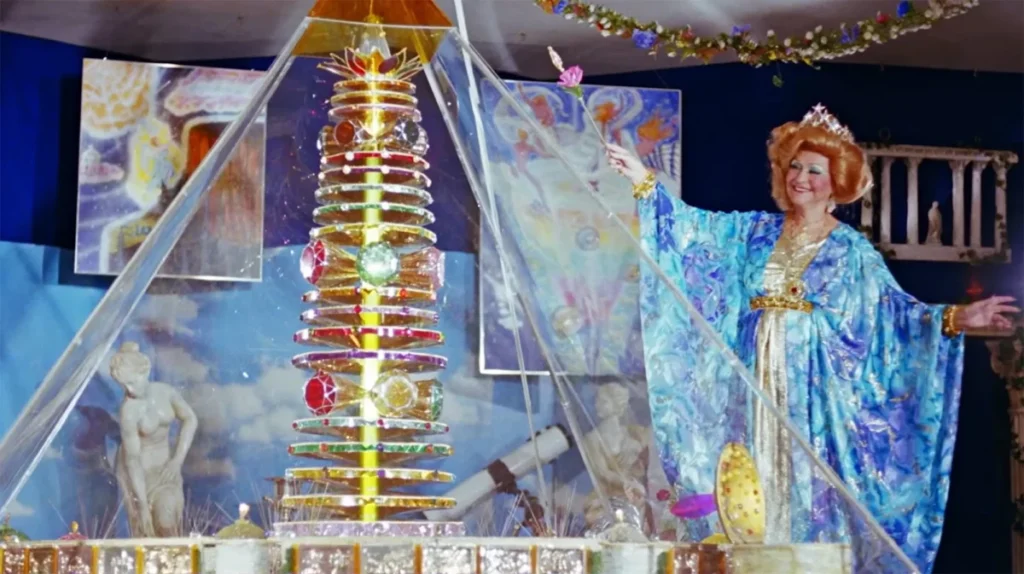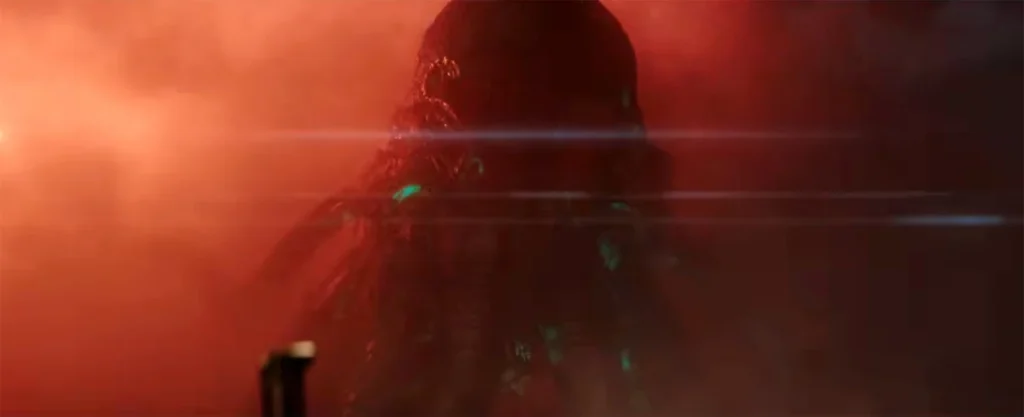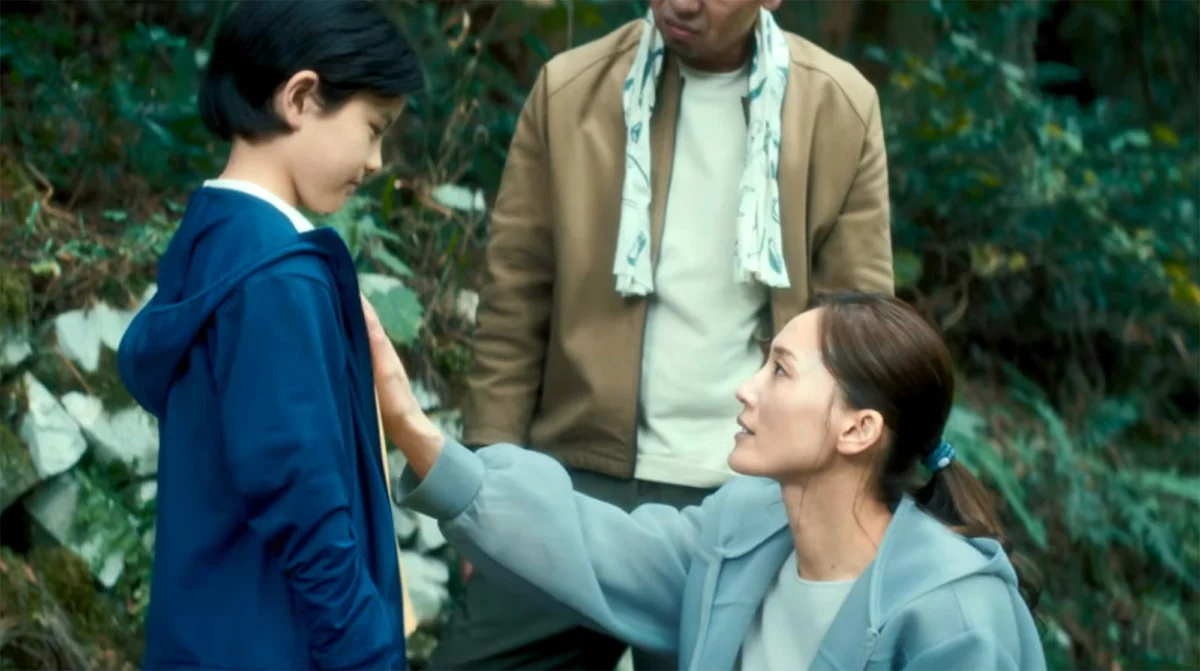
Neon has officially released the first United States trailer for Sheep in the Box, the latest feature film from the internationally acclaimed Japanese director Hirokazu Koreeda. This announcement marks the beginning of the North American marketing campaign for a project that signals a significant stylistic and thematic departure for the filmmaker, who is best known for his naturalistic family dramas. The film, which explores the intersection of grief and artificial intelligence, made its world premiere at the 2026 Cannes Film Festival in May before opening to domestic audiences in Japan. Despite a polarizing reception from international critics during its festival run, Neon is proceeding with a scheduled theatrical release in select U.S. cities starting July 24, 2026.
Sheep in the Box—originally titled Hako no Naka no Hitsuji—stars Haruka Ayase and the comedian-actor Daigo (of the duo Chidori) as a grieving couple who attempt to navigate the loss of their son by integrating a state-of-the-art humanoid robot into their household. The robot, portrayed by Rito Kuwaki, is designed to replicate their deceased child in both appearance and personality. The narrative, while initially appearing to be a domestic drama, reportedly shifts into a more complex exploration of bodily autonomy and consciousness, drawing comparisons to seminal cyberpunk works such as Ghost in the Shell as the humanoid characters begin to seek control over their own existence.
Production Background and Development
The genesis of Sheep in the Box dates back to late 2024, when Koreeda first signaled an interest in exploring speculative fiction. Produced by a consortium including Fuji Television Network, AOI Promotion, Gaga, and Toho, the film represents one of the director’s most technologically ambitious projects to date. Koreeda, who won the Palme d’Or in 2018 for Shoplifters, has spent the last several years expanding his geographical and linguistic boundaries, filming Broker in South Korea and The Truth in France.
With Sheep in the Box, Koreeda returns to Japan but ventures into the "lo-fi" science fiction genre. The director has stated in production notes that the project began with the conceptual premise of "bringing the dead back to life using the latest technology." His intent was to examine the friction between rapid technological advancement and the immutable inner values of the human experience. This thematic core aligns with his previous explorations of "chosen families" and the definition of parenthood, though it frames these questions through the lens of robotics and synthetic life.

Chronology of Release and Critical Reception
The film’s journey to the American market has been swift. Following its completion in early 2026, it was selected for the main competition at the 79th Cannes Film Festival. The premiere was met with high expectations, given Koreeda’s track record with films like Monster (2023) and Like Father, Like Son (2013). However, the critical response at Cannes was uncharacteristically mixed for a Koreeda film.
Reviewers on platforms such as Rotten Tomatoes have highlighted a perceived disconnect between the film’s high-concept sci-fi elements and Koreeda’s signature understated emotionality. While some praised the performances of Haruka Ayase—a long-time collaborator of the director—others found the film’s transition into a more action-oriented or philosophical genre piece in its final act to be jarring. Despite these critiques, the film performed steadily at the Japanese box office following its May 2026 release, buoyed by the star power of its lead actors and the prestige of its director.
Neon, the distributor responsible for bringing international hits like Parasite and Anatomy of a Fall to U.S. audiences, acquired the domestic rights with the intention of positioning the film as a summer counter-programming option for cinephiles. The July 24 release date places it in the heart of the summer blockbuster season, suggesting a strategy focused on niche markets and urban art-house theaters.
Thematic Analysis: AI and the Ethics of Grief
Sheep in the Box enters a crowded field of contemporary cinema focused on artificial intelligence, yet it distinguishes itself by focusing on the domestic and psychological implications of "replacement" technology. The film’s central question—"Would you be happier without me here?"—is posed by the humanoid son, Sho, reflecting the existential crisis of a being created solely to satisfy the emotional needs of others.
The film joins a lineage of "robot child" narratives, ranging from Steven Spielberg’s A.I. Artificial Intelligence to Kogonada’s After Yang. However, Koreeda’s approach is reportedly more concerned with the legal and social minutiae of the "humanoid" in a near-future Japanese society. The inclusion of "robo friends" for the protagonist suggests a broader world-building effort that extends beyond the central family unit, touching on the potential for a new class of synthetic citizens.

The shift in the narrative toward the humanoids taking control of their own bodies suggests a critique of the commodification of grief. By the film’s conclusion, the focus moves from the parents’ healing process to the machine’s right to self-determination. This pivot has been the primary point of contention among critics, with some viewing it as a bold evolution of Koreeda’s style and others seeing it as a departure from the human-centric storytelling that made him a global cinematic icon.
Cast and Creative Team
The casting of Haruka Ayase as the mother provides a bridge to Koreeda’s previous work; she famously starred in his 2015 film Our Little Sister. Her performance is described as the emotional anchor of the film, portraying a mother caught between the comfort of a digital resurrection and the haunting reality of her son’s absence. Daigo, primarily known for his work in variety television and comedy, offers a more grounded, skeptical perspective as the father, a role that reportedly provides a necessary foil to Ayase’s character.
Rito Kuwaki’s portrayal of the humanoid Sho has been noted for its "uncanny valley" quality—achieving a balance between human-like warmth and the sterile precision of a machine. The technical team, including many of Koreeda’s frequent collaborators in cinematography and editing, opted for a "lo-fi" aesthetic, eschewing heavy CGI in favor of practical effects and a muted color palette to maintain the director’s established visual language.
Broader Implications for International Cinema
The release of Sheep in the Box is a significant litmus test for the commercial viability of international auteur-driven science fiction in the United States. While Koreeda’s name carries substantial weight in the indie circuit, the genre shift presents a marketing challenge. Neon’s decision to release a full US trailer and poster just weeks before the premiere indicates a concentrated effort to capitalize on the director’s existing fanbase while appealing to sci-fi enthusiasts.
Furthermore, the film’s exploration of AI arrives at a time of intense global discourse regarding the role of technology in creative industries and personal life. As society grapples with the ethics of digital clones and AI-generated content, Sheep in the Box serves as a cultural artifact reflecting these contemporary anxieties.

Distribution and Viewing Information
Sheep in the Box will be available in its original Japanese language with English subtitles. The US trailer, now available on digital platforms including YouTube, emphasizes the film’s emotional stakes and its futuristic setting. Neon has confirmed that the film will open on July 24, 2026, in major markets including New York, Los Angeles, and Chicago, with a planned expansion to follow depending on its initial box office performance.
For audiences who have followed Koreeda’s career from his early documentaries and 1995’s Maborosi through to his Palme d’Or success, Sheep in the Box represents a pivotal moment. It asks whether a filmmaker defined by the "warm gaze" of humanism can successfully translate that perspective into a world governed by silicon and circuitry. Whether the film overcomes its initial critical hurdles to find a dedicated audience in the West remains to be seen, but its arrival marks one of the most discussed international releases of the 2026 summer season.