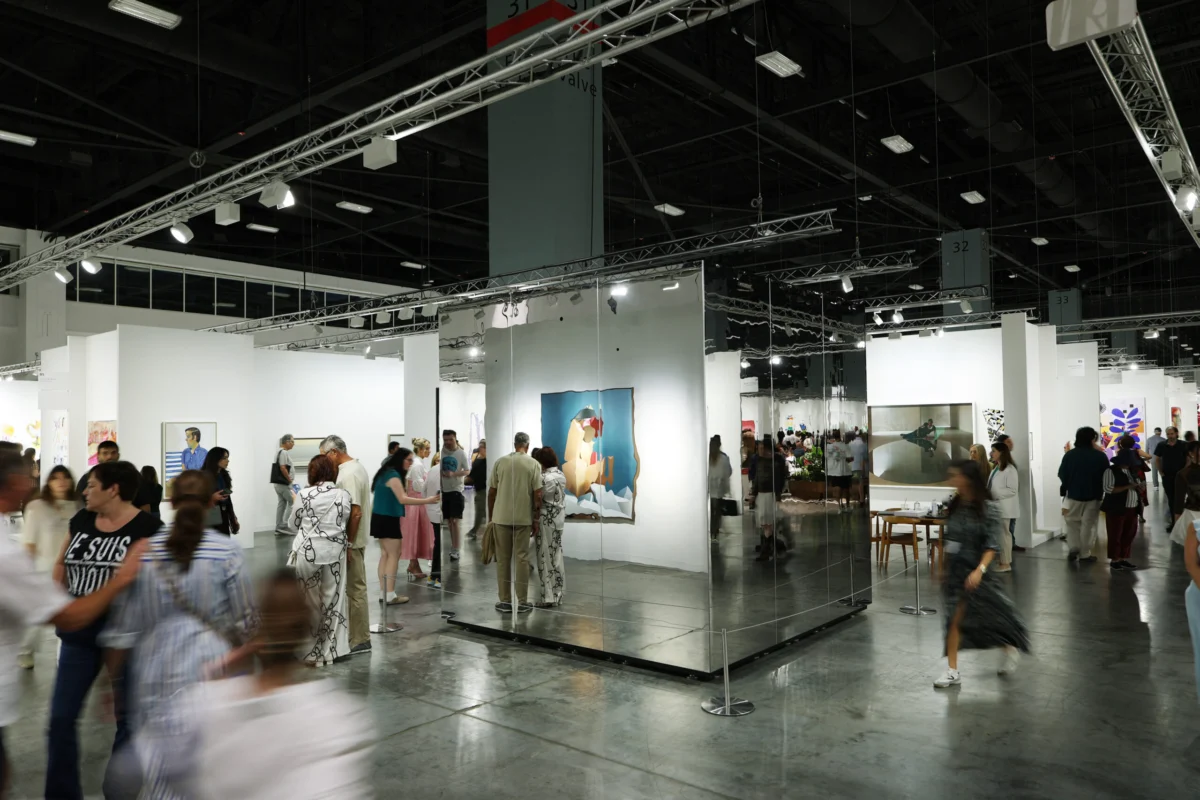
MCH Group, the Swiss-based international marketing and live-marketing company renowned for its stewardship of the Art Basel franchise, has officially announced its strategic expansion into the media and content sector with the launch of Jupiter Festival. This new venture represents a significant diversification for the group, which has traditionally focused on the high-end art market and industrial exhibitions. The inaugural edition of Jupiter Festival is scheduled to take place this October at the Miami Beach Convention Center, the same venue that hosts Art Basel Miami Beach, signaling MCH Group’s intent to leverage its established infrastructure in South Florida to create a premier destination for media industry leadership.
The festival enters a crowded marketplace of global industry summits, yet its founders and backers assert that the current state of the media landscape requires a specialized forum that prioritizes high-level networking and forward-looking debate over traditional trade show dynamics. As the media industry grapples with the fallout of the streaming wars, the integration of artificial intelligence, and shifting advertising paradigms, Jupiter Festival aims to position itself as the definitive venue for senior executives to navigate what organizers describe as a "seismic" shift in the global content economy.
Strategic Vision and the Gap in the Media Market
The inception of Jupiter Festival is rooted in the belief that existing industry gatherings have failed to keep pace with the rapid convergence of technology, entertainment, and distribution. William Mellis, CEO and co-founder of Jupiter Festival, identifies a fundamental lack of events that address the specific complexities of the modern content lifecycle. In recent industry discussions, Mellis has emphasized that the media sector is no longer undergoing a merely transformational phase but is instead facing a structural overhaul.
According to Mellis, the festival is designed to be "delegate-focused," a move intended to differentiate it from larger-scale consumer electronics shows or advertising festivals that may prioritize product launches or brand activations. The goal is to bring together the decision-makers who are currently architecting the "new paradigm" of video content. By focusing on a high-level delegate base, Jupiter Festival intends to foster an environment where the industry’s elite can engage in candid discourse regarding the survival and growth of media brands in an increasingly fragmented digital ecosystem.
The decision to launch in Miami is strategic. Over the past five years, Miami has seen a significant influx of venture capital and tech-sector investment, often referred to as the "Silicon Tropics" movement. By situating Jupiter Festival in this burgeoning hub, MCH Group is tapping into a city that has already proven its ability to host world-class cultural events while simultaneously growing its reputation as a center for international business and innovation.
The MCH Group Pivot: From Fine Art to Media Pillars
For MCH Group, the backing of Jupiter Festival is a calculated move to broaden its revenue streams and intellectual footprint. Historically, the group’s identity has been inextricably linked to the art world, with Art Basel shows in Basel, Miami Beach, Hong Kong, and Paris serving as the gold standard for the industry. However, under the leadership of Group CEO Andrea Zappia, MCH Group is redefining its mission to encompass broader "cultural pillars."
Zappia, who joined MCH Group with a background in major media entities—having previously served as a senior executive at Sky—views media as an essential component of cultural development. In justifying the expansion, Zappia has noted that media and art are adjacent territories within the cultural landscape. The investment in Jupiter Festival is seen as an opportunity to build a new brand that can eventually achieve the same level of global prestige and influence as Art Basel.
The involvement of Lupa Systems, the investment firm founded by James Murdoch, is a critical factor in this expansion. Lupa Systems became the largest individual shareholder in MCH Group in 2020, bringing James Murdoch’s extensive media pedigree to the organization. Murdoch’s recent activities, including the acquisition of a majority stake in New York magazine and the purchase of Vox Media’s podcasting business, underscore a broader strategy of investing in high-quality content and intellectual property. The launch of Jupiter Festival aligns perfectly with this trajectory, providing a platform where the very themes Murdoch is investing in—media consolidation, platform evolution, and content monetization—will be the primary topics of discussion.
A High-Profile Lineup: Bridging Sports, News, and Digital Platforms
The inaugural speaker roster for Jupiter Festival reflects the cross-disciplinary nature of the modern media business. By securing leaders from disparate sectors, the festival aims to break down the silos that have traditionally separated sports broadcasting, traditional news, and digital-first platforms.
Among the featured speakers is Rebecca Glashow, CEO of Tribeca Enterprises. Glashow’s presence is significant given Tribeca’s own evolution from a local film festival to a year-round media and entertainment brand. Her insights into the "festivalization" of content and the importance of experiential media will likely set the tone for much of the event. Joining her is Pete Distad, a veteran executive who has held leadership roles at Apple and Hulu, and was recently tapped to lead the sports streaming joint venture between Fox, Disney, and Warner Bros. Discovery. Distad’s perspective on the future of live sports—the last remaining "glue" of the traditional cable bundle—is expected to be a major draw for attendees.
The sports and entertainment intersection is further represented by Kenny Smith, the long-time host of Inside the NBA. Smith’s career trajectory from athlete to a central figure in sports media provides a case study in brand building and talent-led content. From the digital side, Brian Albert, a senior executive at YouTube, will provide the platform perspective, addressing how user-generated content and professional production are merging. Representing the legacy of high-end journalism is Bill Owens, the executive producer of 60 Minutes, whose presence suggests that the festival will also grapple with the role of prestigious, long-form reporting in a high-speed news cycle.
Furthermore, the inclusion of industry provocateurs like Evan Shapiro suggests that Jupiter Festival will not shy away from critical analysis. Shapiro, often referred to as a "media cartographer," is known for his data-driven and often blunt assessments of the industry’s failings, ensuring that the festival’s programming includes voices that challenge the status quo.
Contextualizing the "Seismic" Change in Media
The "seismic change" referenced by William Mellis is backed by significant industry data and recent market trends. The global media and entertainment market, valued at approximately $2.5 trillion, is currently facing several headwinds that provide the backdrop for the Jupiter Festival:
- The Decline of Linear Television: In the United States, traditional cable and satellite television viewership has dropped below 50% of total TV usage for the first time in history, as streaming continues its ascent.
- Ad-Revenue Fragmentation: The "duopoly" of Google and Meta, along with the rise of Amazon’s advertising business, has forced traditional media companies to reinvent their ad-sales strategies, moving toward retail media networks and sophisticated data targeting.
- The Impact of AI: Generative AI is poised to revolutionize content production, from scriptwriting and visual effects to personalized news feeds. The ethical and economic implications of these technologies will be a central theme at Jupiter.
- Consolidation and M&A: The industry is witnessing a wave of consolidation as companies seek scale to compete with tech giants. The recent discussions surrounding mergers between major studios highlight the urgency of the topics Jupiter intends to cover.
By providing a venue specifically for senior executives to discuss these trends, Jupiter Festival aims to fill the gap left by larger, more generalized tech conferences where the nuances of content strategy can often be overshadowed by hardware announcements.
Comparative Analysis: Jupiter in the Global Event Calendar
Jupiter Festival enters a calendar already populated by major events like the Consumer Electronics Show (CES) in Las Vegas, the Cannes Lions International Festival of Creativity, and the Possible conference. However, each of these serves a slightly different primary audience. CES is tech-centric; Cannes Lions is focused on the advertising and creative agencies; and Possible is heavily geared toward marketing technology.
Jupiter’s unique value proposition lies in its focus on the "Future of Content." While other festivals treat content as a vehicle for advertising or a demo for new hardware, Jupiter intends to treat content as the primary product. By mirroring the "delegate-first" model of high-level economic forums like Davos, the festival seeks to create a more intimate and productive networking environment than the sprawling, 100,000-attendee trade shows.
The choice of the Miami Beach Convention Center also provides a sense of continuity for MCH Group. The facility’s recent $620 million renovation has made it one of the most technologically advanced venues in the country, capable of supporting the high-bandwidth needs of a media-focused summit.
Anticipated Implications and Future Outlook
The success of Jupiter Festival will be measured not just by its inaugural attendance, but by its ability to foster genuine industry-shifting conversations. For MCH Group, a successful launch would validate its strategy of diversifying beyond the art world and could lead to the international scaling of the Jupiter brand. Given Art Basel’s history of expanding into Europe and Asia, it is highly probable that MCH Group envisions Jupiter as a global franchise with future iterations in cities like London, Singapore, or Riyadh—all of which are investing heavily in their own media and creative economies.
For the media industry, the festival represents a new "tentpole" event that could help define the business strategies of the 2025 fiscal year. As executives gather in Miami this October, the focus will be on moving beyond the rhetoric of "disruption" and toward the implementation of sustainable, profitable models for the next generation of media.
In a period where the industry is searching for clarity amidst chaos, Jupiter Festival arrives with the backing of one of the world’s most prestigious event organizers and the intellectual capital of some of the most influential figures in media. Its debut in Miami marks a new chapter for MCH Group and a potential turning point for the global media community as it seeks to define the new paradigm of content.