The captivating and often misunderstood life of Henry Paget, the 5th Marquess of Anglesey, has long been a subject of historical intrigue. Now, filmmaker Celyn Jones has brought his flamboyant and tragic story to the silver screen with “Madfabulous,” a cinematic exploration that premiered to critical acclaim at the BFI Flare London LGBTIQ+ Film Festival in March and is currently enchanting audiences across the U.K. during Pride Month. Jones, an acclaimed actor and director, reveals that his journey to tell Paget’s story began not with historical texts, but with a striking image. “I think I knew the picture before I knew the story,” Jones recounts, describing the iconic photograph of Paget draped across a chair, resplendent in an embellished gown, an elaborate winged headpiece, glistening jewels, and surrounded by fur. Initially mistaking it for a modern album cover or a glam rock aesthetic akin to David Bowie or Marc Bolan, Jones was astonished to discover its true origin: an 1890s portrait of a British peer, the Marquess of Anglesey. This serendipitous encounter ignited a decade-long passion project that culminates in a film lauded for its historical depth, emotional resonance, and profound cultural impact, particularly within Wales.
The Enigmatic Marquess: A Life of Extravagance and Controversy
Henry Cyril Paget, born in 1875, inherited his title, along with vast estates and immense wealth, in 1898 at the tender age of 23. His ancestral seat was Plas Newydd, a magnificent castle nestled on the serene waters of the Menai Strait, just off the northwest coast of Wales. From the moment he ascended to his peerage, Paget embarked on a lifestyle of unparalleled extravagance that quickly earned him the moniker “the dancing marquess.” His short tenure at the helm of his family’s fortunes was marked by an insatiable appetite for the theatrical and the opulent. He famously squandered his inheritance on lavish parties, an astonishing array of bespoke garments, and the establishment of his own private theatre company, where he himself was the undisputed star.
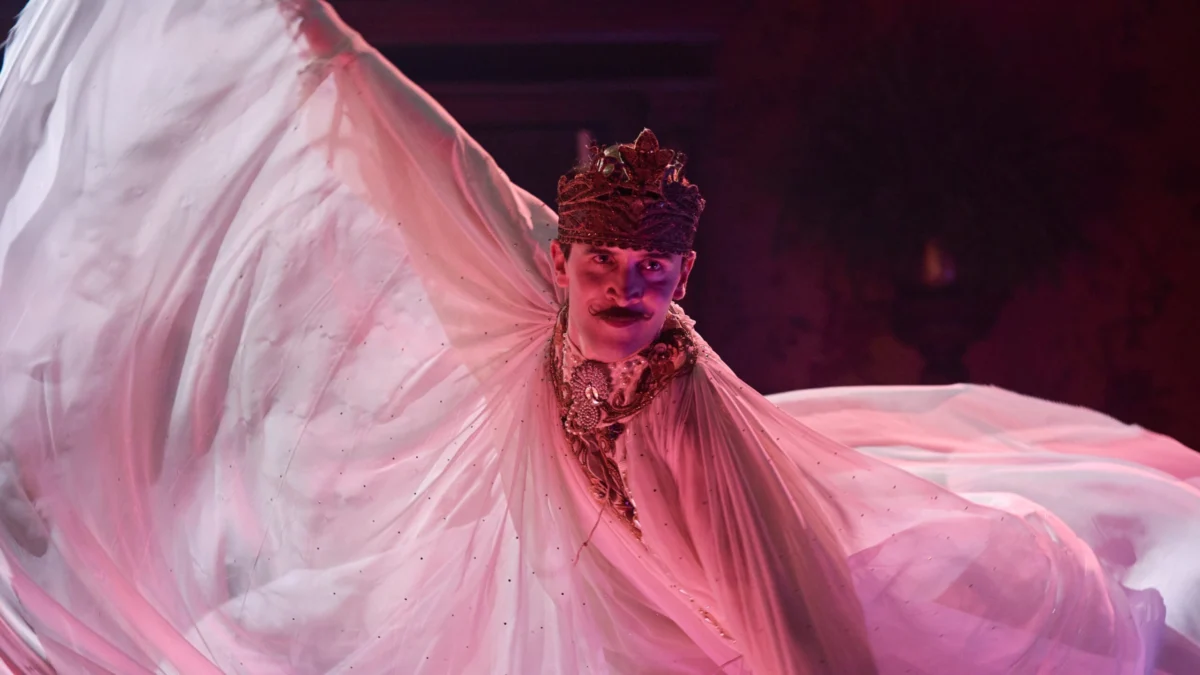
Paget’s performances were legendary, particularly his "Butterfly Dancing," which often involved him performing in transparent silk robes, adorned with jewels, under elaborate lighting. While his theatricality and generous spirit endeared him to many locals, his financial profligacy was staggering. By the time of his death in 1905 at just 29 years old from complications of tuberculosis, he had accumulated debts equivalent to over £60 million in today’s money ($68 million USD). This astronomical sum underscored the magnitude of his spending, which extended beyond personal indulgence to include transforming Plas Newydd into a veritable stage set, complete with a private theatre, custom-built costumes, and exotic pets.
His lifestyle, coupled with the scandalous breakdown of his marriage to his cousin, Lilian Florence Maud Chetwynd, has long fueled historical debate surrounding Paget’s sexuality and gender identity. In an era when societal norms were rigidly defined, Paget’s public performances and personal presentation pushed boundaries that were largely incomprehensible to his contemporaries. Welsh historian Norena Shopland succinctly captures this complexity, noting, “There is little doubt that Henry must be included in the history of gender identity.” Paget’s story, therefore, transcends mere aristocratic eccentricity; it becomes a poignant exploration of an individual striving for authentic self-expression in a world ill-equipped to understand or accept it.
A Vision Realized: The Genesis of ‘Madfabulous’
Celyn Jones’s decade-long fascination with Paget’s story found its cinematic voice through "Madfabulous." The director, whose production company, Mad as Birds, was an early champion of the project, envisioned a film that would delve beyond the surface-level scandal to explore the profound human motivations driving Paget’s life. “I always think about the monster and the man, and the man and the monster,” Jones explains, articulating his desire to explore the dichotomy between public perception and inner life. For Jones, Paget represented a complex individual grappling with universal themes: "The need for acceptance, the need to be his authentic self – or have time to even find out what that is – in a time where the world was projecting all these rules on your shoulders, and you just wanted to experience the world in the way that you felt natural.”
The film also presented a unique opportunity to illuminate a historically overlooked dynamic: the intricate relationship between North Wales’ working-class communities and its aristocracy. Screenwriter Lisa Baker seized this opportunity, crafting a narrative that serves as a “real love letter to the region,” showcasing the landscape, culture, and social fabric of Anglesey with authenticity and respect. This dual focus – on Paget’s personal quest for identity and the socio-economic backdrop of his extraordinary life – elevates “Madfabulous” beyond a simple biopic, positioning it as a nuanced historical drama with contemporary relevance.

Crafting the Narrative: Themes and Challenges
Bringing Paget’s complex persona to the screen required a delicate balance. Jones was keen to avoid a one-dimensional portrayal of a profligate peer. Instead, he sought to uncover the underlying humanity and vulnerability that drove Paget’s extreme behaviors. "We needed an actor that, on paper, could be a bit of a dick. He spends all the money and seems to not care about the consequences. [But] I felt the story was not going to be that," Jones explains. He posits that Paget’s actions were likely rooted in deeper issues, suggesting, “I think we’re dealing with addiction, I think we’re dealing with neglect. All those things that make us human.”
This perspective shaped the narrative, moving it beyond mere historical recounting to a psychological exploration. The film aims to portray Paget not as a simple villain or a caricature, but as a deeply flawed yet profoundly human figure navigating immense privilege, societal expectations, and personal yearning. The screenplay, meticulously crafted by Lisa Baker, weaves together the historical facts with an empathetic understanding of Paget’s internal world, creating a narrative that resonates with modern discussions around mental health, identity, and the pressure to conform.
Assembling the Ensemble: Casting and Performances
The success of “Madfabulous” hinges significantly on its meticulously chosen cast, spearheaded by Callum Scott Howells in the titular role. Howells, a breakout star from Russell T Davies’ acclaimed series “It’s a Sin,” was Celyn Jones’s immediate and unequivocal choice for Henry Paget. “He was the first person I thought of, and the first person I asked,” Jones affirms, highlighting Howells’ unique blend of charisma and vulnerability. The role demanded an actor with exceptional range: someone who could embody Paget’s impish charm and theatrical flair while also conveying the profound vulnerability, potential neglect, and addictive tendencies that Jones believed underscored his character. “We needed an actor who not only had range and ability, [but] who could move, who could dance, who could be quiet, who could be bold, who could be theatrical, who could be cinematic, who had a range of emotions and charisma. Callum has it all, and he’s Welsh,” Jones elaborates, emphasizing the added layer of authenticity Howells brought to the role.
The ensemble is further strengthened by Ruby Stokes, known for her roles in “Bridgerton” and “Lockwood & Co.,” who portrays Paget’s cousin and wife, Lilian Florence Maud Chetwynd, affectionately known as Lily. Jones, typically wary of extensive audition processes, was compelled by Stokes’s exceptional talent. He recalls being eager to review all her previous work, recognizing in her “a quality of an actress who could go from a young girl to a woman,” possessing a natural charisma and “joie de vivre” essential for Lily’s complex journey from innocent bride to a woman navigating a tumultuous marriage.
Perhaps the most inspired casting choice, however, is British acting legend Rupert Everett as Gelert, Paget’s doting and long-suffering butler. Everett’s presence brings a layer of gravitas and subtle commentary to the film. Jones reflects on the multiple dimensions Everett brings to the role: “There are so many different levels to Rupert.” He cherished the idea of an established, older leading man like Everett, who has been a prominent figure in the industry and a vocal advocate for LGBTQ+ rights, introducing a new leading man in Howells. This creates a “meta quality” of guidance and authenticity between the two actors, both openly identifying as gay, adding an unspoken depth to their on-screen relationship. Everett, at 67, embraced playing Gelert as much older, infusing the character with a stoic endurance that crumbles only in private moments. Jones recounts Everett’s vision: “He wanted that stoic survivor. The last thing he’ll do is stoop in front of his master, and then when the door closes, he’ll sit down and rub his knees. So when you see him crumpled in a chair, you really feel it as an audience: ‘Oh my gosh, even Gelert is broken down by this addiction.’” This nuanced portrayal underscores the emotional toll Paget’s lifestyle took not only on himself but on those closest to him.
The film boasts an impressive array of Welsh and English talent in supporting roles, including Paul Rhys, Louis Hynes, Louise Brealey, Tom Rhys Harries, Siobhán McSweeney, Guillaume Gallienne, Steve Speirs, Kevin Eldon, Ian Puleston-Davies, Roger Evans, Lisa Jên Brown, and Leisa Gwenllian. Notably, Clara Paget, a distant relative of the Marquess, also features, playing the head of his theatre company, further cementing the film’s connection to its historical roots.
Authenticity on Screen: Production and Heritage
A crucial element of "Madfabulous" is its unwavering commitment to historical and regional authenticity. Celyn Jones felt it was paramount to honor the film’s heritage, leading to the decision to film on location at Plas Newydd, Henry Paget’s actual ancestral estate. This choice imbues the film with an undeniable sense of place and history, allowing the audience to step directly into the world of the dancing marquess. The meticulous attention to detail extends to the production team, led by costume designer Francisco Rodriguez-Weil, whose elaborate creations capture the essence of Paget’s extravagant wardrobe. Cinematographer Laurie Rose and production designer Keith Dunne expertly craft the visual world, while Oscar-winning makeup and hair artist Nadia Stacey, celebrated for her work on “Poor Things,” ensures that every visual aspect contributes to the film’s immersive quality. This collective effort creates a visually stunning and historically accurate portrayal that transports viewers back to the opulent, yet ultimately tragic, world of Henry Paget.

Resonance and Reception: A Cultural Movement
The impact of “Madfabulous” has far exceeded Celyn Jones’s initial expectations, particularly in his native Wales. “What’s so beautiful – it’s so gorgeous – [is] when we started this film years ago, Henry Paget was a photograph next to the toilets in Plas Newydd. Now, we’ve filled a bedroom with the costumes from the film. He’s back in the house, he’s celebrated, and people are going to see [the movie],” Jones marvels, describing the profound shift in how Paget’s legacy is now perceived and presented at his former home. This revival of interest has been palpable throughout North Wales, where the film has become a cultural phenomenon. “The audience around North Wales, [they’re] on fire at the moment for the film,” he enthuses. In Bangor, a relatively small city, “Madfabulous” has been the best-selling film since “Barbie,” attracting over 3,000 viewers in just two and a half weeks. The enthusiasm is further amplified by a unique initiative: cinema ticket holders can gain free entry to Plas Newydd to view the film’s costumes, creating a tangible link between the cinematic experience and historical site.
Beyond its commercial success, the film has struck a deep emotional chord with audiences, particularly within the LGBTQ+ community. Jones recounts moving interactions at Q&A sessions across the U.K., including one memorable encounter with a man whose husband held his hand as he struggled to articulate his feelings through tears. “You can’t write that, you can’t sit in a production office and go, ‘This is what I wanted to create!’ You don’t know what’s going to happen,” Jones reflects. The man’s poignant remark, “I wish this film existed when I was a young man,” left the filmmaker at a loss for words, underscoring the profound impact of seeing one’s history and identity reflected on screen.
When asked if this success marks a “moment” for Welsh film, Jones emphatically corrects the interviewer: “It’s not a moment, it’s a movement. That’s what it is.” In an era where British independent cinema faces ongoing struggles, “Madfabulous” stands as a testament to the power of authentic storytelling. Jones champions the spirit of independent filmmaking, asserting, “As long as there are some mad people out there like myself who go, ‘I’m going to tell this story. I’m going to do it that way,’ the more work there is for people, the more entertainment there is for people and therefore, more representation.” This sentiment encapsulates the film’s broader significance: it’s not just a historical drama but a beacon for diverse narratives and independent voices.
Beyond ‘Madfabulous’: Celyn Jones’s Future Endeavors
Riding the wave of “Madfabulous’” unprecedented enthusiasm, Celyn Jones is already embarking on his next cinematic venture. The Hollywood Reporter can exclusively reveal that Jones is set to begin production on his upcoming feature, “Mountain.” He offers a tantalizing glimpse into the project: “It’s a coming-of-age story set in the ‘80s, and even though it’s a fiction, it feels very, very personal. That’s about as much as I’m allowed to say right now,” he teases, hinting at another deeply personal and evocative narrative.
Jones’s schedule remains packed, balancing the demands of promoting “Madfabulous” with new acting commitments. The film continues its festival circuit, following its triumphant premieres at BFI Flare and the world’s oldest and largest queer film festival, San Francisco’s Frameline LGBTQ+ Festival on June 21st. Another major European film festival appearance is slated for September, though details remain under wraps. In addition to his directorial pursuits, Jones has secured several notable acting roles, including alongside screen legends Anthony Hopkins and Catherine Zeta-Jones in “A Visit to Grandpa’s,” and in Rhys Marc Jones’s “Black Church Bay” with Tom Cullen and Joe Locke.
As Pride Month progresses, Celyn Jones reflects with gratitude on the journey of “Madfabulous.” He extends his thanks to the dedicated cast and crew, the enthusiastic Welsh audiences, and, most importantly, to the memory of the dancing marquess himself. “I think Henry was for the people, and I think the film is for the people,” Jones concludes, encapsulating the enduring spirit of a film that has not only revived a forgotten history but also ignited a powerful cultural movement.
“Madfabulous” is currently playing in U.K. theaters.