The Karlovy Vary International Film Festival (KVIFF), the world’s second-oldest film festival after the venerable Venice Film Festival, is set to mark a momentous occasion as it convenes its 60th edition in its 80th year from July 3 through July 11, 2026. This double anniversary promises a unique blend of historical reflection and forward-looking innovation, attracting a constellation of Hollywood stars and unveiling a slate of captivating new cinematic discoveries. Throughout its storied eight-decade history, the Czech festival has been a consistent beacon for diverse filmmaking, hosting an eclectic array of movies and welcoming countless celebrities to the picturesque spa town. However, the 2026 iteration distinguishes itself by embracing an unprecedented number of "firsts" and significant debuts, extending beyond its traditional film premieres to redefine its own legacy.
A Legacy Forged in History: KVIFF’s Enduring Significance
Founded in 1946 in the aftermath of World War II, KVIFF quickly established itself as a crucial cultural event, particularly within the Central and Eastern European film landscape. Its establishment was a testament to the power of cinema to rebuild connections and foster understanding in a fractured world. Over the decades, it evolved under varying political climates, notably enduring the Cold War era as a significant cinematic window for Eastern Bloc countries. Despite the ideological pressures of its time, KVIFF maintained a commitment to artistic integrity, eventually earning the prestigious A-list accreditation from the International Federation of Film Producers Associations (FIAPF), placing it among the elite global festivals like Cannes, Berlin, and Venice.
The festival has historically served as a vital platform for filmmakers from regions often underrepresented on the international stage, nurturing emerging talents and bringing their stories to a broader audience. Its cultural impact extends far beyond the cinematic realm, significantly boosting the Czech Republic’s cultural tourism and establishing Karlovy Vary as a prominent hub for arts and diplomacy each summer. The transition from its long-standing "East of the West" competition, which aimed to spotlight films from the former Eastern Bloc, to the more globally focused "Proxima" competition in recent years underscores KVIFF’s adaptability and its evolving mission to champion bold, diverse cinematic voices from every corner of the world. This strategic shift reflects a commitment to remaining relevant and inclusive in a constantly changing global film industry, ensuring that its legacy is not merely about preserving the past but actively shaping the future of cinema.
Celebrating Milestones: The 60th Edition in the 80th Year
The year 2026 marks an extraordinary juncture for KVIFF, celebrating both its 60th competitive edition and its 80th anniversary since its inaugural event. Such double anniversaries are rare for any cultural institution, offering a profound opportunity for introspection and forward planning. Traditionally, festivals mark such milestones with grand retrospectives, special tributes to legendary filmmakers, and thematic programming that highlights their enduring contributions to cinema. For KVIFF, this means reflecting on eight decades of film history, remembering the groundbreaking works and iconic personalities who have graced its screens and stages. The festival’s artistic director, Karel Och, and his team are poised to curate an experience that honors this rich past while simultaneously pushing boundaries with contemporary selections.
The "firsts" being introduced this year are particularly poignant against this backdrop of historical celebration. They are not merely novelties but symbolic gestures that reaffirm KVIFF’s commitment to global representation and the discovery of untold stories. By featuring debut films from countries like Myanmar and Colombia in its competitive sections, and by making an unconventional jury selection, KVIFF demonstrates that its pursuit of innovation and inclusivity is as strong as ever. This dual focus—on honoring tradition and embracing the new—is expected to draw an even wider international audience, eager to witness how one of the world’s most respected film festivals navigates its past, present, and future. The festival’s ability to seamlessly integrate its celebrated heritage with a vibrant, forward-looking program underscores its unique position in the global cinematic landscape.
Unprecedented Debuts: A Global Tapestry of Stories
The 2026 Karlovy Vary International Film Festival is poised to make history with several groundbreaking entries, each representing a significant "first" for the festival and reflecting its expanding global reach. These selections highlight KVIFF’s dedication to showcasing diverse narratives and voices from across the world, offering audiences a rich tapestry of human experiences.
First Film from Myanmar: ‘Fruit Gathering’

A landmark moment for KVIFF comes with the inclusion of the first-ever film from Myanmar in its competition lineup: Fruit Gathering (Thit-thee Khu), the feature debut of Burmese writer-director Aung Phyoe. This selection is particularly significant given the complex socio-political landscape of Myanmar, where artistic expression often navigates a challenging environment of censorship and societal norms.
Fruit Gathering delves into the intricate lives of two young women working at a textile factory in Yangon, Myanmar’s largest city. The narrative promises an intimate exploration of "how women’s desires survive in a country where intimacy and love between women remain socially unacceptable." This theme is profoundly courageous and offers a rare glimpse into a subject often silenced within Burmese society. The film’s synopsis paints a vivid picture of contemporary Myanmar, where "exhausting work, social repression and economic uncertainty" are daily realities. Yet, amidst these struggles, the protagonists "continue to dream of intimacy and escape," leading them to grow closer and awaken "previously silenced fibers of their own emotions."
The creative team behind Fruit Gathering includes cinematographer Thaiddhi and editor Emily Swe, with a cast featuring Nandar Myat Aung, Nandar Myint Lwin, Thida Soe Khant, Tin Tin Ei, and Min Nyo. The film’s presence at KVIFF provides a crucial international platform for a voice from a country whose cinema is still largely unknown to global audiences, offering vital exposure for its filmmakers and shedding light on universal human desires within a specific cultural context. The international reception of Fruit Gathering will be closely watched, as it represents a significant step for Burmese cinema onto the world stage, potentially paving the way for more diverse stories from the region to gain global recognition.
First Colombian Film: ‘Five Years, Four Months’
Another historic debut at KVIFF 2026 is Five Years, Four Months (Cinco años, cuatro meses), a powerful co-production between Colombia and the U.S., marking the first Colombian film to enter the festival’s prestigious competition program. Directed by the collaborative duo Esteban Hoyos García and Juan Miguel Gelacio Ramírez, the film addresses one of the most painful and enduring consequences of Colombia’s long-lasting armed conflict: the phenomenon of enforced disappearances.
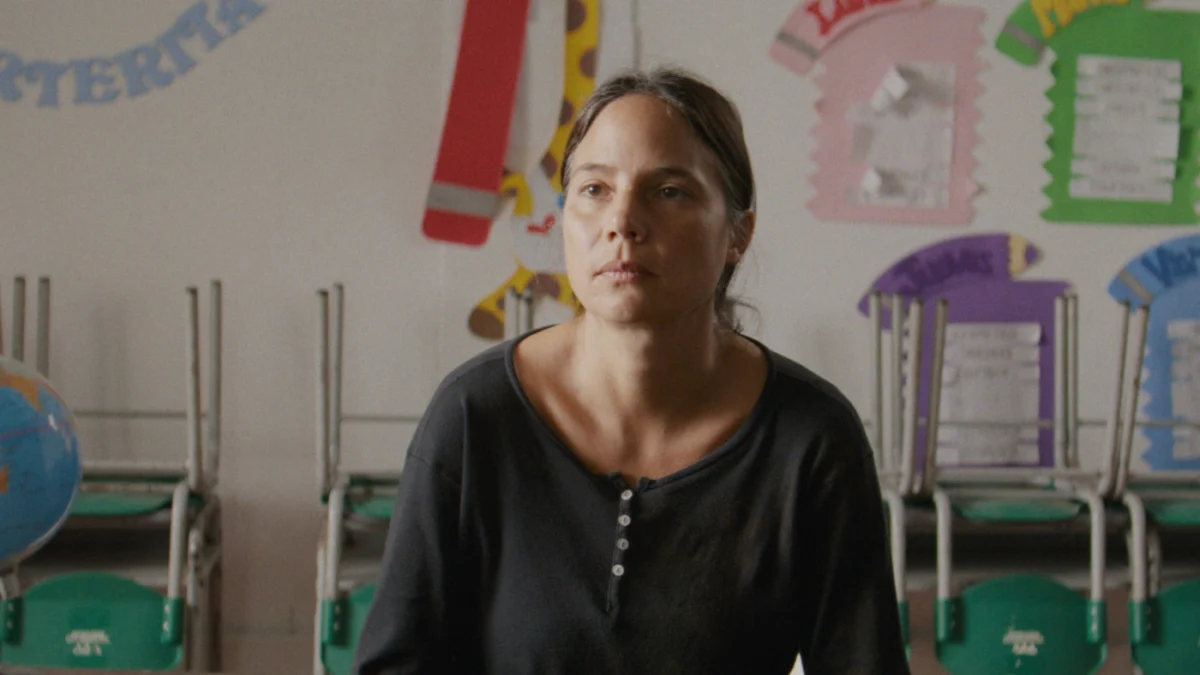
The narrative centers on Martha, a woman grappling with the devastating loss of her eldest son, whose fate and remains remain unknown. After years of fruitless searching, she encounters Sandra, who offers a desperate, final hope: a journey to a remote place where "the line between the living and the dead is blurred." KVIFF’s synopsis highlights that the directorial duo "gives voice to Colombian women who, after their children’s disappearance, took the search into their own hands." This focus on maternal resilience and agency is a potent commentary on the human cost of conflict and the unwavering quest for truth and justice.
The film’s "subdued, focused narrative" is a deliberate artistic choice, designed to convey the profound grief and relentless determination of these women. It portrays the arduous search for peace and reconciliation in a land that has known little of it, particularly for those denied the closure of a proper farewell. Featuring a cast including Jenny Nava and Carmiña Martínez, with cinematography by Paula Moreno Vergara and editing by Gelacio Ramírez, Five Years, Four Months is not only a significant cinematic achievement but also a powerful socio-political statement. Its world premiere at KVIFF, coupled with sales handled by Patra Spanou Film, signals its potential for broad international distribution, bringing this critical Colombian narrative to global audiences and fostering greater understanding of the country’s journey towards healing.
First Plumber on the Proxima Competition Jury: Jakub Felcman
Beyond the films themselves, KVIFF is also breaking new ground with its jury selections. The Proxima competition, now in its fifth year, serves as a vital space for "bold works by young filmmakers and renowned auteurs alike," having replaced the "East of the West" competition to embrace a more global perspective. This year, the Proxima jury features an unprecedented member: Jakub Felcman.
Described in his KVIFF bio as "a Czech screenwriter, festival organizer, film critic, creative producer, director, and qualified plumber," Felcman embodies a remarkable breadth of experience. His diverse background, particularly the inclusion of his trade as a "qualified plumber," has sparked considerable interest. While Felcman’s extensive film credentials—including collaborations as a script editor on films by acclaimed directors like Jan Němec, Petr Václav, Radu Jude, and Corneliu Porumboiu—are impeccable, his unique vocational skill has never before been seen on a KVIFF jury.
Karel Och, the festival’s artistic director, confirmed the novelty of this selection to The Hollywood Reporter, stating, "I am not aware of any trained craftsmen being on the jury before… Jakub is an incredibly interesting person, and we’re happy he will join us." This choice transcends mere novelty; it symbolizes KVIFF’s commitment to diverse perspectives and a rejection of traditional elitism often associated with film festivals. A juror with a background in manual labor brings a grounded, real-world sensibility that could enrich discussions and evaluations, emphasizing the universal appeal and impact of storytelling beyond academic or purely artistic circles. Felcman’s presence on the jury underscores KVIFF’s dedication to inclusivity and its belief that valuable insights can come from all walks of life, reflecting a broader, more democratic vision for cinematic judgment.

First Swiss Competition Film: ‘A Happy Family’
While Switzerland has had a presence at KVIFF in various sections over the years, 2026 marks a historic first: a Swiss film will compete for the coveted Crystal Globe in the main competition. This distinction goes to A Happy Family, directed by Jan-Erick Mack, who brings experience from acclaimed shorts and TV series like Wilder and Davos 1917.
Mack co-wrote the script with Anna Schinz, Nikita Afanasjew, and Eva Kienholz. Schinz also stars in the film alongside Michael Neuenschwander, Julia Jentsch, Alireza Bayram, Bettina Stucky, and Martina Apostolova. The film’s visual narrative is crafted by cinematographer Yunus Roy Imer, with editing by Benjamin Fueter. A Happy Family delves into similarly challenging social themes, exploring the complexities of state intervention in family life and a mother’s relentless struggle.
The synopsis reveals the poignant story of Niki, a mother working two jobs whose meager earnings are barely enough to support her and her two young children. A tragic accident—the children inadvertently setting the kitchen on fire while unsupervised—leads Swiss authorities to place them with a foster family on the opposite side of the country. Despite being forbidden from contact, Niki embarks on a desperate quest to track down her children, highlighting themes of maternal love, social welfare challenges, and the profound impact of bureaucratic decisions on individual lives.
This Swiss entry holds particular historical resonance, as noted by Karel Och. He draws a direct line to the very first KVIFF in August 1946, where among the 14 films screened in 14 days, one was the Swiss refugee drama The Last Chance (Die Letzte Chance) by Leopold Lindtberg. That film went on to win the Grand Prix at the Cannes Film Festival. Och expressed his delight in this "connection of a Swiss film at the first edition of the festival, and a Swiss film in competition now, 80 years later." This poetic symmetry underscores KVIFF’s deep appreciation for its own history and its continuous journey of cinematic discovery, linking its foundational moments with its contemporary evolution.
Broader Implications and KVIFF’s Future Outlook
The array of "firsts" at the 2026 Karlovy Vary International Film Festival—from pioneering national entries to an unconventional jury selection and a historically resonant competition film— collectively underscore the festival’s vibrant commitment to global cinema and its evolving role in the international film community. These selections are not merely statistical milestones; they represent KVIFF’s proactive stance in discovering new talent, amplifying marginalized voices, and fostering a truly inclusive cinematic dialogue.
By bringing films like Fruit Gathering from Myanmar and Five Years, Four Months from Colombia to a prominent international stage, KVIFF actively contributes to diversifying the global film canon. It provides crucial visibility to narratives that might otherwise struggle to reach broader audiences, thereby challenging existing perceptions and fostering cross-cultural understanding. This commitment reflects a growing trend among leading festivals to move beyond traditional cinematic powerhouses and embrace the rich storytelling potential from every corner of the world.
The inclusion of Jakub Felcman, the "qualified plumber," on the Proxima jury is a bold statement about the value of diverse life experiences in artistic judgment. It signals a move towards democratizing the critical process, suggesting that profound insights into human stories can come from individuals with varied backgrounds, not just those traditionally entrenched in academic or artistic circles. This decision could inspire other festivals to reconsider their jury compositions, fostering a more relatable and representative critical discourse.
Furthermore, the historical connection drawn by Karel Och between A Happy Family and The Last Chance from the inaugural 1946 festival highlights KVIFF’s deep reverence for its own legacy. It demonstrates that while the festival is forward-looking, it remains firmly rooted in its rich history, weaving together past achievements with future aspirations. This balance between tradition and innovation is key to KVIFF’s enduring appeal and its continued relevance in a rapidly changing media landscape.
As KVIFF approaches its 60th competitive edition and 80th anniversary, these groundbreaking "firsts" position the festival as a dynamic institution that not only celebrates its illustrious past but also actively shapes the future of global cinema. Attendees, filmmakers, and industry professionals can anticipate an edition that is both a nostalgic tribute and a thrilling glimpse into the future, reaffirming Karlovy Vary International Film Festival’s status as an indispensable platform for cinematic discovery and dialogue. The festival’s continued dedication to embracing new perspectives and challenging conventions ensures its place as a vital cultural force for decades to come.