Belgian writer-director Isabelle Tollenaere is set to challenge conventional perceptions of home, memory, and displacement with her debut fiction feature, Paris Paris, which will hold its highly anticipated world premiere on Tuesday, July 7. The film is a prominent entry in the Proxima competition program of the 60th edition of the Karlovy Vary International Film Festival (KVIFF), one of Europe’s most venerable and influential cinematic events. With a title that provocatively echoes the classic phrase "See Paris and die," Tollenaere’s work promises audiences a profoundly different gaze upon the world, employing a unique narrative device to explore universal themes of identity in an era of unprecedented global migration.
Karlovy Vary International Film Festival: A Prestigious Platform
The Karlovy Vary International Film Festival, celebrating its 60th anniversary this year, stands as a beacon for art-house cinema and emerging talent in Central and Eastern Europe. Established in 1946, KVIFF is one of the oldest and most respected film festivals globally, renowned for its discerning selection and its commitment to fostering cinematic innovation. Its Main Competition and various specialized sections, including the Proxima competition, frequently unearth films that go on to critical acclaim and international recognition. The Proxima competition, specifically, is dedicated to showcasing audacious and experimental works that push the boundaries of cinematic expression, making it an ideal platform for Tollenaere’s thought-provoking narrative. The festival’s choice to feature Paris Paris underscores its relevance and perceived artistic merit within the contemporary global cinema landscape.
Thematic Core: Home, Memory, and Displacement
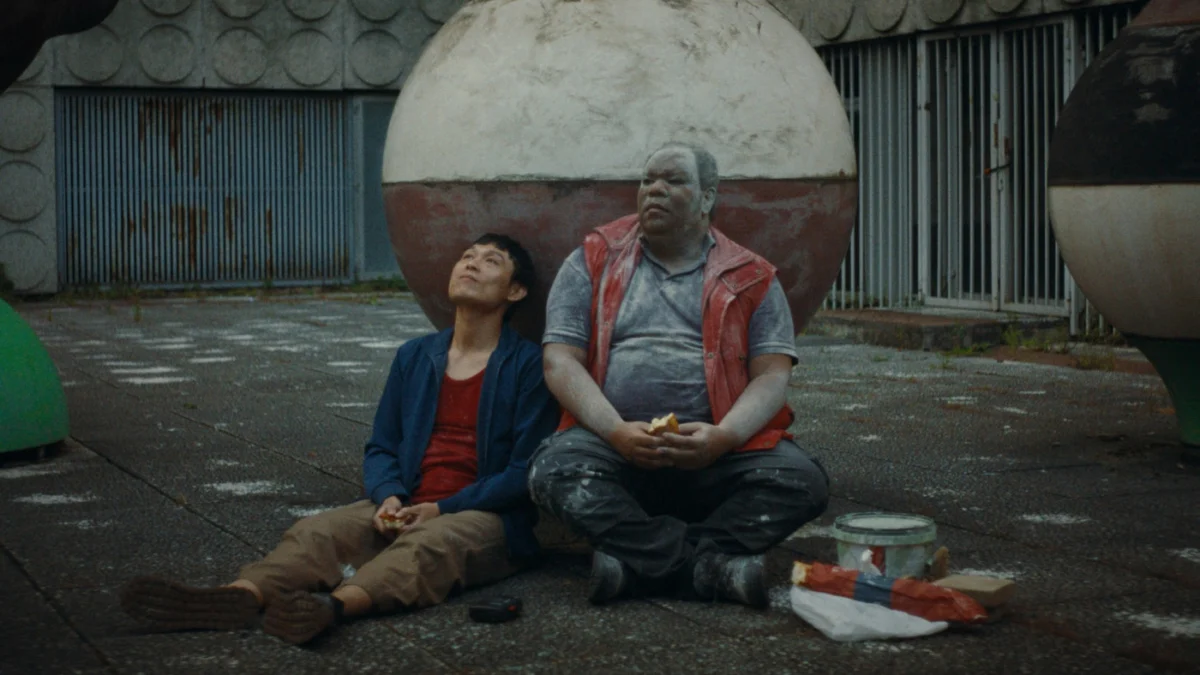
At its heart, Paris Paris is an allegory of the human condition in flux, meticulously dissecting the multifaceted notions of "home," the persistent human endeavor to keep memories alive through repetition, and the profound psychological impact of displacement. The film navigates these complex ideas through the experiences of three undocumented immigrants: Yi-En from China, Junior from the Democratic Republic of Congo, and Hamzah from Palestine. These men, strangers brought together by circumstance, share a precarious existence in a squatted apartment within the French capital. Their shared vulnerability, life in exile, and the ever-present threat to their temporary sanctuary form the dramatic crux of the narrative, highlighting the fleeting nature of possessions, relationships, and even safety in their lives.
The KVIFF website describes the film as an "allegory of searching, loss, displacement, and the discovery of new meanings and commonalities." This official framing points to a film that transcends a mere social commentary, aiming instead for a poetic and metaphorical exploration of human resilience. The intertwining of these themes—the search for belonging, the pain of loss, the struggle with displacement, and the unexpected bonds forged in adversity—positions Paris Paris as a timely and deeply resonant work for audiences grappling with the global migration crisis and evolving definitions of community.
The Two Parises: A Global Metaphor for Dreams and Reality
Central to the film’s innovative structure is the stark juxtaposition of two distinct "Parises." One is the iconic European metropolis, a city synonymous with culture, romance, and often, for many, a dream of a better life. The other is Tianducheng, a colossal residential development nestled within Hangzhou, Zhejiang Province, China. This ambitious urban project is a meticulously crafted replica of the French capital, featuring Parisian-style architecture, grand boulevards, public fountains, and even a 354-foot replica of the Eiffel Tower.

This phenomenon, often termed "duplitecture" or "copycat architecture," is not uncommon in China, where developers have frequently recreated famous Western landmarks and entire cities. Tianducheng, initiated in 2007, was conceived to house around 10,000 residents, offering a taste of European grandeur to China’s burgeoning middle class. However, it gained notoriety for long periods as a "ghost city" due to low occupancy rates, only more recently seeing an increase in residents. For Paris Paris, this Chinese replica serves as more than just an exotic backdrop; it functions as a potent metaphor. As the KVIFF notes, it represents "the immigrants’ old dream of life in a new home and its gradual transformation into a new dream about their old home." This duality masterfully encapsulates the disorienting experience of seeking a promised land, only to find its essence replicated, diluted, or distorted, ultimately forcing a re-evaluation of what constitutes a genuine sense of belonging.
The film’s exploration of these two cities—one a historical center of aspiration, the other a modern simulacrum—allows Tollenaere to delve into the psychological landscape of her characters. It questions whether a physical place, even a perfect replica, can truly replace the emotional and cultural ties that define "home." The cinematographic approach, helmed by Thomas Verijke, is crucial in capturing these two distinct yet visually similar environments, undoubtedly playing a significant role in conveying the film’s complex themes.
A Director’s Journey: From Concept to Screen
Isabelle Tollenaere’s path to Paris Paris began unexpectedly in 2014 when she first encountered an online article detailing the existence of the Parisian replica in China. "I was immediately fascinated by this," Tollenaere recounts, noting how the concept "set many thoughts in motion." The idea of "doubling the same city in one single film"—exploring its implications, potential narratives, and how to connect these two geographically disparate yet visually identical places—became an immediate creative impetus. This initial spark laid the groundwork for what would become her debut fiction feature, marking a significant departure from her acclaimed documentary background, which includes films like Battles and Victoria.
Her fascination propelled her to spend three months in China, primarily based in Shanghai, not far from Tianducheng. This immersive experience proved transformative for the film’s development. Tollenaere vividly recalls being confronted with "this huge construction fever, unlike anything I’ve ever seen before." Amidst this rapid development, she observed widespread demolition, a landscape in constant, drastic change. It was during this period that she gathered poignant testimonies from locals who, upon returning home after a short absence, found their neighborhoods unrecognizable, or even struggled to find their way back to their own houses. "This is when the themes of loss, disappearance, memory, and the precariousness of home first started emerging," she explains. This profound personal research underscores the authentic emotional core of Paris Paris.
Initially, Tollenaere considered focusing on a Chinese community in Paris, France. However, as her understanding deepened, her approach shifted, leading her to craft a narrative centered on three protagonists from widely diverse global origins. This change allowed for a broader exploration of universal experiences of migration and displacement, transcending specific national narratives to touch upon a shared human condition.
Crafting the Narrative: Hybrid Filmmaking and Authentic Voices
Tollenaere’s casting process for Paris Paris also reflects her documentary sensibilities and commitment to authenticity. The journey began with Yi-En Chen, a dancer and choreographer whom she met at an artist residency in 2018. Despite Chen having no prior acting experience, Tollenaere was deeply impressed by him. "At first, I didn’t think of casting him for the film. I just really liked him, and we hung out," she shares. It was only later that she realized his unique qualities would be "really, really great for the film," leading her to tailor the character of Yi-En with him specifically in mind.

The other two lead actors, David Mutamba (Junior) and Mahmoud Beshtawi (Hamzah), were found through a later casting call. Crucially, Tollenaere sought actors who had personal experiences mirroring those of their characters, allowing for a profound level of emotional truth in their performances. This method, a hallmark of her hybrid filmmaking approach, meant that the actors were not merely interpreters of a script but active contributors to its development. "Because I come from a documentary background, I’ve always welcomed people helping shape a film," Tollenaere states. "So there are many elements that come from the actors that I was allowed to include in the script." This collaborative process enriched the narrative with layers of lived experience, lending an undeniable resonance to the film’s portrayal of displacement.
The decision to transition from purely reality-based or hybrid documentaries to a full-fledged fiction feature was a gradual, organic process for Tollenaere. While her previous works always incorporated elements of fiction, Paris Paris marked a deliberate pivot. She explains that "some of the topics I was dealing with were not easy to access" through a purely documentary lens, suggesting that fiction offered a necessary freedom and depth to explore the sensitive and often guarded realities of undocumented life and profound personal loss. This strategic shift allowed her to delve into the interior worlds of her characters with greater imaginative scope, while still grounding the narrative in rigorous research and authentic human experience.
Language, Memory, and Identity
The title Paris Paris itself is deeply interwoven with the film’s central themes. Tollenaere reveals that this title was conceived from the very beginning, unlike her usual practice of using working titles. "On one level, obviously, it’s about the two Parises," she notes. "But also, repetition is used throughout the film as a way of remembering, so the title is very much linked to the theme of memory." The dynamic interplay between "remembering and forgetting" and "repeating and disappearing" forms the driving and opposing forces within the film, emphasizing the fragility of identity and the constant struggle against erasure.
Language emerges as another powerful thematic element, intimately tied to the notion of "home." Tollenaere articulates how speaking one’s mother tongue, especially when far from one’s native land, can evoke "a very strong feeling of coming home." The characters in Paris Paris seek and find this sense of belonging through various means: the comfort of their native languages, the echoes of memories, and the tangible presence of personal objects carried from their past lives. These artifacts become symbolic anchors, "carrying a part of that with you," as Tollenaere describes, connecting them to the places and identities they left behind.
Conversely, the act of learning a new language, French in this context, is portrayed with an almost opposite effect. The generic, cliché-ridden phrases learned in language courses, often devoid of genuine emotional depth, paradoxically "become meaningless in a sense." This superficial engagement with the new language highlights "their position as newcomers and their uncomfortable position and the experience of foreignness and alienation." It underscores the linguistic barrier not just as a practical hurdle, but as a profound symbol of their disconnectedness and the struggle for genuine integration.
A Subtle Political Statement
When asked about the political dimensions of Paris Paris, Tollenaere unhesitatingly affirms, "Yeah, to me, it’s very much a political film." The very premise of the film—featuring three undocumented immigrants as its protagonists and depicting their daily struggles and inherent difficulties—is inherently political. However, Tollenaere is careful to clarify her approach: "I think the film is very political, but it’s not a statement that’s in your face. That’s not my style." This nuanced stance allows the film to engage with urgent social issues without resorting to didacticism, instead inviting viewers to empathize with the characters’ experiences on a deeply human level.

The inclusion of Hamzah, the Palestinian character, further accentuates the film’s political undertones. Tollenaere explains that Hamzah’s nationality was initially left open in the script, and his Palestinian background became part of the film organically when Mahmoud Beshtawi was cast. What began as a coincidence evolved into a deliberate choice to incorporate a vital contemporary issue. "I’m really glad about that because this is such an urgent topic that we need to keep addressing," she reflects. "It’s something that touches me a lot, and that makes me feel so powerless. So, I’m really glad that it became part of the film, and even though it’s not the main topic, we get to address it." This integration demonstrates the film’s capacity to weave in complex geopolitical realities subtly, enriching the narrative tapestry without overshadowing the individual journeys of the characters.
Balancing Hope and Hardship: The Film’s Tone
Beyond the intricate visuals and compelling characters, Tollenaere meticulously calibrated the tone of Paris Paris. The film is a rich tapestry of drama, comedy, warmth, and a spectrum of other emotions, a deliberate choice to reflect the complexities of real-life experiences. "I was really seeking this balance between tragedy and comedy, or heaviness and lightheartedness," she explains. This intentional blend ensures that while the film addresses profound and often somber subjects, it never succumbs to unrelenting bleakness.
The director emphasizes the critical role of humor and resilience in navigating difficult situations. "Even if we experience grief and are in a very difficult situation, there’s always humor," she states. "We need humor in order to survive and in order to function." This philosophy underpins the film’s portrayal of its characters, moving beyond mere depictions of misery to highlight their inherent strength and humanity. In a genre that can often risk objectifying suffering, Tollenaere strives to present her protagonists as "humans in an inhuman situation," celebrating their resilience and unwavering hopefulness. This humanistic approach ensures that Paris Paris is not only a poignant reflection on global issues but also an uplifting testament to the enduring human spirit.
Broader Impact and Implications
As Paris Paris prepares for its world premiere at KVIFF, it arrives at a moment when discussions around migration, national identity, and the meaning of belonging are more pertinent than ever. Tollenaere’s film offers a unique and artistically ambitious contribution to this global dialogue. By juxtaposing two physically identical yet existentially different "Parises," and by charting the lives of three men from disparate backgrounds united by displacement, the film transcends geographical boundaries to explore a universal human experience.
The film’s hybrid approach, blending documentary authenticity with the expressive freedom of fiction, allows for a nuanced portrayal of a complex reality. It challenges viewers to consider the psychological toll of seeking refuge, the ephemeral nature of safety, and the powerful, often subconscious, ways in which memory and language shape our sense of self. Paris Paris is poised to spark conversations about the true cost of globalization, the nature of urban development, and the enduring human capacity to find hope and community even in the most precarious circumstances. Its debut at a festival of KVIFF’s stature signals not only a significant milestone for Isabelle Tollenaere as a director but also the emergence of a film that promises to resonate deeply, offering a fresh, empathetic, and thought-provoking perspective on what it truly means to call a place "home" in the 21st century.