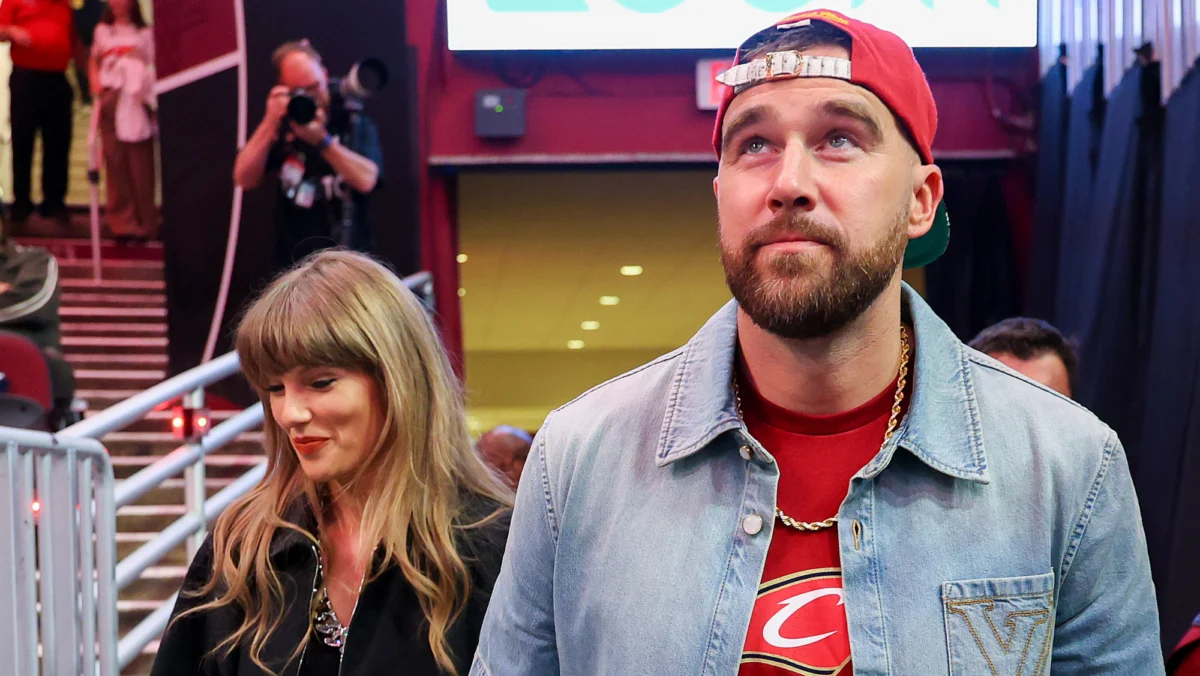
As the cultural phenomenon surrounding the relationship between pop icon Taylor Swift and NFL star Travis Kelce reaches its zenith, the discourse has shifted from the sidelines of football stadiums to the high-stakes corridors of matrimonial law and intellectual property management. With reports circulating of a multi-day wedding celebration at New York City’s Madison Square Garden, legal and financial experts are analyzing the complexities of a union between two of the most powerful brands in the entertainment and sports industries. At the heart of this analysis is not merely the division of assets, but the unprecedented question of whether a spouse’s surname can be treated as a protected corporate asset within a prenuptial agreement.
The Economic Powerhouse: A Comparative Financial Profile
The union of Swift and Kelce represents a merger of two vastly different, yet equally formidable, financial empires. Taylor Swift, recently minted as a billionaire by Bloomberg and Forbes, has achieved a level of financial independence rare in the music industry. Her net worth, estimated to be between $1.1 billion and $2 billion, is rooted in her strategic control of her intellectual property. Unlike many of her peers, Swift owns the master recordings of her post-2018 albums and the publishing rights to her entire discography.
Her "Eras Tour" serves as a primary case study in modern economic impact, grossing over $1 billion in 2023 alone and projected to exceed $2 billion by its conclusion in late 2024. This touring revenue is supplemented by a global merchandising operation managed by TAS Rights Management and Bravado, as well as a prolific streaming presence that generates tens of millions in annual royalties.
In contrast, Travis Kelce’s financial portfolio, while substantial for a professional athlete, operates on a different scale. Across his eleven-season career with the Kansas City Chiefs, Kelce has earned approximately $111 million in NFL salary and bonuses. However, his current trajectory suggests a pivot toward a long-term media career. In 2024, Kelce and his brother Jason signed a three-year, $100 million distribution deal with Amazon’s Wondery for their podcast, New Heights. Kelce has also expanded his footprint into Hollywood, securing roles in Ryan Murphy’s Grotesquerie, hosting the game show Are You Smarter Than a Celebrity?, and filming a cameo for the upcoming Happy Gilmore 2. For Kelce, the "Swift" association represents a significant brand elevation as he transitions from the gridiron to the screen.
Chronology of a Global Brand Alignment
The timeline of the Swift-Kelce relationship illustrates a rapid integration of two distinct fan bases, creating what marketing analysts call the "Taylor Swift Effect" on the NFL.
- July 2023: Travis Kelce attends the Eras Tour at Arrowhead Stadium, later revealing on his podcast that he attempted to give Swift a friendship bracelet with his phone number.
- September 2023: Swift attends her first Kansas City Chiefs game, leading to a 400% spike in Kelce jersey sales and a record-breaking viewership among female demographics for the NFL.
- February 2024: The relationship is cemented in the public eye as Swift celebrates Kelce’s third Super Bowl victory on the field in Las Vegas.
- May 2024: Public speculation regarding a name change intensifies after Kelce "likes" an Instagram post suggesting he adopt the hyphenated surname "Swift-Kelce."
- Late 2024: Legal experts and industry insiders begin discussing the "ironclad" nature of the couple’s potential prenuptial agreement ahead of rumored wedding plans.
The Architecture of the High-Net-Worth Prenuptial Agreement
Given the scale of their respective fortunes, a prenuptial agreement is considered a biological necessity by legal professionals. Nancy Chemtob, a prominent New York attorney specializing in high-net-worth separations, suggests that the agreement would likely follow a "separate property" blueprint. Under this structure, all assets brought into the marriage—such as Swift’s real estate portfolio (valued at over $150 million) and Kelce’s existing contracts—remain the sole property of the original owner.
Furthermore, any income generated during the marriage from pre-existing assets, such as royalties from Swift’s past albums or residuals from Kelce’s podcast, would be shielded from distribution. Legal analysts also anticipate the inclusion of "lifestyle clauses" or "confidentiality provisions." These clauses, common in celebrity divorces like that of Ariana Grande and Dalton Gomez, prohibit the disclosure of private details about the relationship to the media or through creative works, potentially barring Kelce from discussing the marriage on his podcast in the event of a split.
Randall Kessler, an Atlanta-based family law attorney with experience representing high-profile athletes and entertainers, notes that alimony or spousal support is unlikely to be a factor. "Travis doesn’t really have the grounds to fight for spousal support," Kessler explains. "With a net worth exceeding $100 million, he has the means to maintain his lifestyle independently."
The Surname as Intellectual Property: A Legal Frontier
The most provocative aspect of the Swift-Kelce union is the potential use of the "Swift" name by Kelce. In the world of philanthropy and global branding, a surname is often more than an identifier; it is a trademark. The precedent set by Melinda French Gates, who retained the Gates name after her 2021 divorce to maintain her standing in the charitable sector, highlights the name’s value as an asset.
For Travis Kelce, adopting the "Swift" name—either as a replacement or through hyphenation—could theoretically increase his marketability in Hollywood. However, this presents a unique challenge for Swift’s legal team. Swift is notoriously protective of her brand, maintaining over 170 active or pending trademark registrations.
Legal experts argue that while a prenuptial agreement can govern money and property, it struggles to govern identity. "A provision that dismisses a person’s right to use a name they legally acquire through marriage will likely be found unenforceable," says Greg Bordelon, a professor of legal studies at Suffolk University. Courts have historically been reluctant to treat a surname as "repossessable property." No American appeals court has upheld an order forcing an ex-spouse to abandon a legally acquired name against their will.
The "Personal Name Defense" and Trademark Litigation
If the couple were to divorce and Kelce continued to use the Swift name for commercial purposes, Swift might seek recourse through trademark law. However, she would encounter the "personal name defense." This legal doctrine recognizes an individual’s right to use their legal name in business, provided there is no intent to deceive consumers.
The complexity arises if Kelce establishes a "Kelce-Swift" production company or brand during the marriage. If that brand becomes his primary professional identity, a court would be unlikely to strip him of it post-divorce, as it would interfere with his right to earn a living.
"She can’t contractually bind him not to use it," Kessler adds. "He will be Taylor’s ex-husband, and he has a right to that identity." This creates a rare vulnerability in Swift’s otherwise impenetrable legal armor. While she successfully fought to re-record her catalog and regain control of her masters, the "ownership" of her name in the context of a marriage remains governed by family law rather than corporate statutes.
Broader Implications for Celebrity Branding
The Swift-Kelce union serves as a bellwether for the future of "brand marriages." In an era where personal identity is inextricably linked to digital influence and commercial value, the traditional prenuptial agreement is evolving. We are seeing a shift where legal teams must account not only for liquid assets and real estate but for the "halo effect" of a spouse’s reputation.
The implications extend to the music and sports industries at large. Swift’s ability to protect her brand while navigating a high-profile marriage will likely set a new standard for how artists manage their legacies. For the NFL, the union has already proven to be a masterclass in demographic expansion, proving that the intersection of sports and pop culture is the most lucrative frontier in modern media.
As the couple prepares for their rumored nuptials, the "ironclad" prenup will undoubtedly be a masterpiece of legal drafting. Yet, the question of the "Swift" name remains a reminder that in the eyes of the law, some aspects of human identity remain beyond the reach of a contract. Swift may own her music, her image, and her trademarks, but the legal right to a name acquired through marriage remains one of the few assets that cannot be easily clawed back.