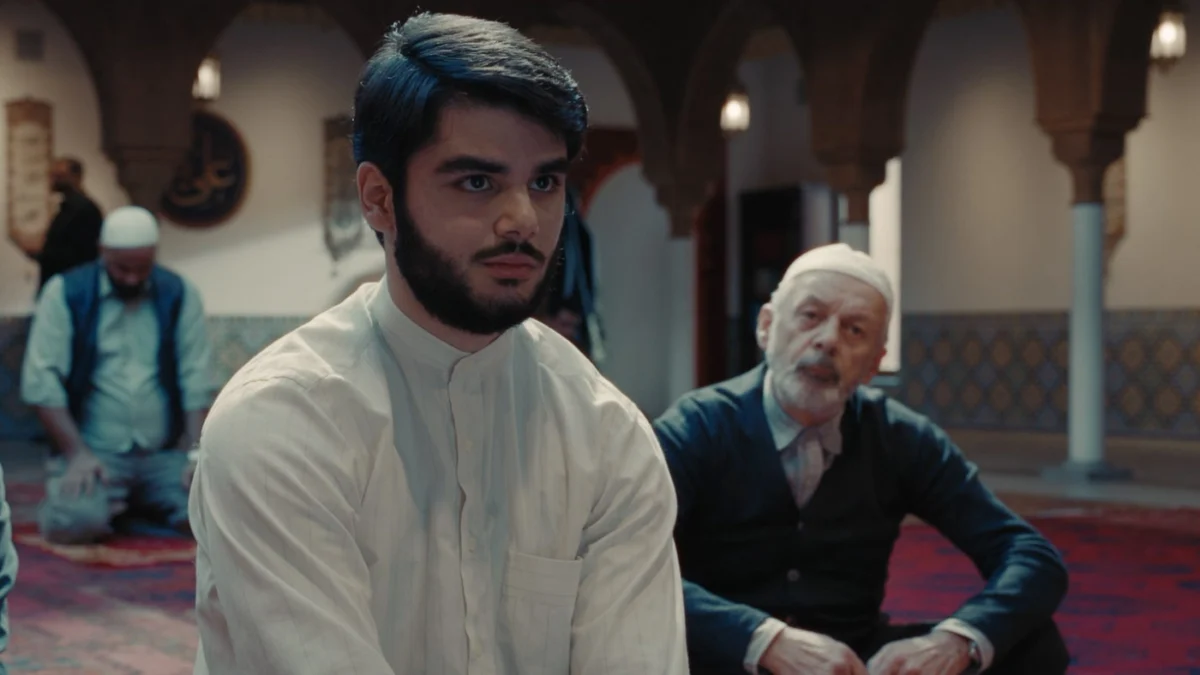
The 60th edition of the Karlovy Vary International Film Festival (KVIFF) on Wednesday, July 8, marks a significant, albeit somber, occasion with the world premiere of the family drama Hijamat. Iranian writer and director Nader Saeivar, known for The Witness, No End, and Namo, will attend the Crystal Globe main competition premiere in person, a privilege tragically denied to his long-time friend and creative collaborator, Jafar Panahi. Panahi, an internationally acclaimed auteur, produced and edited Hijamat and co-wrote the Cannes 2025 Palme d’Or winner It Was Just An Accident with Saeivar. His absence from the festival underscores the persistent challenges faced by artists in Iran, as he remains under a travel ban and faces renewed threats of imprisonment for "propaganda against the regime."
Panahi’s current predicament casts a long shadow over what should be a celebratory moment for Iranian cinema. Having recently had his passport confiscated by Iranian authorities, he is once again entangled in legal battles, facing the prospect of another prison term. This latest development follows a pattern of persecution that has plagued Panahi’s career for over a decade. In 2010, he was initially sentenced to six years in prison and a 20-year ban from filmmaking, writing screenplays, giving interviews, or traveling abroad. Despite this, he continued to create groundbreaking films, often employing clandestine methods, which earned him international accolades, including the Golden Bear at the Berlin Film Festival for Taxi (2015) and the Golden Lion at Venice for No Bears (2022). His perseverance became a powerful symbol of artistic defiance against state censorship.
A Director’s Exile and Artistic Rebirth in Berlin
For Nader Saeivar, Hijamat represents a profound personal and artistic turning point. The film is his first feature fully made outside of Iran, a direct consequence of his decision to leave the country for Berlin in the middle of shooting It Was Just An Accident. This geographical shift mirrors a deeper internal migration, as Saeivar openly discusses how his relocation influenced his artistic perspective. "Moving to Berlin helped me think about myself, my inner feelings," Saeivar told The Hollywood Reporter ahead of the premiere. "When I moved from Iran to Berlin after 50 years of my life, suddenly I realized that all those wrong beliefs I had — they broke down within one night. I suddenly realized that I was just wasting my energy on such wrong and rigid beliefs."

His previous three films, Saeivar notes, primarily focused on "social issues and people’s objectives." Hijamat, however, delves into the "roots of these problems," reflecting his own journey of introspection. This shift from external activism to internal excavation is central to the film’s narrative and its broader philosophical implications. It’s a brave exploration of personal transformation, challenging deeply ingrained societal and individual dogmas, which Saeivar believes are universal.
The Narrative Heart of Hijamat: Family, Faith, and Identity
Hijamat centers on Murad, played by the multi-talented Kida Khodr Ramadan, a figure well-known in German, Arab, and Turkish communities in Berlin. Murad finds himself in a desperate struggle to protect his younger brother, Kerem (Jael Cem Ilhan), after discovering Kerem is gay. This revelation shatters the fragile equilibrium of their deeply religious Muslim family, threatening to expose long-buried secrets and tear their lives in Berlin apart. The film navigates the tumultuous intersection of faith, sexuality, and familial duty, set against the backdrop of a diaspora community grappling with tradition in a modern, liberal society.
The ensemble cast further enriches the film’s texture, featuring acclaimed actors such as Nicolette Krebitz, Aziz Capkurt, Moritz Bleibtreu, and Nastassja Kinski. Their involvement underscores the film’s international appeal and its potential to resonate with diverse audiences beyond its specific cultural context. Saeivar’s choice of Ramadan as the protagonist was strategic, aiming to connect authentically with the community depicted. "If you want to conquer a village, you have to see the mayor first," Saeivar explained, likening Ramadan’s influence to that of a community leader. Panahi himself, upon seeing Ramadan’s work during the editing process, was reportedly "amazed by his work," praising Saeivar’s casting choice.
The Metaphor of "Hijamat": Purging the "Dirty Blood" of Beliefs

The film’s title, Hijamat, refers to an ancient therapeutic practice, also known as wet cupping. This traditional method involves drawing small amounts of blood from the body, believed to provide pain relief and detoxification. Saeivar masterfully employs this practice as a powerful metaphor for the film’s core message. "I believe that we have to really tackle the issues that are like a wall that we have built around ourselves," Saeivar asserts. "Without that, we cannot change any political issues. It’s like the ‘dirty’ blood in the back of our bodies, as we see in Hijamat. If we don’t get rid of it, if we don’t tackle it, nothing changes!"
This metaphor extends to his own past experiences. Saeivar vividly recounts his childhood during the Iran-Iraq war in the 1980s. "In the ’80s, in Iran, we believed that we had an eight-year war with Iraq, and we believed that if we went to that war and we fought, that would be the right thing, and we should die for our beliefs," he recalled. "I was a child, and I believed it strongly. I really wished to grow up fast to go to war and become a martyr. Just imagine what it was like when I later realized that all that war was due to political gains for some?! Imagine how I felt. Where was God? Where was paradise?" This deeply personal disillusionment fuels the film’s call for radical self-examination and the courage to question long-held convictions.
Saeivar argues that this "dirty blood" of rigid beliefs is not exclusive to one culture or ideology. While in the East, this wall might be "formed by religion and religious beliefs," in the West, it is often "built by memories of the past." He posits that "the Eastern person is broken under the weight of religion and rigid beliefs, but the Western person is broken or strangled by remembering the glorious past. Until you take this load off your shoulders, you will never reach real freedom. That’s why I believe that everybody needs hijamat." The film thus transcends its specific setting in Berlin’s Turkish community to address a universal human struggle: the imperative to critically assess and, if necessary, purge outdated or harmful belief systems that hinder individual and collective progress. A scene showing Murad being led to a cellar, as if to dig deep within himself, visually reinforces this internal journey.
The Unbreakable Bond: Saeivar and Panahi’s Creative Partnership
The shadow of Jafar Panahi’s absence is ever-present, yet the enduring strength of his creative and personal bond with Saeivar shines through. Despite the geographical distance and Panahi’s confinement, their collaboration on Hijamat was seamless, with Panahi overseeing the production and editing. Their partnership has been fruitful, notably yielding It Was Just An Accident, a film that garnered critical acclaim, including the Palme d’Or at Cannes in 2025.

Saeivar maintains daily contact with Panahi, speaking for at least an hour each day. "He’s just getting bored in Iran. He can’t do anything," Saeivar notes, painting a poignant picture of a master filmmaker stifled by political constraints. Panahi’s time is now consumed by "the judiciary, going to court and seeing a lawyer every day," rather than pursuing new projects. This daily communication highlights not just their friendship but also Panahi’s continued intellectual engagement with cinema, even under duress. Their bond is so profound that Panahi was the first to congratulate Saeivar and other colleagues from It Was Just an Accident when they were accepted into the Academy, and he remains Saeivar’s primary sounding board for new ideas.
Karlovy Vary: A Platform for Global Cinema and Artistic Resilience
The Karlovy Vary International Film Festival, one of the oldest and most prestigious film festivals in Central and Eastern Europe, provides a significant platform for Hijamat. Founded in 1946, KVIFF has a rich history of showcasing challenging and thought-provoking cinema, often from regions where artistic expression faces state restrictions. The Crystal Globe competition, where Hijamat premieres, is its highest honor, signifying the festival’s recognition of the film’s artistic merit and thematic depth.
KVIFF’s decision to feature Hijamat prominently, despite the political backdrop, reinforces its commitment to artistic freedom and its role in fostering global dialogue. While the festival had hoped to welcome Panahi as part of the film’s delegation, his travel ban prevents this. This situation is not uncommon for Iranian filmmakers, many of whom have faced similar restrictions, making international festivals crucial conduits for their voices to be heard. KVIFF, like other major festivals, often becomes a de facto stage for highlighting human rights issues and the struggles of artists worldwide.
Broader Implications for Iranian Cinema and Artistic Freedom

Panahi’s ongoing persecution is indicative of a broader pattern of repression against artists and intellectuals in Iran. The charge of "propaganda against the regime" is a broad and frequently used tool to silence dissenting voices or those whose work is perceived as critical of the state. Filmmakers like Panahi, Mohammad Rasoulof, and many others have endured arrests, travel bans, and imprisonment, creating a chilling effect within the country’s vibrant film industry.
The international film community has consistently rallied in support of these artists. Film festivals, academies, and human rights organizations regularly issue statements, hold screenings in solidarity, and bestow awards to draw global attention to their plight. This collective response underscores the universal value placed on artistic freedom and the recognition that suppressing creative expression diminishes not just the individual artist, but global culture as a whole. Panahi’s situation serves as a stark reminder of the sacrifices many artists make for their craft and their beliefs. His continued defiance, even from within Iran, inspires filmmakers worldwide and keeps the conversation around artistic censorship alive.
A Call for Universal Introspection
As Hijamat makes its debut, it arrives not just as a film but as a profound statement. Nader Saeivar’s personal journey of self-reflection, spurred by his move to Berlin, infuses the narrative with an authentic call for introspection. The film challenges viewers to confront their own "rigid beliefs," whether they stem from religious dogma, cultural traditions, or idealized pasts. By setting the story within a specific community in Berlin, Saeivar skillfully universalizes the struggle, making it accessible to anyone who has ever grappled with internal conflict or societal pressures.
The film’s exploration of identity, sexuality, and the tension between tradition and modernity is particularly timely in an increasingly globalized world. It prompts audiences to consider how deeply ingrained beliefs can hinder personal growth and societal progress, and how essential it is to perform a kind of "hijamat" on the mind – a cleansing of outdated thoughts and prejudices. As Saeivar continues his work from Berlin, and Panahi endures his challenges in Tehran, Hijamat stands as a testament to the enduring power of cinema to provoke thought, foster empathy, and ultimately, advocate for a deeper, more courageous understanding of ourselves and the world around us. Its premiere at KVIFF is not just a cinematic event; it is a vital conversation starter in an era that desperately needs it.