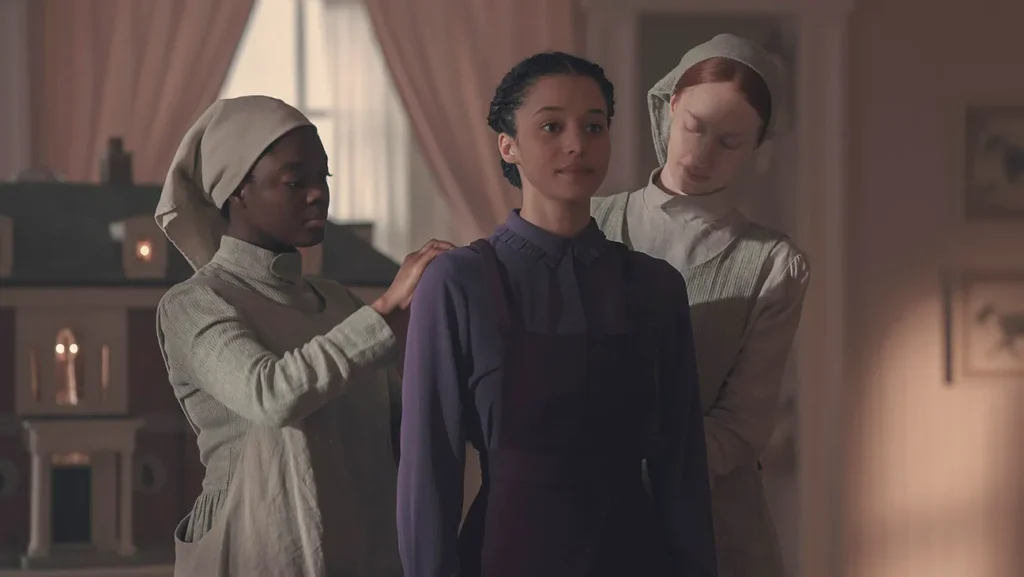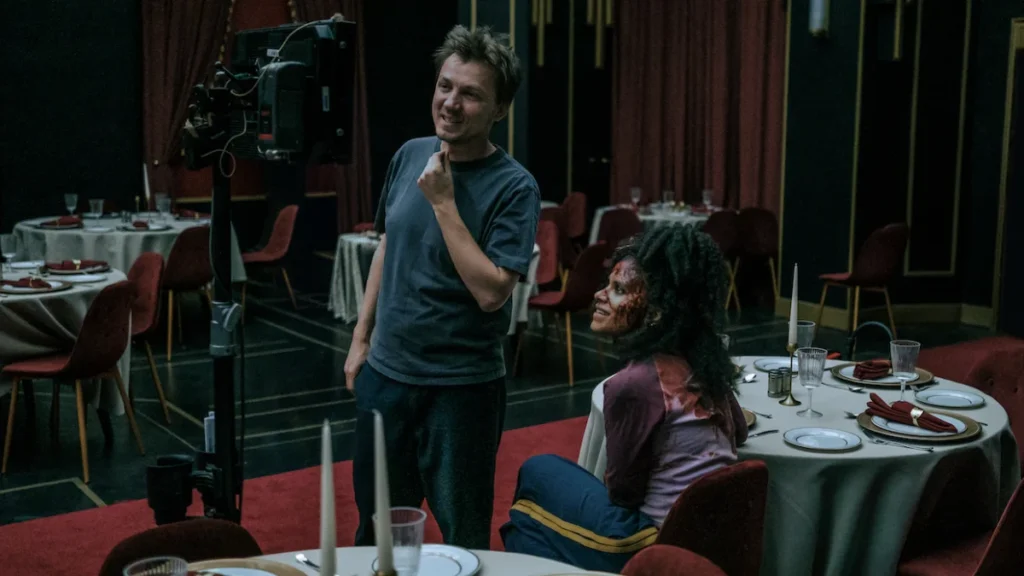
Director Chie Hayakawa’s latest feature, Renoir (2026), presents a deeply personal and nuanced portrayal of a preteen girl’s confrontation with grief and self-discovery against the vivid backdrop of Japan’s "bubble period" in 1987. The film, which recently premiered at IFC Center in New York and is set to open at the NuArt in Los Angeles before expanding nationally through Film Movement, marks a distinct yet thematically resonant departure from Hayakawa’s acclaimed debut, Plan 75 (2022).
A Deep Dive into Fuki’s World: Grief, Identity, and the 1987 Bubble Era
At the heart of Renoir is Fuki (Yui Suzuki), an 11-year-old girl whose world is irrevocably altered and darkened by the terminal illness of her father. Set approximately a year into Japan’s historic "bubble period," the film deftly intertwines Fuki’s evolving inner life with the transformative economic landscape of the nation. This era, characterized by unprecedented financial and real-estate speculation, radically reshaped Japan’s economy just a generation after its remarkable post-war recovery. Hayakawa uses this boom time not merely as a historical setting, but as a dynamic canvas against which Fuki gains a profound awareness of the people around her and the far-reaching consequences of her own actions.
A pivotal moment in Fuki’s journey involves a chance encounter with a reproduction of Auguste Renoir’s 1880 oil portrait, Irène Cahen d’Anvers. This renowned artwork, depicting an eight-year-old girl with an air of delicate poise, provides Fuki with a crucial clue to her burgeoning sense of taste and a vision for how she wishes to navigate her own path through the world. The film meticulously captures Fuki’s perspective, skillfully contrasting her unmistakable interest in the macabre with the mundane daily rituals and the conventional societal expectations placed upon an 11-year-old girl.
Director Hayakawa revealed that Renoir is deeply rooted in her own formative experiences, stating that she had envisioned making such a film since she was Fuki’s age. Her primary inspiration stems from personal recollections, further enriched by the cinematic influences of Shinji Somai’s 1993 film Moving and the works of Taiwanese master Edward Yang, particularly his celebrated 2000 drama Yi Yi, both of which similarly explore the intricacies of family life and the journey of self-discovery through a child’s eyes.
Chie Hayakawa’s Evolving Vision: From Dystopia to Intimate Portrait
Renoir stands in a starkly different register from Hayakawa’s breakout debut, Plan 75. The 2022 film garnered significant international attention for its unsettling premise: a Japanese government-implemented, incentivized euthanasia program for senior citizens designed to alleviate the country’s looming population crisis. Plan 75 resonated deeply with global anxieties, especially given projections that by 2050, one-third of all Japanese people will be over 65, and its release coincided with a global pandemic that intensified discussions around human value and productivity.
While Plan 75 was widely described internationally as a dystopian science-fiction film, Hayakawa herself clarifies that she never perceived it as such, but rather as a depiction of a world chillingly parallel to contemporary society. Within Japan, the reception was particularly potent, with many viewers describing it as "scarier than a horror movie" due to its perceived real-world plausibility in the near future. This sentiment was amplified by the COVID-19 pandemic, which forced a societal shift in perspective, transforming the film’s concept from a distant possibility to an almost inevitable outcome in the eyes of many.
In contrast, Renoir presents a more mysterious and arguably riskier narrative proposition. It delves into the complex process of reconciling one’s personal suffering with the suffering of others. Both films, however, form a fascinating diptych in their distinct yet profound approaches to grief, notably avoiding pat catharses and cheap sentimentality. Hayakawa acknowledges the role of sentimentality in the psychic landscape of late childhood, particularly in Renoir, but ultimately crafts narratives that are both unflinching and deeply compassionate.
The Echoes of a Changing Nation: Japan’s Post-War Trajectory and Western Influence
The decision to set Renoir in 1987 is not merely an aesthetic choice but a deliberate anchoring to a pivotal moment in modern Japanese history. The "bubble period," which roughly spanned from 1986 to 1991, was a time of unprecedented economic exuberance and speculation. Following its "miraculous" post-war recovery, Japan had rapidly ascended to become the world’s second-largest economy. This boom was fueled by aggressive financial deregulation, low interest rates, and a nationalistic fervor that saw asset prices, particularly in real estate and stocks, soar to unsustainable heights. The Nikkei 225 stock average, for instance, peaked at nearly 39,000 in December 1989, an all-time high never since surpassed.
This period of immense wealth creation and perceived limitless optimism serves as a crucial backdrop for Fuki’s journey. Director Hayakawa reflects on her own childhood during this era with a sense of gratitude, noting the absence of smartphones and the internet. She describes a time when the "rest of the world still felt so far away," fostering a unique cultural environment. Programs featuring psychics on television were immensely popular, indicating a collective willingness to believe in the mysterious and the unseen. This was, in her words, an "optimistic time" where "people genuinely believed that the future would be brighter."
This era also saw a strong cultural admiration for the West, particularly America and Europe. Hayakawa highlights how this manifested in various ways, from the widespread purchase of replica European masterworks to the adoption of Western concepts like anger-management courses. The Renoir painting central to the film is itself a replica, a common sight in Japanese homes of the time, often displayed in "gaudy, Gothic frames" within typically small Japanese residences. Hayakawa recalls begging her parents for such a reproduction, purchased from a newspaper ad, finding an "innocence" in this trend that represented the prevailing outlook of many Japanese people. The inclusion of an American-originated anger-management course, attended by Fuki’s mother, further underscores this admiration for Western ideas, often perceived as superior.
Crafting Authenticity: Director’s Process and Autobiographical Underpinnings
Hayakawa’s commitment to authenticity is evident in her meticulous casting and narrative construction. The search for Fuki led to Yui Suzuki, the very first candidate Hayakawa auditioned. Suzuki immediately captivated the director by consistently delivering performances that subtly deviated from Hayakawa’s initial vision, surprising her with unique expressions and movements. Suzuki’s complete lack of camera shyness, coupled with a rare coexistence of childlike essence and mature understanding, solidified her role. A memorable moment from the audition, Suzuki’s "special skill" imitation of a horse, so charmed Hayakawa that she immediately wrote it into the script, further illustrating the organic and responsive nature of her creative process.
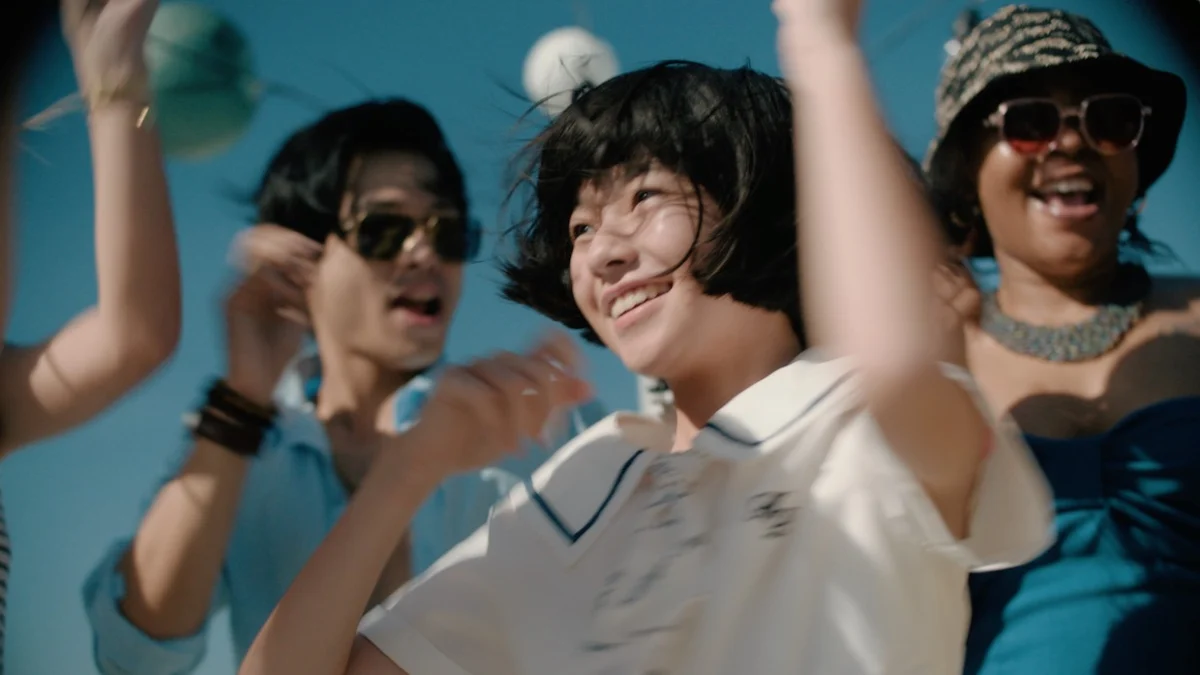
The 1980s setting is woven into the film through subtle yet evocative signifiers: children dancing to a Yellow Magic Orchestra song at camp, Fuki’s nerve-wracking interactions on a phone chat service (a precursor to modern online communication), and her frequent viewing of VHS tapes. These details immerse the audience in a bygone era, emphasizing the director’s appreciation for a time when personal relationships felt less complicated and the world, though admired, retained a sense of mystery.
A particularly poignant subplot concerns Fuki’s mother, who grapples with her husband’s impending death while simultaneously being obligated to attend a corporate course on how to interact with colleagues and employees. Hayakawa reveals a deeply personal motivation behind this storyline: depicting the profound loneliness experienced by adults. Her own mother struggled with anger management, a memory that initially caused childhood upset but later evolved into an empathetic understanding of her mother’s isolation. In Renoir, the mother’s anger, humiliation, and eventual connection with someone who sees her inherent good are explored with a depth that transcends simple judgment, reflecting Hayakawa’s mature perspective on human flaws and vulnerabilities.
The Business of Cinema: Navigating the Japanese Film Industry
Hayakawa’s approach to filmmaking also sheds light on the contemporary Japanese film industry. She notes the overwhelming prevalence of films based on pre-existing intellectual property (IP), such as best-selling novels, manga adaptations, or live-action versions of anime. This trend, estimated by Hayakawa to account for perhaps 90% of domestic hit films, is driven by a risk-averse investment climate that favors established narratives.
Hayakawa, however, maintains a clear preference for original scripts. While she respects anime and manga as distinct media and expresses no desire to adapt them into live-action, she remains open to adapting novels if a story genuinely resonates with her. This inclination towards original content, combined with the scarcity of funding opportunities for debut features based on original scripts in Japan, has led Hayakawa to pursue international co-productions. Both Plan 75 and Renoir benefited from this strategy, finding crucial support through European grants and film festival sections dedicated to first features. This international collaborative model, Hayakawa observes, is increasingly blurring national borders in filmmaking, making it less of an anomaly for Japanese directors to operate globally.
A Collaborative Vision: Cinematography and Production Insights
A significant creative partnership for Hayakawa is with cinematographer Hideho Urata, who worked on both Plan 75 and Renoir. Their collaboration reveals a nuanced approach to visual storytelling. In Plan 75, for instance, scenes involving the Filipino care worker were deliberately shot handheld to convey her vibrant and lively character. Hayakawa, who did not have the conventional assistant director experience common among Japanese filmmakers, credits Urata for patiently guiding her through the practicalities of being on set and ensuring smooth production.
Despite early challenges, including Urata’s limited involvement in location scouting for Plan 75 due to strict lockdown rules, their shared sensitivity to image-making fostered a deeply collaborative environment. Hayakawa describes extensive phone and Zoom conversations about films they admired and the script’s thematic core, which laid the groundwork for a profound understanding. By the time they embarked on Renoir, many crew members from Plan 75 returned, creating a trusted and relaxed atmosphere that allowed Hayakawa to lean into her directorial strengths.
Universal Themes of Loss and Empathy: Renoir‘s Broader Resonance
Renoir delves into the profound and often solitary experience of grief, a theme that resonated deeply with one interviewer who saw the film amidst personal family struggles. Hayakawa acknowledges the paradox that while a person’s death often elicits an outpouring of sympathy, it can also be one of the loneliest periods of human existence. The film explores the complexities of how people react to grief, from well-intentioned but awkward attempts at comfort to selfish responses or withdrawals due to discomfort.
Hayakawa shares a powerful autobiographical anecdote, recalling her own childhood anticipation of her father’s funeral, imagining friends actively trying to relate to her pain, a thought she carried with immense guilt and shame. This early experience informs Fuki’s journey, where she gains an awareness of death and its isolating effects, while simultaneously learning to empathize with the suffering of others. The film also touches on the "layered, strange" aspects of familial grief, as Hayakawa recounts her observation of her mother’s almost performative display of widowhood at her father’s funeral, a memory that highlights the complex and sometimes unsettling reality of human reactions to profound loss.
Despite its sober themes, Renoir is visually beautiful, counterbalancing a wistful, summer vibe with the creeping onset of grief and isolation. Hayakawa attributes this sober nostalgia to her own childhood memories, which she describes as predominantly filled with worry, stress, loneliness, and isolation, rather than the typically idealized view of childhood happiness.
Addressing Japan’s Future: A Director’s "Optimistic Pessimism"
The thematic concerns in Renoir and Plan 75 are deeply intertwined with Japan’s contemporary anxieties. Hayakawa articulates a widespread concern about the future across Japan, driven by its aging and declining population. The anticipation of societal collapse, separate from economic decline, is palpable. She notes the resistance to change from an older generation, often nostalgic for the bubble period, hindering the development of new solutions. This has fostered a general feeling of helplessness among Japanese people, a sense of being unable to fight or resist the country’s multifaceted problems.
While the United States grapples with a powerful older generation refusing to relinquish power, Hayakawa clarifies that Japan’s primary concern revolves around discrimination faced by the elderly, who are often labeled a "burden" and frequently struggle economically. Both films, in their distinct ways, offer compassionate yet unsparing examinations of these societal pressures and individual responses to them.
Chie Hayakawa describes her personal philosophical stance as an "optimistic pessimist," a sentiment that encapsulates the essence of her filmmaking. Her works confront uncomfortable truths and societal anxieties with unflinching honesty, yet they are ultimately imbued with a profound sense of human compassion and a glimmer of hope.
Conclusion: Renoir‘s Theatrical Run and Lasting Impact
As Renoir continues its theatrical rollout, starting with its current run at IFC Center in New York and expanding to the NuArt in Los Angeles this Friday before wider distribution by Film Movement, it offers audiences a compelling and deeply affecting cinematic experience. Through the eyes of a young girl navigating personal tragedy amidst a pivotal moment in national history, Chie Hayakawa delivers a film that is both intimately personal and broadly resonant, cementing her reputation as a vital voice in contemporary Japanese cinema that thoughtfully explores the complexities of grief, identity, and societal evolution.