John Travolta’s feature directorial debut, Propeller One-Way Night Coach (2026), captivated audiences and critics at the Cannes Film Festival, culminating in an honorary Palme d’Or for the veteran actor and achieving remarkable streaming success on Apple TV. The 60-minute film, an intimate and deeply personal exploration of a young boy’s first airplane flight in 1962, premiered on the festival’s frantic first Friday night, immediately distinguishing itself as a refreshing, uncynical oasis amidst the usual frenzy of the prestigious cinematic event. Its subsequent availability on Apple TV saw it rapidly climb to the position of the most-streamed film globally for seven consecutive days, underscoring its broad appeal and the resonance of its unique narrative vision.
A Triumphant Return to Cannes
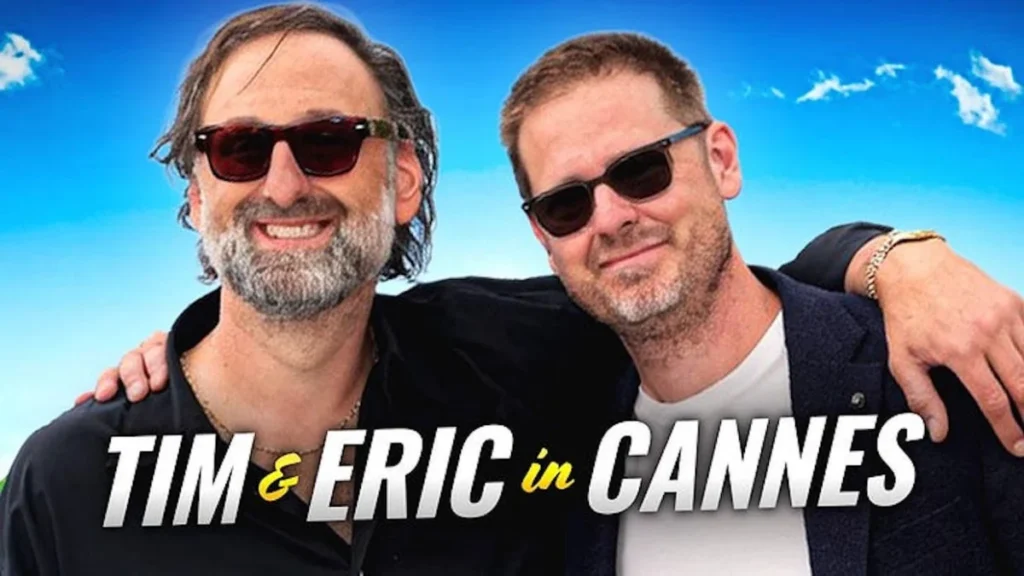
The screening at Cannes was preceded by a poignant highlight reel of Travolta’s illustrious career, showcasing iconic roles from Saturday Night Fever (1977) to Pulp Fiction (1994), films that have indelibly etched his presence into cinematic history. Following this retrospective, festival director Thierry Frémaux presented Travolta with an honorary Palme d’Or, a recognition of his enduring contribution to cinema. Travolta, visibly moved, expressed profound gratitude for the unexpected honor. The anticipation in the packed theater was palpable, as attendees pondered what form Travolta’s directorial voice would take in a film centered on such a specific and seemingly simple premise: a child’s maiden voyage by air.
The answer arrived in a charming and meticulously crafted portrait of childhood experience, imbued with a loving attention to detail and a profound sense of memory. The film, adapted from Travolta’s own 1997 novella of the same name, draws directly from his personal experiences with his mother, sister, and other family members. Critics and audiences alike noted how the film’s vibrant, living colors and immersive atmosphere felt like a direct, total-recall excerpt from Travolta’s own early life, a cinematic memoir brought to vivid life. Frémaux later lauded the film not merely as an homage to aviation but as a broader tribute to movies, actors, cinema, soundtracks, and the very spirit of mid-century art and culture.
The Genesis of a Personal Narrative
The journey of Propeller One-Way Night Coach from personal anecdote to acclaimed film spans decades. Travolta initially penned the novella in 1993, creating 70 copies for his family. The overwhelmingly positive reception among his relatives encouraged him to seek wider publication, leading to its release by Warner Brothers in 1997. Despite significant interest from producers eager to adapt it into a film, Travolta resisted, feeling the story was too personal and intimate to risk misinterpretation by others. He harbored a deep-seated desire to protect the integrity of his vision, fearing that an external production might fail to capture the subjective nuances central to his childhood memories.
This long-held aspiration finally materialized a year and a half prior to its Cannes premiere. Nearing his 70th birthday, Travolta recognized the urgency of bringing his story to the screen himself. He made the decisive choice to self-finance and produce the film, ensuring complete creative control over its direction, casting, and aesthetic. His objective was clear: to translate his novella into a visual "painting," a pure expression of his imagination, and then assess its relevance and appeal to a broader audience. This independent spirit allowed him to craft a film that remained uncompromised by commercial pressures, a testament to his artistic integrity.
Apple TV Acquisition and Unprecedented Festival Selection
The film’s path to distribution was swift and decisive. Travolta first presented Propeller One-Way Night Coach to Eddie Cue at Apple, who immediately recognized its unique quality. Cue enthusiastically declared it "spectacular" and an "important movie," assuring Travolta that Apple would ensure its global reach. This initial endorsement from a major streaming platform provided crucial validation for Travolta’s self-funded project.
Just three months later, the film garnered further, unprecedented recognition from Thierry Frémaux at the Cannes Film Festival. Frémaux, unaware of Apple’s acquisition, was deeply impressed by the film, stating, "I can’t see anything wrong with this movie. I love it." Following an extensive 45-minute discussion with Travolta about the project, Frémaux took the extraordinary step of accepting Propeller One-Way Night Coach as the first official selection for the Cannes Film Festival, five months ahead of schedule—a move he admitted was unprecedented in the festival’s history. Frémaux committed to ensuring a "very special night" for Travolta, underscoring the profound impact the film had on him. When informed of Apple’s prior interest, Frémaux expressed a playful regret about not being the first to introduce it to the world, but quickly embraced a collaborative approach, proclaiming, "Let me lead the way, and let Apple lead the way, and together we’ll make this beautiful for you." This dual backing from a major streaming giant and the world’s most prestigious film festival provided Travolta with "two pillars of strength," setting the stage for a truly remarkable premiere.
A Child’s Perspective: The Heart of the Film
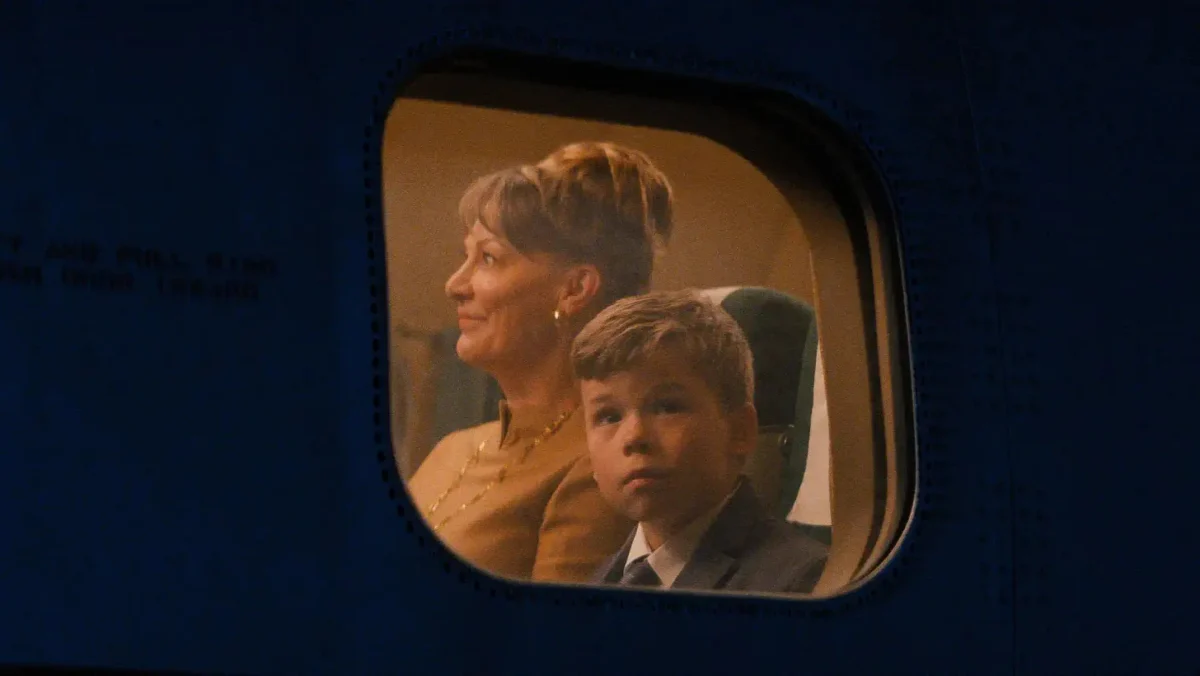
The film’s narrative is skillfully anchored by a fascinating voiceover narration, offering an internal monologue and commentary from the perspective of the young protagonist, Jeff. Played by Clark Shotwell, whom Travolta’s daughter, Ella Bleu, described as evoking her father ("He’s a little him"), Jeff is an acutely observant and precocious child, absorbing every detail of his first flight in 1962. Ella Bleu Travolta also features in the film, portraying a captivating flight attendant, while Kelly Eviston-Quinnett delivers a compelling performance as Helen, Jeff’s mother, whose keen interest in the world is clearly infectious for her son. This "joie de vivre" that permeates the film also characterized Travolta’s own generous and wonderfully observant responses during interviews, reflecting his self-description as a "voyeur, an observer of life."
The voiceover, written by Travolta himself, captures the sincerity and richness of a child’s experience, depicting fleeting thoughts with an innocent, childlike tonality. It allows the audience to access Jeff’s unvarnished perceptions – his non-judgmental awareness of his mother’s flirtatiousness or proclivity to drink and smoke, his empathy for others’ pain, and his resilient capacity to recover from distressing events. For instance, the film touches upon real-world anxieties of the early 1960s, such as the famous 1960 Idlewild plane crash, the Cuban Missile Crisis, and the threat of atomic bombs. Yet, through Jeff’s eyes, these grave concerns are filtered through a child’s unique lens of curiosity, problem-solving, and inherent optimism. His reaction to a man’s fear after hearing about a plane crash – focusing on his own broken toy and devising a plan to have the pilot fix it – perfectly encapsulates this distinctive stream of consciousness. This observational quality, where drama emerges not from contrived conflict but from the nuanced perception of everyday life, is a hallmark of the film’s success.
Meticulous Recreation of the Mid-Century Era
A significant strength of Propeller One-Way Night Coach lies in its painstaking recreation of the 1962 setting. Travolta, a self-proclaimed "tenacious" collector of airline tickets, schedules, and advertisements from his youth, poured his encyclopedic knowledge of the era into every visual and sensory detail. He sought to accurately capture the impact of each visual element: the distinct colors of plane interiors, the exotic and colorful meals (Chateaubriand, chicken cordon bleu) served on divine plateware and glassware, and the elegant uniforms of flight attendants (then called stewardesses), often designed by renowned couturiers like Don Loper and even Dior in earlier decades.
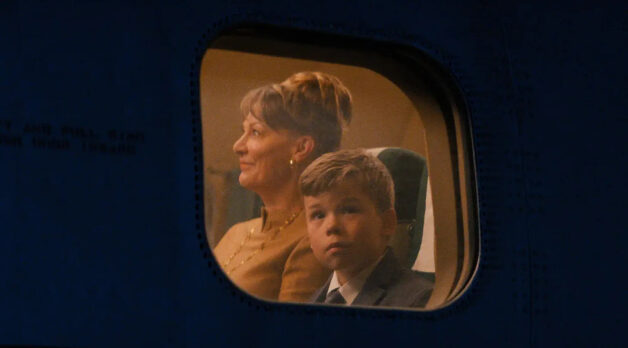
Beyond the aesthetics, Travolta vividly recalls the atmosphere of air travel during that period. Planes often felt spacious and uncrowded, rarely sold out, reflecting a time when air travel was a luxury for the few. He meticulously recreated sensory details such as the mix of cigarette smoke and food scents in the cabin, a stark contrast to modern air travel.
The soundtrack is another vital component of this historical immersion. Travolta curated a selection of music that defined the early 1960s, from the sudden worldwide popularity of Brazilian samba artists like Antônio Carlos Jobim and Sérgio Mendes, to the enduring melodies of popular tunes by Frank Sinatra, Tony Bennett, and Barbra Streisand. Iconic film scores also play a crucial role, with Henry Mancini’s "Moon River" from Breakfast at Tiffany’s (1961) perfectly accompanying a walk through the red corridor of the TWA terminal, or Dave Brubeck’s "Take Five" aligning with the era’s innovative architecture. These musical choices were not arbitrary but "kismetic," aligning organically with the visuals and emotional beats of the film, creating a cohesive and immersive experience. Travolta’s ability to sync Barbra Streisand’s "Lazy Afternoon" with a specific dialogue about his mother’s summer stock experiences, or "A Girl from Ipanema" with his daughter Ella’s slow-motion walk, exemplifies this meticulous integration of sound and vision.
A Tapestry of Cinematic Influences
Travolta openly acknowledges that Propeller One-Way Night Coach is a rich "homage to movies and actors and cinema and soundtracks and music." The film is an eclectic blend of influences, reflecting his lifelong engagement with the art form. He references a diverse range of films and directors, from the classic Hollywood glamour of The V.I.P.s (1963) starring Liz Taylor and Paul Newman, to the European artistry of Bernardo Bertolucci and Federico Fellini. The unexpected appearance of a ten-foot-tall man, for instance, is a deliberate "Fellini move," while the mother’s "one-night escapade" subtly evokes Bertolucci’s Last Tango in Paris (1972). Films like A Man and a Woman (1966), Two for the Road (1967), and the stunning South American film Black Orpheus (1959) also contribute to the film’s rich tapestry of inspiration.
Travolta emphasizes that these diverse influences, though spanning various years, shared a "similar era" aesthetic and sensibility, allowing them to coalesce harmoniously within his film. He compares it to designing a house with elements from Saarinen, Lapidus, and Frank Lloyd Wright – disparate yet compatible styles that speak to a common artistic spirit. This approach, he explains, felt organic and steady, mirroring the eclectic array of visuals and cultural phenomena that shaped his own childhood. The film, therefore, becomes a celebration of mid-century everything: architecture, design, clothing, music, and the resilient, hopeful spirit of the age, even amidst global anxieties.
Lessons from the Masters: Travolta’s Directorial Philosophy
Having worked with revered directors such as Quentin Tarantino, Brian De Palma, and Mike Nichols, Travolta brought a wealth of practical knowledge to his directorial debut. He distilled valuable lessons from observing filmmaking processes across a spectrum of quality. From Tarantino, he learned the power of efficient storytelling, demonstrating that audiences are "smart" and don’t require every detail to be explicitly shown. He recalls a scene in Pulp Fiction where Tarantino opted for a tight close-up of a character vomiting rather than showing every beat of the preceding action, trusting the audience to infer the narrative.
Travolta also advocates for meticulous rehearsal and fewer takes, believing that well-prepared actors deliver their best performances early on, preventing "rehearsing on screen." This not only enhances the quality of the performances but also maintains momentum and excitement on set for both actors and crew. Crucially, he echoes the sentiments of Nichols and De Palma regarding casting: "90% of your issues are: is everyone right for those characters?" He believes that true talent is "inborn" and that correct casting means actors "already own that character," allowing the director to focus on subtle refinements rather than micromanaging performances. These insights from a storied acting career profoundly shaped his approach to directing Propeller One-Way Night Coach.
Defying Narrative Conventions: The Power of Observation
Perhaps one of the film’s most distinctive qualities is its deliberate eschewal of conventional dramatic conflict. Many might expect a film about a child’s journey to feature a "big conflict or drama," such as the boy getting lost in the airport. However, Travolta consciously rejected this pressure, opting instead for a "cool journey" driven by observation and atmosphere. He trusted that the inherent interest of the characters, the richness of the era, and the sensory immersion would be compelling enough.
The "drama" in Propeller One-Way Night Coach emerges from the awakening of the senses, from the "Michelin-star restaurant" effect of experiencing something entirely new and vivid. The minor "conflict" of the boy’s broken toy airplane is resolved with a simple act of kindness from the stewardess and the pilot, becoming a significant moment precisely because the audience is transported to a time and mindset where such an event holds profound importance. Both Thierry Frémaux and Eddie Cue lauded the film’s perfect length, affirming that its 60-minute runtime was precisely what it "had to be," demonstrating that a compelling cinematic experience doesn’t always require a sprawling narrative or overt conflict.
Broader Implications and Legacy
The success of Propeller One-Way Night Coach carries significant implications for John Travolta’s career and the broader film industry. For Travolta, it represents a profound artistic validation, showcasing his talent not just as an actor but as a visionary director capable of crafting deeply personal and universally resonant narratives. It defies expectations often placed on established stars, revealing a nuanced and sensitive artistic sensibility.
Frémaux’s emphasis on the film’s low production cost and high impact also sends a powerful message to the industry, demonstrating that cinematic excellence and global appeal are not solely contingent on massive budgets. This could inspire a new wave of independent filmmaking focused on authentic storytelling and artistic vision over commercial spectacle. For Apple TV, the acquisition and subsequent streaming success underscore its commitment to acquiring unique, critically acclaimed content that appeals to a diverse global audience.
Ultimately, Propeller One-Way Night Coach stands as a testament to the enduring power of memory, the richness of a child’s perspective, and the timeless allure of mid-century charm. It is a heartfelt homage, a meticulously crafted historical piece, and a triumphant directorial debut that has resonated deeply with audiences and critics worldwide, cementing John Travolta’s place not just as a Hollywood icon, but as a compelling new voice in filmmaking.