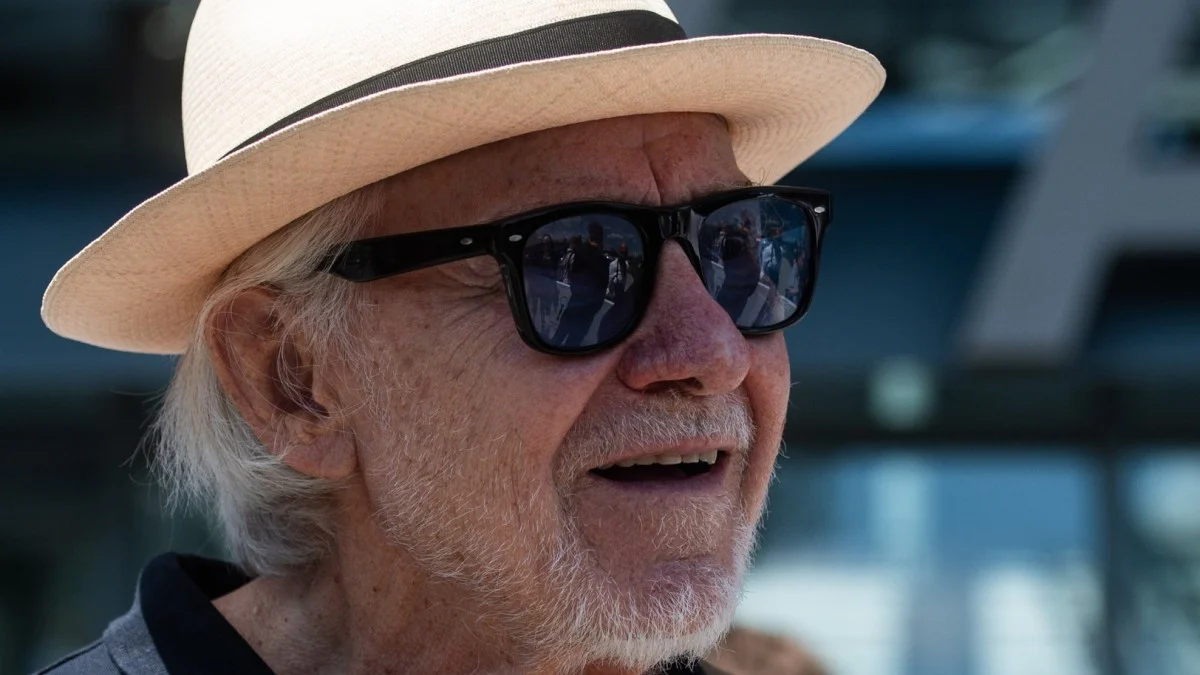
Legendary actor Harvey Keitel, a towering figure in American cinema, passionately articulated his belief in film and other artistic expressions as fundamental forces for fostering unity and instigating profound societal change during a recent discussion with The Hollywood Reporter at the Karlovy Vary International Film Festival (KVIFF). His conviction, he asserted with characteristic intensity, is not merely a personal sentiment but one echoed through millennia, citing the ancient Greek philosopher Aristotle to underscore the timeless power of aesthetic force. Keitel’s appearance at KVIFF, a prestigious cinematic event celebrating its 60th edition in its 80th year, running through July 11, provided a significant platform for his reflections on the state of global cinema and the wider world.
The Karlovy Vary International Film Festival: A Beacon of Cinematic Dialogue
The Karlovy Vary International Film Festival, nestled in the picturesque spa town of Karlovy Vary in the Czech Republic, stands as one of the oldest and most respected film festivals globally, holding an "A" category accreditation from the International Federation of Film Producers Associations (FIAPF). Its rich history dates back to 1946, initially alternating with the Moscow International Film Festival before establishing its annual cadence. This year’s milestone double anniversary — the 60th edition marking 80 years since its inception — underscores its enduring legacy and its critical role in connecting Eastern and Western European cinema with the broader international film landscape. KVIFF is renowned for its eclectic programming, showcasing both established masters and emerging talents, and for its unique, intimate atmosphere that encourages genuine interaction between filmmakers, industry professionals, and audiences. The festival’s commitment to independent and art-house cinema, often highlighting works that provoke thought and spark conversation, aligns perfectly with Keitel’s own philosophical perspective on the transformative power of art. As a gathering point for diverse voices and narratives, KVIFF, much like its counterparts such as Cannes, Venice, Berlin, and Tribeca, serves as a vital nexus where the "aesthetic force" Keitel speaks of can truly materialize and ripple outwards, influencing cultural discourse and understanding.
Keitel’s Vision: Art as an Aesthetic Catalyst for Societal Change
In a world increasingly marked by division and conflict, Keitel’s message resonated with particular urgency. He observed the "tumultuous world" where "people are so against each other for banal reasons," lamenting a pervasive lack of understanding he encapsulated as having "never heard the expression ‘no bias.’" He articulated a vision where individuals are free to exist authentically, "to let people be who they want to be without objecting to it, without killing each other over religion or color or politics." It is precisely in this fractured global landscape, Keitel argued, that the arts emerge as an indispensable remedy. Drawing directly from Aristotle, he invoked the profound insight: "Words alone are not enough to change a culture. Aesthetic force is needed, and that is the artist." This Aristotelian concept, deeply rooted in the philosopher’s views on catharsis and the ethical power of tragedy and poetry to refine human character and promote civic virtue, provides a robust historical and philosophical framework for Keitel’s contemporary assertion. For Keitel, film festivals are not merely platforms for screening movies; they are crucial conduits for this "aesthetic force." By providing a space for artists to "show their wares and share how they feel about life with people," these festivals become engines of change, fostering empathy, challenging preconceptions, and ultimately "instigating change." This change, he elaborated, is "a tool for growing as a people to cure our biases and start becoming human beings instead," a process he deemed "particularly needed now, because of all the wars, fighting, politics." His statements serve as a potent reminder of the enduring belief in art’s capacity not just to entertain or reflect, but to actively shape and improve the human condition, promoting tolerance and understanding in an era often defined by their absence.
The Actor’s Path: A Journey of Self-Discovery and Empathy
Beyond its societal impact, Keitel also illuminated the deeply personal transformative power of acting, framing it as a profound avenue for self-knowledge and personal evolution. "The real gift is learning to know yourself through art," he shared with THR. This introspective journey, he explained, intrinsically "opens up one’s mind ‘instead of standing rigidly — I’m white or I’m black or I’m Christian or I’m Jewish or Arab, or so.’" His own trajectory serves as a testament to this principle. Recalling his early days in New York’s theater scene, he recounted, "When I got involved with the theater in New York, I met all these people from different beliefs, and that really changed me." This formative experience, immersing him in a crucible of diverse perspectives and life experiences, was instrumental in shaping his worldview and reinforcing his conviction in art’s capacity to transcend narrow identities. The process of inhabiting varied characters, exploring different emotional landscapes, and collaborating with individuals from myriad backgrounds inherently broadens an actor’s understanding of humanity, breaking down mental barriers and fostering a more expansive, empathetic self. This personal growth, Keitel suggested, is not merely a byproduct but a fundamental component of artistic practice, empowering artists to then contribute to the broader societal transformation he advocates.
A Master’s Education: Collaborating with Cinematic Visionaries
Despite his illustrious career spanning decades and an iconic presence in countless films, Keitel never ventured into directing. He offered a pragmatic and insightful explanation for this choice: "When you reach a certain place that I was fortunate enough to reach, acting becomes working with the director and being your own director many times." This perspective highlights the profound level of creative input and interpretive agency a seasoned actor can wield, effectively shaping the narrative and character alongside the director. He also humbly admitted, "I didn’t have time to become a director, and I didn’t have the education." However, what he lacked in formal directorial training, he more than compensated for through an unparalleled education garnered from collaborating with some of the most influential filmmakers in cinematic history. "But I was lucky enough to meet the people that did, so my education became the theater and cinema, and these wonderful people I was fortunate enough to work with — Scorsese, Tarantino, Jane Campion, Lina Wertmüller, Theo Angelopoulos and many others. Forgive me if I’m forgetting you here!"
This roster of directors represents a pantheon of global cinema, each a master in their own right, and their collaborations with Keitel have yielded some of the most memorable performances in film history.

- Martin Scorsese: Keitel’s early work with Scorsese on films like Who’s That Knocking at My Door (1967) and, most notably, Mean Streets (1973), was foundational, establishing him as a raw, intense talent and forging a lifelong association with the New Hollywood movement. Mean Streets, a gritty portrayal of small-time gangsters in Little Italy, is often cited as a breakthrough for both Scorsese and Keitel, defining a new era of American realism.
- Quentin Tarantino: His roles in Tarantino’s groundbreaking debut Reservoir Dogs (1992) as Mr. White and Pulp Fiction (1994) as The Wolf cemented Keitel’s status as an actor capable of delivering iconic, morally complex performances in contemporary cinema, showcasing his versatility and enduring appeal to new generations of filmmakers.
- Jane Campion: In The Piano (1993), Keitel delivered a nuanced and powerful performance that garnered critical acclaim and showcased his ability to portray vulnerability and desire within a period drama, demonstrating his range beyond the tough-guy roles for which he was often known.
- Lina Wertmüller: The Italian director, known for her satirical and politically charged films, collaborated with Keitel on Swept Away (1974), a controversial yet captivating exploration of class and gender dynamics, further expanding his international profile and demonstrating his willingness to engage with challenging material.
- Theo Angelopoulos: Keitel’s work with the Greek auteur Theo Angelopoulos on Ulysses’ Gaze (1995) saw him starring in a visually stunning and intellectually profound film, characteristic of Angelopoulos’s slow, meditative style, further solidifying Keitel’s reputation as an actor committed to artistic integrity and international collaboration.
Through these collaborations, Keitel implicitly absorbed a vast education in narrative structure, visual storytelling, character development, and directorial vision, allowing him to contribute profoundly to the filmmaking process without assuming the director’s chair himself. His advice to aspiring actors distills this experience: "Study, read, work at your craft. It takes work, and growing as a human being takes work." This emphasizes not just technical skill, but a holistic approach to artistry, integrating personal development with professional dedication.
Current Ventures and Reflections on Urban Evolution
Even after decades in the industry, Keitel remains actively engaged in his craft, revealing details about a new film project with his wife, Daphna Kastner Keitel. Daphna, herself an accomplished filmmaker, writer, and actress, is collaborating with Harvey on a project in Los Angeles, where they currently reside. While the Hollywood legend teasingly withheld the title, explaining with a laugh that it’s not yet shareable, he offered a glimpse into its thematic core. "I can’t tell you what it’s about, because it’s about discovery," he stated, immediately connecting it back to his central philosophy: "Using the art of filmmaking to be the aesthetic force for the people around us… to grow and try to stamp out prejudice and short-mindedness." This collaboration not only signifies a continuation of his artistic journey but also a deeply personal expression of his belief in cinema as a tool for social enlightenment, reinforcing the idea that art can illuminate truths and challenge societal ills.
While Los Angeles is their current base, Keitel still maintains ties to New York, reflecting on the profound changes the city has undergone. "I’m enjoying it. I miss New York, of course, the New York of old, though. It was different than New York today." His sentiment echoes a widespread nostalgia for a bygone era of New York, often romanticized for its vibrant, gritty cultural scene. He harbored hope for a return to that spirit, noting, "As a matter of fact, the word is out that New York will change back to the old days once theater comes back." This observation touches upon the significant impact of the COVID-19 pandemic on urban cultural landscapes, particularly in cities like New York where live performance is intrinsically linked to its identity and economic vitality. The resurgence of theater, he suggested, could be a catalyst for a broader cultural revival, helping to restore the city’s unique artistic pulse that has been undeniably altered by recent global events and evolving urban dynamics.
An Enduring Presence at KVIFF: Honors and Legacies
Keitel’s current visit marks his third appearance at the Karlovy Vary International Film Festival, solidifying his deep connection with the event. His history with KVIFF is one of mutual admiration and recognition. In 2004, at the festival’s 39th edition, Keitel was bestowed with the prestigious Crystal Globe for Outstanding Artistic Contribution to World Cinema, a testament to his profound and indelible impact on the art form. Eleven years later, in 2015, he returned to introduce Paolo Sorrentino’s critically acclaimed film Youth, in which he delivered a memorable performance as a retired orchestra conductor. The film went on to win the Právo Audience Award, which Keitel graciously accepted in person, further cementing his rapport with the festival’s audience.
On the current Sunday, prior to his interview, Keitel played a pivotal role in the festival’s celebratory events, presenting the esteemed Crystal Globe award to legendary cinematographer Robert Richardson. Richardson, a three-time Academy Award winner, is celebrated for his distinctive visual style and his long-standing collaborations with visionary directors such as Oliver Stone, Quentin Tarantino, and Martin Scorsese – a testament to the interconnectedness of artistic genius within the industry, as Keitel himself has worked with both Tarantino and Scorsese. The recognition of a cinematographer of Richardson’s caliber by an actor of Keitel’s stature at KVIFF underscores the festival’s commitment to honoring all facets of cinematic artistry.
As a further tribute to Keitel’s immense contribution to cinema and at his specific request, KVIFF is screening Martin Scorsese’s seminal 1973 film Mean Streets. This choice is particularly poignant, as the film not only launched Keitel into international prominence but also remains a powerful example of the raw, authentic storytelling that has defined much of his career.
Keitel is part of an exceptional lineup of cinematic luminaries gracing KVIFF’s double anniversary edition. This year’s honorees and special guests reflect the festival’s commitment to celebrating both established icons and contemporary talents. Alongside Keitel, other notable figures recognized or attending include Hollywood titan Dustin Hoffman, acclaimed actress and director Maggie Gyllenhaal, and multifaceted artist Jesse Eisenberg, who also presented his latest directorial effort. The festival further bolstered its star power with the attendance of Kevin Bacon and Kyra Sedgwick, adding to the constellation of talent celebrating the rich history and vibrant future of cinema. This gathering of celebrated artists at Karlovy Vary reinforces the festival’s standing as a premier international event, fostering a dynamic environment for cinematic appreciation, professional exchange, and profound artistic discourse.
In essence, Harvey Keitel’s presence at the Karlovy Vary International Film Festival transcends a mere celebrity appearance. It serves as a powerful reaffirmation of art’s fundamental role in human society – not just as entertainment, but as an indispensable tool for fostering understanding, challenging prejudice, and inspiring collective growth. His articulate defense of the "aesthetic force" of cinema, rooted in ancient philosophy and validated by his own extraordinary career, resonated deeply within the hallowed halls of KVIFF, leaving an indelible mark on its 60th anniversary celebration.