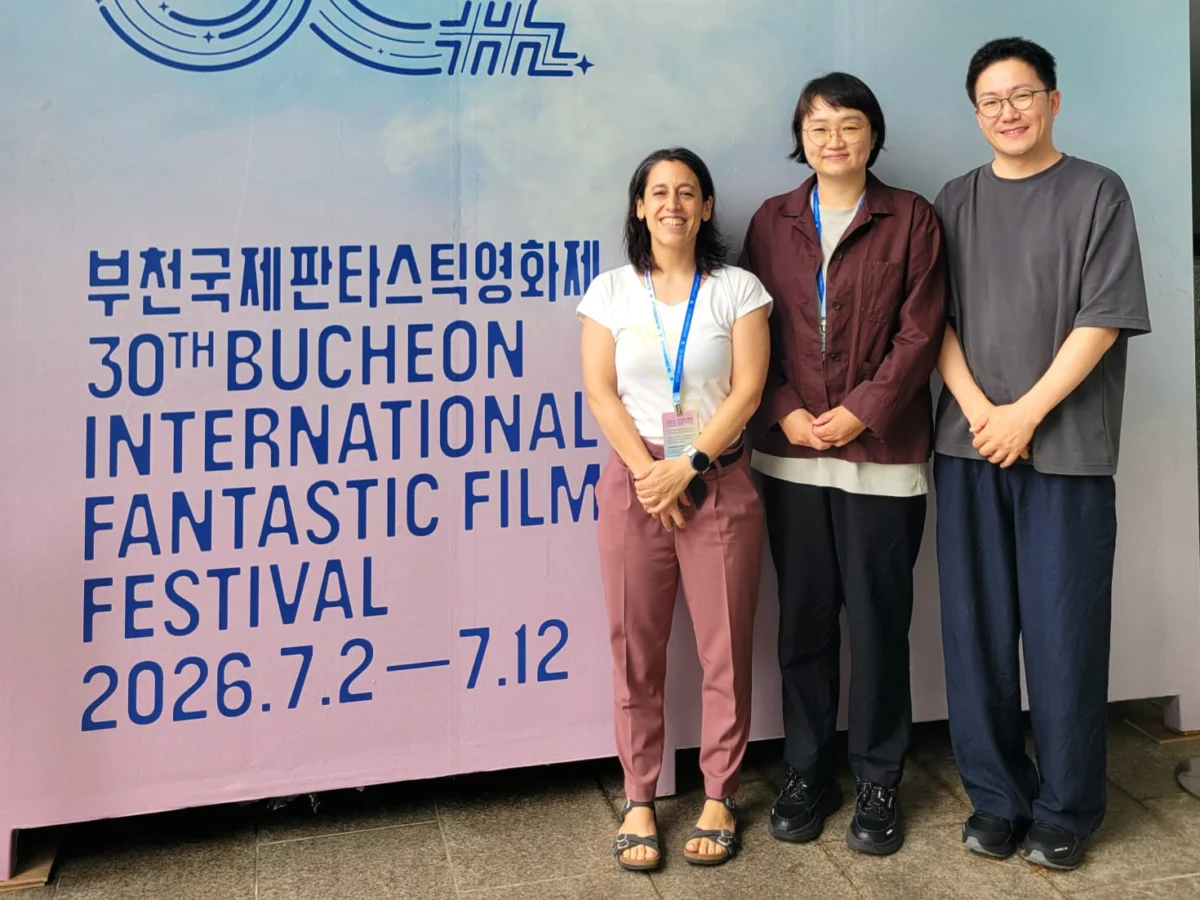
Director Kim Eun-young’s sophomore feature, "Brunch with a Depressed Zombie," has emerged as a compelling highlight in the Fanta-scape section of the 26th Bucheon International Fantastic Film Festival (BIFAN). Arriving just two years after her critically acclaimed debut, "Will You Please Stop, Please" (2024), this new work firmly establishes Kim as a distinctive voice in contemporary Korean cinema, adept at blending genre conventions with profound thematic explorations. The film, a nuanced examination of depression cloaked in the guise of a zombie dramedy, aligns perfectly with BIFAN’s ethos of celebrating innovative and boundary-pushing fantastic cinema, promising a viewing experience that is both light in its approach and deep in its emotional resonance.
A Director’s Rapid Ascent and Evolving Vision
Kim Eun-young’s trajectory in the Korean film industry has been remarkably swift. Her 2024 debut, "Will You Please Stop, Please," captivated Korean audiences with its sharp wit and accessible narrative, initially conceived as a web drama. This foundational experience shaped its rapid, commercial pacing, designed for broad appeal and effective delivery of an office comedy. However, with "Brunch with a Depressed Zombie," Kim deliberately pivoted, opting for a markedly different narrative rhythm. "The first film was originally conceived as a web drama, so we planned it from the start with a very short, fast rhythm. It had to be commercial and widely accessible, and a quick pace felt like the most effective way to carry an office comedy," Kim explained in an interview. "With the second film, I wanted to keep things light on the surface, easy to approach, but the subject is depression. And depression is not an illness that recovers quickly or intensively. It felt wrong to treat it with the same pace. So I wanted the film to have a longer rhythm." This conscious decision underscores Kim’s commitment to aligning form with content, allowing the narrative’s pace to mirror the complex, non-linear journey of coping with mental illness.
Both of Kim’s films share a foundational interest in exploring the ironic dichotomies of everyday life. Her debut masterfully placed the mundane hell of office routines within the serene, spiritual confines of a Buddhist temple, creating a compelling gap between external appearance and internal reality. "What I think connects both films is my love of the irony that comes from everyday life," Kim reflected. This thematic thread continues in her latest work, where the grim reality of depression is juxtaposed with the warmth of love, the comfort of food, and the intimacy of domestic moments. Kim elaborated, "People often imagine depression as a constant state of darkness, but that’s not really how it is. There are periods when everything is extremely difficult, periods when you somehow manage to endure, and periods when you genuinely feel okay. I wanted to portray that whole spectrum, and that’s why I chose to place the characters in these polarized emotional situations." This approach moves beyond simplistic portrayals, offering a more authentic and empathetic depiction of mental health struggles.
The Genesis of a ‘Depressed Zombie’
The central metaphor of linking depression to a zombie virus is perhaps the film’s most striking innovation, born from a deeply personal experience. Kim Eun-young revealed the intimate origins of the concept: "This is a quite personal story. I experienced depression myself for about seven years. During one of the worst periods, I was at home sitting on my duvet, barely moving. My husband, who is also our producer, walked past and, trying to make me smile, said: ‘you look like a zombie.’ We both laughed. That moment stayed with me." This poignant moment of shared humanity and dark humor became the seed for a larger narrative.
Later, this idea blossomed within a writing group. Her husband contributed a short story for a collaborative book, detailing a husband secretly caring for his zombie wife at home, whose desperate craving for brunch leads to a clandestine outing. This narrative, initially a short film concept, progressively expanded into a feature-length screenplay. The collaborative spirit extended to the script’s development, with Kim adapting her husband’s initial draft and working closely with lead actress Kim Yeon-kyo to refine and imbue the characters with depth. This organic, collaborative process, rooted in personal experience, highlights the film’s authenticity and emotional resonance.
Food as a Language of Inherited Care
A deeply touching and central theme in "Brunch with a Depressed Zombie" is the metaphor of food as a language of care, communication, and inherited memory. The film draws a parallel between Byeong-jin’s grandmother, who learned to understand her husband through food after he lost the ability to speak, and Byeong-jin’s own journey to care for Seon-woo. "I thought of food as a language from the beginning: a way for these characters to communicate when words are not enough," Kim explained.
The culinary creations in the film are not merely props but narrative devices, embodying patience, effort, and a blend of tradition with the present. Byeong-jin’s dishes, such as a Korean "sul-ppang" (rice wine bread) reimagined as a soufflé and topped with Seon-woo’s favourite dried mealworms, or his grandmother’s red bean porridge transformed into a soup with fried grasshoppers, are rich in symbolism. These unconventional ingredients and preparations serve to bridge the gap between Seon-woo’s altered state and her past self, while also signifying Byeong-jin’s unwavering commitment to her. The director emphasized, "What I wanted was for the viewer to feel that care is passed down the way a recipe is: from one person to the next, from one generation to the next." This concept elevates cooking from a mundane task to a profound act of love and remembrance, illustrating how practical expressions of affection can transcend linguistic barriers and persist through generations.
Kim Yeon-kyo’s Transformative Performance
Actress Kim Yeon-kyo, who played a fast-talking, comic role in Kim Eun-young’s debut, undertakes a vastly different challenge in "Brunch with a Depressed Zombie." Here, she portrays Seon-woo, a character rendered speechless and reliant solely on body language, embodying three distinct facets: her healthy self, her depressed self, and her zombie self. This demanding role required a remarkable range and meticulous preparation.
Kim Eun-young revealed that Kim Yeon-kyo’s natural speaking pace is not fast, indicating the significant effort she invested in her debut performance. For her role as the zombie Seon-woo, an action director was brought in, and the team collectively studied existing zombie films to inform posture, gestures, and use of props. Specifically for Seon-woo, three levels of makeup intensity were designed, reflecting the progression and eventual softening of her zombie condition as Byeong-jin’s care begins to reach her. Crucially, the director established early on that this zombie would maintain eye contact and communicate, differentiating her from conventional, unconscious portrayals.
For the depressed Seon-woo, extensive discussions with the actress focused on the real-world manifestations of depression, including avoidance and deflection, portraying a spectrum of behaviors rather than a monolithic image of despair. This detailed approach allowed Kim Yeon-kyo to craft a performance that is both physically demanding and emotionally nuanced, effectively conveying the internal struggles of a character navigating profound changes without relying on dialogue.
The Unwavering Commitment: An Emotional Core
Beyond its genre elements, "Brunch with a Depressed Zombie" resonates deeply as a story of unwavering commitment and the complexities of coexistence. While it can be read as a narrative about adapting to a loved one’s transformation, the emotional core lies in Byeong-jin’s profound dedication to Seon-woo, even when others might deem her lost. Kim Eun-young highlighted Byeong-jin’s background, shaped by his grandparents’ enduring love, which instilled in him the capacity to give love. "I think of him as a character for whom Seon-woo is almost everything that sustains his life. There is even a line in the film that says this directly," she noted.
However, the film thoughtfully complicates this seemingly one-directional care. The director intentionally introduces a reversal towards the end, when Byeong-jin collapses and Seon-woo, in turn, comes to his aid. This moment underscores a vital message: "Over the course of a life, who cares for whom can change completely." This reciprocal nature of care, where roles can shift and responsibilities intertwine, offers a mature and realistic perspective on long-term relationships and mutual support. Kim likened the film to a "picture diary, or a recipe book, something you turn page by page," emphasizing its episodic, evolving portrayal of a relationship under extraordinary circumstances.
Challenging the Korean Zombie Canon
Korea possesses a robust and globally recognized tradition of zombie cinema, from the blockbuster success of "Train to Busan" (2016) and its sequel "Peninsula" (2020) to popular streaming series like "Kingdom" (2019) and "All of Us Are Dead" (2022). This established visual archive typically portrays zombies as monstrous, flesh-eating threats that embody societal anxieties and often serve as stark social commentary. Introducing the concept of a "good zombie," or a "humanized zombie" suffering from depression, presented a significant hurdle for Kim Eun-young and her team.
"There was definitely a threshold to cross, especially with the actress," Kim acknowledged. Kim Yeon-kyo grappled with the challenge, recognizing that a conventional zombie performance would likely garner easier recognition and praise. The nuanced portrayal of a humanized, depressed zombie who makes eye contact required a delicate calibration. "What I kept telling her was that this zombie is simply a different kind of zombie," the director shared.
Paradoxically, the global pandemic played an unexpected role in softening audience resistance to this unconventional portrayal. The widespread experience of isolation, lethargy, and being "cut off" during lockdowns made the emotional logic of a zombie who is more human than monster feel less alien. The collective trauma of the pandemic inadvertently prepared audiences to connect with a story that explores profound psychological states through a fantastical lens, thus making the "depressed zombie" more relatable than it might have been in a pre-pandemic world. This highlights the evolving nature of genre cinema to reflect contemporary societal experiences.
The Bucheon International Fantastic Film Festival: A Platform for Visionaries
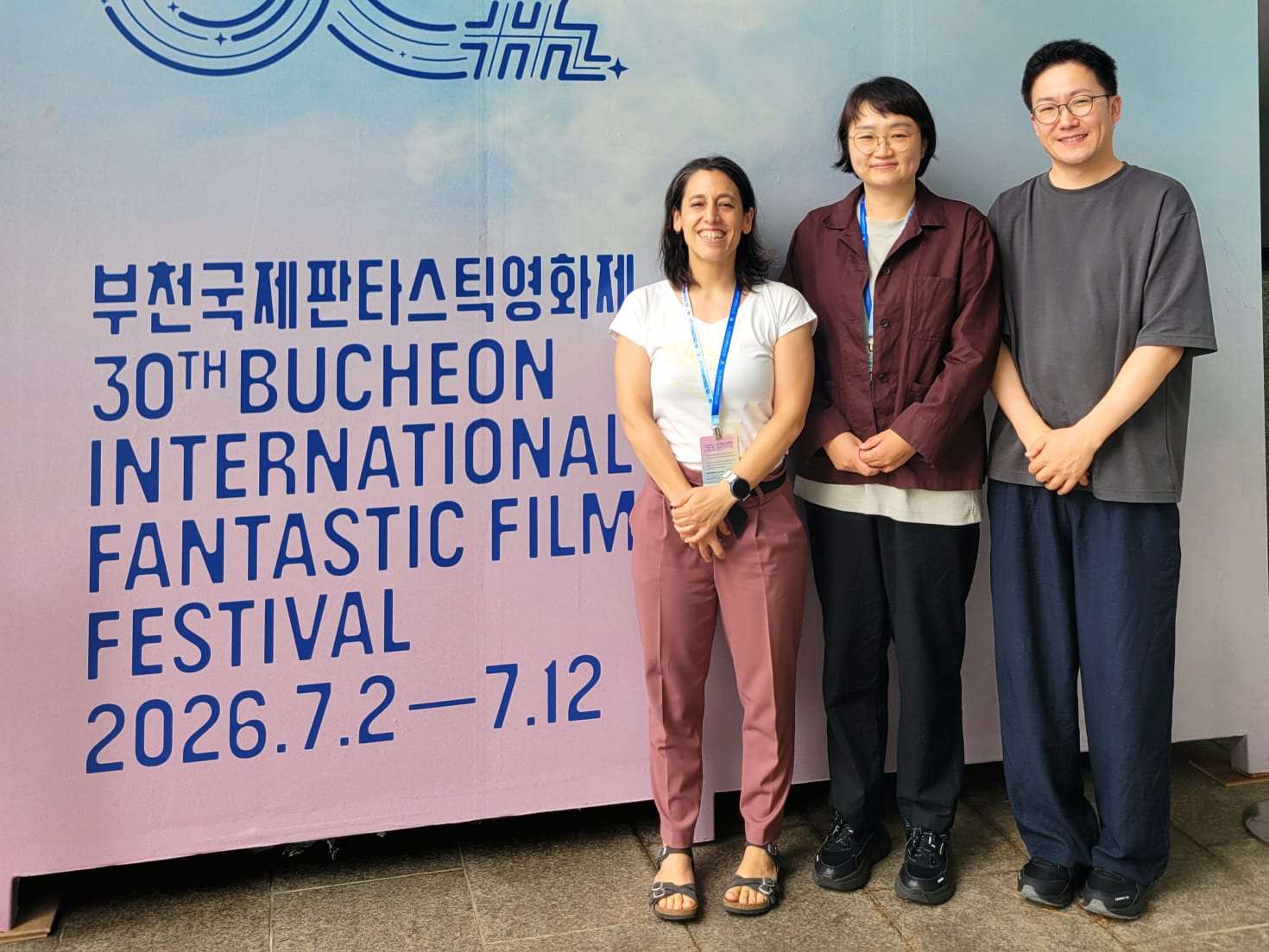
The Bucheon International Fantastic Film Festival (BIFAN), founded in 1997, has cemented its reputation as a crucial platform for genre cinema, particularly within Asia. Dedicated to showcasing horror, fantasy, sci-fi, and thrillers, BIFAN is renowned for its eclectic programming and its commitment to nurturing emerging talent and celebrating bold cinematic visions. Its Fanta-scape section, where "Brunch with a Depressed Zombie" premiered, is specifically designed to highlight films that push genre boundaries and offer unique perspectives.
BIFAN’s significance extends beyond mere screenings. It hosts industry programs like the Network of Asian Fantastic Films (NAFF), a project market that fosters co-production and investment in genre films, further bolstering its role in the global fantastic film ecosystem. With typically over 100,000 attendees annually and hundreds of films from around the world, BIFAN serves as a vibrant hub for filmmakers, critics, and cinephiles alike. The selection of Kim Eun-young’s film within this esteemed festival underscores its artistic merit and its potential to contribute to broader discussions on genre innovation and mental health representation. Its presence at BIFAN signals not only a recognition of Kim’s talent but also the festival’s ongoing commitment to challenging conventions and championing narratives that resonate with contemporary audiences.
Crafting the Visual and Aural Landscape
The film’s visual and aural elements were meticulously crafted to support its unique narrative and tonal balance. The grandmother’s house, a central location in the film, held a deeply personal connection for the director, as her own home served as the set. "We worked with an art director, but my team and I were also involved in the art department ourselves. And in the end, we used my own house as the set for the grandmother’s home. I still live with that wallpaper," Kim revealed, adding an intimate layer to the film’s production.
The choice of a multiplex apartment building for the countryside setting, rather than a traditional rural house, was a deliberate decision to reflect practicality and accessibility for a grandmother caring for her husband. This unconventional image of the Korean countryside further aligns with the film’s commitment to subverting expectations. Seon-woo’s profession as a painter permeates the film’s visual design, with all paintings and even the wallpaper connecting to themes of water and the ocean. The final chapter features a painting of light entering through water, symbolizing the director’s hopeful message for the audience.
The film’s music also played a critical role in maintaining its delicate tonal balance. Initial attempts with royalty-free music proved insufficient, leading to the involvement of a dedicated music director. "The main challenge was tonal: we didn’t want the film to slide too far into heavy drama, but we also didn’t want it to tip too far into comedy. The music was one of the main tools for holding that balance," Kim stated. The enriched score ultimately contributed significantly to the film’s ability to navigate its complex emotional landscape without veering into extremes, allowing it to be both poignant and playfully fantastic.
The Broader Impact and Future of Kim Eun-young
Making a second feature film is often cited as a more challenging endeavor than the debut, burdened by expectations and the pressure to avoid the "sophomore slump." However, Kim Eun-young found a different experience. "I think the pressure around the first feature in Korea is enormous, much higher. Directors feel they must establish their name with it, and that pressure can stop you from even starting. It stopped me too, for a while," she confessed. Her approach to the second film was more pragmatic, focusing on longevity and a sustainable filmmaking career. "What helped after that, was thinking about my own temperament and about how I want to keep making films over a long period of time. I tried to approach it a little more lightly and keep on."
"Brunch with a Depressed Zombie" not only showcases Kim Eun-young’s artistic growth but also contributes significantly to broader cinematic and societal discourses. It challenges the conventional portrayal of zombies, pushing the boundaries of genre filmmaking and demonstrating how fantastical elements can serve as powerful metaphors for real-world issues. By openly discussing depression, the film contributes to the growing conversation around mental health in South Korea, a society that has historically struggled with stigma surrounding such issues. The film’s empathetic portrayal could resonate deeply with audiences, fostering greater understanding and reducing stigma.
For Korean independent cinema, Kim’s work represents a vibrant future, blending commercial appeal with artistic integrity and social relevance. Her rapid succession of critically noted films positions her as a director to watch, capable of delivering unique narratives that entertain, provoke thought, and touch the human heart. As "Brunch with a Depressed Zombie" makes its rounds at BIFAN and potentially other festivals, it stands as a testament to the power of cinema to explore complex human experiences through innovative and unexpected lenses.