The 25th anniversary of Rob Cohen’s The Fast and the Furious was celebrated with a special midnight screening at the Cannes Film Festival, marking a significant moment for both the iconic street-racing saga and the prestigious cinematic event. The gala, held at the Grand Théâtre Lumière, was a testament to the film’s enduring cultural impact and featured an emotional appearance by franchise patriarch Vin Diesel, alongside co-stars Michelle Rodriguez, Jordana Brewster, and Meadow Walker, daughter of the late Paul Walker. This inclusion in the Official Selection underscored a broader trend at Cannes, where the festival increasingly acknowledges and embraces commercially successful blockbusters alongside its traditional art-house fare.
A Quarter-Century Milestone for a Cultural Phenomenon
Released in 2001, The Fast and the Furious was more than just a summer action film; it launched a global phenomenon that would redefine the action genre and establish one of Hollywood’s most lucrative franchises. The original film, produced on a budget of approximately $38 million, garnered over $207 million worldwide, far exceeding initial expectations and cementing its place in cinematic history. Its narrative of undercover law enforcement, high-stakes street racing, and the formation of an unconventional "family" resonated deeply with audiences, particularly younger demographics drawn to its adrenaline-fueled sequences and themes of loyalty and rebellion.
The decision by Cannes General Delegate Thierry Frémaux and President Iris Knobloch to feature The Fast and the Furious for its 25th anniversary in 2026 was a deliberate one, reflecting the festival’s evolving programming philosophy. While Cannes is renowned for its Palme d’Or contenders and premieres of auteur cinema, it has also demonstrated a willingness to honor films that have achieved massive popular appeal and cultural significance. This strategy helps to broaden the festival’s audience and maintain its relevance in a rapidly changing media landscape, acknowledging that "classic" status can be earned through both critical acclaim and widespread cultural resonance. The event mirrored previous high-profile Hollywood inclusions, such as the premieres of Top Gun: Maverick in 2022 and Mission: Impossible – Dead Reckoning Part One in 2023, both of which saw their stars, notably Tom Cruise, gracing the Croisette with much fanfare.
Red Carpet Spectacle and Emotional Returns
The evening commenced with a vibrant red carpet procession, drawing a substantial crowd of photographers and enthusiastic fans. Vin Diesel, the driving force behind the Fast & Furious universe, made a grand entrance, his presence commanding attention. Adorned in a blazer encrusted with the declaration "FAST FOREVER," Diesel spent considerable time engaging with the media and fans, basking in the global recognition of the franchise. His co-stars Michelle Rodriguez (Letty Ortiz) and Jordana Brewster (Mia Toretto), who have been integral to the saga since its inception, joined him, along with Meadow Walker, Paul Walker’s daughter, who has become a symbolic torchbearer for her late father’s legacy within the "Fast Family."
The collective presence of these figures underscored the central theme of "family" that has become synonymous with the Fast & Furious series, both on and off-screen. Festival officials, including Thierry Frémaux and Iris Knobloch, waited patiently outside the Grand Théâtre Lumière for Diesel to complete his red carpet engagements, highlighting the significance of his attendance to the festival.
Vin Diesel’s Personal Journey and an Emotional Address
Inside the packed 2,300-seat Grand Théâtre Lumière, an emotional Vin Diesel addressed the audience, reflecting on his long and deeply personal connection to the Cannes Film Festival and the Fast & Furious franchise. Speaking in his characteristic slow, resonant cadence, Diesel alluded multiple times to the film’s newfound "classic" status, a designation he clearly felt was validated by its inclusion at Cannes, even if it wasn’t officially part of the festival’s "Classics" sidebar.
Diesel recounted his first visit to Cannes in 1995, nearly three decades prior. At the age of 28, he was an unknown aspiring filmmaker, presenting his 20-minute short film, Multi-Facial, which he wrote, produced, directed, and starred in. This early work, a semi-autobiographical piece about a struggling actor, was a pivotal moment in his career, catching the attention of Steven Spielberg and eventually leading to roles in films like Saving Private Ryan. Frémaux himself had reportedly reminded Diesel earlier that day, "You, Vin, were born in Cannes," acknowledging the festival’s role in his artistic genesis.

Overcome with emotion, Diesel’s eyes welled with tears as he spoke, his voice cracking when referencing his late co-star and friend, Paul Walker. Walker, who tragically died in a high-speed single-car collision in 2013 while filming Furious 7, remains a profoundly influential figure in the franchise’s narrative and Diesel’s personal life. "This is the film where brotherhood was introduced to our millennium by myself and my brother Pablo," Diesel declared, using his affectionate nickname for Walker. This poignant tribute resonated deeply with the audience, many of whom have grown up with the franchise and its core message of enduring bonds. The timing of the speech, just past midnight, lent an almost dreamlike quality to the heartfelt declaration, blurring the lines between cinematic reality and personal experience.
The Enduring Allure of the Original Film
As the lights dimmed and the opening scenes of The Fast and the Furious graced the screen, the audience was transported back to the early 2000s, a period before the franchise’s increasingly elaborate, globe-trotting, and often gravity-defying stunts. The original film’s plot, centered around a series of heists involving VCRs and DVD players, now appears quaint compared to later installments that have seen cars flying through skyscrapers and even into space. This grounded realism, coupled with its gritty aesthetic, offers a refreshing contrast to the digitalized spectacle of its successors.
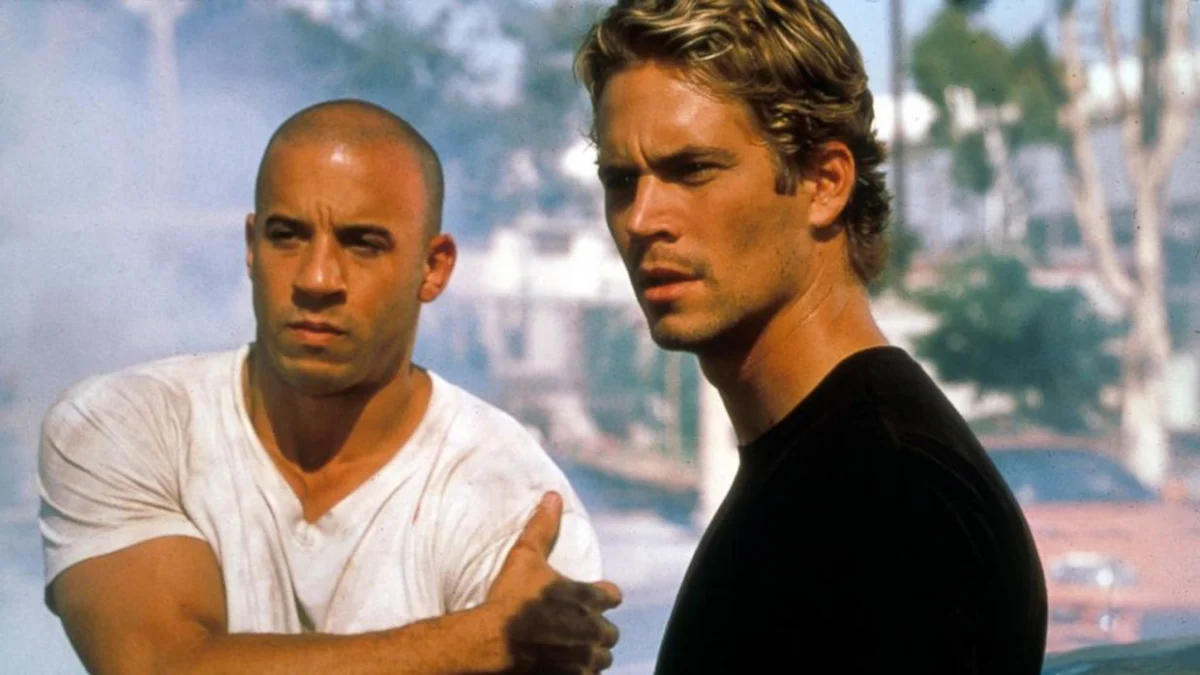
The film’s strength lies in its character development and the palpable chemistry between its leads. Paul Walker’s portrayal of undercover LAPD officer Brian O’Conner, tasked with infiltrating Dominic Toretto’s street racing crew, showcases a blend of determination, simmering anger, and burgeoning loyalty. His performance, characterized by a furrowed brow and intense, "Fremen-blue" eyes, hints at his earlier acting roots in soap operas like The Young and the Restless. The original film’s narrative, while ostensibly an action-crime thriller, quickly establishes the familial melodrama that would become the bedrock of the entire franchise. The complex relationships, shifting loyalties, and unwavering bonds among the crew form the emotional core that has sustained the series for over two decades.
Retrospectively, the 2001 film exhibits a highly calibrated, almost hypnotic quality. Its focus on practical stunts, authentic street racing culture, and character-driven conflict offers a stark contrast to the later films’ maximalist approach. Film critics have often noted its surprising depth, comparing its style to the work of directors like Michael Mann in its depiction of morally ambiguous characters operating on the fringes of the law, where the lines between good and bad blur, and personal codes of honor dictate actions. This initial incarnation remains, for many fans and critics, the most strangely sultry and compelling of the entire series.
The Broader Implications for Cannes and Cinema
The inclusion of The Fast and the Furious at Cannes is not merely a nostalgic gesture; it signifies a broader evolution in how prestigious film festivals engage with popular culture. In an era where streaming services and blockbuster franchises dominate the entertainment landscape, festivals like Cannes are increasingly recognizing the need to bridge the gap between art-house cinema and mainstream appeal. By celebrating films that have left an indelible mark on global audiences, they reinforce their position as comprehensive arbiters of cinematic achievement, regardless of genre or budget.
This strategic programming helps to attract a wider audience, including younger generations who might otherwise perceive Cannes as inaccessible or exclusively focused on niche cinema. It also acknowledges the economic realities of the film industry, where tentpole franchises generate the revenue that often fuels independent filmmaking. Furthermore, it sparks a crucial conversation about the definition of "classic" cinema, suggesting that cultural impact and longevity, coupled with a certain artistic integrity, can elevate a film beyond its initial commercial classification.
The Fast & Furious franchise itself continues to be a cinematic powerhouse. While the "final" installment of the main saga is reportedly slated for 2028, the "FAST FOREVER" promise on Vin Diesel’s jacket is not idle. A total of four spin-off TV series are currently in various stages of development at Peacock, ensuring that the legacy of Dominic Toretto and his crew will continue to expand across different platforms, perpetuating the themes of speed, family, and extraordinary feats for years to come.
A Night of Reflection and Renewed Appreciation
As the credits rolled at nearly 3 a.m. and Vin Diesel concluded his second, equally heartfelt address to the audience, the midnight screening transcended a mere film showing. It was a profound reflection on a quarter-century of cinematic history, a poignant tribute to a fallen star, and a reaffirmation of the enduring power of storytelling. For attendees, many of whom had endured long days of queuing and a relentless schedule of screenings, the experience was a potent reminder of the original film’s charm and impact. It solidified the notion that some films, regardless of their initial critical reception, possess an intrinsic quality that allows them to resonate across generations, becoming ingrained in the collective consciousness. The event not only celebrated a specific film but also underscored Cannes’ adaptability and its ongoing commitment to honoring the diverse tapestry of global cinema, from the avant-garde to the universally beloved.