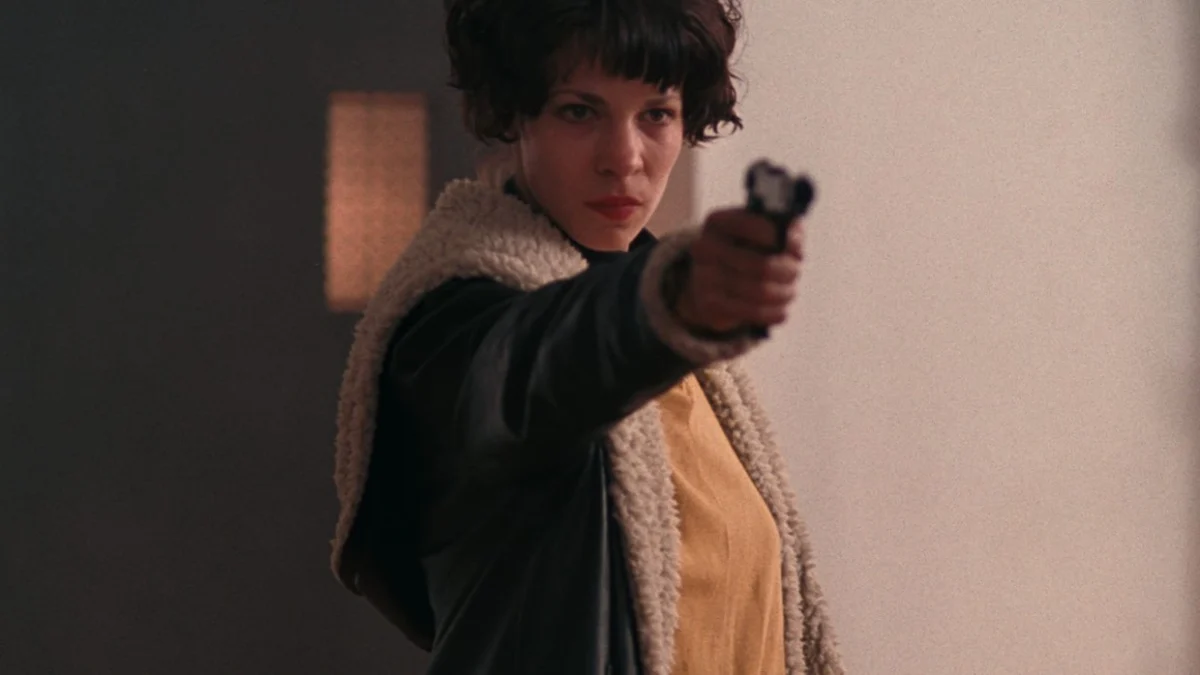
Mary Harron’s seminal 1996 debut feature, I Shot Andy Warhol, is returning to screens in a pristine 4K restoration, inviting a new generation to grapple with its provocative themes and re-evaluating its place in cinematic history. Before crafting the iconic portrait of capitalist pathology in American Psycho (2000), Harron meticulously devised a nuanced exploration of a different kind of New York outsider: Valerie Solanas, the radical feminist who infamously shot pop art titan Andy Warhol. The film, celebrated for its raw portrayal of Solanas and the vibrant, yet often ruthless, world of Warhol’s Factory, continues to resonate with contemporary discussions around feminism, gender identity, and the struggles of societal outsiders.
The Genesis of a Radical Narrative
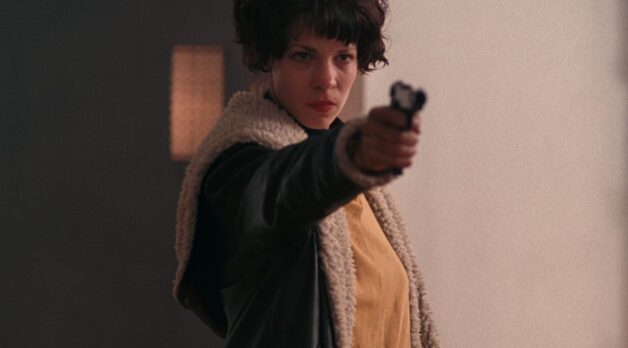
I Shot Andy Warhol delves into the life of Valerie Solanas (portrayed with magnetic deadpan swagger by Lili Taylor), tracing her tumultuous journey through the margins of New York’s downtown art scene. Solanas, a figure often relegated to a footnote in Warhol’s biography, was the author of the SCUM Manifesto, a blistering, satirical, and deeply confrontational text published in 1967. This document, which advocates for the elimination of men, remains one of the most intriguing and debated texts of 20th-century radical feminism.
Harron’s fascination with Solanas and the SCUM Manifesto began long before the film’s production. Initially encountering the manifesto as a "darkly comic" outlier amidst her immersion in Warhol, the Factory, and The Velvet Underground, Harron’s perspective shifted dramatically upon reading it herself. She found a copy in a left-wing bookstore while researching a Warhol documentary in the late 1980s. "I was completely stunned by how brilliant it was," Harron recalls, highlighting her immediate appreciation for Solanas’s stylish, sophisticated writing and spot-on irony. The opening line, "Life in this society being, at best, an utter bore…," struck her with its elegance, akin to Evelyn Waugh. Harron was particularly impacted by Solanas’s "dissection of the absurdity and injustice of modern society, built on this assumption of female inferiority," a sentiment that resonated deeply with her own experiences combating condescension as a woman in the 1980s.
Chronology of a Cultural Collision
The events surrounding Valerie Solanas, Andy Warhol, and the SCUM Manifesto unfolded as follows:
- 1936: Valerie Solanas is born in Ventnor City, New Jersey. Her early life was marked by significant hardship, including sexual abuse and a difficult relationship with her family, leading her to homelessness and sex work.
- 1965: Solanas moves to New York City, immersing herself in the Greenwich Village counterculture.
- 1967: Solanas writes and self-publishes the SCUM Manifesto. The title, SCUM, is often interpreted as an acronym for "Society for Cutting Up Men," though Solanas herself denied this, stating it simply referred to "scum" as a derogatory term for men. She begins selling copies on the streets of New York for "Two dollars for men, one dollar for women," a detail faithfully depicted in Harron’s film. She also writes the play Up Your Ass, which she struggles to get produced.
- Late 1967 – Early 1968: Solanas increasingly drifts into the orbit of Andy Warhol’s Factory, seeking Warhol’s assistance in producing Up Your Ass. Warhol initially expresses interest, even casting her in his film I, a Man, but ultimately does not produce her play, allegedly losing her manuscript.
- June 3, 1968: Solanas goes to The Factory at 33 Union Square West and shoots Andy Warhol and art critic Mario Amaya. Warhol is severely wounded, undergoing a five-hour operation and surviving despite massive internal injuries. Solanas turns herself in to the police shortly after the shooting, stating, "He had too much control over my life."
- 1969: Solanas is diagnosed with paranoid schizophrenia and sentenced to three years in prison, serving two. She would spend much of the remainder of her life in and out of mental institutions.
- 1988: Valerie Solanas dies of emphysema and pneumonia in a welfare hotel in San Francisco at the age of 52, largely forgotten by the mainstream. Andy Warhol had passed away the previous year.
- 1996: Mary Harron’s I Shot Andy Warhol premieres, bringing Solanas’s story and the SCUM Manifesto back into public consciousness.
- 2024 (projected): The 4K restoration of I Shot Andy Warhol is released, ensuring its continued presence and critical re-evaluation.
Crafting a Living Document of New York’s Art World
Harron’s film is less a conventional biopic and more a "living document" of a specific moment in New York’s history. The director eschewed traditional dramatic film models, instead drawing inspiration from documentary sources and "poetic realism" exemplified by films like Larry Clark’s Kids (1995). Cinematographer Ellen Kuras, whom Harron describes as "brilliant," achieved a visual style that is both "gritty and beautiful," allowing for naturalistic lighting and subtle uses of color to create a slightly magical, yet grounded, portrayal of The Factory. Harron specifically instructed Kuras to study photographers like Diane Arbus for the hotel sequences, aiming for "a lot of negative space, empty rooms, just a couple of things on the wall," and rented numerous photos from Magnum to provide visual references for the period.
The cast, featuring Martha Plimpton, Michael Imperioli, and Stephen Dorff as the iconic Candy Darling, masterfully captures the spirit of the era’s independent arts scene. Jared Harris’s portrayal of Andy Warhol is particularly noteworthy for its nuanced depiction of the artist’s "incredible fragility and elusiveness." Harron, who had met Warhol twice, recognized his dynamic of intense interest in people followed by a sudden withdrawal, which could be devastating to those seeking his attention. Harris, according to Harron, was the first actor to truly embody Warhol’s "vulnerability" from the inside, moving beyond simplistic portrayals of the artist.
The film’s soundtrack is another crucial element, featuring indie stalwarts like Yo La Tengo and Pavement. When Lou Reed denied permission to use Velvet Underground songs, Harron enlisted Velvet Underground co-founder John Cale to compose the score, a move that imbued the film with an authentic, period-appropriate sound without being a direct reconstruction.
Warhol’s Factory: A Double-Edged Sword for Women
The Factory, mythologized as a bohemian haven, is depicted in Harron’s film through Solanas’s outsider perspective. Harron acknowledges Warhol’s unparalleled "eye for talent," particularly his ability to discover and elevate individuals who were otherwise marginalized, such as drag queens and trans women like Ondine, Candy Darling, and Jackie Curtis. "He changed America in that way," Harron asserts, recognizing Warhol’s groundbreaking role in subtly introducing a "gay sensibility into the mainstream."
However, Harron also portrays the Factory as a place with "the ruthlessness of a Hollywood studio." Women, in particular, often found themselves celebrated as muses and "superstars" only to be discarded when they became "too difficult" or ceased to be new. This "gendered economy," where women were offered temporary stardom but ultimately extracted from, was a source of profound frustration and rage for Solanas. Harron notes that Warhol, in some ways, found trans men "easier to deal with than biological women," suggesting a complex dynamic of power and control that fueled Solanas’s grievances, particularly concerning her play and the perceived exploitation of her SCUM Manifesto by Warhol and publisher Maurice Girodias.
The Enduring Power of the SCUM Manifesto
The SCUM Manifesto itself has had a remarkably long and evolving cultural life. From its initial obscurity, it has been "claimed and reclaimed by feminists, radicals, even TERFs" (Trans-Exclusionary Radical Feminists). Harron acknowledges that in the late 1980s and early 1990s, when she was making the film, the manifesto was known only to a "very small group of people, radical feminists," and considered a "weirdo outlier." Its wider circulation, Harron believes, came later with republishings and even a graphic novel adaptation.
One of the most persistent questions surrounding the SCUM Manifesto is whether Solanas was serious or satirical. Harron deliberately chose to keep this question "productively open," believing that the text defies easy categorization. She sees it as sharing elements with Jonathan Swift’s A Modest Proposal but argues it’s not a "completely self-contained work of satire with a specific political goal." To Harron, the manifesto is "both brilliant and fantastically well-written but also disturbing and awful at moments." She stresses that readers must engage with the "whole package" to form their own conclusions, resisting the urge to simplify its complex, often nihilistic, message.
Solanas, Feminism, and the Modern Landscape
The film’s re-release comes at a time when "feminist rage and debates about what forms it’s allowed to take are very live." Harron observes the cyclical nature of feminist progress and backlash. She recalls the "Backlash" era of the early 90s, when feminism was unfashionable, followed by a period where it became widely embraced, and now, "this extraordinary, brutal, clumsy backlash that’s almost beyond parody." This current climate, Harron suggests, might make the film "strike a chord" in new and powerful ways.
Harron’s body of work often explores characters that "the culture can’t easily metabolize"—outsiders, loners, and those disregarded or despised. She attributes this thematic preoccupation to her own sense of being an outsider, despite a full family life. This personal connection informs her sympathetic portrayal of Solanas, allowing audiences to understand her longing to create and express herself, a feeling Harron deeply related to before she found her voice as a director.
Intriguingly, Harron speculates that Valerie Solanas "might have thrived" in today’s internet culture. In the 1960s, Solanas struggled to find an audience and a platform. Today, an individual with her radical ideas and unique voice could potentially "make your own fame," find a community, and "create, to find an audience" through social media, bypassing traditional gatekeepers. While acknowledging the "terrible side" of this phenomenon, Harron finds the opportunities for marginalized voices "exciting."
The question of Solanas’s views on gender identity, particularly in light of contemporary discussions, also arises. While Solanas was friends with many trans individuals at the Factory, Harron clarifies that her philosophy was "very essentialist," rooted in a biological understanding of chromosomes. Solanas believed men were "missing a chromosome and therefore biologically inferior," leading her to conclude that "men cannot be women." Harron cautions against imposing modern "ideology or language" onto a figure from 1968, urging understanding of the historical context. While acknowledging that some contemporary critics interpret the SCUM Manifesto as "trans-affirming," Harron personally finds this a "stretch" but remains open to how people "get what they need from a text like that."
The 4K Restoration: A Renewed Clarity
The 4K restoration, supervised by Ellen Kuras, brings a renewed clarity to Harron’s original vision. Harron was "really impressed" by how Kuras created a "slightly magical world while keeping its grunginess," making it look "both gritty and beautiful—but not too beautiful, which is important." Seeing the film’s playback without sound allowed Harron to appreciate Kuras’s "beautiful lighting and the colors" anew, underscoring the naturalistic yet deliberate aesthetic.
The film’s ending, which concludes with a note that the SCUM Manifesto has become a classic radical feminist text rather than Solanas’s biographical detail of dying in a welfare hotel, was a point of discussion for Harron. While she originally leaned towards the bleakness of the biographical note, she now feels the chosen ending "makes more sense" given the manifesto’s subsequent republishing and widespread discussion. "It’s become true in a way it wasn’t 30 years ago," she reflects, affirming the film’s lasting impact on feminist discourse.
I Shot Andy Warhol stands as a testament to Mary Harron’s directorial skill and her unwavering commitment to exploring complex, often uncomfortable, truths. More than a simple biopic, it is a nuanced examination of ambition, rejection, radicalism, and the enduring struggle for agency in a world often unwilling to listen to its most unconventional voices. Its 4K restoration ensures that Valerie Solanas’s story, and Harron’s masterful telling of it, will continue to challenge, provoke, and inspire audiences for years to come.