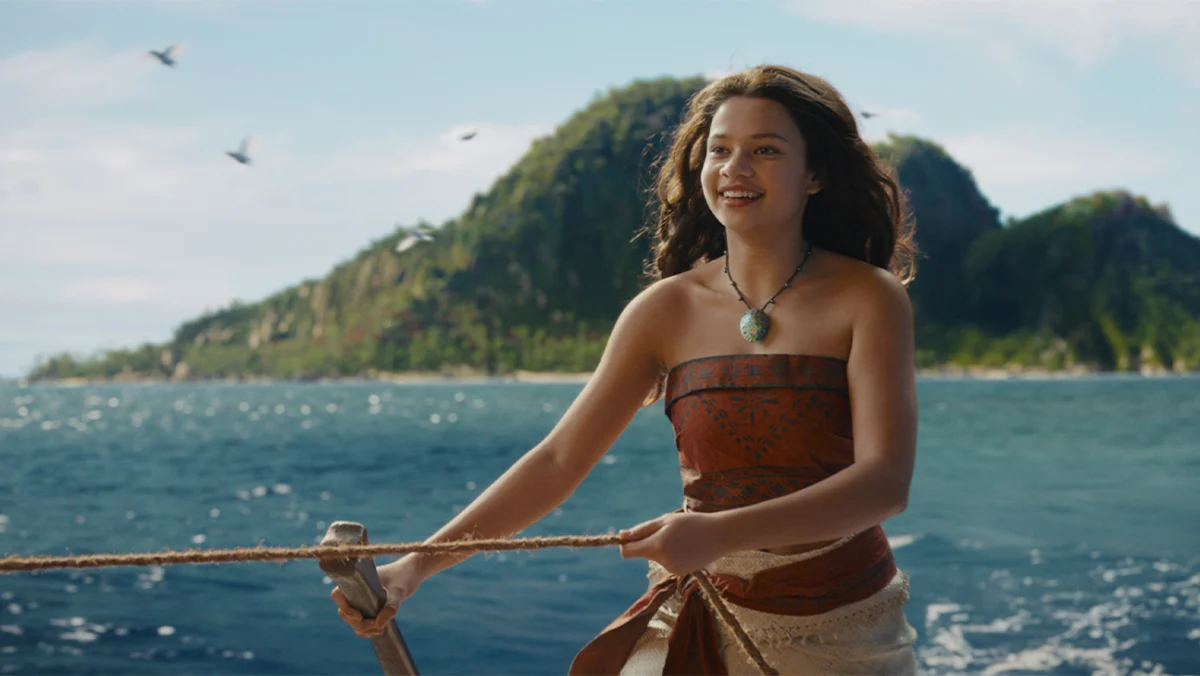
The highly anticipated live-action adaptation of Disney’s beloved animated musical Moana, starring Dwayne Johnson as the charismatic demigod Maui and newcomer Catherine Laga’aia in the titular role, prepares to make its theatrical debut this weekend amidst a complex and challenging box office landscape. The film, directed by Thomas Kail, is projected to open domestically with figures ranging between $60 million and $65 million from approximately 3,900 North American theaters. This revised forecast represents a noticeable tempering of initial tracking estimates from just last month, which had optimistically pegged the film’s opening weekend at $75 million or potentially higher.
The primary hurdle for the live-action Moana is its unprecedented proximity to its animated predecessor’s sequel. The release comes less than two years after Moana 2, which premiered in November 2024, an unusually tight turnaround for a major studio franchise. This rapid succession of entries from the same intellectual property raises significant questions about potential audience fatigue and the sustainability of Disney’s aggressive live-action reimagining strategy. With a substantial production budget of $250 million, the studio is banking on Moana to establish itself as a perennial family-friendly draw throughout the competitive summer movie season, requiring sustained strong performance beyond its opening weekend.
The Genesis of a Rapid-Fire Franchise Expansion
The original Moana, released in 2016, quickly cemented its status as a modern Disney classic. Directed by John Musker and Ron Clements, the animated musical introduced audiences to the spirited Polynesian princess Moana (voiced by Auli’i Cravalho) and the larger-than-life demigod Maui (voiced by Dwayne Johnson). The film, which centers on Moana’s journey to restore the heart of Te Fiti and save her island from a spreading blight, was a critical and commercial triumph. It garnered two Academy Award nominations, including Best Animated Feature and Best Original Song for Lin-Manuel Miranda’s "How Far I’ll Go," and grossed an impressive $643 million globally, with an $82 million five-day domestic opening over Thanksgiving. Its cultural impact was profound, lauded for its authentic representation of Pacific Islander mythology and its empowering narrative. The Moana brand has since flourished across various platforms, boasting over 1.5 billion hours streamed on Disney+, sales of more than 22 million toys, and a staggering 26 billion music streams.
The decision to fast-track both an animated theatrical sequel and a live-action remake within such a narrow timeframe speaks volumes about Disney’s commitment to leveraging its most valuable intellectual properties. Moana 2, initially conceived as a Disney+ streaming series, was elevated to a full theatrical release due to its perceived strength and the company’s strategic pivot towards maximizing theatrical revenues. This move proved immensely successful, with the animated sequel collecting an astounding $225 million domestically over its five-day Thanksgiving frame in 2024 and ultimately surpassing $1 billion globally. The swift conversion from a streaming project to a billion-dollar box office phenomenon underscored the immense appeal of the Moana universe and the enduring popularity of its characters, voiced again by Johnson and Cravalho. However, this success simultaneously set an exceptionally high bar and created a unique challenge for the live-action iteration, which now arrives less than two years later.
Critical Reception and Audience Expectations
Early critical reception for the live-action Moana has been decidedly mixed, reflecting the inherent difficulties in remaking a beloved and relatively recent animated film. The movie currently holds a modest 37 percent approval rating from reviewers on Rotten Tomatoes. While The Hollywood Reporter‘s chief film critic David Rooney offered a more positive assessment, noting that "this charming new iteration stands confidently on its own," many critics have questioned the necessity of a live-action version so soon after the original and its successful sequel. Common criticisms often revolve around the perceived lack of fresh artistic vision, the difficulty in translating animated magic to live-action without losing charm, and the feeling that the film, despite its technical prowess, struggles to justify its existence beyond being a faithful, yet redundant, retelling.

Dwayne Johnson, who not only reprises his role as Maui but also serves as a producer, addressed concerns about the quick turnaround at the film’s Los Angeles premiere. "To be honest with you, I never bought into this idea [of], ‘You have to wait 20 years. You have you wait 30 years. It’s too soon,’" Johnson told THR. He articulated his belief that the enduring themes and values of the animated Moana — particularly its narrative of a young girl’s journey of self-discovery and courage — could translate powerfully and resonate with a new generation when portrayed by a live actress. This perspective underscores a key rationale for Disney’s live-action strategy: to offer a new, immersive experience of cherished stories, particularly for audiences who might connect more deeply with live-action portrayals.
Disney’s Live-Action Empire: A Track Record of Highs and Lows
The live-action Moana enters a lineage of Disney remakes that has seen both unprecedented triumphs and notable missteps. Disney’s strategy of re-imagining its animated classics began gaining significant momentum in the 2010s, evolving from films like Tim Burton’s Alice in Wonderland (2010) and Kenneth Branagh’s Cinderella (2015) into a full-blown tentpole production pipeline. The motivation behind this strategy is multifaceted: it allows Disney to capitalize on globally recognized intellectual property, appeal to nostalgic adult audiences, introduce these stories to new generations, and generate massive merchandising and theme park synergies.
The pinnacle of this strategy remains Jon Favreau’s The Lion King (2019), which utilized groundbreaking photorealistic CGI to open with a staggering $191 million domestically and went on to gross over $1.6 billion worldwide. Other notable successes include Bill Condon’s Beauty and the Beast (2017), which earned over $1.2 billion globally, and Guy Ritchie’s Aladdin (2019), which surpassed $1 billion worldwide. These films demonstrated the immense financial potential of reimagining beloved stories with modern cinematic techniques and star power.
More recently, Disney has continued to expand this slate with varying degrees of success. Lilo & Stitch, slated for a 2025 release, showed promising early tracking, opening with $146 million in North America and projected to hit $1 billion globally. Its success is further bolstered by the return of Chris Sanders, who co-directed the 2002 animated original and voices the titular alien, to helm a forthcoming live-action sequel. Similarly, a live-action Tangled, starring Teagan Croft and Milo Manheim, has already commenced production in Spain, signaling Disney’s continued commitment to this model.
However, the path has not been without its challenges. Films like Dumbo (2019) and Mulan (2020), the latter experiencing a hybrid theatrical and Disney+ premium access release due to the pandemic, performed below expectations. The recent live-action Snow White, featuring Rachel Zegler and Gal Gadot, notably struggled, opening to a mere $42 million domestically in March of last year. Its performance raised concerns about production controversies, shifting narrative interpretations, and audience reception to significant changes from the source material. These varied outcomes underscore the delicate balance Disney must maintain between fidelity to the original, injecting fresh perspectives, and managing audience expectations.
The Broader Box Office Environment and Franchise Fatigue
The live-action Moana arrives in a summer box office season characterized by a mix of highs and lows, suggesting that audience behavior is increasingly discerning. While some major releases have soared, others have struggled, indicating a potential preference among viewers for properties that have had a longer theatrical absence. This phenomenon, often dubbed "franchise overload" or "sequelitis," posits that a rapid succession of entries can dilute interest and diminish the perceived novelty of a new installment.

Recent examples support this hypothesis. DC Studios’ Supergirl became one of the season’s significant misfires, released by Warner Bros. in June, just a year after Superman landed in cinemas. Similarly, Universal’s Minions & Monsters, which opened last weekend, delivered the lowest domestic sum for an entry in the otherwise highly successful Despicable Me franchise, arriving two years after 2024’s Despicable Me 4 and four years after 2022’s Minions: The Rise of Gru. These instances highlight a growing sensitivity among audiences to the pacing of franchise releases, suggesting that a longer gestation period between entries can often fuel anticipation rather than diminish it. The unique situation of Moana — with an animated sequel and a live-action remake released within 18 months of each other — represents an unprecedented test case for this theory.
Adding to the competitive pressures, Moana faces direct competition from other family-friendly juggernauts. Disney’s Toy Story 5 continues its strong run, having already crossed $800 million globally just ahead of its fourth weekend. Universal’s Minions & Monsters also occupies the same demographic space, despite its soft opening. Beyond family fare, Warner Bros. is launching the latest installment in the Evil Dead horror franchise, Evil Dead Burn, which THR critic Rooney described as featuring "orgiastic slaughter," catering to a distinctly different audience segment.
Looking ahead, the cinematic calendar remains packed with high-profile releases. Universal’s The Odyssey, directed by Christopher Nolan and boasting a star-studded cast including Matt Damon, Tom Holland, Robert Pattinson, Anne Hathaway, and Lupita Nyong’o, looms large with a July 17 release. Just two weeks later, Sony’s Spider-Man: Brand New Day, also starring Tom Holland, swings into theaters on July 31. The brief respite in wide releases between these two attention-grabbers offers a window for films like Moana to potentially build momentum and capture audiences.
Implications for Disney’s Future Strategy
The performance of the live-action Moana will be closely scrutinized across Hollywood, carrying significant implications for Disney’s future strategic decisions regarding its animated catalog. Should the film meet or exceed its revised box office projections despite the "franchise overload" concerns and mixed critical reception, it would validate Disney’s aggressive approach to intellectual property management and its belief in the enduring power of its stories, regardless of format or release frequency. This could embolden the studio to accelerate other live-action projects and potentially compress the windows between different iterations of popular franchises.
Conversely, a softer performance could force Disney to re-evaluate its timing strategies, potentially leading to longer gaps between animated sequels and live-action remakes, or even a more selective approach to which titles receive the live-action treatment. It might also prompt a deeper examination of the balance between honoring the original material and introducing genuinely new elements to justify a remake’s existence. Industry analysts suggest that while Disney’s strategy to leverage its beloved animated catalog has proven lucrative, the rapid succession of Moana titles presents a unique stress test for audience engagement and brand longevity. The performance of this live-action iteration will undoubtedly inform future decisions regarding the pacing and timing of remakes and sequels, particularly as the studio continues to invest heavily in its extensive pipeline of live-action adaptations. The ultimate success of Moana will depend not only on its opening weekend numbers but also on its ability to sustain audience interest and demonstrate its unique value proposition in a saturated and increasingly competitive entertainment market.