A Skeptical Dawn for a Galactic Phenomenon
The early days of "Star Wars" were far from the assured triumph that history now records. In February 1977, a raw, unadorned cut of George Lucas’s science-fiction fantasy was screened for a select group at his Northern California home. This preview, famously devoid of John Williams’s soaring score and the groundbreaking visual effects that would later define the film, elicited a response that bordered on bewildered disbelief. Among the attendees were studio executives from 20th Century Fox, collaborators like screenwriter Gloria Katz, and acclaimed director Brian De Palma.
Peter Biskind, in his seminal work "Easy Riders, Raging Bulls," recounts the scene, noting that the screening was met with a "stunned silence." De Palma’s candid, and perhaps brutal, assessment was famously overheard: "What is this shit?"
The emotional toll on those involved was palpable. Marcia Lucas, who alongside Richard Chew and Paul Hirsch had meticulously shaped the film’s narrative through the editing process, was reportedly in tears, convinced of its impending failure. Gloria Katz, offering a practical, albeit perhaps uncomforting, piece of advice, urged her, "Don’t cry when there are people from the studio there."
The Unsung Architect of "Star Wars"
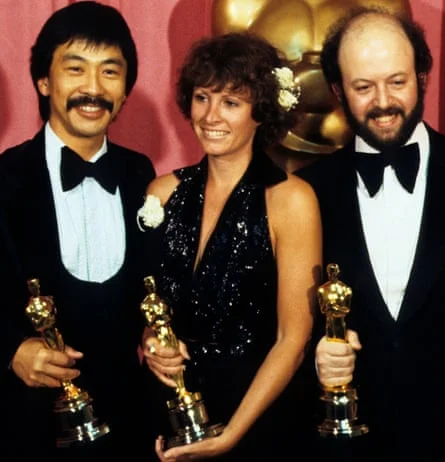
Despite the initial trepidation, Marcia Lucas’s contribution to "Star Wars" was recognized with an Academy Award for Best Film Editing, shared with Chew and Hirsch, the following year. George Lucas’s biographer, Dale Pollock, would later refer to her as the director’s "secret weapon," a testament to the profound impact of her editorial prowess.
However, Marcia Lucas herself consistently downplayed any notion that she single-handedly infused the film with its emotional core or, as some suggested, "saved Star Wars." She told film historian J.W. Rinzler, "I wouldn’t think so. I definitely made scenes work… George came up with all of it using his amazing imagination." This humility underscored her professional ethos: to elevate existing material, not to claim its genesis.
Yet, her professional journey during the making of "Star Wars" reveals a complex relationship with the project. In December 1976, amidst the critical phase of cutting the climactic assault on the Death Star, she left the "Star Wars" editing bay to take over on Martin Scorsese’s ambitious musical, "New York, New York" (1977). This move followed the death of that film’s original editor, a testament to her reputation and skill.
A Preference for the Gritty and the Grounded
Richard Chew, speaking to Biskind, offered insight into Marcia’s perspective: "Marcia respected Marty [Scorsese] above all other directors, and didn’t believe in Star Wars terribly much. It was not her thing. She abandoned George to work on this serious, artistic film." This sentiment was echoed by Gloria Katz, who recalled Marcia telling George that "New York, New York" was "a film for grownups, yours is just a kids’ movie, and nobody’s going to take it seriously."
This assessment, while perhaps dismissive of "Star Wars" at the time, was not an outlier. The entire industry harbored considerable skepticism regarding the film’s commercial viability. However, by the time the completed "Star Wars" was previewed publicly in San Francisco later in 1977, the tide of opinion had begun to turn dramatically.
Marcia Lucas’s own gauge of the film’s success was rooted in audience reaction. She maintained that the true measure of its impact could be seen in the response to the Millennium Falcon’s unexpected swoop to the rescue during the final battle. At that San Francisco preview, as recounted by Richard Chew in his memoir, "A Long Time Ago in a Cutting Room Far, Far Away," the audience erupted in cheers. Chew observed Marcia’s reaction: "I looked over and caught Marcia’s eye. She was grinning, and so was I. She shrugged, as if to say: I guess it works." This moment of shared understanding, a quiet acknowledgment of a profound impact, symbolized her own evolving perception of the film’s potential.
The eventual box office success of "Star Wars" was staggering, grossing over $775 million and fundamentally reshaping the blockbuster model that continues to dominate Hollywood today. Its influence extended far beyond its financial returns, creating a cultural phenomenon that has endured for decades.
Beyond the Galaxy Far, Far Away
Marcia Lucas’s career, while indelibly linked to "Star Wars," extended to other significant projects. She contributed minor uncredited work to "The Empire Strikes Back" (1980) and co-edited "Return of the Jedi" (1983). Her influence was also felt in other blockbuster franchises. She provided crucial editorial notes on the ending of "Raiders of the Lost Ark" (1981), a film co-created by George Lucas, and played an inadvertent, yet pivotal, role in naming its iconic archaeologist-adventurer hero. The character of Indiana Jones, immortalized by Harrison Ford, owes his moniker to Marcia’s beloved Alaskan malamute, Indiana.

A Life Shaped by Modesto and Hollywood
Born Marcia Griffin in Modesto, California, her early life was marked by her father’s departure when she was two years old. Her mother, Mae Griffin, worked as an insurance clerk to raise Marcia and her sister in North Hollywood. "It wasn’t a sad, bad time," Marcia recalled, "But economically it was very hard on my mother." This resilience forged in her youth would later serve her well in the demanding, and often challenging, world of filmmaking.
After graduating from high school, she embarked on a career path that led her to a mortgage banking firm and then to the Sandler Film Library. There, she progressed from locating archival footage to the intricate art of film editing, a profession that captivated her despite its modest financial rewards and the pervasive sexism of the era. "I would have cut films for free because I enjoyed it so much," she stated, highlighting her deep-seated passion for the craft.
A Partnership Forged in Filmmaking
Her introduction to George Lucas occurred while they both worked under Verna Fields, the eventual editor of "Jaws," on the short film "Journey to the Pacific" (1968). Marcia described George as "cripplingly shy," noting, "It was really hard to get him to speak at all." While George was shooting documentary footage for Francis Ford Coppola’s drama "The Rain People," Marcia served as an assistant editor on the film. She subsequently took on a similar role for Haskell Wexler’s "Medium Cool." Both films were released in 1969, the same year she and George Lucas married.
Marcia was an assistant editor on George’s directorial debut, the science-fiction thriller "THX 1138" (1971). However, the film’s reception left her unimpressed, and she candidly shared her reservations with George when the studio expressed dissatisfaction. "It left me cold," she admitted. "When the studio didn’t like the film, I wasn’t surprised. But George just said to me, I was stupid and I knew nothing. Because I was just a Valley Girl. He was the intellectual." This early friction hinted at the differing artistic sensibilities that would characterize their professional and personal relationship.
The critical and commercial failure of "THX 1138" reinforced her view. "After THX went down the toilet, I never said: ‘I told you so,’ but I reminded George that I warned him it hadn’t involved the audience emotionally… So finally, George said to me: ‘I’m gonna show you how easy it is. I’ll make a film that emotionally involves the audience.’"
The Breakthrough of "American Graffiti"
That challenge led to the creation of "American Graffiti" (1973), a nostalgic comedy that became a runaway success. Marcia Lucas earned her first Oscar nomination for her editing work on the film, sharing it with George Lucas and Verna Fields. The film’s seemingly loose narrative, masterfully weaving together disparate stories and characters through deft cross-cutting, showcased her skill in creating emotional resonance from fragmented elements.
Her career received another significant boost when Martin Scorsese enlisted her to edit "Alice Doesn’t Live Here Anymore" (1974), starring Ellen Burstyn. This collaboration marked a conscious effort by Marcia to gain recognition beyond her work with George. "I thought, If I’m ever going to get any real credit, I’m going to have to cut a movie for somebody besides George," she reasoned. Scorsese later retained her services for his acclaimed masterpiece, "Taxi Driver" (1976), a gritty exploration of urban alienation featuring Robert De Niro as a disturbed cab driver.
Divorce and Discontent
The marriage between Marcia and George Lucas ended in divorce in 1983, with Marcia reportedly receiving a $50 million settlement. Her perspective on the dissolution of their union was candid: "For me, the bottom line was just that he was all work and no play. I wanted joy in my life. And George just didn’t." She also expressed a sense of being consistently undervalued by her husband. "When we were finishing [Return of the Jedi], George told me he thought I was a pretty good editor. In the 16 years of our being together, I think that was the only time he ever complimented me."
Despite these perceived slights, Marcia Lucas possessed an unshakeable confidence in her own abilities. "I love editing and I’m real gifted at it," she asserted in 1983. "I have an innate ability to take good material and make it better, or take bad material and make it fair. I’m compulsive about it. I think I’m even an editor in real life."
A Critical Stance on Modern Cinema
By 1997, Marcia Lucas confessed to Peter Biskind that she harbored mixed feelings about the profound impact of "Star Wars." "There are so few good films, and part of me thinks Star Wars is partly responsible for the direction the industry has gone in, and I feel badly about that." This sentiment revealed a deep concern for the artistic integrity of filmmaking, a perspective that contrasted with the commercial imperatives that "Star Wars" had helped to unleash.
Her critiques extended to later installments of the franchise. While acknowledging George Lucas as "a good guy and a talented film-maker," she admitted to lamenting his return to "Star Wars" with "The Phantom Menace" (1999), even crying after seeing it because "I didn’t think it was very good." Her assessment of the more recent Disney-produced "Star Wars" films was even more severe, dismissing their storylines as "terrible. Just terrible. Awful."
In 1983, Marcia married Tom Rodrigues, a stained-glass artist she met at Skywalker Ranch. They divorced a decade later. She is survived by her two daughters, Amanda, from her marriage to George Lucas, and Amy, from her marriage to Tom Rodrigues. Marcia Lucas leaves behind a legacy of unparalleled skill and critical insight, a testament to the vital, often unseen, role of the editor in shaping cinematic masterpieces.