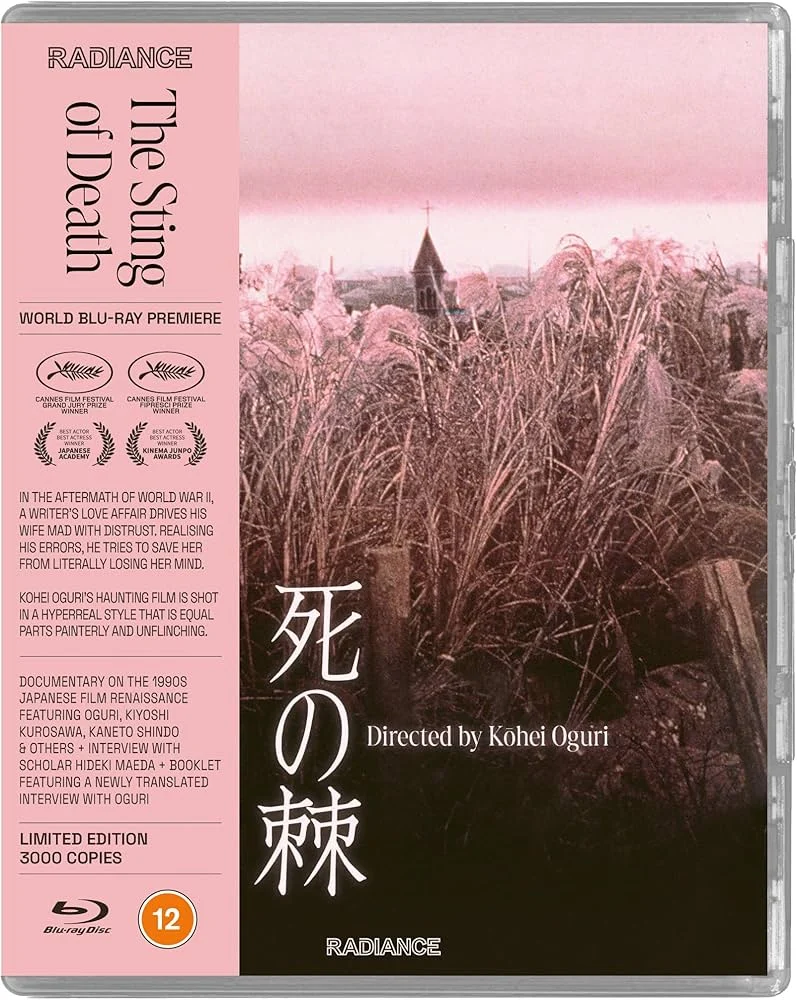
Kohei Oguri stands as one of Japanese cinema’s most compelling and elusive figures. Throughout a distinguished career spanning 35 years, he meticulously crafted only six feature films, each serving to solidify his reputation as a singular auteur whose vision, while never courting mass appeal, consistently earned critical acclaim and reinforced his unique artistic voice. Among his sparse but potent filmography, "The Sting of Death" (死の棘, Shi no Toge), his third feature, released in 1990, is arguably his most widely recognized work. The film achieved significant international recognition upon its premiere, competing at the prestigious Cannes Film Festival where it was honored with both the coveted Jury Prize and the FIPRESCI Award. Further cementing its international standing, "The Sting of Death" was selected as Japan’s official submission for the Academy Awards in the same year. Despite its impressive accolades and profound thematic resonance, the film has, in subsequent decades, been surprisingly overlooked, standing as a profound, unsettling, and intimate masterpiece that delves into the intricate psychological landscape of post-war Japan, its complex gender dynamics, the persistent tension between modernity and tradition, and the enduring psychological legacy of World War II. At its heart, it is a painfully uncomfortable study of a marriage’s disintegration, brought to life by the remarkable and nuanced performances of lead actors Ittoku Kishibe and Keiko Matsuzaka.
The Enigmatic Auteur: Kohei Oguri’s Vision
Kohei Oguri’s filmmaking career, marked by its deliberate pace and profound depth, began in 1981 with "Muddy River" (Doro no kawa), a poignant coming-of-age story set in post-war Osaka, which also garnered an Academy Award nomination for Best Foreign Language Film. This early success established Oguri’s distinctive style: a preference for quiet observation, meticulously framed visuals, and a deep exploration of human emotion within specific socio-historical contexts. His subsequent works, including "For Kayako" (1984), "The Sting of Death" (1990), "Sleeping Man" (1996), "The Buried Forest" (2005), and "Foujita" (2015), collectively showcase a director unburdened by commercial pressures, consistently pursuing an uncompromising artistic vision. Oguri’s films are often characterized by their contemplative pacing, minimalist dialogue, and a profound empathy for characters grappling with existential dilemmas and societal constraints. His cinematic language frequently employs subtle symbolism and atmospheric tension to convey complex internal states, making his work a challenging yet rewarding experience for discerning audiences. "The Sting of Death" perfectly embodies these characteristics, offering a window into a deeply personal crisis that simultaneously mirrors broader societal anxieties.
Chronology of Acclaim and Release
"The Sting of Death" is based on the semi-autobiographical novel of the same name by Toshio Shimao, published in 1977. The novel itself drew heavily from Shimao’s own tumultuous marriage and his wife Miho’s mental health struggles following his infidelity. Oguri’s adaptation brought this intensely personal narrative to the screen with a stark authenticity that resonated globally.
- 1977: Toshio Shimao’s novel "Shi no Toge" is published, drawing on personal experiences.
- 1990: "The Sting of Death" film adaptation, directed by Kohei Oguri, premieres.
- May 1990: The film is selected for the official competition at the 43rd Cannes Film Festival.
- May 1990: At Cannes, it receives the Jury Prize (shared with "Hidden Agenda" by Ken Loach) and the FIPRESCI Award, acknowledging its artistic merit and critical importance.
- Late 1990: Japan submits "The Sting of Death" as its entry for the Best Foreign Language Film category at the 63rd Academy Awards. While it did not receive a nomination, its submission highlighted its national and international significance.
- Present Day: The film continues to be screened at retrospectives and film festivals, and has seen various home video releases, including a recent limited edition Blu-ray by Terracotta Distribution, indicating a sustained critical appreciation and renewed interest from cinephiles.
A Marriage Undone: The Core Narrative
Set in the stark and emotionally restrained atmosphere of 1950s Japan, "The Sting of Death" unfolds the devastating consequences of infidelity on a family unit. The narrative commences with the shattering discovery by Miho (Keiko Matsuzaka) of her husband Toshio’s (Ittoku Kishibe) extramarital affair. Toshio, a writer, immediately terminates the relationship and embarks on a desperate, agonizing quest for atonement. However, his efforts prove futile against the deep-seated wound of betrayal that Miho carries. What ensues is a prolonged and harrowing emotional crisis that consumes not only the couple but also their two young children, who are forced to witness the escalating frequency of arguments and the pervasive emotional turmoil.
Toshio, consumed by guilt and a desperate desire to mend the fractured bond, vows to dedicate himself entirely to his wife and family, sacrificing his own desires and aspirations in the hope of alleviating Miho’s profound suffering and restoring her trust after years of deception. Yet, even as Toshio remains steadfast in his promise, demonstrating unwavering fidelity, Miho finds herself incapable of overcoming her deep-seated distrust. Her torment manifests in repeated confrontations, each time dragging both herself and her husband deeper into a vortex of emotional despair and psychological breakdown. The relentless cycle of accusation and self-recrimination pushes Toshio to the brink, culminating in a desperate suicide attempt. As their marital crisis unfolds, becoming an increasingly public spectacle observed by neighbors, relatives, and friends, the couple is confronted with an impossible choice: either learn to coexist with the indelible scars of the past, or continue down a path that threatens to obliterate not only their marriage but also their individual sanity and sense of self.
The Societal Tapestry: Public Appearances vs. Private Realities
One of the most profound aspects of "The Sting of Death" is its incisive exploration of the contradiction between public appearances and private realities, a theme particularly resonant within Japanese society. Often associated with principles of conformity, social harmony (wa), and the suppression of individual desires for the collective good, Japan’s cultural landscape can generate immense psychological pressure when personal emotions are forced beneath the surface. Oguri masterfully places this societal dichotomy at the very core of his narrative, portraying not merely the collapse of a marriage but the terrifying psychological disintegration of two individuals relentlessly attempting to maintain a facade of normalcy.
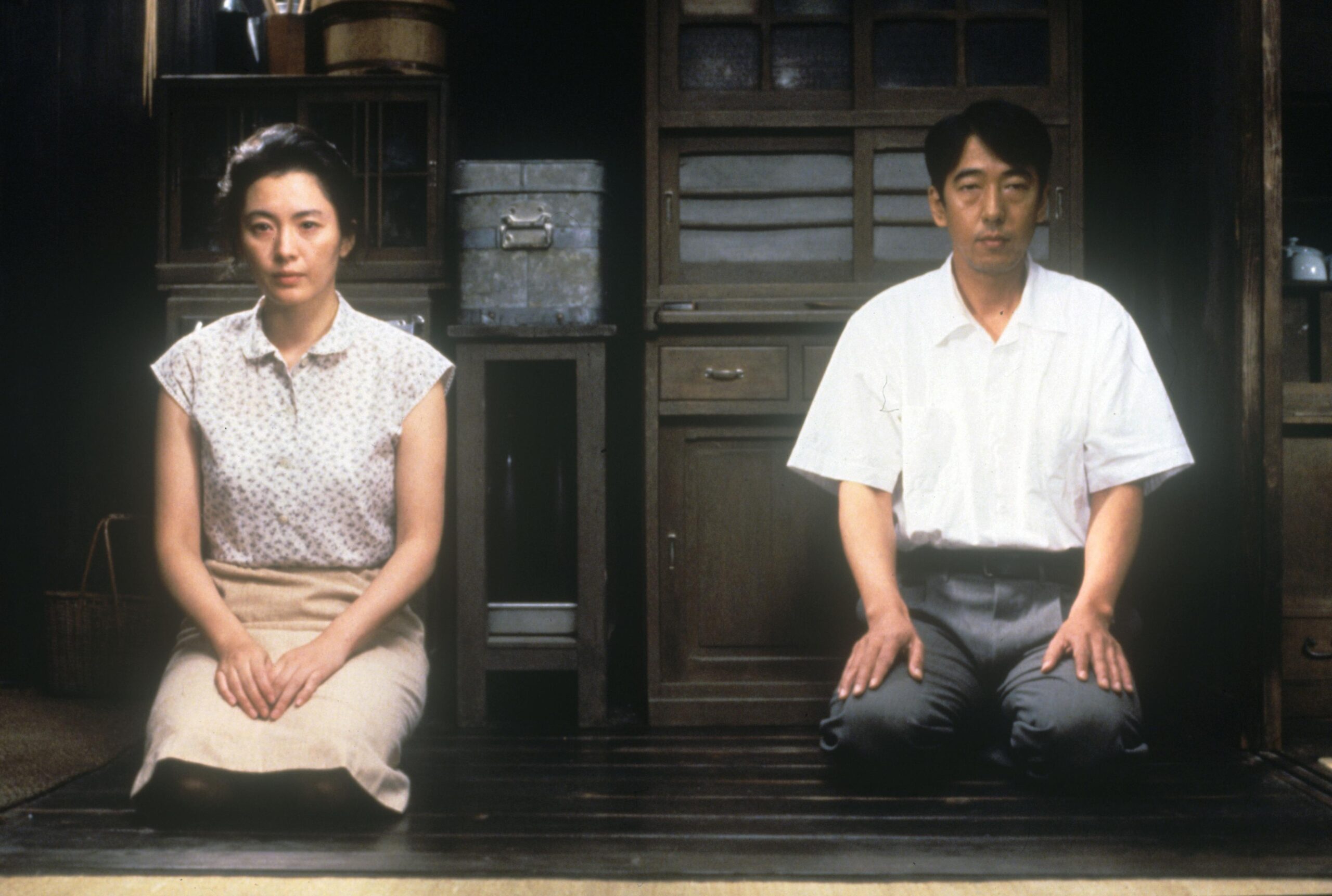
A particularly poignant scene illustrates this theme when Miho requests Toshio to replace the old, dilapidated fence surrounding their home. The erection of this new fence transcends a mere practical improvement; it transforms into a potent symbolic barrier. It serves as a visual metaphor for the family’s desperate attempt to cordon themselves off from the outside world, to prevent others from witnessing the agonizing truth that is already painfully obvious. The family home itself, traditionally a sanctuary, morphs into a carefully constructed facade, almost akin to a theatrical stage, where marital and domestic life are reduced to meticulously maintained, albeit agonizing, performances. This is but one of many visual metaphors Kohei Oguri employs to articulate the crushing psychological burden borne by both protagonists, who are compelled to enact social roles that have gradually become hollow masks. The resultant pressure inexorably accelerates both the collapse of their relationship and their individual mental states, pushing them towards a precipice of madness.
Post-War Echoes and Gender Dynamics
Beyond the confines of the domestic drama, "The Sting of Death" functions as a powerful reflection of broader aspects of post-war Japanese society. The 1950s were a period of immense change and reconstruction, where the nation grappled with the trauma of defeat and occupation, striving to rebuild not just infrastructure but also a collective identity. Toshio’s character, portrayed with remarkable restraint by Ittoku Kishibe, embodies the emotional exhaustion of a man desperately trying to preserve the illusion of the "happy family"—an idealized image aggressively promoted by a society keen to project stability and normalcy, even appearing on advertisements displayed on passing streetcars.
Ironically, Toshio’s relentless willingness to sacrifice himself, repeatedly offering himself up for redemption to prove his devotion, exposes a deep-seated emotional trauma rooted in the war itself. The concept of sacrifice, self-denial, and collective responsibility was heavily ingrained during the war years. For Toshio, every failed attempt at redemption reinforces a growing sense of personal failure—not only as a husband and father, but crucially, as a man in a society grappling with redefined masculine roles in the aftermath of defeat. Kishibe communicates this complex inner conflict through an array of subtle gestures, downcast eyes, and quiet restraint, before allowing it to erupt in occasional, desperate moments of violence that betray the immense pressure beneath his composed exterior.
In stark contrast to Kishibe’s understatement, Keiko Matsuzaka delivers a performance defined by raw, searing emotional volatility. From her very first appearance, Miho appears precariously balanced on the verge of a nervous breakdown. A decade of suspicion, fueled by the initial betrayal and exacerbated by her husband’s repeated attempts to atone, has left her trapped in an unbearable limbo. She is caught between the societal expectation of maintaining the image of the devoted wife and mother and the overwhelming need to confront the enormity of her husband’s infidelity and its psychological toll. Matsuzaka portrays these emotional extremes with unwavering conviction, rendering every outburst simultaneously heartbreaking in its vulnerability and psychologically exhausting—not only for Toshio but, ultimately, for Miho herself, who is consumed by her own pain and inability to forgive. Her performance illuminates the immense pressure on women in a patriarchal society, where their emotional struggles might be pathologized rather than understood as a response to profound trauma.
Societal Scrutiny and the Enforcement of Norms
"The Sting of Death" broadens its perspective far beyond the dissolution of a single marriage, illustrating how societal pressures act as a relentless force. Although the majority of the drama unfolds within the claustrophobic confines of the family home, Oguri repeatedly reveals how neighbors and strangers meticulously observe—and overtly judge—the couple’s increasingly erratic behavior. Casual remarks from a woman at the market, expressing a wish for her own husband to help carry groceries, underscore the prevalent expectations of marital roles. More dramatically, others react with palpable shock and disapproval when Miho publicly scolds or even physically strikes Toshio, actions that flagrantly breach deeply ingrained social conventions regarding spousal conduct and public decorum.
As their relationship grows increasingly volatile and their private agony spills into the public sphere, Oguri portrays a society that is inherently unwilling to tolerate any significant breach of its established social conventions. This intolerance manifests through both subtle and overt forms of pressure, creating an environment where conformity is not merely encouraged but actively enforced. The community becomes a silent, collective judge, amplifying the couple’s internal torment and contributing to their psychological unraveling. This external pressure highlights the delicate balance Japanese society sought to maintain in the post-war era, where the appearance of stability was paramount, even at the cost of individual emotional truth.
Legacy and Enduring Relevance
"The Sting of Death" is more than a mere marital drama; it is a profoundly unsettling and meticulously crafted examination of Japanese society and the many contradictions that continue to shape it. Through the gradual, agonizing collapse of one marriage, Kohei Oguri reveals emotional and historical wounds that extend far beyond the immediate family unit, touching upon the collective psyche of a nation in flux. The film’s nuanced portrayal of trauma, forgiveness, societal expectation, and individual suffering ensures its timelessness.
Thirty years after its release, the psychological drama remains as disturbing and relevant as it was then. Its enduring impact lies in its refusal to offer easy answers or simple resolutions. Instead, it invites viewers into the raw, uncomfortable intimacy of human despair, forcing a confrontation with the complexities of love, betrayal, and the crushing weight of societal judgment. "The Sting of Death" stands as a testament to Kohei Oguri’s unique vision, solidifying his place as a master storyteller capable of transforming a deeply personal narrative into a universal exploration of the human condition, resonating with audiences who appreciate cinema that challenges, provokes, and lingers long after the credits roll. Its continued re-evaluation by film scholars and its availability through specialized distributors confirm its status as an indispensable work within the canon of modern Japanese cinema.