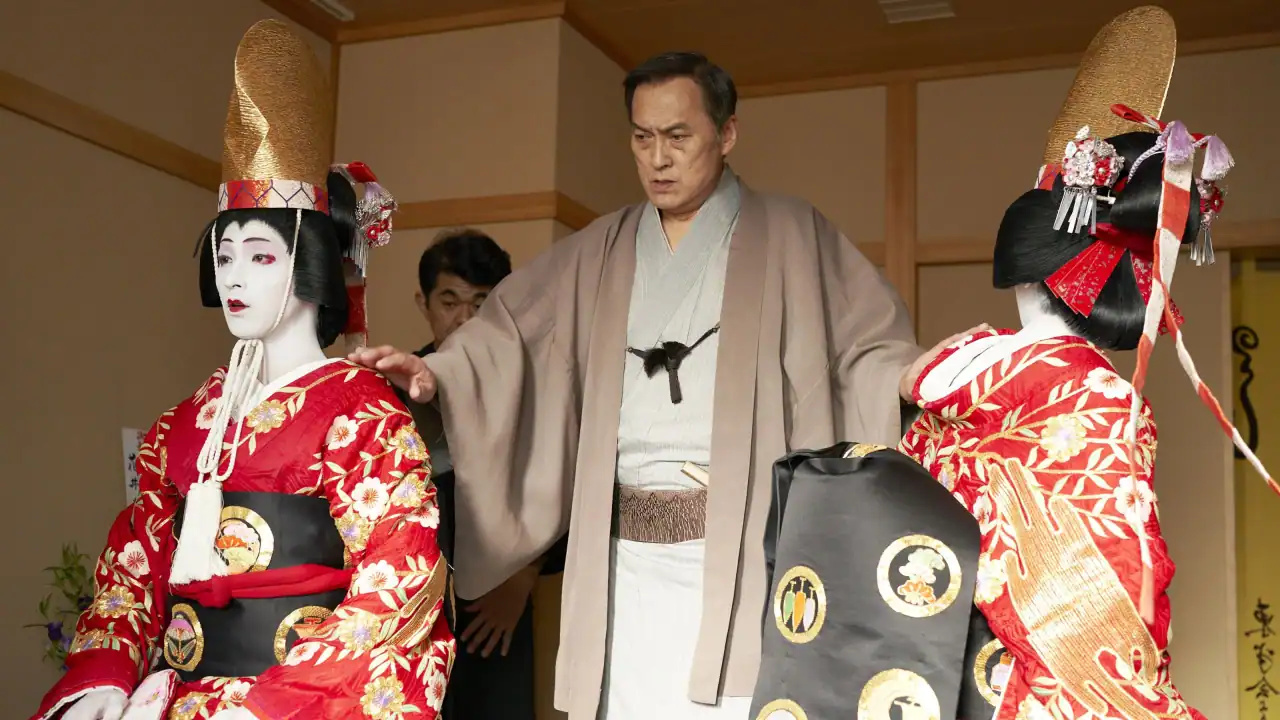
The highly anticipated live-action adaptation of Shuhei Fujisawa’s acclaimed novel, "Kokuho" (National Treasure), is gearing up for its cinematic release in 2025, with early indicators and industry projections already positioning it as a potential record-breaker. This film builds upon the foundation of a critically lauded stage play that first premiered in 2018, also produced by the venerable Shochiku company. The theatrical success has generated immense anticipation for the big-screen rendition, which is already demonstrating remarkable box office performance in its initial phases, with industry analysts forecasting it to become the highest-grossing Japanese live-action production of 2025.
The Legacy of Shuhei Fujisawa and Shochiku’s Vision
The upcoming "Kokuho" film is rooted in the rich literary tradition of Shuhei Fujisawa, a master of Japanese historical fiction. Fujisawa (1927-1993) was renowned for his meticulously researched and emotionally resonant narratives, often exploring the lives of common people and samurai during the Edo period. His works are characterized by their deep psychological insight, evocative descriptions of traditional Japanese life, and poignant themes of duty, loyalty, and the human spirit’s resilience. "Kokuho," one of his most celebrated novels, delves into the intricate world of kabuki, a traditional Japanese performing art, through the compelling journey of its protagonist. Shochiku, a titan in the Japanese entertainment industry with a history spanning over a century, has a long-standing relationship with Fujisawa’s literary legacy. The company is not only a major film studio and distributor but also a principal patron and producer of kabuki theater itself, owning the famed Kabukiza Theatre in Ginza, Tokyo. Their extensive experience in adapting Fujisawa’s works, including past successful productions such as "Villain" and "Rage" (which are separate acclaimed adaptations of Fujisawa’s diverse bibliography), underscores their deep understanding of his storytelling and their commitment to bringing his narratives to life with authenticity and grandeur. This profound synergy between the source material, the production company, and the subject matter of kabuki, positions the "Kokuho" film with an exceptional pedigree.
A Deep Dive into the World of Kabuki and the "Living National Treasure"
At its heart, "Kokuho" is a story interwoven with the essence of kabuki, a classical Japanese dance-drama known for its highly stylized performances, elaborate make-up (kumadori), dazzling costumes, and intricate stage mechanics. Originating in the early 17th century, kabuki evolved into a sophisticated art form that captivated audiences with its dramatic narratives, often featuring historical events, moral conflicts, love stories, and tales of heroism. The play and film specifically explore the Kamigata style of kabuki, distinct from the more widely known Edo (Tokyo) style. Kamigata kabuki, originating in the Kyoto-Osaka region, is traditionally celebrated for its emphasis on emotional depth, lyrical beauty, and realistic portrayal of human sentiment, often incorporating elements of puppet theater (Bunraku) and traditional dance. This regional distinction adds another layer of cultural authenticity to the narrative.
Central to Kikuo’s journey in "Kokuho" is the pursuit of the "Ningen Kokuho" (人間国宝), or Living National Treasure, a designation of immense cultural significance in Japan. Established in 1950 under the Law for the Protection of Cultural Properties, this system identifies and officially recognizes individuals who possess exceptionally high skills in the traditional performing arts or crafts, deemed indispensable to the nation’s cultural heritage. These "Treasures" are not merely skilled artisans or performers; they are living repositories of traditional knowledge and techniques, entrusted with the responsibility of preserving and transmitting these invaluable cultural assets to future generations. The title carries profound prestige and honor, signifying the highest level of mastery and contribution to Japanese culture. For Kikuo to aspire to and potentially achieve this title places his personal struggle within a broader context of cultural preservation and artistic legacy, making his story resonate deeply with Japanese audiences and offering an insightful window into this unique system for international viewers.
The Narrative: A Tale of Ambition, Rivalry, and Artistic Succession
The intricate plot of "Kokuho" chronicles the tumultuous life of Kikuo, a young man from the Kamigata region whose destiny is irrevocably altered by a violent incident at the tender age of fourteen, when his father is tragically murdered. Orphaned and adrift, Kikuo’s exceptional talent for kabuki is serendipitously discovered by Hanai Hanjiro, the revered head of a preeminent Kamigata kabuki school. Hanjiro, a figure of immense authority and artistic discernment, recognizes in Kikuo not only a superior innate technique but also an audacious, almost revolutionary instinct for innovative theatrical expression—a quality that could either propel kabuki forward or challenge its conservative traditions.
Under Hanjiro’s famously rigorous and unyielding tutelage, Kikuo plunges headfirst into the demanding, disciplined, and often unforgiving world of kabuki. His dedication is absolute, fueled by an insatiable curiosity, a profound passion for the art form, and an unwavering commitment to mastering its every nuance. This period of intense training sees Kikuo growing up alongside Shunsuke, Hanjiro’s biological son, who is the presumptive heir to the family’s kabuki lineage. Their relationship quickly evolves into a complex tapestry of rivalry, mutual admiration, and relentless competition. Both young men strive for Hanjiro’s approval and artistic recognition, their individual triumphs and setbacks on stage forging deep, albeit often strained, bonds. Yet, this intense dynamic also creates a profound and ever-widening chasm between them. The tension escalates dramatically when Hanjiro, recognizing Kikuo’s unparalleled genius and potential to become a true "National Treasure," makes the momentous decision to adopt Kikuo, effectively choosing him as his artistic successor over his own biological son, Shunsuke. This decision sends shockwaves through the family and the kabuki world, instigating a palpable, icy rift between Kikuo and Shunsuke that threatens to consume them both. The narrative masterfully explores the emotional fallout of this choice, delving into themes of artistic inheritance, bloodline versus talent, the sacrifices demanded by art, and the intricate dynamics of a surrogate family within a rigid traditional system.
The Stage Play’s Acclaimed Precedent (2018)
The path to the 2025 live-action film was significantly paved by the resounding success of the "Kokuho" stage play, which premiered in 2018. Produced by Shochiku, the theatrical adaptation was a monumental undertaking, featuring a stellar cast of renowned kabuki actors and employing elaborate staging faithful to the art form’s grand traditions. The play ran for an impressive 346 performances over six months, a testament to its popularity and critical acclaim within the demanding Japanese theatre landscape. Audiences and critics alike lauded the production for its faithful yet dynamic portrayal of Fujisawa’s novel, particularly praising the lead actor’s embodiment of Kikuo’s complex character and the breathtaking kabuki sequences. The stage play’s success was not merely commercial; it was a cultural event that reignited public interest in Fujisawa’s work and showcased the enduring power of kabuki to tell compelling, universal stories. It demonstrated that the narrative of "Kokuho" possessed a profound emotional resonance that transcended the written page, creating a strong demand for a broader adaptation that could reach an even wider audience. This theatrical triumph established a high benchmark for the upcoming film, setting the stage for its anticipated record-breaking performance.
The 2025 Film Adaptation: Production, Performance, and Projections
The 2025 live-action film adaptation of "Kokuho" is poised to be a landmark achievement for Shochiku and the Japanese film industry. Leveraging the groundwork laid by the successful stage play, the film aims to capture the grandeur and emotional depth of Fujisawa’s novel with cinematic scope. While specific casting details were not explicitly mentioned in the original article, it is safe to infer that a high-caliber ensemble, likely featuring prominent Japanese actors, will bring these complex characters to life. The film’s production is expected to spare no expense in recreating the authentic atmosphere of Edo-period Japan and the intricate world of kabuki, utilizing state-of-the-art cinematography and production design to immerse viewers in Kikuo’s journey.
Even prior to its official wide release, "Kokuho" has already made significant waves at the box office. Reports indicate that the film garnered an impressive 346 million yen during a recent weekend (likely from limited previews, special screenings, or early releases in select markets), securing a strong third-place finish. This initial success rapidly propelled it to the top spot within its first month, accumulating a staggering total revenue exceeding 5 billion yen and selling over 3.57 million tickets. These figures are extraordinary for a Japanese live-action film, especially considering its full theatrical run is yet to commence. Industry analysts are already making bold predictions, projecting "Kokuho" to become the highest-grossing Japanese live-action production of 2025. This anticipation is fueled by its compelling storyline, the enduring popularity of Fujisawa’s novel, the pre-established success of the stage play, and Shochiku’s robust marketing and distribution capabilities. The early box office triumph is a strong indicator of both critical reception and widespread audience enthusiasm, setting a high bar for its competitors in the coming year.
Cultural and Industry Implications
The anticipated success of "Kokuho" carries significant implications for both Japanese culture and its film industry. On a cultural level, the film serves as a powerful bridge between traditional arts and modern mass media. By showcasing the intricate beauty and profound narratives of kabuki in a contemporary cinematic format, "Kokuho" has the potential to introduce this revered art form to new generations, both domestically and internationally. It can foster a renewed appreciation for traditional Japanese aesthetics, storytelling, and the demanding discipline required to achieve the status of a Living National Treasure. In an era where traditional arts sometimes struggle for relevance amidst digital entertainment, "Kokuho" demonstrates how classic narratives, when adapted with vision and respect, can achieve immense popular appeal.
For the Japanese film industry, "Kokuho"’s projected record-breaking performance signals a robust appetite for high-quality, culturally resonant live-action productions. It reinforces the viability of adapting literary classics, especially those deeply embedded in national heritage. Such success can inspire other studios to invest in similar projects, fostering a new wave of historical dramas and adaptations that celebrate Japan’s rich cultural tapestry. Furthermore, Shochiku’s mastery in transitioning a successful stage play to a cinematic blockbuster provides a valuable case study in multi-platform entertainment strategy. This integrated approach, leveraging the proven appeal of a theatrical production to build momentum for a film, represents a sophisticated model for future content development in Japan. The film’s global distribution potential also offers an opportunity to elevate Japanese cinema on the international stage, showcasing its unique storytelling traditions and technical prowess to a worldwide audience.
Future Outlook
The journey of "Kokuho," from Shuhei Fujisawa’s original novel to a celebrated stage play and now an anticipated cinematic phenomenon, exemplifies the enduring power of compelling narratives. Its story of Kikuo’s relentless pursuit of artistic perfection, the complexities of family and rivalry, and the profound significance of becoming a Living National Treasure, resonates with universal themes of ambition, identity, and the quest for excellence. As the 2025 release approaches, all eyes will be on "Kokuho" to see if it not only fulfills its record-breaking projections but also solidifies its place as a cultural touchstone, celebrating the profound legacy of kabuki and the timeless artistry of Japanese storytelling. Its success will undoubtedly inspire further explorations of Japan’s rich cultural heritage through the dynamic medium of film, ensuring that these invaluable traditions continue to captivate and educate audiences for years to come.