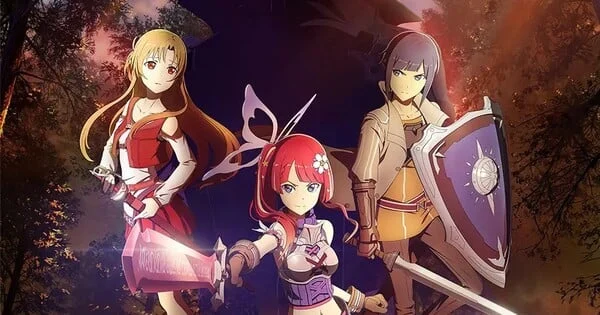
The release of Unanswered//Butterfly, a nearly two-hour animated feature film, as a bonus for the Echoes of Aincrad Ultimate Edition marks a significant departure from typical anime tie-ins. Unlike standard OVA episodes or short-form content, this production represents a substantial narrative expansion, offering fans a deep dive into a previously unexplored and controversial aspect of the Sword Art Online universe: the protagonist Kirito’s descent into becoming a mass murderer within the game’s early days. This ambitious endeavor, produced by Polygon Pictures, aims to captivate long-time fans with a dark, character-driven mystery, though its execution presents a complex mixture of compelling concepts and uneven development.
A Premise Shrouded in Intrigue
At its core, Unanswered//Butterfly presents a potent and inherently engaging premise. The notion of Kirito, the revered hero of the Sword Art Online saga, engaging in widespread slaughter during the game’s initial, perilous stages is a heretical idea designed to immediately draw in the series’ devoted fanbase. This narrative shock value is further amplified by a deliberate shift in perspective. Instead of focusing on Kirito’s internal struggles, the film centers on two entirely new characters: Rex and Emirun, individuals driven by a potent desire for revenge against the "Black Swordsman." This dual-protagonist approach, exploring the ramifications of Kirito’s actions through the eyes of those he has wronged, promises a fresh and potentially empathetic lens through which to re-examine the established lore.
The early days of Sword Art Online were characterized by an unprecedented level of player desperation and emergent predatory behavior. Following the announcement of the game’s death-trap nature, the virtual world of Aincrad transformed from a fantastical adventure into a brutal fight for survival. Player-killing (PK) became a stark reality, with opportunistic individuals exploiting the game’s mechanics to prey on weaker players. This chaotic environment, where trust was a scarce commodity and survival often depended on ruthlessness, provides fertile ground for a story exploring the darker undercurrents of the virtual world and the psychological toll it could exact on its inhabitants, even its heroes.
Character Dynamics: A Tale of Two Protagonists
The film’s narrative strength is largely derived from its character introductions, particularly that of Rex. Rex emerges as a complex and sympathetic figure, burdened by a unique and debilitating affliction. A malfunction in his NerveGear interface prevents him from attacking, leaving him solely reliant on defensive capabilities, primarily his shield. This profound weakness shapes his worldview and his interactions, fostering a sense of vulnerability that contrasts sharply with the hyper-competent Kirito. His reliance on Emirun, a considerably younger and less experienced individual he tutored in the real world, adds another layer to his character. Rex’s serious, goal-oriented demeanor frequently clashes with Emirun’s immature and volatile personality, creating a dynamic that, while often tense, is also a source of narrative friction and potential growth. Rex’s character arc, hinted at through "hidden depths" that alter the audience’s perception of him throughout the film, positions him as a standout element within the narrative, representing a more grounded and emotionally resonant perspective amidst the game’s fantastical chaos.
Emirun, however, presents a more challenging aspect of the film’s character development. Her role as a vengeful individual tasked with assassinating Kirito is consistently undermined by a personality that appears ill-suited for such a grave mission. Her flighty and impulsive nature is amplified to what the review describes as "insane extremes." The rapid emotional shifts she undergoes—from profound grief at a funeral to childish outbursts and then to carefree indulgence in food and fangirling—are jarring and detract from the gravity of her stated objective. While the narrative acknowledges her resilience as a core facet of her character, her inconsistent focus on revenge makes her primary motivation feel secondary. This emotional whiplash, oscillating between moments of genuine pathos and frivolous behavior, can be an exhausting experience for the viewer, potentially diminishing the impact of her supposed quest.
The tonal inconsistency introduced by Emirun’s character is a significant hurdle. While Sword Art Online has always incorporated elements of both lightheartedness and peril, the early stages of Aincrad were undeniably grim. Survivors grappled with the daunting task of clearing floors, a constant stream of deaths was a grim reality, and the rise of PKers created an atmosphere of pervasive fear. Emirun, however, often treats Sword Art Online as the recreational game it was intended to be, rather than the life-or-death struggle it had become. This disconnect is further exacerbated by the film’s own direction and musical choices, which, at times, emphasize the fun and lighthearted aspects to such a degree that it raises questions about whether this segment is intended as a promotional piece for the accompanying game.
Supporting Characters and the Enigmatic Antagonist
Within the broader Sword Art Online narrative, Asuna occupies a crucial, albeit complex, role. She acts as a mentor to both Rex and Emirun, guiding them through the more advanced mechanics of Aincrad. Unbeknownst to her, the target of their revenge is Kirito, a figure she has come to know more intimately than almost anyone else. Simultaneously, Asuna herself is on a parallel quest, seeking to understand Kirito’s drastic transformation into a murderer. This intertwined pursuit creates a compelling dramatic irony, as she trains individuals bent on destroying someone she is simultaneously trying to comprehend and, presumably, save.
The portrayal of Kirito is central to the film’s mystery. Glimpses of him reveal a character perpetually on edge, his eyes darting with paranoia, and a visible criminal icon hovering above his head. This icon functions as a powerful visual metaphor, a "scarlet letter" that isolates him. Other players actively shun him, and the game’s system itself bars him from entering towns, further amplifying his ostracization. From an external perspective, this depiction is genuinely intimidating, and the enigma surrounding his sudden fall from grace is a key element that sustains viewer engagement throughout the film. The deliberate withholding of his motivations, coupled with the visible markers of his outlaw status, builds suspense and invites speculation.
Visual and Auditory Landscape: A Polygon Pictures Endeavor
The visual presentation of Unanswered//Butterfly is helmed by Polygon Pictures, a studio known for its distinctive 3DCG animation style, a departure from the usual work of A-1 Pictures, the primary animation studio for the Sword Art Online series. While the 3DCG animation is noted as fitting the virtual reality setting well, and the combat sequences range from adequate to "absolutely awesome," a significant point of contention arises from the character designs. The visual aesthetic of Emirun, along with other new characters introduced in Echoes of Aincrad, clashes notably with the established visual style of the early Sword Art Online era. Emirun’s two-toned hair, floral accessories, and armor color palette are described as incongruous with the established visual language of Aincrad’s initial floors. This stylistic dissonance reportedly breaks immersion, creating an odd sensation that these characters do not truly belong within the world as it was previously depicted.
On the auditory front, the general soundtrack is deemed "passable." However, the film features a notable insert song, "Reach for the Rainbow," performed by Iori (Kato LEIA) and LaLa (Rina). This song is specifically highlighted as being effective in conveying the idol characters’ personas, suggesting a successful integration of musical performance within the narrative.
Implications and the Price of Entry
Unanswered//Butterfly attempts to delve into the psychological complexities and darker facets of the Sword Art Online universe, a commendable ambition for a tie-in film. The character of Rex, with his unique struggles and layered personality, offers a compelling addition to the established cast and the chaotic environment of Aincrad. Furthermore, the central mystery surrounding Kirito’s violent turn provides a strong narrative anchor, keeping viewers invested, particularly those with a deep familiarity with the series.
However, the film’s impact is significantly hampered by the character of Emirun, whose personality and visual design are seen as fundamentally at odds with the film’s intended tone and the established world. Her jarring inconsistencies and the overall uneven tone can undermine the serious themes the film seeks to explore.
A significant barrier to accessibility, and a point of considerable critique, is the price point for Unanswered//Butterfly. Bundled exclusively with the Echoes of Aincrad Ultimate Edition, the total cost is reported to be $110, a substantial $40 premium over the standalone game purchase. This elevated price makes the film a luxury item, accessible only to the most dedicated and affluent fans. The article suggests that for those not willing or able to bear this cost, the film’s future availability on streaming services like Crunchyroll remains uncertain, leaving a significant portion of the fanbase in limbo. This pricing strategy raises questions about the balance between exclusive content for dedicated fans and broader accessibility for the wider Sword Art Online community. The decision to gate such a substantial narrative piece behind a premium edition of a video game could alienate potential viewers and limit the film’s overall reach and impact within the fandom. The success of such a release strategy will likely be measured not only by critical reception but also by its ability to justify its substantial cost to consumers, potentially setting a precedent for future anime-related video game bonuses.