The festival, a cornerstone of the global film industry since 1946, once again drew an estimated 40,000 attendees, including industry professionals, filmmakers, and journalists, with thousands more participating in the Marche du Film. Despite initial reports suggesting a lack of "red carpet sizzle," the artistic depth and thematic consistency of the selected films quietly asserted Cannes’ enduring role as a barometer for the future of cinema.
A Shift in Storytelling: The Power of Accumulative Narratives
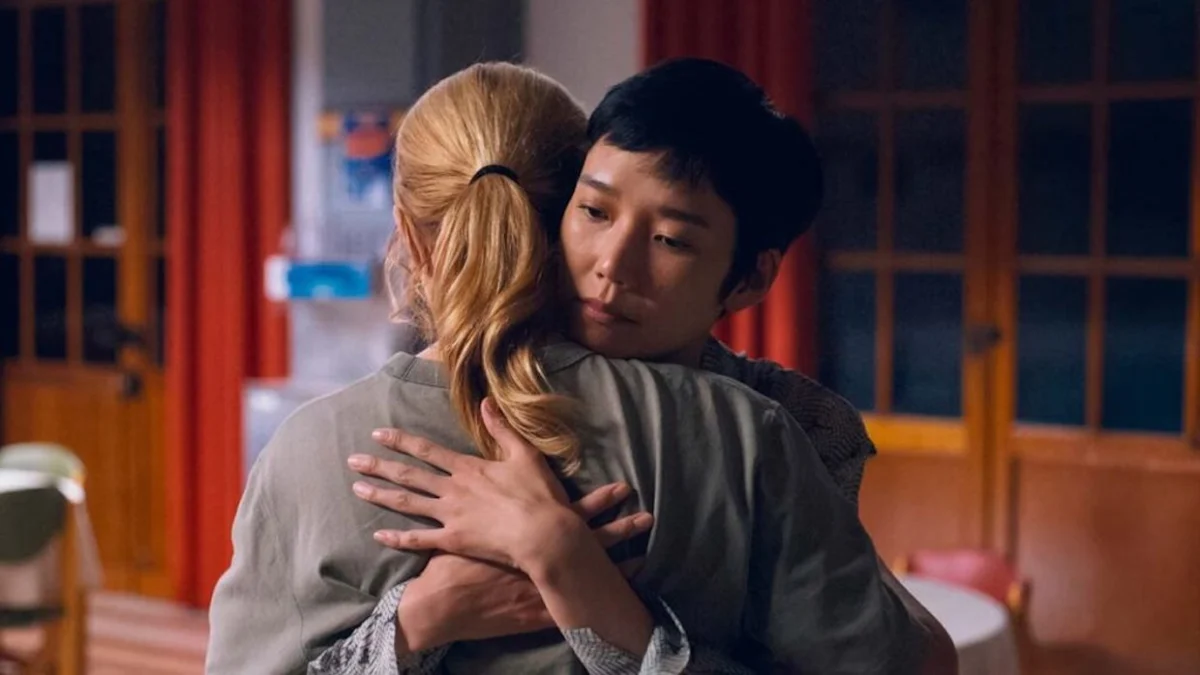
The prevailing artistic trend at Cannes 2026 was undoubtedly the rise of "accumulative works"—films designed to have a gradual, bodily impact on the viewer, eschewing overt dramatic blows for a more profound, internalized experience. This paradigm shift was epitomized by Ryusuke Hamaguchi’s latest, All of a Sudden, a tender exploration of human connection that captivated audiences despite its understated premise. The film, which eventually garnered joint Best Actress awards for its leads, Virginie Efira and Tao Okamoto, delves into the burgeoning friendship between Mari, a Japanese playwright, and Marie-Lou, a French eldercare manager. Their extended heart-to-heart, born of chance encounters, evolves into a fortifying bond, navigating personal concerns and anxieties about global decline with remarkable grace and introspection.
Hamaguchi, celebrated for his previous Palme d’Or contender Drive My Car (2021) and his insightful character studies, once again demonstrated his mastery of dialogue and understated emotion. All of a Sudden was lauded for transforming mere reflection into an adventure, illustrating how deep human connection can serve as a lifeline in an increasingly fragmented world. Its narrative subtly mirrors the real-life correspondence between Japanese anthropologist Maho Isono and philosopher Makiko Miyano, whose terminal illness resonated with the film’s compassionate scenario of chance-sparked connection. The film’s premiere saw Isono’s presence on the red carpet, a poignant nod to the true-life inspiration that underscored its profound themes. Critics noted that the film’s portrayal of friendship, particularly the swift transition from "how are you" to global existential analysis, struck a chord with contemporary anxieties, capturing a daily reality for many. The critical consensus praised its subtle yet devastating emotional power, positioning it as a strong contender for major accolades.
The Palme d’Or and Critical Discourse: "Fjord" Sparks Debate
Despite its critical acclaim and emotional depth, All of a Sudden ultimately ceded the coveted Palme d’Or to Cristian Mungiu’s multilingual drama, Fjord. Mungiu, a previous Palme d’Or winner for his harrowing 2007 film 4 Months, 3 Weeks, and 2 Days, presented a supersized case-study-gone-wrong exposé of Norwegian child protective services. While the film was recognized for its ambition and Mungiu’s signature unflinching gaze, its victory sparked considerable debate among critics and festival-goers. Many viewed Fjord‘s narrative, which posited a Scandinavian "nanny state" as a "clear and present danger," as a "stacked deck" and a departure from the nuanced storytelling that defined much of the festival.
Critics questioned the jury’s decision, perceiving Fjord as possessing an "encroaching reactionary outlook" that felt at odds with the more empathetic and humanistic narratives prevalent elsewhere. The film’s absolute faith in "young ride-or-die bonds" echoed Mungiu’s earlier work but, for some, felt excessively button-pushing in its execution, contrasting sharply with Hamaguchi’s delicate study of care. The decision to award Mungiu a second Palme d’Or was seen by some as an overemphasis on a particular brand of social critique, potentially overshadowing other deserving works that explored more subtle forms of contemporary human experience. A representative from the festival jury, speaking anonymously, acknowledged the robust debate, stating, "The jury’s role is to recognize bold artistic vision, and Fjord undeniably possesses that, even if its perspective is intentionally provocative."
Unveiling Diverse European Perspectives
Beyond the main competition, Cannes 2026 offered a rich tapestry of European cinema, with several films delving into complex historical and social landscapes.
Eastern European Resilience and Gender Dynamics
Valeska Grisebach’s The Dreamed Adventure, a three-hour-plus triumph, emerged a week after All of a Sudden, further cementing the festival’s focus on gradualist storytelling. Despite its unfortunate placement on the last afternoon of premieres, the film quickly secured US distribution, a testament to its powerful narrative. Grisebach, known for her meticulous, lived-in research, crafted an Eastern European borderland saga centered on Veska (Yana Radeva), a middle-aged archaeologist. Veska navigates a landscape rife with strained post-Soviet gangsterism, patiently observing her circle of friends and local intrigue. The film, which opens with Syuleyman Letifov (from Grisebach’s Western) on an unclear mission, slowly unfurls layers of alfresco table talk and village dynamics.
Grisebach’s deliberate pacing allows Veska’s eventual reaction to the "tiresome status quo of chest-bumping, gun-toting men chasing the glory days of the 1990s mafias" to resonate deeply. The director’s years-long preparation, involving immersive research in the region, lent the film an undeniable authenticity. The Dreamed Adventure simultaneously evokes and subverts the Western genre, delivering a profound commentary on power dynamics and "backward gender relations." As Grisebach succinctly articulated in an industry interview, her interest lay in exploring "who is strong and who’s weak… Who is, to speak frankly, fucking, and who is being fucked?"—a clarity of vision that permeated every frame of her confidently realized work. This bold approach was praised for its unflinching portrayal of post-Soviet societal struggles and the quiet strength of female protagonists.
Echoes of History: WWII and Post-War Germany
Two compelling period dramas, both set around World War II, held up mirrors to the present, demonstrating distinct approaches to immersing audiences in the past. Pawel Pawlikowski’s Fatherland offered an impeccably shot and constructed road movie, tracing Thomas Mann (Hanns Zischler) and his daughter Erika Mann (Sandra Hüller) on the writer’s pivotal 1949 speaking tour across West and East Germany. Pawlikowski, acclaimed for his concise yet profound cinematic narratives, rapidly distilled a crucial moment in postwar thought with a fleet touch and an elegant cast. Mann’s eloquent speeches, steeped in the monumental 19th-century first principles of Kant and Goethe, grappled with the stark realities of postwar ruins, blinkered opportunism, and resurgent authoritarian demons. The film provoked uncomfortable questions about whether these historical echoes predict our own near future.
Emmanuel Marre’s A Man of His Time, conversely, tracked the chilling rise and moral decay of a middling municipal bureaucrat (Swann Arlaud, delivering a maddeningly good performance) in Nazi-occupied Vichy France. The film’s hard-lit 16mm aesthetic lent a raw, "you-are-there" immediacy to the Frenchman’s insidious shuffle toward fascism and genocide. Arlaud’s character was based on Marre’s own great-grandfather, whose haunting letters to his wife were quoted throughout the film, providing a deeply personal and unsettling window into the banality of evil. Both films, though set decades apart, effectively channelled the disquiet of their respective eras, prompting reflection on enduring human frailties and societal vulnerabilities. Their release comes at a time of rising global political tensions, making their historical analyses particularly resonant for contemporary audiences.

Breakthroughs in Parallel Sections
The Critics’ Week and Camera d’Or sections frequently serve as launchpads for emerging talent, and Cannes 2026 was no exception, highlighting several standout debut features. These sections, often seen as testing grounds for innovative cinematic voices, consistently punched above their weight in critical reception this year.
"La Gradiva": A Fresh Perspective on Adolescence
Marine Atlan’s La Gradiva, a gorgeously observed debut feature, received widespread acclaim and a Critics’ Week prize, challenging the Competition-centered hierarchy of attention. Atlan, who co-wrote the screenplay and served as co-cinematographer, displayed a wondrously attuned eye to a group of French students on a school trip to Pompeii. Filming on location in Naples, Atlan captured the nuanced landscape of adolescent angst and joy with whisker-sensitive precision, complemented by the credible dedication of their teacher, portrayed by Antonia Buresi.
The film’s strength lay in its ensemble of newcomers, including Suzanne Gerin as a budding artist resigned to loneliness and Colas Quignard as a somewhat inept tragic outsider. Atlan’s direction never diminished their teenage crises nor undermined them with winking humor, drawing viewers deeply into their emotional worlds. Her innovative camera framing shifted perspectives, fluidly designating observers and participants, thereby illuminating the intricate dynamics and evolving autonomy of teenage relationships. La Gradiva secured US distribution through 1-2 Special and garnered an immediate, lengthy rave review from The New Yorker, firmly establishing Atlan as a formidable new voice in cinema, proving that compelling narratives can emerge from any section of the festival.
"Clarissa": A Colonial Critique Reimagined
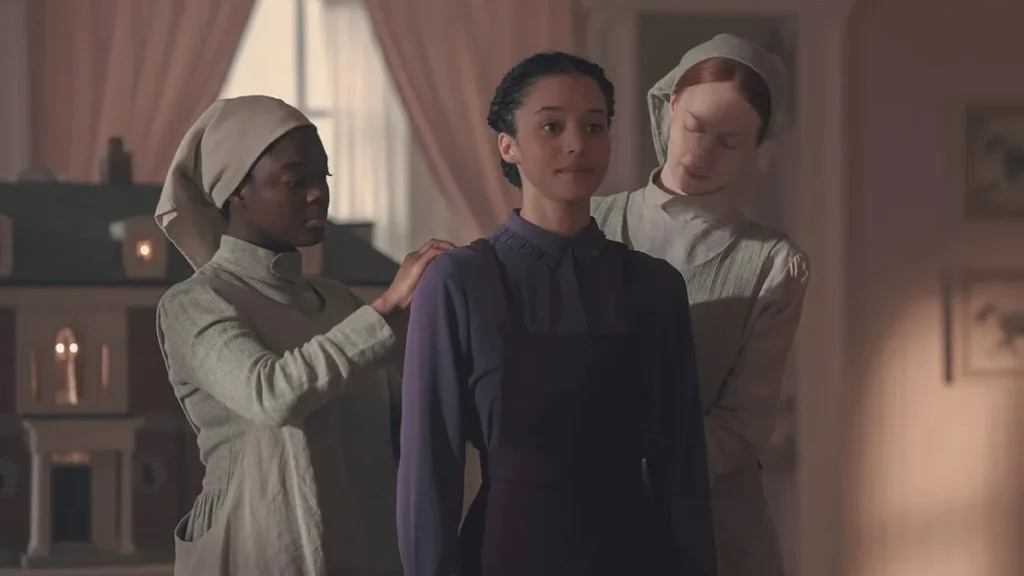
The Camera d’Or for best debut feature was awarded to Clarissa, a sumptuously mounted reworking of Virginia Woolf’s Mrs. Dalloway. Directed by Nigerian filmmakers Arie Esiri and Chuko Esiri, the film presented a sharpened colonialist critique, explicitly referencing Chinua Achebe’s foundational works. Clarissa was one of an impressive armful of titles brought to the festival by NEON, a distributor known for its eclectic slate. NEON’s diverse offerings this year ranged from the turbocharged South Korean monster movie Hope, featuring a galloping, stretchy hominid alien seemingly inspired by Goya’s Saturn Devouring His Son, to James Gray’s Queens family tragedy Paper Tiger. The latter, a pitch-perfect classical work, regrettably did not receive the full recognition it deserved at the festival, a common plight for nuanced dramas amidst more attention-grabbing fare. The inclusion of Clarissa underscored a growing trend in international cinema to reinterpret classic texts through post-colonial lenses.
Un Certain Regard: Exploring Desire and Grief
The Un Certain Regard sidebar, dedicated to original and daring works, opened with grand style with Jane Schoenbrun’s latest and most readily digestible parasocial exploration of desire, Teenage Sex and Death at Camp Miasma. This febrile meta-horror journey of self-realization and pleasure, featuring Hannah Einbinder and Gillian Armstrong, set a provocative tone for the section. However, the section’s top prize ultimately went to Sandra Wollner’s Everytime, a shattering study in divergent, even mysterious pathways through grief and recovery. Shot by Gregory Oke (Aftersun) with a heady intimacy, both up close and from afar, and enhanced by its immediate sound design, Everytime offered a profoundly immersive and affecting experience.
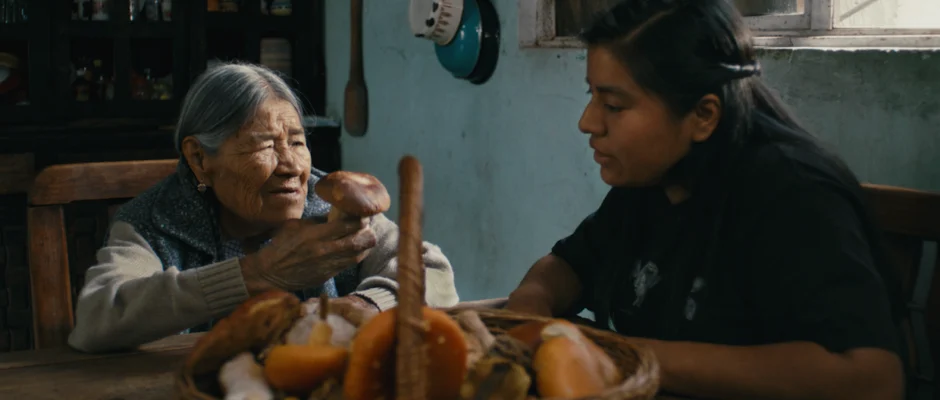
Everytime found a compelling thematic partner in Dominga Sotomayor’s La Perra, a Fortnight title. This magnificently composed portrait centered on a Chilean islander, portrayed by an arresting Manuela Oyarzún, whose complex tangle of childhood loss seemed to manifest symbolically in an ornery stray dog. Both films showcased a deep understanding of psychological landscapes and their external manifestations, demonstrating the power of visual storytelling to convey internal turmoil.
Challenging Perceptions: The Unclassifiable and the Unsettling
Cannes 2026 also embraced films that defied easy categorization, pushing the boundaries of genre and challenging audience expectations. Arthur Harari’s The Unknown emerged as perhaps the most haunting and unclassifiable experience of the festival. In a deeply vulnerable performance, Léa Seydoux played a man who wakes up transferred into the body of a woman with whom he had a one-night stand at a carnivalesque warehouse party.
Despite critics routinely framing it as a "body-swap movie," Harari meticulously sidestepped conventional genre expectations, crafting an uncompromising, go-it-alone film that exemplified the kind of daring cinema Cannes aims to showcase. His disquieting and ambiguous work utilized bodily displacement as a floating signifier, representing trauma in all its bewildering estrangement from self. The film also explored the sometimes queasy solidarity felt with others in this liminal state, a profound meditation on identity and psychological dislocation. Léa Seydoux further explored similar themes in a more conventional drama elsewhere in the Competition: Marie Kreutzer’s Gentle Monster, a crushing if imperfect follow-up to Corsage (2022), where Seydoux starred as a singer blindsided by the arrest of her husband on child pornography charges. These two performances highlighted Seydoux’s versatility and her willingness to tackle challenging, psychologically complex roles, cementing her status as one of Europe’s most compelling actresses.
Political Statements and Lasting Impressions
While Cannes 2026 may not have concluded with the same level of global "communion" as the previous year’s Palme d’Or winner, It Was Just an Accident (whose director, Jafar Panahi, has since faced further resentencing in Iran), this edition certainly ended with a powerful anti-authoritarian gesture. Andrei Zvyagintsev, the Russian exile and Grand Prix winner for Minotaur, used his acceptance speech to directly address Vladimir Putin, urging an end to the Ukraine war. In a subtly under-translated moment, Zvyagintsev referenced the dictator’s disconnect, noting that Putin wasn’t "connecting with a VPN" but had people who could bring him up to speed—a pointed critique of isolation and misinformation that reverberated globally.
Minotaur, Zvyagintsev’s first film in nearly a decade, was filmed in Latvia, a strategic choice to portray a domineering businessman who descends into outright murder. This adaptation of Chabrol’s The Unfaithful Wife to the Russian "corruption industrial complex" was lauded for its unflinching portrayal of power and moral decay, though some found its conclusions somewhat foregone. Zvyagintsev’s statement underscored the festival’s historical commitment to artistic freedom and its role as a platform for political expression.
Other films also used performance and narrative in disarming ways to comment on contemporary issues. Radu Jude’s guest-worker update and "punking" of Octave Mirbeau’s Diary of a Chambermaid served as a less raucous companion piece to his 2023 film Do Not Expect Too Much from the End of the World. It followed a young mother’s double binds, nannying a stranger’s child while only