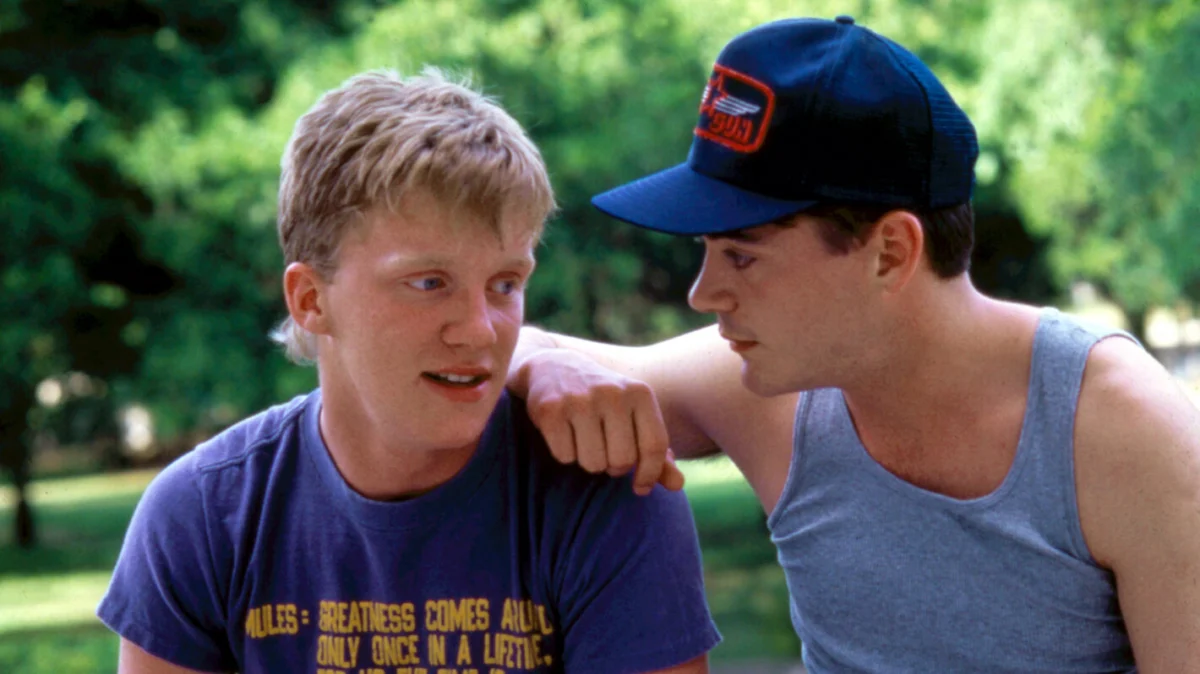
The trajectory of Anthony Michael Hall’s career serves as a definitive case study in the transition from teenage archetypal stardom to sustained character acting within the American film and television industry. While the cultural zeitgeist largely tethers Hall to the "Brat Pack" phenomenon of the 1980s—specifically through his collaborations with director John Hughes in Sixteen Candles, The Breakfast Club, and Weird Science—his professional history encompasses a much broader spectrum of performance. Hall’s career is characterized by a deliberate effort to subvert his early "geek" persona, a transition that began as early as the late 1980s and culminated in a successful tenure as a leading man in cable television and a dependable supporting presence in major motion pictures.
The Formative Years and the John Hughes Collaboration
Anthony Michael Hall began his professional acting career in commercials and off-Broadway theater before making his film debut in the 1982 coming-of-age film Six Pack. However, his breakthrough occurred in 1983 when he was cast as Rusty Griswold in National Lampoon’s Vacation. This role established his timing and relatability, leading directly to his multi-film partnership with John Hughes.
Between 1984 and 1985, Hall became the face of the American adolescent intellectual. In Sixteen Candles (1984), he played "The Geek," a performance that earned him a Young Artist Award. This was followed by The Breakfast Club (1985), where he portrayed Brian Johnson, "The Brain." The film, produced on a modest budget of $1 million, went on to gross over $51 million domestically, solidifying Hall’s status as a household name. His final collaboration with Hughes, Weird Science (1985), further cemented this archetype. Data from the era suggests that Hall was one of the most bankable young stars in Hollywood; however, the actor became wary of the limitations imposed by these roles. In an effort to avoid permanent typecasting, Hall famously turned down roles written for him by Hughes in Pretty in Pink and Ferris Bueller’s Day Off.
Chronology of a Career Shift: 1985–1999
The late 1980s marked a period of experimentation and risk for Hall. In 1985, at the age of 17, he became the youngest cast member in the history of Saturday Night Live (SNL). While his tenure on the sketch comedy show lasted only one season (1985–1986), it signaled his desire to move beyond the high school setting.
The 1990s represented a physical and professional transformation. Hall underwent a significant fitness regimen, altering his lanky teenage physique into a more muscular, mature frame. This physical change facilitated his casting as the antagonist, Jim, in Tim Burton’s Edward Scissorhands (1990). Playing a bully was a calculated move to distance himself from the "Brain" persona of the previous decade. Throughout the 1990s, Hall balanced independent films with television appearances, notably starring in the 1999 Emmy-nominated film Pirates of Silicon Valley, where he portrayed Microsoft co-founder Bill Gates. Critics praised his performance for its intensity and accuracy, marking a high point in his adult career and proving his capability in biographical drama.
The Television Renaissance: The Dead Zone and Beyond
In 2002, Hall’s career experienced a significant resurgence with the premiere of the USA Network series The Dead Zone, based on the novel by Stephen King. Hall starred as Johnny Smith, a man who awakens from a coma with psychic abilities. The series was a critical and commercial success, running for six seasons and 80 episodes. At the time of its debut, The Dead Zone was one of the highest-rated original series on cable television, averaging millions of viewers per episode.
Hall’s involvement in The Dead Zone was not limited to acting; he also served as a producer, providing him with a level of creative control that was absent during his years as a child star. This period solidified his reputation as a reliable television lead and paved the way for a steady stream of guest and recurring roles in prestige dramas such as Warehouse 13, Awkward, and Bosch: Legacy.
Supporting Roles and Modern Contributions
In the latter half of his career, Hall has transitioned into a respected character actor, often cast in roles that require a sense of authority or underlying menace. His participation in Christopher Nolan’s The Dark Knight (2008) as news reporter Mike Engel showcased his ability to fit into large-scale, ensemble blockbusters. He also appeared in the Academy Award-nominated Foxcatcher (2014) and Ben Affleck’s Live by Night (2016).
More recently, Hall joined the legendary Halloween franchise in Halloween Kills (2021), taking over the role of Tommy Doyle. In 2024, it was announced that Hall would join the cast of the hit Amazon Prime series Reacher for its third season, playing the character Zachary Beck. This casting further illustrates Hall’s longevity and his ability to integrate into contemporary high-action television formats.
Analysis of Nine Frequently Overlooked Performances
To fully understand the breadth of Hall’s resume, one must look beyond the Hughes trilogy. The following nine roles demonstrate his range across different genres and eras:
- Rusty Griswold in National Lampoon’s Vacation (1983): Often overshadowed by the different actors who played the role in sequels, Hall’s original portrayal set the comedic standard for the Griswold children.
- Saturday Night Live Cast Member (1985–1986): As the youngest person ever hired for the show, his stint remains a historical curiosity that demonstrated his early industry clout.
- Jim in Edward Scissorhands (1990): This role served as the definitive break from his "geek" persona, proving he could play a convincing and hateful villain.
- Will in Six Degrees of Separation (1993): In this film adaptation of the acclaimed play, Hall delivered a nuanced performance alongside Will Smith and Stockard Channing.
- Bill Gates in Pirates of Silicon Valley (1999): Hall’s portrayal of the tech mogul is often cited as one of the most accurate depictions of Gates’ early career intensity.
- Mike Engel in The Dark Knight (2008): Though a supporting role, Hall’s presence in the highest-grossing film of 2008 reaffirmed his place in mainstream cinema.
- Jack S. Fowler in Foxcatcher (2014): Hall’s performance in this gritty biographical drama demonstrated his ability to contribute to somber, award-contending narratives.
- Paul Barnes in Live by Night (2016): Working under director Ben Affleck, Hall portrayed a tough, period-accurate character in this prohibition-era crime film.
- Tommy Doyle in Halloween Kills (2021): This role allowed Hall to participate in "Slasher" cinema, bringing a physical intensity to a character previously established in the 1978 original.
Broader Impact and Industry Implications
The career of Anthony Michael Hall reflects the broader shifts in Hollywood’s treatment of child actors. Unlike many of his contemporaries who struggled to find work after the 1980s, Hall’s longevity is attributed to his willingness to reinvent himself. Industry analysts often point to Hall as a prime example of successful "brand pivot." By rejecting the very roles that made him famous—such as the archetypal teen lead—he avoided the "washed-up" narrative that plagued other members of the Brat Pack.
Furthermore, Hall’s success in cable television during the early 2000s mirrored the industry-wide shift where high-quality storytelling began moving from film to basic and premium cable. His work on The Dead Zone helped establish USA Network’s "Characters Welcome" branding strategy, which focused on idiosyncratic leads in procedural dramas.
Official Perspectives and Legacy
While Hall has often expressed gratitude for the John Hughes era, he has been vocal in interviews about the necessity of growth. In various press junkets, Hall has noted that he views his career as a marathon rather than a sprint, emphasizing the importance of staying "in the game" over the long term. This perspective is shared by many of his collaborators; directors often cite his professionalism and his ability to adapt to various set environments, from low-budget indies to massive studio productions.
In conclusion, Anthony Michael Hall remains a significant figure in American entertainment not merely because of his iconic 80s roles, but because of his endurance. With a career spanning over four decades, his filmography serves as a timeline of modern American media, moving from the rise of the teen comedy to the explosion of cable television and the current era of streaming dominance. His ability to navigate these changes while maintaining a consistent presence on screen underscores a versatility that few actors of his generation have managed to replicate. As he continues to take on new challenges in series like Reacher, Hall’s legacy remains that of a performer who successfully outran his own shadow.