The 1980s stand as a distinct era for fantasy cinema, a genre that experienced a significant decline in the 1990s before a notable resurgence in the 2000s. However, the fantasy films of the 1980s often possessed a peculiar, unpolished charm and a willingness to embrace the bizarre that set them apart from their more streamlined successors. This series delves into canonical fantasy films released between 1980 and 1989, examining their lasting impact. Following explorations of "Dragonslayer" (1981) and Disney’s animated misstep "The Black Cauldron" (1985), this installment focuses on John Boorman’s capacious retelling of the Arthurian saga, "Excalibur" (1981).
A Visionary Director’s Ambitious Retelling
John Boorman, a director known for his distinctive visual style and thematic depth, embarked on a grand cinematic interpretation of Arthurian legend with "Excalibur." Released in 1981, the film draws heavily from Sir Thomas Malory’s "Le Morte d’Arthur" and T.H. White’s "The Once and Future King," weaving together the foundational myths of King Arthur. While Boorman had previously garnered attention for the visually striking and unconventional "Zardoz" (1974), "Excalibur" represented a more direct engagement with established mythology, albeit filtered through his unique artistic lens.
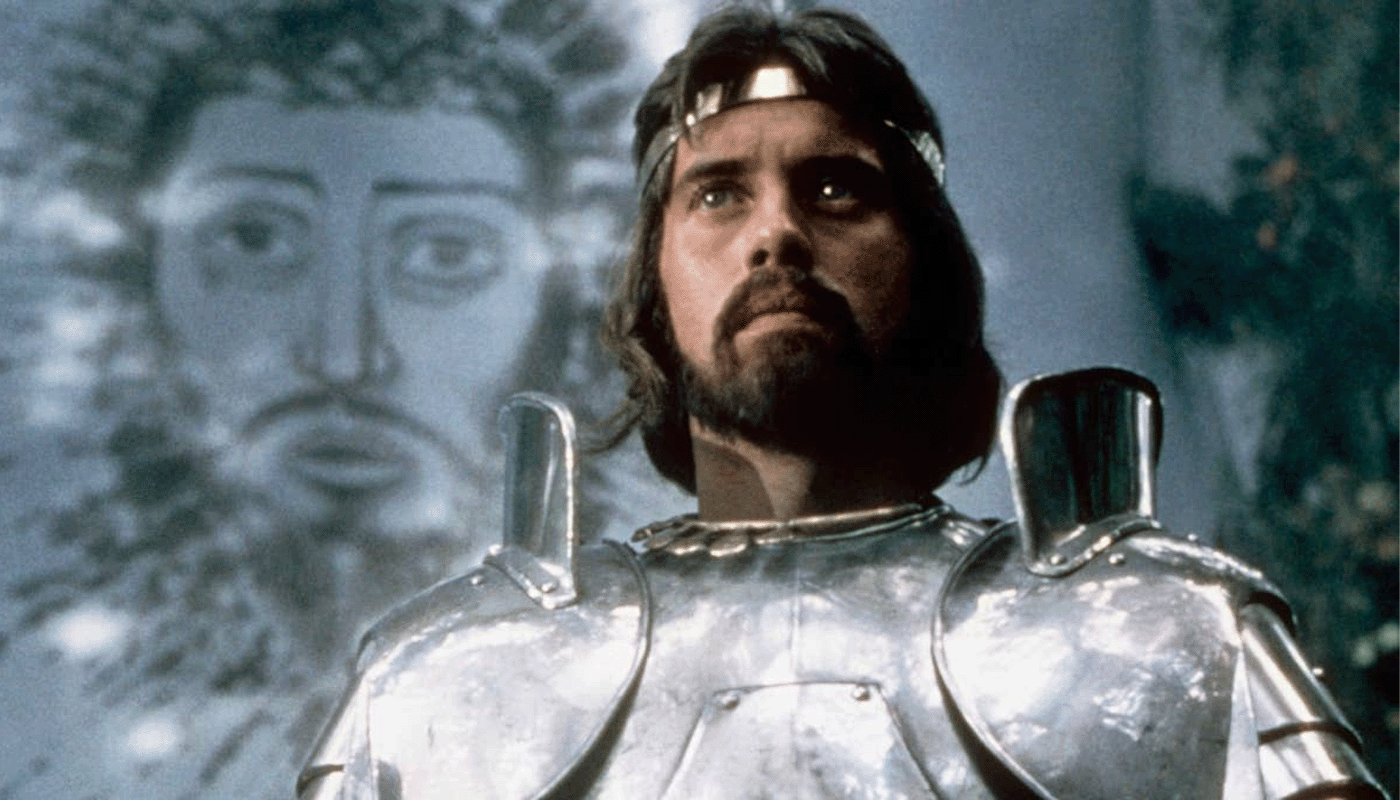
The film’s narrative arc is comprehensive, tracing Arthur’s tumultuous origins, from Uther Pendragon’s deception of Igraine to his eventual rise as king. It navigates key episodes such as Arthur pulling the sword from the stone, his marriage to Guinevere, her tragic affair with Lancelot, the elusive quest for the Holy Grail, Arthur’s fatal confrontation with Mordred, and his final journey to Avalon. Boorman’s adaptation makes certain narrative choices to streamline the epic tale. Notably, the sword Excalibur is presented as the same blade as the Sword in the Stone, a departure from many earlier accounts where they are distinct. Furthermore, the sorceress Morgan le Fay and the enchantress Nimue are consolidated into a single character, and Perceval is reinstated as the primary finder of the Holy Grail, a role often attributed to Galahad in other renditions. The film is characterized by its vivid, jewel-toned palette, frequently dominated by striking greens, and a visually opulent aesthetic.
Critical Reception and Enduring Reputation
Upon its release, "Excalibur" received a generally positive critical reception. Its cinematography was particularly lauded, earning an Academy Award nomination. While it did not secure major awards, the film has since cultivated a reputation as a visually arresting yet narratively complex work by a talented director, often described as deeply flawed but undeniably stunning. This assessment warrants a closer examination of how the film holds up nearly four and a half decades after its premiere.
A Feast for the Eyes, A Puzzle for the Mind
Boorman’s "Excalibur" is undeniably a visual spectacle. The film is replete with lavish costumes, grand battle sequences, and cinematography that imbues the legend with a dreamlike quality. Boorman’s storytelling is lyrical and often hallucinatory, employing sequences that blur the lines between magic, hallucination, and metaphor. The sheer scope and bold visual decisions, coupled with an emphasis on the mystical and ethereal, have led to comparisons with "Monty Python and the Holy Grail" (1975), despite "Excalibur" predating the iconic comedy by six years. This recurring observation underscores the film’s unique ability to evoke a sense of fantastical absurdity, even within its serious dramatic framework.
However, "Excalibur" is not without its shortcomings. Several directorial choices and casting decisions contribute to tonal inconsistencies that prevent it from achieving undisputed masterpiece status. A central point of contention is the portrayal of King Arthur himself. Nigel Terry, known for his more villainous roles, imbues Arthur with a sense of befuddlement rather than charismatic leadership. His performance, particularly in the earlier stages of Arthur’s life, is marked by a West Country accent that evokes a rustic origin, drawing parallels to Samwise Gamgee from Peter Jackson’s "The Lord of the Rings." While Terry’s commitment to the character is evident, the portrayal often feels disconnected from the epic sweep of the narrative, creating a void at the film’s core.
The casting of Nicol Williamson as Merlin further contributes to the film’s tonal shifts. Williamson delivers a performance that is both entertaining and peculiar, leaning into a campy, almost mischievous interpretation of the sorcerer. His Merlin is droll, long-suffering, and prone to petty magical interventions. His physical comedy, such as pratfalling into a river, and his dramatic pronouncements, like "a dream to some, a nightmare to others!", inject moments of levity and eccentricity. The scenes where Merlin clashes with Morgana, portrayed by a young and captivating Helen Mirren, are among the film’s highlights. Yet, this comedic Merlin, complete with a staff topped by a blowtorch, stands in stark contrast to the more traditional depictions of the character. Boorman’s original casting considerations, which included cinematic titans like Lee Marvin, Sean Connery, Max von Sydow, and Klaus Kinski, suggest a different vision for Merlin, making Williamson’s eventual, unconventional choice all the more striking.
Anachronisms and Artistic Liberties
The film’s commitment to visual distinctiveness extends to its numerous anachronisms and peculiar artistic choices. The opening title font, "Herkules," evokes a retro aesthetic reminiscent of 1980s television sitcoms. Camelot itself is depicted as a modernistic fortress constructed from stainless-steel blocks, anachronistic to any historical period. Lady Igrayne’s dance for Lord Cornwall’s guests features gyrations that feel more suited to a 1990s goth club. The seduction scene between Uther Pendragon and Igrayne is particularly memorable for its implausibility, with Uther remaining in full plate mail throughout the encounter. Carl Orff’s "Carmina Burana" is employed multiple times, often appearing as a jarring intrusion, erupting into its crescendo at unexpected moments.
While these choices can sometimes be jarring, they also yield moments of striking visual innovation. Mordred’s unsettling golden mask and armor are a testament to this. Lancelot’s post-exile transformation into a bearded hermit adds a layer of dramatic gravitas. Perceval’s extended, increasingly surreal quests for the Grail contribute to the film’s dreamlike quality. However, these fascinating elements are often interspersed with the film’s pervasive "sparkly, green-tinted fever dream" aesthetic, which can, at times, overwhelm the epic narrative and detract from its potential grandeur.
The Enduring Influence and Legacy of Excalibur
Despite its narrative eccentricities, "Excalibur" has undeniably left a significant mark on the fantasy genre and cinematic storytelling. Its distinctive visual language and willingness to blend the historical with the hallucinatory have influenced subsequent Arthurian adaptations. Zack Snyder, director of "Man of Steel," has cited "Excalibur" as his all-time favorite film, and its visual flair can be seen in films like "First Knight" (1995) and "King Arthur" (2004), which, despite claims of historical accuracy, embrace anachronistic elements. Furthermore, the film’s fusion of legendary and psychedelic imagery resonates with contemporary works such as "The Green Knight" (2021) and "King Arthur: Legend of the Sword" (2017). For many viewers, "Excalibur" has become the definitive cinematic interpretation of the Arthurian legend, surpassing even its comedic predecessor in establishing a powerful, albeit unconventional, visual identity for the myth.
Beyond its influence on filmmaking style, "Excalibur" also served as a crucial launching pad for numerous notable careers in British cinema. Gabriel Byrne made one of his early film appearances as Uther Pendragon. Liam Neeson, in his second film role, portrayed Sir Gawain, sporting a memorable facial hair style. Patrick Stewart, already an established stage actor, played Leodegrance, Guenevere’s father. Ciarán Hinds made his widely distributed film debut as King Lot. In this regard, "Excalibur" can be viewed as a watershed moment, contributing to the emergence of a generation of British actors who have since become revered figures in stage and screen.
The film’s enduring legacy is multifaceted, marked by its visual ambition, its unique interpretation of classic mythology, and its role in fostering significant acting talent. While "Excalibur" may not be a flawless masterpiece, its bold artistic choices and indelible imagery have cemented its place as a significant and influential work within the fantasy genre.
A Look Ahead
As this exploration of 1980s fantasy cinema continues, the upcoming installment will pivot from the high-minded epic of "Excalibur" to a more visceral and low-budget offering: the Roger Corman-produced "Sorceress" (1982). This shift promises to highlight the diverse spectrum of fantasy filmmaking that characterized the decade, from grand, visionary productions to gritty, genre-defining B-movies.