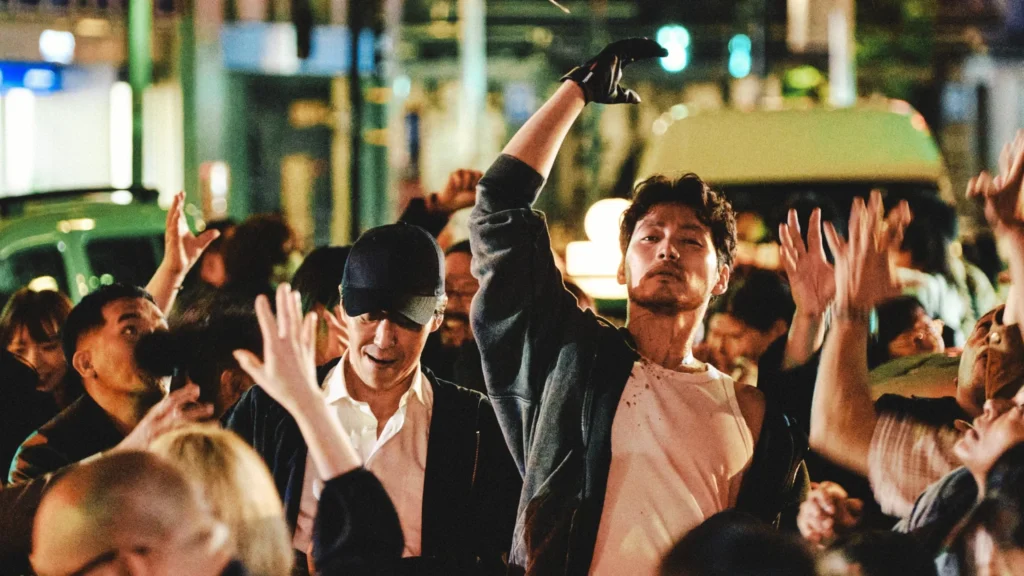
Lee Jun-sup’s highly anticipated debut feature film, "Savon," has emerged as a significant highlight at the 30th Bucheon International Fantastic Film Festival (BIFAN), securing the prestigious Hive Filmworks International Distribution Award. Additionally, actress Jung Yi-ju received a Special Mention for her compelling performance, underscoring the film’s critical reception and its potential for broader international appeal. This recognition at one of Asia’s most prominent genre film festivals solidifies Lee Jun-sup’s position as a burgeoning talent in South Korean cinema, marking a successful transition from acclaimed short films to the challenging landscape of feature filmmaking.
The Ascendance of Lee Jun-sup: From Shorts to Features
Lee Jun-sup’s journey to directing "Savon" is rooted in a compelling track record of short film productions that have garnered critical attention. His previous work, "Pitch Black," notably distinguished itself at the 2021 Bucheon International Fantastic Film Festival, where it was honored with both the Best Korean Fantastic Short Film Award and the Watcha’s Pick Award. These accolades are significant indicators of a filmmaker’s burgeoning talent, often serving as crucial validation for emerging artists within the highly competitive South Korean film industry. The "Best Korean Fantastic Short Film Award," specifically, highlights a director’s prowess in a genre that BIFAN champions, signaling a unique voice capable of exploring imaginative and often unconventional narratives. The "Watcha’s Pick Award," chosen by a prominent streaming platform, further underscores the film’s appeal and potential for wider audience engagement, a vital factor in today’s digital consumption landscape.
The transition from short films to a full-length feature is a challenging yet pivotal step for any director. Short films typically allow for experimentation with narrative structures, visual styles, and thematic concepts without the immense financial and logistical pressures associated with feature productions. For Lee Jun-sup, the success of "Pitch Black" likely provided the necessary momentum, confidence, and perhaps even early investor interest to embark on "Savon." This progression is common in the industry, where festival-recognized shorts often act as calling cards, demonstrating a director’s vision and capability to producers and funding bodies. "Savon" represents not just a creative leap but a strategic move in Lee Jun-sup’s burgeoning career, proving his ability to sustain a compelling narrative over a longer duration while maintaining his distinctive artistic voice.
"Savon"’s Prestigious Festival Journey: A Timeline of Acclaim
"Savon" embarked on its international journey long before its BIFAN triumph, strategically debuting on the global stage to build anticipation and critical buzz. The film first captivated international audiences at the 2025 Vancouver International Film Festival (VIFF), where it was featured in the prestigious "Spotlight on Korea" section. VIFF is renowned as a key North American gateway for Asian cinema, providing a crucial platform for films to gain exposure to critics, distributors, and cinephiles outside of Asia. Its inclusion in this section indicates an early recognition of the film’s artistic merit and its potential to resonate with diverse audiences. For an independent South Korean film, a North American premiere at a festival of VIFF’s stature can significantly enhance its profile and set the stage for further festival selections and potential distribution deals.
Following its successful international debut, "Savon" returned to its home turf for its competitive premiere at the 30th Bucheon International Fantastic Film Festival in July 2026. The film was selected for the highly competitive "Bucheon Choice Korean: Features" section, a category specifically designed to highlight outstanding new Korean genre films. BIFAN, with its focus on fantasy, horror, and science fiction, provides a unique and discerning audience for films that push creative boundaries. Being selected for this competition is itself an honor, placing "Savon" among the best of contemporary Korean genre cinema. The festival’s reputation for championing innovative and often unconventional storytelling aligns perfectly with Lee Jun-sup’s artistic inclinations, making it an ideal venue for the film’s domestic unveiling and a crucial step towards cementing its place in the Korean film landscape. The announcement of its awards during the festival’s closing ceremony in July 2026 marked the culmination of a well-executed festival strategy, translating critical interest into tangible recognition and industry support.
Unpacking the Narrative: A Dive into "Savon"’s Darkly Humorous Core
"Savon" plunges viewers into the darkly comedic and increasingly surreal world of Jae-in, an aspiring actress whose life takes an unexpected and sinister turn. Jae-in, portrayed with nuanced intensity by Jung Yi-ju, juggles part-time work at a pub while relentlessly pursuing her acting dreams, a common yet challenging path for many young artists in South Korea’s highly competitive entertainment industry. Her only perceived escape from the mundane and difficult realities of her daily life appears to be her relationship with Will, her wealthy boyfriend. However, this illusion of security shatters during a visit to Will’s opulent home, where Jae-in uncovers a hidden camera containing irrefutable evidence of his involvement in serious, undisclosed crimes. Confronted with this chilling discovery, the situation escalates violently, leading to Will’s death in an act of self-defense. This pivotal moment thrusts Jae-in into a nightmarish predicament, forcing her to confront the immediate and daunting task of concealing both the death and the incriminating evidence.
The film then introduces one of its most idiosyncratic elements: the "Great Western Fat and Oil Company." This clandestine organization specializes in the discreet removal of bodies and meticulous cleaning of crime scenes for its clients, operating in the shadowy underbelly of society. After the company expertly disposes of the evidence and Will’s body, Jae-in is left with a seemingly innocuous, complimentary bar of soap – a recurring motif that permeates the narrative. Initially, this intervention offers Jae-in a fragile sense of reprieve, allowing her to believe she can return to her aspirations and move past the traumatic event. However, this fragile peace is short-lived. A sudden, chilling memory resurfaces: a Chinese restaurant delivery driver had witnessed her on the night of the killing. This lingering loose end propels Jae-in into a desperate attempt to neutralize the remaining witness, each subsequent decision drawing her deeper into a complex, escalating network of crime, concealment, and relentless pursuit, blurring the lines between perpetrator and victim, reality and mounting paranoia.
Thematic Richness and Genre-Bending Brilliance
Lee Jun-sup masterfully infuses "Savon" with a distinctive blend of "weirdness" and "whimsicality," creating a narrative that defies easy categorization. The film opens with a retro-style advertisement for the titular soap, an immediate signal of its unconventional approach and a "distinct highlight" that sets the tone for the absurdity to follow. This early scene establishes a playful yet unsettling atmosphere, a hallmark of the film’s unique aesthetic. The narrative’s initial construction, from the introduction of Will as a criminal who meticulously records his illicit activities to Jae-in’s shocking discovery, is executed with remarkable effectiveness, drawing the audience into her escalating predicament. The subsequent events—the attempted murder, the self-defensive killing, and the intervention of the specialized cleaning service—are merely the genesis of a much larger, more convoluted descent into the absurd.

The film’s ensemble of supporting characters further contributes to its overall sense of the bizarre. The enigmatic members of the cleaning service operate with a detached professionalism that is both comical and chilling, embodying the film’s dark humor. Won-sup, a fellow actor who harbors an unrequited affection for Jae-in and even resorts to violence in an attempt to "help" her, adds another layer of comedic and dramatic tension, further blurring the lines of conventional morality. As the events unfold, Jae-in’s grip on reality appears to loosen, contributing to a "truly absurd amalgam" that remains compellingly entertaining throughout its runtime. This calculated unraveling of the protagonist’s sanity is a key driver of the narrative, enhancing the psychological thriller elements while maintaining the film’s inherent whimsicality.
Beyond its genre-bending surface, "Savon" offers a trenchant "comment about how the entertainment industry works in Korea," adding a crucial layer of social commentary to its intricate narrative. The film subtly critiques the cutthroat nature, the superficiality, and the often-unseen struggles faced by aspiring artists in a system that can be both glamorous and unforgiving. This underlying commentary grounds the film in a recognizable reality, even amidst its fantastical elements. Simultaneously, the pervasive motif of soap is ingeniously woven into the narrative, appearing in the most "ludicrous moments" to deliver "quite vague comments," thereby deepening the film’s thematic complexity. The soap can be interpreted in various ways: as a symbol of attempted cleansing from guilt, a superficial solution to deep-seated problems, or even a satirical nod to consumerism and the commodification of even the most illicit services. This intricate use of symbolism, combined with thriller premises presented with a distinctive "hilarity," culminates in a film that is "definitely unique in terms of conception and implementation," marking Lee Jun-sup as a filmmaker with a singular vision.
Stellar Performances and Technical Acumen
Jung Yi-ju’s portrayal of Jae-in is unequivocally the anchor of "Savon," and her "Special Mention" award at BIFAN is a testament to her exceptional talent. Appearing in virtually every scene, her performance is central to the film’s success, demanding a vast range of emotional expression. Yi-ju delivers a nuanced and multifaceted performance, expertly navigating Jae-in’s evolving psychological states, from wide-eyed aspiration to desperate paranoia, with remarkable "competence." While a touch of "overdramatic excessiveness" might be observed towards the film’s climax, it generally serves to underscore Jae-in’s unraveling mental state rather than detract from the overall quality of her acting. Her ability to convey vulnerability, determination, and increasing desperation makes Jae-in a compelling and tragically relatable figure, even amidst the film’s more outlandish developments. This award not only signifies a personal triumph for the actress but also elevates her profile within the highly competitive Korean film industry, signaling a potential breakthrough for her career.
Kwak Min-kyu, in his role as Won-sup, provides a strong supporting performance, effectively highlighting his character’s obsessive devotion to Jae-in. His portrayal adds a layer of uncomfortable yet darkly humorous tension, and the "chemistry between the two is quite effective," enriching the interpersonal dynamics within the chaotic narrative. The supporting cast, though perhaps not as central, collectively contributes to the film’s unique atmosphere, each character, no matter how brief their appearance, adding to the overarching absurdity.
From a technical standpoint, "Savon" demonstrates a high level of craftsmanship. Hwang Gyeong-hyeon’s cinematography is particularly noteworthy, employing "frequent close-ups of her face" to intensify the audience’s connection with Jae-in’s internal struggles. These intimate shots magnify her expressions of fear, confusion, and resolve, drawing viewers deeper into her psychological torment. The "visuals in general are on a high level," with the framing, night scenes, and coloring being "impressive to watch on occasion." The deliberate aesthetic choices contribute significantly to the film’s distinctive mood, oscillating between gritty realism and stylized surrealism. The sound design and music, while not overtly attention-grabbing, are skillfully crafted to "accompany the narrative nicely without standing out," subtly enhancing the tension, whimsy, and emotional beats of the story without overpowering the central performances or the intricate plot.
However, the film is not without its acknowledged structural challenges. A critique, echoed among some of the Korean selections at this year’s BIFAN, points to an overabundance of ideas. "Savon" attempts to weave together numerous narrative threads and thematic explorations, at times leading to a "convoluted and excessive" experience. The inclusion of a "‘will they, won’t they’ element" at a certain point further exemplifies this tendency, adding a romantic subplot that, while individually intriguing, contributes to the film’s density. Consequently, Jeong Ji-eun’s editing, despite employing a "very fitting fast pace" that matches the film’s frenetic energy, "struggles to connect all the elements" seamlessly. The presentation of flashbacks and plot twists, while intended to surprise, could have been executed with greater clarity and impact. A particular scene in a car near the film’s conclusion is cited as indicative of these structural complexities, where the narrative might have benefited from greater restraint and a more focused approach.
Implications and the Future of Lee Jun-sup
The receipt of the Hive Filmworks International Distribution Award is a pivotal moment for "Savon" and for Lee Jun-sup’s career. Hive Filmworks is a recognized entity in film distribution, and their backing significantly enhances the film’s prospects for reaching a global audience beyond the festival circuit. This award ensures that "Savon" will not only be seen by critics and industry professionals but will also be made available to wider audiences, potentially through theatrical releases, streaming platforms, or home video markets in various territories. For a debut feature, securing international distribution early on is a tremendous advantage, providing financial returns for investors and invaluable exposure for the director and cast. It validates the film’s commercial viability and its universal appeal, despite its distinct Korean cultural context and unconventional narrative style.
This success at BIFAN firmly establishes Lee Jun-sup as a director with a unique voice and considerable potential. While the film’s narrative ambition occasionally leads to a degree of convolution, it undeniably "highlights the fact that Lee Jun-sup has a number of original ideas and knows how to present them." The prevailing sentiment is that with "a bit of restraint," his future works could achieve an even more "compact" and impactful form. His distinctive ability to implement irony in his narrative, particularly evident in the film’s memorable ending, is a creative "trait that he should build upon moving forward." This particular aspect of his filmmaking signals a sophisticated understanding of storytelling that transcends mere plot mechanics, imbuing his work with deeper thematic resonance and a characteristic sense of wit.
"Savon" not only marks a significant milestone for Lee Jun-sup but also contributes to the ongoing global appreciation for South Korean cinema. The industry has consistently produced critically acclaimed and commercially successful films that push genre boundaries and offer unique cultural perspectives. "Savon," with its dark humor, social commentary, and genre-bending originality, fits squarely within this tradition, demonstrating the continued vitality and innovative spirit of Korean filmmakers. As the film prepares for its international release, audiences worldwide will have the opportunity to experience Lee Jun-sup’s distinctive vision, solidifying his place among the exciting new generation of South Korean cinematic talents.