A Narrative of Compulsion and Escalation
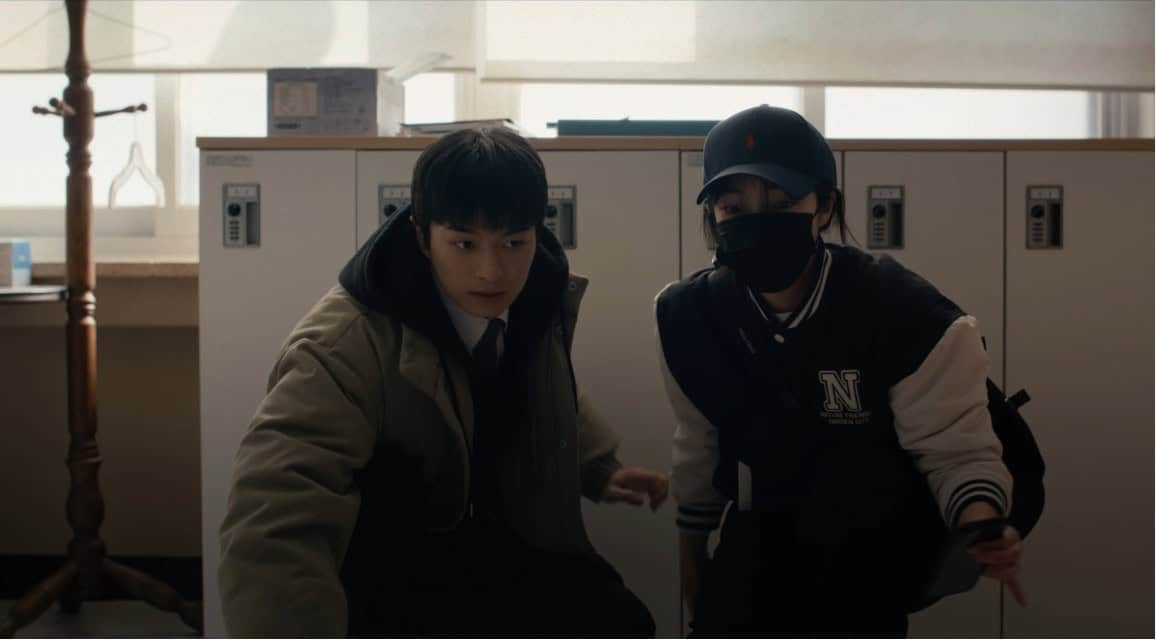
The film introduces Juho, a teenager grappling with kleptomania, whose life takes a dramatic turn after an unspecified incident in Seoul. Seeking a fresh start and a reprieve from his compulsions, Juho transfers to a high school in a tranquil coastal town. His intention is to maintain a low profile and navigate the remainder of his high school years unnoticed, but his irresistible urge to steal persists. The narrative takes an unexpected twist when Juho discovers some of his own belongings have vanished, leading him to suspect the presence of another thief within the school. His suspicions lead him to Dohee, the diligent class president and a seemingly model student, who, unbeknownst to others, shares Juho’s uncontrollable compulsion.
The discovery of each other’s hidden lives and shared secrets forges an unlikely bond between Juho and Dohee. What begins as a cautious alliance rooted in mutual understanding of their weaknesses soon blossoms into a friendship, and eventually, a partnership in their illicit activities. Their shared experiences and the profound question, "Why do you steal?", a query neither had ever been asked before, cement their connection, transforming them from solitary figures into accomplices bound by a unique understanding.
Their world, already fraught with the complexities of teenage kleptomania, takes a perilous turn with the introduction of Min-jun. Min-jun, another high-achieving student who is a direct academic rival to Dohee, becomes entangled in Juho and Dohee’s thievery when they steal an object connected to him. This seemingly petty act of theft inadvertently unearths a far more sinister reality: Min-jun’s respectable facade conceals a sophisticated criminal operation involving deepfakes and blackmail. This revelation thrusts Juho and Dohee from their world of petty transgressions into a dangerous web of serious crime, forcing them to confront consequences far more severe and morally ambiguous than they could have ever imagined. The film masterfully navigates this escalation, transforming a coming-of-age story about troubled youth into a gripping thriller infused with relevant social critiques.
Production Background and Festival Circuit
"The Robber" benefits significantly from its institutional backing. The Korea National University of Arts (K-Arts) School of Film, TV and Multimedia, renowned for its rigorous programs and as a crucible for emerging talent in South Korea’s vibrant entertainment industry, served as the film’s production house. K-Arts has a long-standing reputation for nurturing filmmakers who often go on to achieve critical acclaim and commercial success, both domestically and internationally. This institutional support provides budding directors like Song Hyeon-bum with invaluable resources, mentorship, and a platform to realize ambitious projects. The film’s 88-minute runtime is a common duration for independent features, striking a balance between narrative depth and accessibility for audiences.
M-line Distribution, a key player in the independent film distribution landscape, has taken on the task of bringing "The Robber" to broader audiences. M-line specializes in handling arthouse and independent productions, often playing a crucial role in the global outreach of Korean cinema. Their involvement suggests confidence in the film’s artistic merit and its potential to resonate with both domestic and international viewers, particularly within the festival circuit.
The film’s initial critical reception, as highlighted in reviews from festivals such as the Bucheon International Fantastic Film Festival (BIFAN), underscores its strong conceptual foundation. BIFAN, known for its eclectic programming of genre films, often serves as a vital launchpad for innovative Korean features. The positive commentary regarding the high caliber of Korean scripts at BIFAN this year, with "The Robber" being cited as a prime example, indicates a fertile period for creative storytelling within the nation’s film industry. The festival environment provides an essential platform for emerging directors to gain visibility, engage with critics and industry professionals, and secure further distribution opportunities.
Deep Dive into Social Commentary
"The Robber" distinguishes itself not merely as a crime thriller or a coming-of-age drama, but as a potent vehicle for social commentary. Director Song Hyeon-bum adeptly weaves several pressing societal issues into the fabric of the narrative, providing layers of depth that elevate the film beyond its genre trappings.
The Neglect of Youth Mental Health and Family Structures: A central theme explored is the underlying causes of Juho and Dohee’s kleptomania. The film subtly suggests that both teenagers come from "broken families," albeit with differing manifestations of dysfunction. This background context serves to highlight a critical societal blind spot: the often-overlooked mental health struggles of adolescents. The poignant question, "Why do you steal?", becomes a symbolic cry for help and understanding. The narrative suggests that their kleptomania is neither properly treated nor even formally diagnosed; instead, they are simply labeled as "thieves" by society. This societal failure to address the root causes of their compulsion, coupled with a pervasive accusation directed at the perceived shortcomings of the parental generation, forms a significant part of the film’s critique. It implicitly challenges the audience to consider the systemic factors that contribute to youth deviance and the inadequacy of punitive measures without therapeutic intervention. In South Korea, where academic pressure and societal expectations are particularly high, the mental health of youth is a growing concern, with issues like depression, anxiety, and behavioral disorders often stigmatized or left unaddressed.
The Scourge of Digital Crime: Deepfakes and Blackmail: The inclusion of Min-jun’s criminal enterprise, centered on deepfakes and blackmail, thrusts the film into the heart of a contemporary global crisis. Deepfake technology, powered by artificial intelligence, allows for the creation of highly realistic but fabricated images and videos, often used for malicious purposes such as defamation, extortion, and identity theft. The film powerfully illustrates how AI, once touted for its potential benefits, can be weaponized within the digital sphere to destroy lives. This element serves as a stark warning about the ethical implications of rapidly advancing technology and the ease with which it can be exploited for criminal gain.
South Korea, a hyper-connected society, has seen a rise in digital sex crimes and online blackmail, making this aspect of the film particularly resonant. The film’s depiction of a high school student engaging in such serious offenses underscores the vulnerability of young people to both perpetrating and becoming victims of these crimes. It highlights the urgent need for digital literacy, ethical guidelines, and robust legal frameworks to combat the destructive potential of deepfake technology.
The "Dog-Eat-Dog" School Environment and Adult Complicity: Song Hyeon-bum paints the school environment not as a safe haven for learning and growth, but as a "truly dog-eat-dog and quite dangerous setting." This portrayal reflects a critical perspective on the intense competitive culture prevalent in many Korean educational institutions, where pressure for academic excellence can foster ruthless ambition and a moral vacuum. While the specific scenario of deepfake blackmail might appear somewhat exaggerated for dramatic effect, the underlying sentiment of a cutthroat environment where students resort to extreme measures for perceived advantage is not entirely divorced from reality. The film further critiques the role of adults in this ecosystem. They are depicted either as actively making things worse through their own complicity, passively collaborating with illicit activities, or simply remaining oblivious to the profound struggles and dangers faced by the students under their care. This nuanced portrayal of adult responsibility adds another layer to the film’s social critique, suggesting a systemic failure to protect and guide the younger generation.
Artistic Merit and Technical Execution
Beyond its thematic richness, "The Robber" is lauded for its competent artistic execution, particularly for a debut feature. The film successfully integrates coming-of-age and romantic elements within its crime narrative, creating a multi-faceted viewing experience. This blend is significantly bolstered by the palpable chemistry between Son Sang-yeon as Juho and Ji Hye-won as Dohee. Their evolving relationship, from wary acquaintances to close friends and confidantes, forms the emotional core of the story, allowing the audience to invest deeply in their journey. The transformation of their bond, forged in shared vulnerability and escalating danger, is consistently highlighted as one of the film’s strongest assets.
While some critics noted a slight dip in pace and a touch of conventionality towards the ending, particularly during a running sequence, the overall conclusion is generally well-received for its narrative resolution. The very last scene, in particular, has been praised for its brilliance, offering a powerful and memorable close to their complex arc. The film’s brief action sequences, though noted as having room for refinement, are effectively integrated into the story, serving to heighten the tension without overshadowing the character development or thematic depth.
The technical aspects of "The Robber" also contribute significantly to its overall impact. Jung Da-bin’s cinematography is praised for its ability to capture the diverse settings through a palette of muted colors, which effectively establishes a subdued and often melancholic atmosphere reflecting the characters’ inner turmoil. The night scenes are singled out as particularly impressive, demonstrating a sophisticated use of lighting and shadow to create visual drama and suspense. The framing of the voyeuristic crime scenes is highlighted as excellent, underscoring the film’s keen attention to visual storytelling and its ability to evoke unease and intrigue.
Park Sang-eun’s editing is instrumental in maintaining a fittingly fast pace throughout the 88-minute duration. With minor exceptions, the editing ensures that the narrative neither drags nor rushes, allowing the story to unfold naturally and the emotional beats to land effectively. This controlled pacing is crucial for a film that balances character-driven drama with elements of a crime thriller, keeping the audience engaged without sacrificing thematic depth.
Broader Implications and Future Outlook
"The Robber," despite its minor imperfections, stands out as a remarkably competent debut, effectively leveraging its intriguing premise to deliver a compelling and thought-provoking cinematic experience. Its success at festivals and its distribution by M-line underscore its potential to make a significant impact within the independent film scene.
The film’s exploration of youth kleptomania, the perils of deepfake technology, and the complexities of adult responsibility resonates deeply within contemporary societal discourse. It contributes to a growing body of Korean cinema that fearlessly confronts difficult social issues, prompting audiences to reflect on the vulnerabilities of youth in an increasingly digital and demanding world.
For Song Hyeon-bum, "The Robber" is more than just a debut; it is a powerful statement of intent. The film showcases his potential as a director capable of crafting narratives that are both entertaining and socially relevant, demonstrating a keen eye for character development and a sophisticated approach to complex themes. Industry observers and critics are already anticipating his future projects, suggesting that he is a director "bound to make some noise in the years to come." His emergence signifies a positive trend in Korean cinema, indicating a continued influx of fresh talent dedicated to pushing boundaries and exploring the nuanced realities of modern life through compelling storytelling. "The Robber" thus represents not only a successful film in its own right but also a promising indicator of the evolving landscape of Korean filmmaking.