The Genesis of a Vision: From Mountain Inspiration to Thematic Depth
Samik Roy Choudhury’s inspiration for "Maya Satya Bhram" emerged following the unexpected success of his debut feature in 2024, which resonated well with audiences after a successful festival run. This initial triumph provided the impetus for a more ambitious undertaking. The core concept for "Maya Satya Bhram" materialized during a reflective trip to the mountains, a setting often associated with introspection and spiritual awakening. It was there that Choudhury began to formulate the central philosophical tenet of his story: the crucial importance of living in the present. He posited that true happiness and contentment are intrinsically linked to an individual’s ability to disengage from the past’s grip and to resist the obsessive pursuit of knowing the future. This philosophical anchor serves as the bedrock for the film’s intricate plot and character motivations.
Adding a layer of mystical intrigue, Choudhury recounted a past, unexplainable encounter with a shaman, an experience that defied easy categorization or belief. This encounter provided the blueprint for the enigmatic mystical figure, Trilokadarshi Baba, a character pivotal to expressing the director’s profound thoughts on perception and reality within the narrative. The creative spark was intense; Choudhury penned the entire story in a remarkable seven days while still in the mountains. Upon returning to the plains, he swiftly pitched the compelling idea to producers and financiers, securing the necessary backing before meticulously developing the screenplay. This rapid transition from conceptualization to production underscores Choudhury’s fervent commitment to his vision and the project’s inherent appeal to stakeholders in the industry. The film is currently slated for release in India at the end of August, pending the requisite censor approval, a standard procedure for cinematic works entering public exhibition.
Unraveling the Narrative: A Tale of Disappearances and Deeper Truths
The narrative of "Maya Satya Bhram" is propelled by a series of unsettling events that send shockwaves through Kolkata’s Prafulla Nagar police station. The primary catalyst is the disappearance of Totoro, the young son of Inspector Sanjay Konwar, a development that imbues the police procedural with a deeply personal stakes. Simultaneously, Sara Nielsen, a Swedish researcher dedicated to the study of shamans, also vanishes without a trace. The convergence of these two seemingly disparate disappearances forms the initial mystery that Inspector Konwar must untangle.
The investigation quickly zeroes in on Trilokadarshi Baba, the enigmatic figure whom Sara Nielsen had interviewed just prior to her disappearance. Baba soon emerges as the linchpin of both the unfolding mystery and the film’s overarching philosophical concerns, blurring the lines between spiritual guidance and potential deception. As Inspector Sanjay Konwar delves into Sara Nielsen’s recordings, a chilling and profound truth gradually surfaces. This truth is not merely a revelation of criminal activity but a complex tapestry where faith, deliberate deception, deep-seated trauma, and something far more terrifying coalesce. The film skillfully navigates these thematic currents, forcing both its characters and the audience to question the nature of reality, belief, and moral responsibility. The non-linear structure of the storytelling, moving fluidly through different points in time and shifts in perception, is instrumental in constructing this intricate puzzle of testimonies, fragmented recordings, haunting memories, and deeply held beliefs, lending the narrative a distinct and immersive identity.
Societal Mirror: Addressing Real-World Crises
Beyond its crime and mystical elements, "Maya Satya Bhram" anchors itself firmly in contemporary societal issues, a move that significantly enriches its narrative and provides critical relevance. A substantial portion of the film’s storyline is connected to a harrowing real-life crime case from Jharkhand, involving a child molester whose heinous acts were eventually uncovered by the police. Samik Roy Choudhury has publicly expressed his dismay that, despite its gravity, this incident received limited coverage from major Indian media outlets, largely confined to smaller, regional publications. By integrating this real-world tragedy into "Maya Satya Bhram," Choudhury explicitly aims to amplify awareness, particularly emphasizing the critical need for parents and society at large to remain vigilant against such insidious dangers. This intentional inclusion transforms the film from mere entertainment into a platform for social advocacy, using the power of cinema to shed light on overlooked injustices and promote collective responsibility.
The film’s exploration of ‘Godmen’ and mass belief further solidifies its role as a social commentator. In India, spiritual leaders, or ‘Godmen,’ often command immense public reverence and influence, a phenomenon that has historically presented a complex dynamic between faith, charismatic leadership, and, at times, unchecked power. Choudhury’s portrayal of Babaji is deliberately nuanced; he avoids the simplistic binary of good or evil, instead presenting him as a philosophical question mark. This ambiguity serves as a powerful irony and a sharp critique of how Indian society often treats such figures—with profound deference but often without adequate scrutiny. This observation is one of the film’s most incisive comments, infusing its mystical elements with a vital sociopolitical dimension. It prompts audiences to reflect on the societal inclination to suspend critical judgment in matters of faith, and the potential vulnerabilities that arise when spiritual authority is unchallenged. The film implicitly asks what prompts people to believe unquestioningly and what they deliberately choose to ignore or refuse to question, even in the face of mounting evidence or moral ambiguity.
Filmmaking Prowess and Artistic Ambition: A Double-Edged Sword
The audacious ambition that defines "Maya Satya Bhram" is simultaneously its most pronounced strength and, at times, its principal challenge. Choudhury’s determination to incorporate a vast array of narrative arcs, characters, and episodes results in a dizzying complexity. While this multifaceted approach can be exhilarating, it occasionally verges on being overstuffed, suggesting that a degree of restraint could have further refined the overall impact. Certain scenes, including an unexpected sci-fi interlude mentioned in early reviews, have been noted as potentially extraneous, possibly detracting from the film’s core focus.
Despite these minor critiques, the quality of storytelling remains undeniably high. The non-linear structure, a deliberate choice woven into the screenplay, is masterfully executed. It allows the narrative to unfold as a mosaic of perceptions and timeframes, transforming the viewing experience into an active assembly of a complex puzzle. This structural ingenuity grants the story a distinctive identity, allowing it to function as a dynamic interplay of fragmented testimonies, unearthed recordings, elusive memories, and deeply ingrained beliefs.
Crafting the Visual and Auditory Landscape
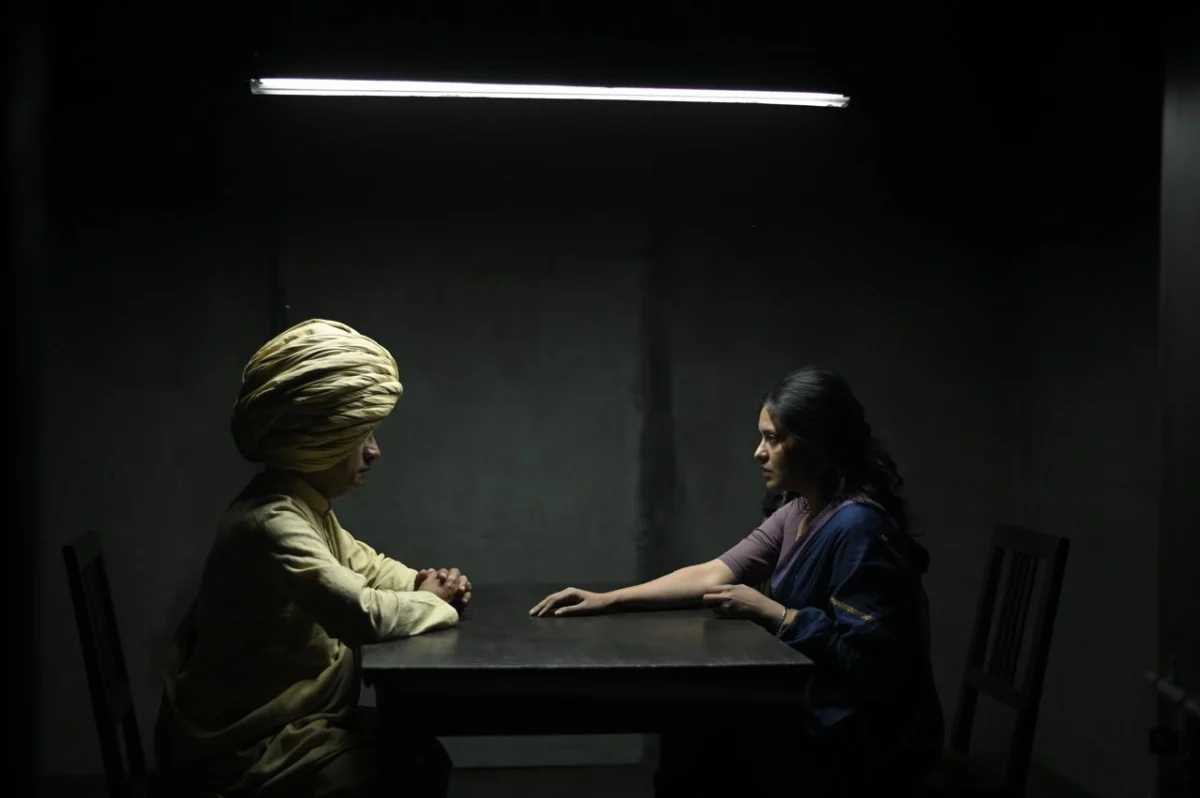
Visually, "Maya Satya Bhram" is exceptionally strong, demonstrating a meticulous attention to aesthetic detail that enhances its complex narrative. The coloring is particularly noteworthy, with distinct palettes employed to differentiate between past and present timelines. This sophisticated visual coding serves as an invaluable guide for the viewer, helping to navigate the film’s fragmented structure and ensure narrative coherence. Prosenjit Koley’s cinematography is equally impressive, marked by its atmospheric quality and strategic framing. Sequences such as the revelation of a hidden room within a house or the intense interrogation scenes benefit immensely from Koley’s discerning eye. His deliberate use of wider frames provides moments of visual breath, allowing certain scenes to resonate with a sense of space and contemplation, while tighter, more intimate shots are expertly deployed during the heightened tension of the investigation and other critical dramatic junctures, drawing the audience deeper into the characters’ immediate experiences.
Sanglap Bhowmik’s editing plays a pivotal role in the film’s success, functioning as much more than a mere technical process. Recognizing that the non-linear structure was an intrinsic part of the screenplay, Bhowmik’s editing allows the diverse narrative material to flow with a remarkable sense of freedom, eschewing rigid adherence to a conventional plot mechanic. The relatively fast pace of the editing perfectly complements the film’s intricate style, especially considering the multitude of narrative threads that are skillfully interwoven. However, the sheer volume of scenes, characters, and tonal shifts occasionally gives rise to pacing issues, contributing to the feeling that the movie, despite its artistic merits, can sometimes feel overstuffed. This balance between ambition and control remains a central discussion point for the film’s artistic evaluation.
Stellar Performances Anchor the Narrative
The acting in "Maya Satya Bhram," while occasionally leaning towards the excessive in line with the narrative’s heightened tone, generally serves the story effectively. Paran Banerjee delivers a particularly strong impression as Babaji, the enigmatic spiritual figure. His portrayal relies heavily on nuanced expressions and presence rather than extensive dialogue, making his character a powerful embodiment of the film’s central philosophical questions. Soham Majumdar, in the role of the police officer, provides a crucial anchor to the investigative arm of the story, grounding the more fantastical elements with a sense of realism and procedural rigor. Priyanka Sarkar brings significant emotional gravity to her role as the mother, her performance underscoring the profound personal stakes involved in the disappearances. Alexandra Taylor, as the Swedish researcher Sara Nielsen, perfectly embodies the curious outsider whose academic pursuit leads her into increasingly uncertain and perilous territory, her character serving as a catalyst for much of the film’s unraveling mystery.
Industry Implications and Critical Outlook
"Maya Satya Bhram" stands as a testament to Samik Roy Choudhury’s burgeoning talent and his willingness to push the boundaries of conventional storytelling. Its premiere at the Bishkek International Film Festival signals an early international recognition for the Bengali film, placing it within a global context of independent and art-house cinema. While the film’s ambition sometimes veers into excess—with certain arcs potentially benefitting from trimming, some ideas better suggested than explicitly explained, and a few additions feeling superfluous—it remains a genuinely interesting and thought-provoking cinematic endeavor.
The film highlights Choudhury’s storytelling prowess, showcasing his ability to blend disparate genres—crime, mysticism, philosophy, and social observation—into a cohesive, personal cinematic language. Even in its most crowded moments, "Maya Satya Bhram" retains its intrigue, leveraging the complex figure of Babaji and the chaotic circumstances surrounding him to pose fundamental questions about human belief, the pursuit of truth, and society’s often-selective capacity for scrutiny.
The upcoming Indian release, pending censor approval, will be a crucial moment for the film. Given its sensitive themes, particularly the commentary on ‘Godmen’ and the inclusion of a real-life child molestation case, its reception by a wider Indian audience will be keenly observed. It has the potential to spark important societal conversations, contributing to a broader discourse on faith, justice, and media responsibility. "Maya Satya Bhram" is more than just a film; it is a challenging artistic statement that encourages introspection and critical engagement, solidifying its place as a significant contribution to the evolving landscape of Indian cinema.