
Edmund Yeo’s second feature film, "Aqerat," winner of the Best Director Award at the Tokyo International Film Festival, stands as a profoundly impactful work that courageously confronts the harrowing plight of the Rohingya, a stateless Indo-Aryan people originating from Myanmar’s Rakhine State. This cinematic endeavor not only brings to light one of the most pressing humanitarian crises of our time but also delves into the complex moral landscape of individuals caught within its periphery.
Synopsis and Thematic Core
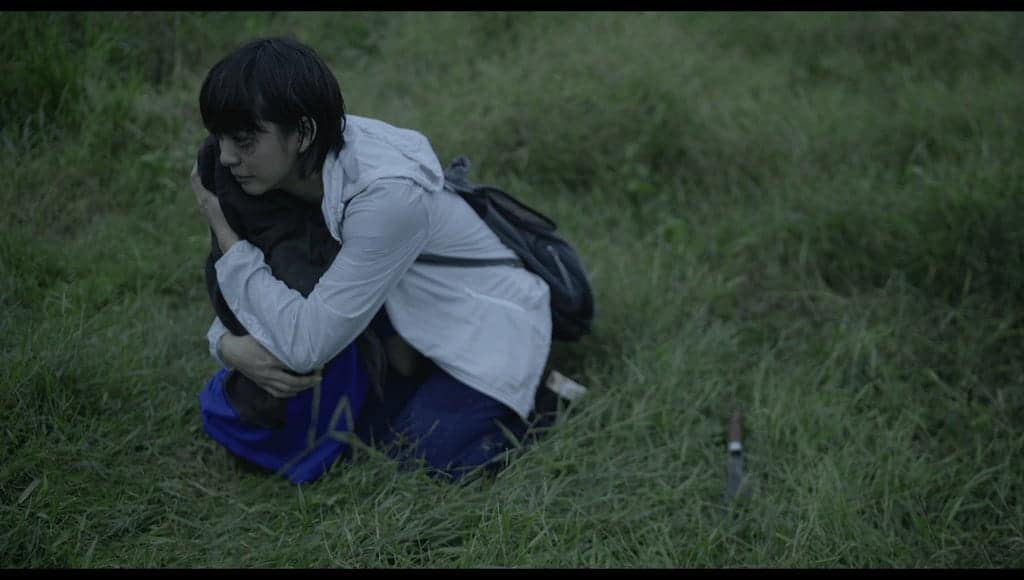
"Aqerat" introduces audiences to Hui Ling, a young woman residing near the Malaysian-Thai border, driven by the aspiration of a better life in Taiwan. Her initial efforts involve working diligently in a restaurant to save funds for this journey. However, a cruel twist of fate intervenes when her savings are stolen, forcing her into an desperate situation. This desperation leads her down a perilous path, culminating in her involvement with a human trafficking syndicate. This syndicate primarily preys upon the vulnerable Rohingya, who, in their desperate flight from persecution in Myanmar, seek refuge and a new beginning in Malaysia.
Initially, Hui Ling is depicted as repulsed by the syndicate’s brutal tactics and insatiable greed. Yet, the seductive allure of substantial financial gains gradually begins to corrupt her moral compass. Her journey takes a critical turn following a significant setback in her illicit "endeavors" and a pivotal encounter with Wei, a compassionate young hospital worker who frequently tends to Rohingya patients. These experiences serve as a stark awakening, forcing Hui Ling to confront the grim realities of her choices and the profound moral decay she has embraced.
The film’s title, "Aqerat," translates to "afterlife" in Rohingya. Director Edmund Yeo masterfully utilizes this concept to frame Hui Ling’s profound psychological and moral transformation. Her narrative arc is portrayed as a journey from the "deeper depths of humanity" – a metaphorical hell – towards an understanding of "true light," akin to a spiritual rebirth or an experience of the afterlife. Through this intense metaphorical "trip," Yeo offers a raw and unflinching depiction of the persecuted Rohingya, many of whom escape the immediate dangers in Myanmar only to face equally, if not more, brutal circumstances in Malaysia. The film’s portrayal of these episodes, particularly those set in the jungle, resonates with a disturbing realism, drawing inspiration from actual incidents, such as the discovery of mass graves of refugees along the border.
The Persecution of the Rohingya: A Deep-Rooted Crisis
To fully appreciate the gravity of "Aqerat," it is essential to understand the historical and contemporary context of the Rohingya crisis. The Rohingya are a Muslim ethnic minority group primarily residing in Myanmar’s Rakhine State. Their presence in the region can be traced back to the 8th century, with significant migration occurring during British colonial rule. Despite this long history, the Myanmar government, dominated by the Buddhist Bamar majority, refuses to recognize the Rohingya as one of the country’s official 135 ethnic groups or as one of the eight "national indigenous races."
The legal foundation for this statelessness was cemented by the 1982 Citizenship Law. Human Rights Watch (HRW) and other international bodies have highlighted how this legislation "effectively denies to the Rohingya the possibility of acquiring a nationality." This law retroactively nullified the citizenship of most Rohingya, rendering them stateless and stripping them of fundamental rights. The implications are far-reaching: Rohingya face severe restrictions on freedom of movement, denial of state education, exclusion from civil service jobs, and limits on marriage and family size. These conditions have led numerous international academics, analysts, and political figures, including Nobel Peace Laureate Desmond Tutu, to draw stark comparisons between the plight of the Rohingya and the apartheid system in South Africa.
The humanitarian situation escalated dramatically in recent decades. In 2016 and particularly in August 2017, Myanmar’s military launched what it termed "clearance operations" in Rakhine State following attacks by the Arakan Rohingya Salvation Army (ARSA). These operations, however, quickly devolved into widespread and systematic violence against the Rohingya civilian population, including mass killings, widespread rape, and the burning of villages. UN officials and HRW have unequivocally described these actions as "ethnic cleansing," a grave accusation that implicates Myanmar in severe international crimes. The scale of displacement has been catastrophic, with over 740,000 Rohingya fleeing across the border into Bangladesh, seeking refuge in overcrowded camps like Cox’s Bazar, now the world’s largest refugee settlement. Millions more remain internally displaced or in precarious situations within Myanmar, facing ongoing discrimination and violence.
The Shadow of Human Trafficking in Southeast Asia
"Aqerat" starkly portrays the grim reality that escaping persecution does not guarantee safety. The film highlights how the Rohingya, rendered stateless and highly vulnerable, often fall prey to sophisticated human trafficking networks operating across Southeast Asia. The Malaysian-Thai border, where Hui Ling’s story unfolds, is a known transit point for such illicit activities.
Human trafficking is a multi-billion-dollar industry that thrives on exploiting the desperation of individuals seeking safety or economic opportunity. For the Rohingya, who often lack legal documentation, financial resources, and knowledge of safe routes, traffickers present a false promise of passage and a new life. They are often lured with the promise of work or passage to Malaysia, a relatively prosperous Muslim-majority nation. However, these journeys are fraught with danger. Refugees are typically transported in overcrowded, unseaworthy boats or through dense, dangerous jungle paths, often enduring starvation, disease, and brutal treatment at the hands of their captors.
Upon arrival, many are held in remote jungle camps or makeshift detention centers, subjected to extortion, torture, and forced labor. Families are often separated, with captors demanding exorbitant ransoms from relatives. Those who cannot pay are often sold into forced labor, sexual exploitation, or even killed. The discovery of numerous shallow graves along the Malaysian-Thai border in 2015, which reportedly contained the remains of trafficking victims, underscores the horrific realities faced by those attempting to flee. "Aqerat" bravely confronts these grim details, bringing to the forefront the secondary layer of exploitation that awaits many Rohingya refugees.
A Director’s Vision: Blending Realism with Artistic Expression
Edmund Yeo’s directorial prowess in "Aqerat" is evident in his ability to weave together a shocking, yet profoundly realistic, portrayal of the Rohingya’s suffering with an introspective exploration of human morality. The film’s strength lies in its documentary-like realism when depicting the lives of the Rohingya, particularly the harrowing episodes in the jungle. Yeo does not flinch from portraying violence and degradation, immersing the viewer in the brutal experiences of the refugees. This approach heightens the emotional impact, making the viewer a direct witness to the atrocities.
Beyond the external horrors, Yeo masterfully charts Hui Ling’s internal "downward spiral towards inhumanity." This character arc serves as a powerful vehicle for examining the concept of morality and the devastating consequences of its erosion. This part of the narrative occasionally departs from strict realism, incorporating surrealistic elements that, while initially seeming incongruous, ultimately coalesce to create a compelling and unique artistic statement. This blend allows Yeo to delve into the psychological turmoil of his protagonist, illustrating the internal battles fought when confronting extreme moral choices.
The film’s aesthetic is significantly enhanced by Leslie Leon Lee’s cinematography. The scenes involving the Rohingya adopt a raw, handheld, documentary-style approach, often following Hui Ling from a close distance. This technique effectively places the spectator directly into her perspective, allowing them to experience the unfolding events through her eyes, thereby amplifying the sense of immediacy and empathy. Conversely, other sequences employ a more art-house style, utilizing a combination of long and close shots, often with a steady camera, to reflect Hui Ling’s internal psychological states and her detachment from the unfolding horrors. Edmund Yeo’s precise editing skillfully integrates these distinct visual styles, maintaining a compelling pace that both informs and engages the audience, transcending mere entertainment to deliver a profound message.

Performances and Thematic Resonance
Daphne Low delivers an undisputed protagonist performance as Hui Ling, portraying an individual who loses her moral compass only to rediscover it through a powerful realization. Her acting is characterized by a laconic style, which perfectly complements the film’s aesthetic. Low conveys a profound range of emotional and psychological states with minimal dialogue, allowing her subtle expressions and body language to speak volumes about her character’s internal struggles.
Similarly, Kahoe Hon as Wei adopts a restrained, understated approach. The nuanced chemistry between Low and Hon becomes one of the film’s highlights, serving as a quiet counterpoint to the surrounding chaos and moral ambiguity. Wei’s character, with his compassionate work in the hospital, embodies a glimmer of hope and moral rectitude amidst the pervasive darkness, offering Hui Ling a path toward redemption.
Broader Impact and Cinematic Activism
"Aqerat" is more than just a film; it is a significant piece of cinematic activism. By taking a thorough and unflinching look at a crucial sociopolitical issue – the Rohingya crisis and human trafficking – while simultaneously exploring the complexities of the human psyche, the film transcends conventional storytelling. Its highly artistic spectacle, significantly benefiting from Yeo’s direction and distinctive narrative style, positions it as an important contribution to global cinema.
The film serves as a potent reminder of the power of art to raise awareness about humanitarian crises that often remain marginalized in mainstream discourse. It challenges viewers to confront uncomfortable truths, fostering empathy and encouraging reflection on global inequities and individual moral responsibility. "Aqerat" compels audiences to consider the systemic failures that create such vulnerabilities and the individual choices that perpetuate or combat them.
In conclusion, "Aqerat" stands as a testament to Edmund Yeo’s courage and artistic vision. Its recognition at the Tokyo International Film Festival underscores its global relevance and artistic merit. The film not only offers a compelling narrative but also acts as a vital educational tool, shedding light on the ongoing suffering of the Rohingya people and the pervasive issue of human trafficking. It is a powerful call to consciousness, urging viewers to acknowledge the "afterlife" of despair that many are forced to endure and to reflect on the moral journey of humanity itself.