The cinematic landscape of the 1950s was significantly shaped by the pervasive influence of film noir, a genre largely defined by American productions that captivated audiences with its shadowy aesthetics, cynical narratives, and morally ambiguous characters. As this wave of hardboiled detective stories and fatalistic thrillers reached international shores, Japanese film studios, particularly Nikkatsu Corporation, recognized an opportune moment to adapt the genre’s conventions while imbuing them with a distinct national identity and socio-cultural resonance. Among the pioneering works that emerged from this period, Koreyoshi Kurahara’s 1957 feature, ‘I Am Waiting,’ stands out as a poignant exploration of post-war Japanese disillusionment, skillfully weaving classic noir elements with a deep-seated examination of a generation grappling with an uncertain future.
The Rise of Nikkatsu Noir: A Strategic Response to a Global Phenomenon
Following World War II, Japan embarked on a period of intense reconstruction and cultural redefinition. The film industry, a vital component of the nation’s cultural output, sought new directions. Nikkatsu, one of Japan’s oldest and most prominent studios, which had been dormant during the war, re-entered film production in 1954 with a renewed ambition to compete in a rapidly evolving market. The studio quickly identified the commercial and artistic potential of noir, a genre that naturally lent itself to exploring themes of crime, moral decay, and societal unease—elements highly pertinent to a nation navigating its post-war identity.
Nikkatsu’s strategy was multifaceted. It involved recruiting a new generation of directors and stars capable of injecting fresh energy into the genre. While early Nikkatsu noir features often echoed American prototypes in their visual style and narrative structures, they increasingly began to reflect uniquely Japanese anxieties and experiences. Works such as Seijun Suzuki’s ‘Take Aim at the Police Van’ (1960) and Toshio Masuda’s ‘Rusty Knife’ (1958) quickly became celebrated examples, showcasing a blend of stylish action and introspective drama. These films, characterized by their gritty urban settings, intricate plots, and often tragic conclusions, not only capitalized on noir’s popularity but also helped Nikkatsu carve out a distinct niche within the burgeoning Japanese film industry. This period saw the studio become synonymous with what would later be termed "Nikkatsu Action"—a genre often infused with the existential dread and fatalism inherent in noir.
Koreyoshi Kurahara’s Distinctive Vision within Nikkatsu
Within this fertile ground of Nikkatsu’s genre experimentation, Koreyoshi Kurahara emerged as a singularly influential voice. Born in 1927, Kurahara was part of a generation deeply affected by the war and its aftermath. His filmmaking career at Nikkatsu began in the mid-1950s, and he quickly distinguished himself with a modernist approach, often employing dynamic camera work and unconventional narrative techniques. While many of his contemporaries adhered more strictly to established genre formulas, Kurahara pushed boundaries, infusing his noirs with a deeper psychological complexity and a starker artistic vision.
‘I Am Waiting’ (1957) was one of Kurahara’s early, yet highly impactful, contributions to the genre. It preceded some of his more avant-garde and internationally recognized works like ‘Intimidation’ (1960) and the seminal ‘The Warped Ones’ (1960), but already demonstrated his capacity to transcend mere genre exercise. Kurahara’s films, including ‘I Am Waiting,’ often explored themes of alienation, youthful rebellion, and the search for meaning in a rapidly changing world. His distinctive style—marked by expressive cinematography, often utilizing stark black-and-white contrasts, and a keen sense of urban malaise—helped define the aesthetic of Nikkatsu’s darker output. Film critics and historians frequently point to Kurahara’s work as a bridge between classic Hollywood noir and the more experimental New Wave cinema that would emerge in Japan and elsewhere in the following decade.
Synopsis and Character Portrayal: A Portrait of Lingering Despair
‘I Am Waiting’ centers on Joji (Yujiro Ishihara), a former boxer who now runs a modest restaurant near the bustling harbor. His current occupation, however, is merely a placeholder, a temporary existence endured while he awaits a letter from his brother, who has journeyed to Brazil with the promise of establishing a farm and a new life for them both. This anticipation defines Joji’s present, positioning him in a state of perpetual limbo, tethered to a dream of escape.
One fateful evening, after closing his establishment, Joji encounters Saeko (Mie Kitahara), a young woman on the precipice of despair, seemingly intent on ending her life. His intervention leads to her finding temporary refuge in his restaurant. Joji, demonstrating a quiet empathy, offers her sustenance and warmth without pressing for the painful details of her past. This initial act of compassion sets the stage for a subtle yet profound connection to form between the two lost souls.
As days turn into weeks, Saeko gradually becomes an integral part of the restaurant, assisting Joji and slowly shedding fragments of her guarded exterior. She learns of his boxing career, abruptly cut short by unspecified circumstances, and his fervent hope for a fresh start in South America. Concurrently, Saeko’s own troubled history resurfaces. Local thugs, agents of a powerful and unscrupulous nightclub owner, begin to menace her, demanding her return to their boss’s dominion. Joji finds himself at a crucial juncture, forced to confront whether he will commit to protecting Saeko, potentially jeopardizing his own carefully constructed future and confronting the demons of his own past. The narrative skillfully interweaves these personal struggles with the broader thematic undercurrents of the era, illustrating how individual destinies were often shaped by the societal dislocations of post-war Japan.
Thematic Core: "Waiting" as a Metaphor for Post-War Japan
The central leitmotif of ‘I Am Waiting’—the act of waiting itself—transcends a mere plot device to become a profound metaphor for the psychological state of post-war Japan. Kurahara masterfully portrays Joji and Saeko as embodiments of a generation caught between a devastating past and a future that remains frustratingly out of reach. Joji’s constant refrain of waiting—for his brother’s letter, for his new life in Brazil, for a definitive break from his past—underscores a collective yearning for resolution and a fresh beginning. Saeko, initially encountered in a state of profound hopelessness, mirrors this sentiment, albeit from a place of having seemingly abandoned the very act of waiting for a brighter tomorrow.
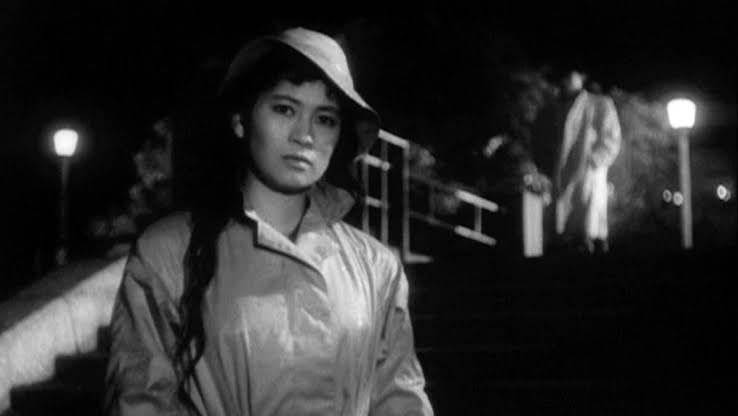
This "waiting" is not passive; it is an active state of suspended animation, fraught with unspoken anxieties and fading hopes. The film’s narrative implicitly suggests that the promise of a brighter future, often articulated in the early days of Japan’s economic recovery, was not universally realized. For many, particularly those on the fringes of society or those scarred by personal trauma, the future remained elusive, a distant dream that slowly dissolved into disappointment and frustration. Through Joji and Saeko, Kurahara effectively critiques the societal narrative of immediate post-war prosperity, instead highlighting the lingering despair and the pervasive sense of being stuck in a transitional, often painful, phase. This perspective offers a nuanced counter-narrative to the prevailing optimism of Japan’s "economic miracle" era, reminding audiences of the emotional toll exacted by rapid social change and unfulfilled expectations.
Noir Conventions and Kurahara’s Unique Interpretation
‘I Am Waiting’ firmly embraces many classic noir conventions, yet Kurahara’s approach is distinct. Unlike some of his American counterparts who occasionally leaned into surrealism or dream-like atmospheres, Kurahara grounds his narrative in a stark, unvarnished reality. The film’s striking black-and-white cinematography is not merely an aesthetic choice but a thematic one, reflecting the bleak and often pessimistic worldview that pervades the story. The chiaroscuro lighting, deep shadows, and stark contrasts visually articulate the moral ambiguities and the emotional desolation experienced by the protagonists.
The film’s proximity to the city’s seedy underworld—the harbor district, the criminal elements, the oppressive nightclub owner—provides the quintessential noir backdrop. These settings are not just locales; they are extensions of the characters’ internal struggles, symbolizing the entrapment and the corrupting forces that threaten to consume them. Recurring themes of lost hope, broken dreams, and failed careers further define the atmosphere, cementing its place within the noir canon.
However, Kurahara’s genius lies in his ability to use these conventions to explore deeper psychological states rather than just presenting a crime story. The predictability of certain narrative developments, inherent in many noirs, is offset by the subtlety with which Kurahara develops the growing trust and affection between Joji and Saeko. This delicate emotional arc, often understated, prevents the film from becoming a mere genre exercise, elevating it to a profound character study.
Performances and Emotional Resonance: The Quiet Power of Ishihara and Kitahara
The success of ‘I Am Waiting’ in conveying its complex emotional landscape relies heavily on the restrained yet potent performances of its lead actors, Yujiro Ishihara and Mie Kitahara. Ishihara, a rising star of the era known for his charismatic screen presence and "tough guy" image, delivers a nuanced portrayal of Joji. He embodies a man whose outward stoicism conceals deep-seated vulnerability and a yearning for a life beyond his present circumstances. His performance avoids melodrama, instead conveying Joji’s internal conflict through subtle gestures and an underlying weariness that speaks volumes.
Mie Kitahara, equally celebrated for her roles in Nikkatsu’s action and youth films, brings a compelling fragility and resilience to Saeko. Her initial despair is palpable, yet as the narrative unfolds, she slowly reveals a strength forged in adversity. The chemistry between Ishihara and Kitahara is crucial; it is not overtly passionate but rather a slow burn of mutual understanding and shared loneliness. Both actors portray individuals who have developed their own coping mechanisms in an apparently hopeless world—Joji clinging to the possibility of escape, Saeko grappling with the temptation of abandoning her suffering altogether.
Their scenes together are characterized by a delicate balance between their growing affection and the emotional scars left by disappointment and failure. This dynamic highlights a profound existential loneliness—another defining motif of film noir—which persists even as they find solace in each other. Their bond, while offering a glimmer of hope, does not entirely dissipate the pervasive sense of isolation, reflecting a generation exhausted by waiting yet uncertain how to move forward. The actors’ ability to convey this complex emotional tapestry without resorting to overt exposition is a testament to their skill and Kurahara’s precise direction.
Broader Impact and Legacy: A Lasting Reflection of an Era
‘I Am Waiting’ may not reinvent the noir genre in terms of its narrative structure, with certain plot points following familiar paths. However, its enduring significance lies in Koreyoshi Kurahara’s success in capturing the existential anxiety of Japan’s post-war generation. The film serves as a powerful cinematic document, offering insight into the collective psyche of people unable to fully liberate themselves from the burdens of the past while simultaneously struggling to believe in the possibility of a brighter future.
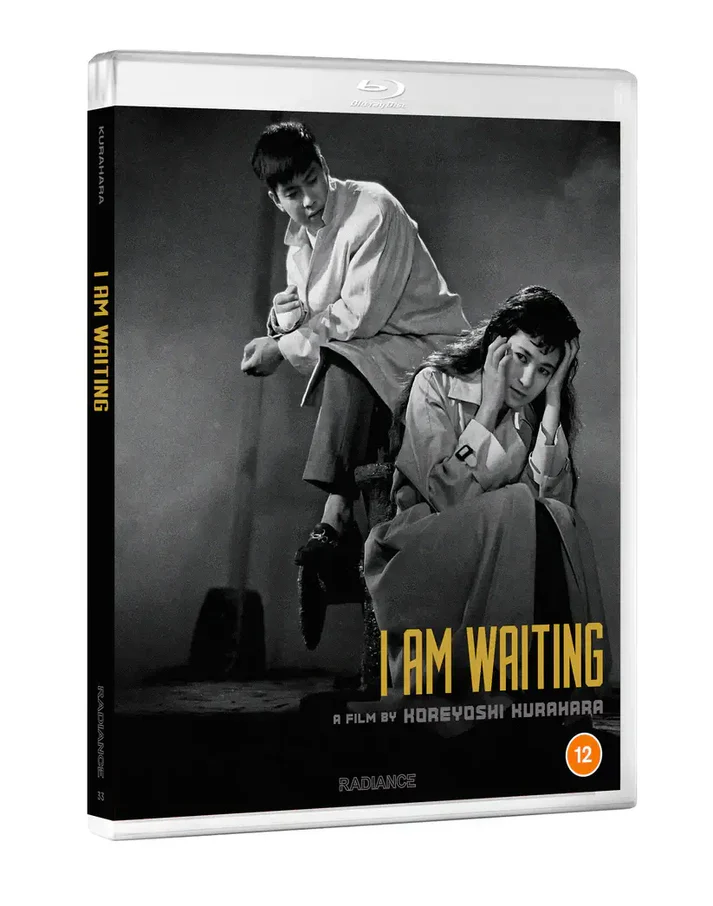
Decades after its release, ‘I Am Waiting’ continues to resonate with audiences and film scholars alike. It is frequently cited as a crucial entry in the Japanese noir canon and a significant work in Kurahara’s filmography. Its themes of disillusionment, the search for identity, and the quiet struggle against societal pressures remain universally relatable. The film’s recent availability on Blu-ray through distributors like Terracotta underscores its renewed critical appreciation and its status as a rediscovered classic, allowing new generations to experience its introspective depth and emotional power.
Ultimately, ‘I Am Waiting’ is more than just a crime drama; it is a profound meditation on the human condition in a specific historical context. It cemented Koreyoshi Kurahara’s reputation as a visionary director who could infuse genre filmmaking with profound artistic and social commentary, ensuring its place as a poignant and enduring reflection of a pivotal era in Japanese history.