The sixth episode of the AMC series The Vampire Lestat, titled "Montreal," marks a pivotal narrative juncture for the Immortal Universe, bringing together themes of lingering trauma, the fallibility of memory, and the complex family dynamics of its undead protagonists. The episode features a high-stakes supernatural encounter that serves as both a psychological reckoning for Louis de Pointe du Lac and Lestat de Lioncourt and a bridge between AMC’s interconnected Anne Rice adaptations. By centering the narrative on a séance conducted by the witch Merrick Mayfair, the production provides a visceral exploration of the consequences of the characters’ past actions, specifically the tragic demise of Claudia during the Theatre des Vampires trial in Paris.
Contextual Background of the Immortal Universe
To understand the weight of the events in "Montreal," it is necessary to examine the established chronology of the series. The narrative of The Vampire Lestat is deeply rooted in the events of the preceding season, which culminated in the public execution of Claudia and her companion Madeleine. This execution was orchestrated by the Theatre des Vampires under the leadership of Armand, while Lestat de Lioncourt was present, ultimately failing—or refusing—to intervene effectively to save his fledgling.
The loss of Claudia has remained the central trauma for Louis de Pointe du Lac, played by Jacob Anderson. Throughout the current season, Louis’s struggle with grief has manifested in various self-destructive ways, including the formation of an unsettling psychological bond with a waitress named Regina, who shares a physical resemblance to Claudia. This fixation underscores the theme of the "preserved memory," where the survivors of trauma attempt to sanitize or romanticize the deceased to cope with their own guilt.
The introduction of Merrick Mayfair, portrayed by Sarah Afful, serves as a significant crossover event within AMC’s Immortal Universe. Merrick is a character drawn from Anne Rice’s The Mayfair Witches series and the 2000 novel Merrick, which specifically deals with the intersection of the vampire and witch bloodlines. Her appearance in "Montreal" fulfills a dual purpose: it advances the plot of the current series while solidifying the shared continuity between The Vampire Lestat and Anne Rice’s Mayfair Witches.

The Séance: A Chronology of Confrontation
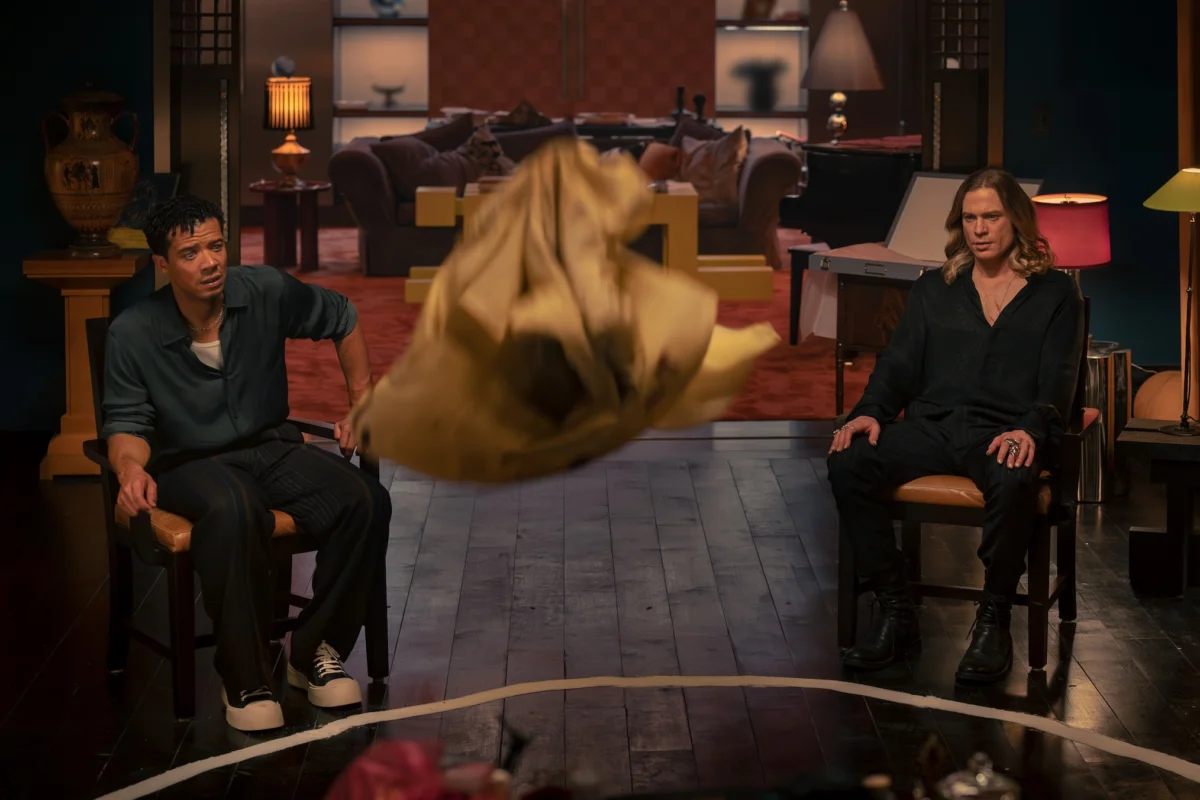
The central set piece of the episode involves Louis and Lestat visiting Merrick Mayfair’s residence for a séance intended to contact Claudia’s spirit. The atmosphere of the scene is one of clinical desperation, as the two vampires seek closure for a death that has defined their existence for decades. However, the ritual does not produce the gentle reconciliation they anticipate. Instead, it manifests a manifestation of Claudia’s spirit that is defined by "feral" rage and uncompromising clarity.
Upon her conjuration, Claudia, portrayed by Delainey Hayles, immediately challenges the narrative of mourning that Louis has constructed. She rejects his self-indulgent grief, famously labeling herself as "car fuel for your self-pity." This dialogue highlights a critical critique of Louis’s character: his tendency to center himself within the tragedies of others. Claudia’s accusations extend to their complicity in the death of Madeleine, noting that while Louis and Lestat have "hugged it out" and found a path toward reconciliation, Madeleine remains lost in the void, unremembered and unrecovered.
The confrontation also touches upon the hierarchy of affection within their dysfunctional family unit. In a surprising revelation, the spirit of Claudia suggests she harbored a complex preference for Lestat over Louis, despite Lestat’s role in her downfall. This assertion serves to further destabilize Louis’s sense of moral superiority and his belief that he was the "better" protector.
Cast Perspectives and Character Analysis
The actors involved in the sequence have provided detailed insights into the psychological state of their characters during this encounter. Delainey Hayles, who stepped into the role of Claudia in the second season, described the script for "Montreal" as a transformative experience. Hayles noted that the scene required her to navigate the "seven stages of grief" simultaneously. She emphasized the ambiguity of the spirit’s testimony, questioning how much of the rage was genuine and how much was a reflection of the survivors’ own projections.
"In the beginning, I thought she meant every single word," Hayles stated in a recent interview. "But at the same time, she’s hurt, and you say things when you’re hurt. Furthermore, the séance is Lestat’s version of the events, which might explain why she does not attack him as viciously as she does Louis." This perspective introduces the possibility that the séance is not an objective communication with the dead but a manifestation filtered through the subconscious of the living vampires.

Jacob Anderson echoed this sentiment, suggesting that while the encounter was hurtful, it was a necessary corrective for Louis. Anderson argued that Louis had spent years "preserving" Claudia like an artifact—specifically referencing the preservation of her dress in glass—to maintain a pure, heroic memory of her. "I think most of what she says, I’m glad she’s finally getting to express this in a way that is new," Anderson remarked. He acknowledged that while some of the barbs were intended specifically to wound, the core of her grievances was "completely true and valid."
Supporting Data and Production Details
The production of Episode 6 relied heavily on the chemistry between the three lead actors. According to production notes and cast interviews, the séance scene underwent several iterations during filming. Early versions of the script were reportedly even harsher, while others attempted a softer tone. The final cut balances these extremes, presenting a Claudia who is both a victim of her "fathers" and a powerful judge of their character.
The episode also utilized the "Backstage Pass" aftershow format to provide viewers with additional context regarding the Mayfair connection. Sarah Afful’s performance as Merrick was highlighted as a key element in grounding the supernatural ritual in a sense of history and gravitas. The inclusion of the song "Stained-Glass Eyes," a romanticized tribute to Claudia written by Lestat, serves as a thematic counterpoint to the raw anger displayed during the séance, illustrating the gap between Lestat’s artistic legacy and the reality of his parental failures.
Broader Impact and Narrative Implications
The fallout from "Montreal" is expected to resonate throughout the remainder of the series. By forcing Louis and Lestat to confront the "true" Claudia, the show has stripped away the illusions that allowed them to coexist in the present day. The revelation of their shared guilt regarding Madeleine and the Theatre des Vampires trial serves to bind them together while simultaneously poisoning their reconciliation.
Furthermore, the episode sets the stage for a potential reckoning with Armand. While Lestat and Louis were the focus of Claudia’s ire during the séance, the narrative reminds the audience that Armand was the primary architect of the trial. Hayles’s commentary on the character suggests that Claudia’s intelligence and vengeful nature would eventually lead her to target Armand. "I think she’d want to chop his head off," Hayles admitted, hinting at the potential for future supernatural hauntings or psychological torment directed at the ancient vampire.

The integration of Merrick Mayfair also signals a more aggressive expansion of the Immortal Universe. By successfully blending the storylines of The Vampire Chronicles and The Mayfair Witches, AMC is positioning its franchise as a cohesive narrative world where the actions in one series have tangible consequences in another. This approach mirrors the literary structure of Anne Rice’s later works, where the boundaries between different supernatural groups became increasingly porous.
Conclusion
"Montreal" stands as a testament to the series’ commitment to exploring the darker, more uncomfortable aspects of immortality. Rather than providing a standard ghost story, the episode uses the séance to dissect the anatomy of a dysfunctional family. The return of Claudia, even in a metaphorical or spiritual sense, serves as a reminder that in the world of The Vampire Lestat, the past is never truly buried. As the series progresses, the repercussions of this psychic confrontation will likely dictate the path of Louis and Lestat’s relationship, moving them away from romanticized memories and toward a starker, more painful reality.
The episode reinforces the idea that for these characters, the greatest threat is not the sun or the stake, but the weight of their own history. With professional execution and a deep reverence for the source material, The Vampire Lestat continues to redefine the modern gothic horror genre for television audiences.