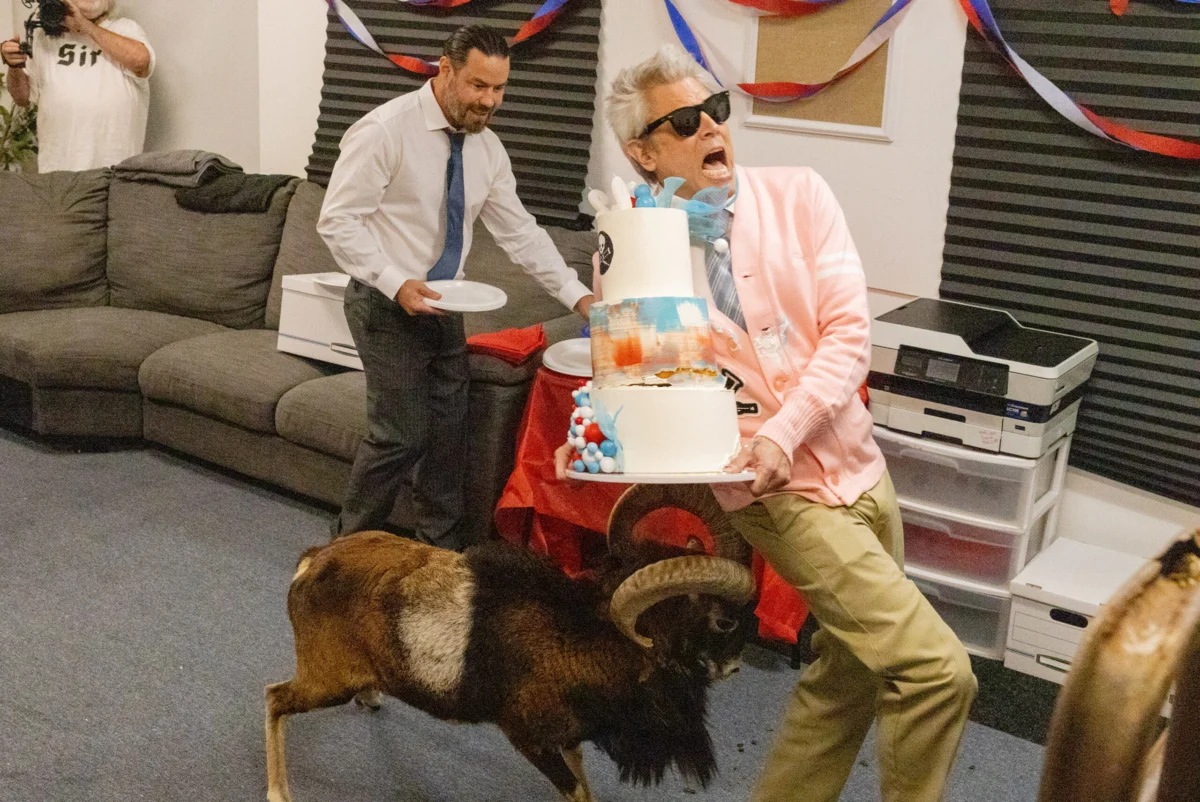
The impending release of Jackass: Best and Last in 2026 marks a potentially poignant farewell to one of the most enduring, yet defiantly sophomoric, franchises in modern entertainment. As the series approaches its rumored conclusion, both cast members and the man who has meticulously orchestrated its controlled chaos from behind the camera, director Jeff Tremaine, are grappling with an unexpected sense of wistfulness. Tremaine, the steady hand guiding the Jackass crew through countless improbable stunts and candid moments, recently shared his emotional reflections on two decades of pushing boundaries, defying expectations, and inadvertently forging a unique cultural phenomenon.
"I really felt it in the edit bay when we started opening up the old footage and looking back on how long we’ve been doing this," Tremaine confessed during a recent interview, his voice tinged with nostalgia. "Seeing all these guys as babies, that hit me a little bit. We thought that we would get one episode on TV—if we did—and it would just get shut down. We weren’t built to run long-distance, but somehow we did." This sentiment underscores the improbable journey of Jackass, a series that began as a rebellious, low-budget cable television show and evolved into a multi-million dollar cinematic franchise, consistently challenging perceptions of comedy, performance art, and male camaraderie.
The Architect of Anarchy: Jeff Tremaine’s Unexpected Journey
Jeff Tremaine, often seen sporting a vintage Smiths T-shirt and exuding a boyish impishness despite his graying hair, hardly fits the conventional image of a film auteur. His aversion to pretension is palpable; he would likely scoff at the very notion. Yet, alongside fellow Jackass co-creators Johnny Knoxville, the charismatic daredevil frontman, and Spike Jonze, the visionary filmmaker known for his distinctive directorial style, Tremaine has profoundly shaped the sensibility and aesthetic of the beloved franchise. His background, however, points to an artistic foundation rarely highlighted in discussions about Jackass.
Tremaine holds an undergraduate degree in fine arts, having cultivated a deep love for painting and drawing from an early age. This artistic grounding provided him with a unique lens through which to approach the seemingly chaotic world of Jackass. While journalists have often focused on the outrageous stunts and the "knucklehead" persona of the cast, few have explored the artistic eye Tremaine brought to a cultural phenomenon best known for grown men enduring spectacular pain. It is this often-overlooked dimension that allowed Tremaine to craft something unexpectedly touching and endearing from these coarse moments, spearheading a comedic series that, beneath its layers of slapstick, subtly condemns homophobia and celebrates genuine, healthy male friendships.
Growing up, movies were an interest, particularly independent and documentary-style films, but directing was never an aspiration. His career pinnacle, he believed, was achieved when he secured a job at Big Brother skateboarding magazine. "I’m the boss, I get to lay out this magazine, I get to choose exactly what it looks like," he recalled. It was within this environment, curating the most outrageous personalities in skateboarding rather than necessarily the most skilled, that the seeds of Jackass were sown. Tremaine possessed an innate ability to extract extraordinary, often dangerous, performances from individuals. The pivotal moment arrived when Johnny Knoxville filmed himself being shot with a handgun for a Big Brother video. This footage, Tremaine realized, transcended the scope of a mere skateboard video, signaling a larger potential. With the addition of other inherently funny and fearless personalities like Steve-O, Wee Man, and Chris Pontius, the idea of a television show began to coalesce.
From Guerrilla Gags to Cinematic Spectacle: The Evolution of Jackass
The journey from a skateboarding magazine’s video segment to a globally recognized brand is a testament to the raw, unfiltered appeal of Jackass. The television series premiered on MTV in October 2000, quickly becoming a cultural touchstone for a generation. Its blend of outrageous stunts, pranks, and physical comedy, coupled with a genuine camaraderie among its cast, resonated deeply, despite its controversial nature. The show’s initial run, lasting just three seasons until 2002, laid the groundwork for its cinematic expansion.
The transition to feature films began with Jackass: The Movie in 2002, followed by Jackass Number Two (2006), Jackass 3D (2010), and Jackass Forever (2022). Each film consistently outperformed critical expectations and demonstrated remarkable box office staying power, accumulating hundreds of millions of dollars worldwide. Jackass: The Movie grossed approximately $79.5 million globally, while Jackass Number Two achieved $84.6 million. The franchise reached a commercial peak with Jackass 3D, which earned an impressive $171.7 million worldwide, showcasing the viability of 3D technology for immersive physical comedy. Even after a decade-long hiatus, Jackass Forever returned to critical and commercial success, pulling in $80.5 million globally and proving the franchise’s enduring appeal.
This commercial growth necessitated a significant shift in production scale. Tremaine vividly remembers the early days: "We used to all fit in one van. The cameraman, the sound guy and the cast—and I’m driving the van . . . for a Paramount movie! I had to drive Ryan Dunn to get the X-ray when he had the car up his ass—it’s not a union driver, it’s me." This stark contrast highlights the challenges of maintaining the raw, spontaneous energy that defined Jackass as its operations expanded. "Every movie, it has just kept growing and growing, to the point where I’m like, ‘We have all these fing people. I don’t even know what everyone’s doing.’ And we shoot 360—if the cameraman’s throwing up, you spin over and see him. Now if you spin over, there’s 60 people past him and 60 people beyond that. I was like, ‘How come we keep getting fing bigger when I’m trying to keep it small?’"
The growth also brought logistical hurdles, primarily the need for permits and increased restrictions. The spontaneity of acts like "kidnapping Brad Pitt," where the crew would simply roll up to a public place like Pink’s Hot Dogs and execute a stunt within minutes, became a relic of the past. "I love that so much and I miss those days, because now we are a slow-moving, deliberate machine that is hard to control," Tremaine lamented. However, he also acknowledged that operating with restrictions could foster creativity, forcing the team to innovate within new parameters.
One notable example of navigating restrictions involved the Motion Picture Association of America (MPAA) and its strict guidelines on nudity. For Jackass 3D, a prolonged slow-motion shot of Chris Pontius’s penis hitting a ping-pong ball proved contentious. Tremaine recounted the arduous negotiations: "They were like, ‘No, this is too long,’ so I sped it up to the point where it stopped being magical… They’re like, ‘You can have ten seconds of penis exposed.’ So we ended up putting a black bar over it, and then the black bar slides away and the dick hits the [ping-pong ball]—the funny part—and then the black bar comes back in and covers it. That was okay with them." This anecdote perfectly encapsulates the franchise’s blend of audacious content and the often-absurd realities of mainstream film production.
Beyond the Stunts: A Deeper Look at Jackass’s Artistic Core
Despite Tremaine’s self-deprecating nature and reluctance to embrace high-minded labels, the critical landscape surrounding Jackass underwent a significant transformation. Initially dismissed as crude, violent, and lacking artistic merit, the franchise began to garner unexpected praise, particularly around the release of Jackass 3D in 2010. This shift culminated in the film premiering at the Museum of Modern Art (MoMA), an event that shocked many, including Tremaine himself.
Critics began to re-evaluate Jackass, recognizing its unique blend of performance art, slapstick comedy, and documentary filmmaking. Reviews for later installments, especially Jackass Forever, often highlighted the film’s "heart," its celebration of genuine male friendship, and its surprisingly progressive stance against homophobia. The series, beneath its surface-level absurdity, inadvertently became a nuanced exploration of vulnerability, trust, and the boundaries of physical and social norms. Tremaine’s fine arts background, though rarely discussed, undoubtedly contributed to the franchise’s distinct visual language, often employing high-speed cameras, intricate setups, and a meticulous approach to capturing fleeting moments of pain and triumph.
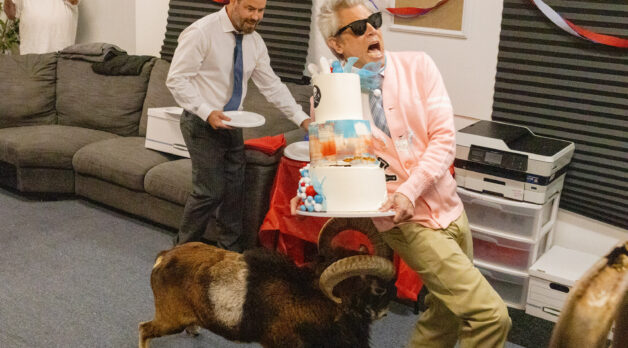
Tremaine views this critical embrace with a mixture of amusement and unease. "I thought it was hilarious, and you are picking up on something—I’ve always struggled with intellectualizing what we do. To me, it is just so surface-level: ‘This is what we do and it’s stupid. We’re magnifying stupid.’ That’s all it is to me." Yet, he concedes that critics sometimes hit upon truths he hadn’t consciously intended. "I love reading a good intellectualized breakdown of what we do, and they’re right some of the time—and sometimes they’re just pulling s*** out. I’m like, ‘That’s great that they think that,’ but sometimes they are dead-on. They’re much more psychologically in tune than I am with what’s happening."
The Collaborative Engine: Directing the Ensemble
Tremaine’s directorial style with the Jackass crew is less about conventional direction and more about curation and strategic placement. He emphasizes that he doesn’t script dialogue, allowing the cast’s genuine personalities to shine through. However, he remains acutely aware of the need to maintain authenticity. "I don’t tell anyone what to say—it is their real personalities—but sometimes I can feel some hamminess and I’ll make them redo things." His real genius lies in creating situations that provoke authentic, often hilarious, reactions. "It’s really more about putting them in situations where I know they’re going to say something funny," he explained. He consistently positions quick-witted individuals like Chris Pontius near the action, knowing they can elevate a mediocre bit into an iconic moment. "I have no idea what he’s going to say, but I know if this bit isn’t as funny as it’s supposed to go, if you go to Chris, it’s going to turn a C into an A."
The balance between creative ambition and safety is a constant tension in the world of Jackass. Tremaine and Knoxville serve as the "judge and jury" for all proposed stunts. While Tremaine often has the final veto, he acknowledges Knoxville’s relentless drive for certain ideas, even those that seem impossible. He cited "The High Five" and "The Bear" from Jackass Forever as examples where Knoxville’s persistence led to iconic segments, despite Tremaine’s initial skepticism about their feasibility or safety.
A particularly telling moment highlighted in Jackass: Best and Last revisits "The Magic Trick" from Jackass Forever, where Knoxville is gored by a bull. Despite breaking two ribs on the first attempt, the initial hit wasn’t cinematic enough. Tremaine faced the unenviable task of telling Knoxville he had to go again. "It was really hard for me to tell him we didn’t have it on that first hit. He wanted to hear that we got it—he knew we didn’t, everyone knew we didn’t, even though he broke two ribs on that first hit," Tremaine recalled. "He knew he had to go again, but he needed to hear it—I’m the one who has to tell him that. And it scared all of us because . . . f***, man, I would never stand in front of a bull; I am terrified of that. But we knew, we’re going to do this until we get it right—and getting it right is getting it wrong." This exchange underscores the immense trust and unspoken understanding between the director and his fearless frontman, a dynamic forged over two decades of shared risk and reward.
The Critical Paradox: Embracing the "Stupid"
The critical trajectory of Jackass is almost unprecedented in film history. Few franchises, particularly those rooted in "lowbrow" entertainment, see their critical reception improve with each subsequent installment. "We never got good reviews in the beginning—terrible reviews, always—and that fueled me. Not to try to get better reviews, but, ‘This is great, f** you,’" Tremaine admitted. This punk rock ethos, a defiant rejection of mainstream critical approval, was central to the Jackass* identity.
However, the warm reception for Jackass Forever particularly unnerved Tremaine. "It really hit me on Jackass Forever—we started getting these really nice reviews. I’m like, ‘This doesn’t feel right. Either we’ve been doing it too long and now the kids that we raised up are now the critics—or maybe we’re just not fing punk anymore. Maybe we’ve lost it. Maybe now we’re mainstream—or maybe COVID just broke the world and we’re fed.’" This humorous self-analysis reveals a director grappling with the uncomfortable reality of mainstream acceptance, a state antithetical to the anarchic spirit that initially defined Jackass. Despite the internal conflict, Tremaine maintains, "it’s still ‘F*** the world’ in our mindset—or mine, at least."
An Unconventional Legacy: Impact and Influence
The cultural impact of Jackass extends far beyond its box office numbers and critical re-evaluations. It pioneered a unique form of reality television, blurring the lines between scripted comedy, performance art, and genuine danger. It influenced a generation of content creators, from early YouTube pranksters to subsequent reality shows. More profoundly, it offered a raw, unfiltered portrayal of male friendship, often messy and painful, yet undeniably supportive and loving. In a media landscape that frequently caricatures masculinity, Jackass presented a diverse group of men who, despite their outlandish antics, demonstrated loyalty, vulnerability, and a surprisingly inclusive spirit.
Tremaine’s creative process, whether painting or directing, stems from the same core. "What I do is all one thing. If I’m painting or if I’m directing, it’s all the same part of my brain firing." He attributes his reduced painting output to the all-consuming nature of his directing work. Despite his protests, his distinct voice, honed over decades, is undeniable. "I’m almost embarrassed that I found that voice early—and the voice didn’t change. Goddamn it, I want it to evolve, but it just feels like the same f**ing thing and it didn’t mature. I’m almost 60 years old, and I still like to draw dicks on things. It’s weird to me that that is still funny to me. I’m waiting to grow up." This candid admission perfectly encapsulates the enduring, defiant spirit of Jeff Tremaine and the Jackass* franchise.
The Unseen Hand: Tremaine’s Diverse Creative Ventures
Beyond the Jackass universe, Tremaine’s versatility as a filmmaker has occasionally surfaced in unexpected projects. Notably, he directed an elegant and stylish safety PSA for American Airlines, a commission that amused him greatly. "That made me laugh—how the *f*** am I even being considered to make a safety video for American Airlines, the biggest airline in the world? ‘You know who we got to get to do our safety video? The Jackass* guy!’" he chuckled. He relished the irony of being the "Safety third" guy finally embracing "Safety first," knowing that this widely seen video might be his most viewed work.
The polished openings and closings of Jackass films, often featuring intricate choreography and musicality, hint at Tremaine’s deep connection to music. "Music has always been in the foreground for me. It’s not a background element in my life—it is a foreground element in my development." Discovering punk rock in his youth was a pivotal moment, connecting him to a subculture and like-minded individuals, much like skateboarding and BMX. For Jackass, music is never merely background noise; it’s a crucial element, serving as both homage and a reflection of the crew’s collective taste.
A Bittersweet Swan Song: Looking Ahead to 2026
As Jackass: Best and Last prepares for its 2026 release, it signals not just a potential conclusion to a beloved franchise but also an opportunity to reflect on its unlikely journey and profound impact. Jeff Tremaine, the reluctant auteur who never aspired to direct, has helmed a cultural phenomenon that consistently defied categorization and expectation. From its humble origins in a skateboarding magazine to its unlikely embrace by critical institutions, Jackass has remained true to its core—a celebration of camaraderie, outrageous humor, and the defiant spirit of its creators.
The bittersweet emotions expressed by Tremaine and the cast are a testament to the deep bonds formed over two decades of shared experiences, both exhilarating and painful. While the era of new Jackass adventures may be drawing to a close, the legacy of its unique brand of comedy, its subversive artistry, and its surprisingly heartfelt portrayal of friendship is cemented in popular culture, a lasting testament to the genius of its "exceptional dumb-dumbs" and the visionary hand that guided them.