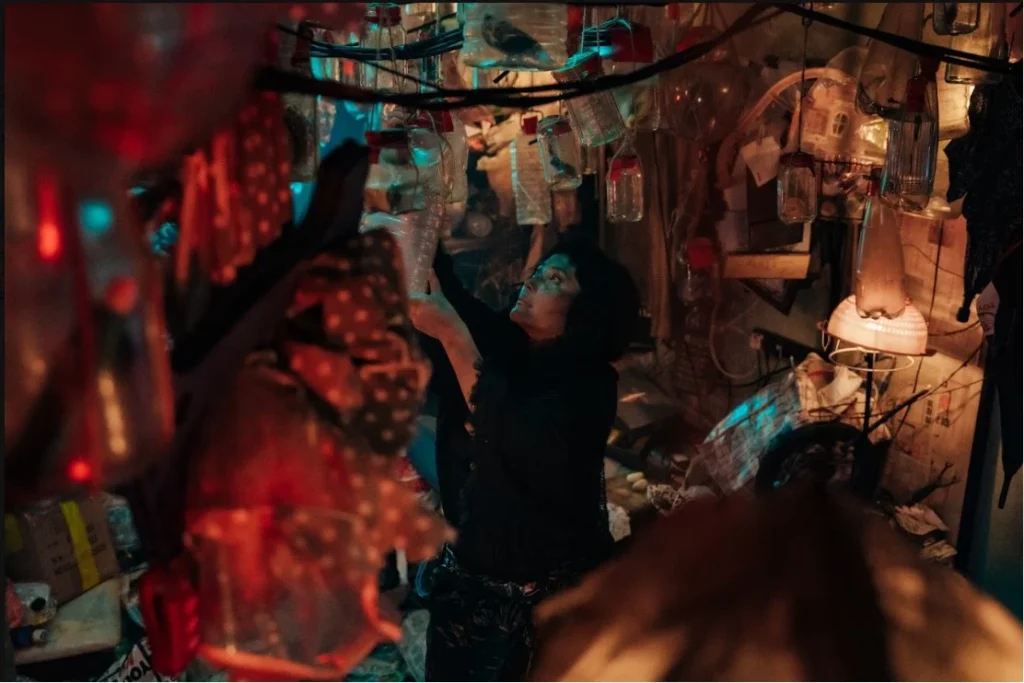
The highly anticipated Thai production, "4 Tigers" (สี่เสือ), is set to make its North American debut at the 2026 New York Asian Film Festival (NYAFF), following its international premiere at the prestigious International Film Festival Rotterdam (IFFR). The 138-minute epic, an expansion of director Kongkiat Komesiri’s acclaimed "Khun Pan" trilogy, will feature the attendance of celebrated star Mario Maurer, signaling its significant international appeal. Released in Thailand by Sahamongkol Film International in October 2025, "4 Tigers" promises a genre-bending spectacle infused with Komesiri’s characteristic blend of action and sharp political commentary.
A Director’s Vision: Kongkiat Komesiri’s Distinctive Style
Kongkiat Komesiri has long been recognized as a formidable voice in contemporary Thai cinema, lauded for his fearless approach to filmmaking that seamlessly merges genre conventions with incisive social and political critiques. His filmography is a testament to his versatility and willingness to push boundaries, often employing heightened realities to explore deeper societal issues. Before "4 Tigers," Komesiri cemented his reputation with a diverse array of projects. His earlier work, "The Gangster," delved into the gritty underworld of Thai organized crime, showcasing his knack for crafting compelling character dramas within intense action frameworks.
His more recent endeavors further exemplify this unique blend. "Bangkok Breaking: Heaven and Hell" offered a stark look at urban disparity and corruption, wrapped in a gripping thriller narrative. Meanwhile, "Operation Undead" presented a novel take on the zombie genre, transforming what could have been a simple horror flick into a potent anti-war statement. Perhaps one of his most critically acclaimed works, the 2009 thriller "Slice," garnered multiple Best Director awards, including Thailand’s leading national directing honor, solidifying his status as a master craftsman capable of delivering both commercial success and critical recognition. "Slice" in particular was praised for its dark psychological depth and unflinching exploration of human depravity, proving Komesiri’s ability to tackle challenging themes with artistic precision.
The "Khun Pan" trilogy, which "4 Tigers" expands upon, is rooted in the legend of a real-life Thai police officer, Khun Pantharakrachadej, who was renowned for his supernatural abilities and his relentless pursuit of notorious criminals. Komesiri’s adaptation of these tales has brought a rich tapestry of Thai folklore, magic, and historical context to the big screen, captivating audiences with its unique blend of fantasy and period action. "4 Tigers" aims to delve deeper into this universe, exploring new facets of its mythical landscape and the socio-political undercurrents that define it. The decision to expand the existing universe rather than produce a direct sequel suggests Komesiri’s ambition to build a more intricate and expansive world, allowing for a broader exploration of its themes and characters.
Chronology of a Premiere and Festival Significance
The journey of "4 Tigers" to international screens began with its International Premiere at the International Film Festival Rotterdam (IFFR). IFFR, known for its focus on independent, experimental, and art-house cinema, provided a significant platform for the film to gain critical attention from a global audience and industry professionals. Its selection underscores the film’s artistic merit and its potential to resonate beyond conventional genre boundaries.
Following this, the North American Premiere at the 2026 New York Asian Film Festival (NYAFF) marks another crucial milestone. NYAFF holds a prominent position in North America as a leading showcase for contemporary Asian cinema, introducing a diverse range of films from across the continent to Western audiences. The festival is celebrated for its curated selection, often featuring cutting-edge genre films alongside critically acclaimed dramas. The inclusion of "4 Tigers" at NYAFF, especially with the highly anticipated appearance of star Mario Maurer, highlights the film’s commercial viability and its potential to attract a broad viewership. Maurer’s attendance is a strategic move, leveraging his international fame, particularly within Asian diaspora communities and among fans of Thai popular culture, to generate considerable buzz and engagement for the festival screening. His presence adds a layer of star power that significantly elevates the film’s profile, making it a must-see event for festival-goers.
A Post-War Thai Western: Setting the Stage
"4 Tigers" is meticulously set in Thailand’s central plains during the tumultuous period shortly after World War II. This historical backdrop is crucial to understanding the film’s narrative and its political undertones. Post-WWII Thailand was a nation grappling with the aftermath of conflict, economic instability, and shifting political landscapes. The power vacuum and societal unrest often gave rise to banditry and lawlessness in rural areas, creating a fertile ground for folk legends and heroic tales.
The plot ignites with the disappearance of a substantial fortune in Japanese gold, a relic of the war that becomes the catalyst for widespread chaos. Field Marshal Lert, a figure representing the authoritarian military establishment that frequently characterized Thai politics during various periods of its modern history, shrewdly exploits this theft. He uses the incident as a pretext for launching a nationwide purge against the region’s legendary bandits, effectively manufacturing a crisis to consolidate his own power. By placing bounties on their heads and instigating internecine warfare among the criminal factions, Lert aims to eliminate any opposition and establish unchallenged control. This tactic mirrors historical instances where ruling elites have leveraged perceived threats to justify repressive measures and expand their authority, a recurring theme in Komesiri’s socially conscious filmmaking.
Into this volatile environment emerge the four extraordinary outlaws, the eponymous "Tigers," each endowed with unique, almost supernatural abilities, elevating them beyond mere criminals into figures of myth. Fai, a master of ancient spells, embodies the mystical traditions deeply embedded in Thai folklore. Bai possesses the improbable ability to bend bullets, a fantastical twist on the Western sharpshooter archetype. Dum commands overwhelming physical strength, a force of nature in human form. And Mahesuan, protected by a powerful amulet, is rendered almost impossible to kill, a classic motif of invulnerability found in many heroic legends.
These four disparate figures are drawn into the same orbit, not by choice, but by the machinations of the military regime. Their paths eventually converge through the intervention of Rosarin, an alluring and enigmatic actress. Rosarin, far from being a mere damsel in distress, carries her own hidden agenda and possesses a keen understanding of power dynamics. She attempts to unite these formidable rivals for a common mission: to challenge the increasingly despotic military leader, Field Marshal Lert. Her role as a manipulator and strategist adds another layer of intrigue, positioning her as a pivotal character in this high-stakes game of power and rebellion.
An Unrestrained Genre Symphony
From its very opening sequences, "4 Tigers" boldly announces its intention to be an all-encompassing cinematic experience, a maximalist tapestry woven from an astonishing array of genre elements. It is not merely an action movie; it is an action movie imbued with the sweeping scope of a fantasy epic. It channels the dusty, morally ambiguous aesthetic of a spaghetti Western, while simultaneously delivering sharp political satire. Elements of traditional martial arts cinema intertwine with romantic adventure, moments of unexpected comedy, and even bursts of musicality, creating a truly unique and often dizzying concoction.
Komesiri’s "anything-goes" approach is arguably the film’s most distinctive and compelling attribute. He displays a remarkable lack of self-consciousness or restraint, treating the audacious blend of genres not as a challenge requiring careful balance or strict plausibility, but as an opportunity for unbridled creative expression. Magic spells are presented alongside machine guns with casual defiance, while reanimated bodies, thrilling horseback pursuits, and flirtatious interludes coexist without apology. This audacious fusion is a deliberate artistic choice, reflecting a director confident in his vision and unafraid to defy conventional narrative structures. The film’s willingness to embrace the fantastical and the absurd, without demanding strict adherence to realism, allows it to transcend typical genre limitations and carve out its own distinctive niche.
Political Undercurrents: Rebellion as Entertainment
Beneath the dazzling surface of genre spectacle, "4 Tigers" carries a clear and resonant political current, a hallmark of Komesiri’s work. The narrative serves as a thinly veiled critique of authoritarianism and the manipulation of public perception. Field Marshal Lert personifies an elite class that deliberately fabricates emergencies and external threats to justify the expansion and strengthening of its own authority. This strategy, where criminals are conveniently branded as "enemies of the state" to legitimize oppressive campaigns, resonates with historical and contemporary political realities in many parts of the world, including Thailand.
Conversely, the bandits, the "Tigers," are not simply portrayed as lawbreakers. They are resurrected as folk heroes, figures whose violence, while often brutal, appears almost justifiable when directed against a corrupt and tyrannical regime. This narrative framing taps into a deep-seated tradition of admiring outlaws who challenge oppressive systems, a common trope in folklore and popular culture globally. The commentary, though hardly subtle, is delivered with an irreverence that perfectly aligns with the film’s overall tone. "4 Tigers" consistently mocks military pomposity and presents rebellion not only as a necessary act of defiance but also as an immensely entertaining spectacle. This dual portrayal of resistance—both politically charged and cinematically thrilling—allows the film to engage audiences on multiple levels, provoking thought while providing exhilarating escapism.
Narrative Complexity and Its Double-Edged Sword
While the film’s ambition in genre blending and political commentary is commendable, the narrative itself occasionally struggles under its own weight. The story becomes increasingly convoluted, and at times, frequently incoherent. A cascade of betrayals, intricate schemes, obscured secret motivations, and an ever-expanding set of supernatural rules accumulate throughout the plot. Unfortunately, this complexity does not always translate into a particularly engaging or easy-to-follow narrative. The plot often feels less like a coherent, progressive story and more like a series of elaborate excuses designed to propel the characters from one visually striking confrontation to the next.
However, Komesiri’s mastery of action choreography largely mitigates this narrative challenge. The action sequences are so consistently inventive and dynamic that they are often sufficient to carry long stretches of the film, even when the underlying motivations or plot points become difficult to decipher. The sheer visual energy and creativity of these confrontations ensure that audience engagement remains high. The humor, however, proves to be less consistent, occasionally veering into pedantic territory with jokes that overstay their welcome, diminishing their impact. This unevenness in comedic timing can sometimes disrupt the film’s otherwise relentless pace and immersive atmosphere.
Charismatic Ensemble and Technical Brilliance
Komesiri demonstrates a keen understanding of the visual appeal of his chosen cast, leveraging their star power to enhance the film’s operatic tone. Sukollawat Kanaros, Mario Maurer, Arak Amornsupasiri, and Phakin Khamwilaisak are presented as larger-than-life figures rather than deeply psychologically complex characters. Their innate charisma and magnetic screen presence perfectly suit the film’s heightened reality, making their constant competition and occasional inability to cooperate effectively a source of amusing chemistry. Mario Maurer’s attendance at NYAFF further underscores the film’s reliance on its star power, a strategic choice to attract a wider international audience, especially given his significant fan base across Asia.
Nevertheless, it is Mashannoad Suvalmas as Rosarin who emerges as the film’s most magnetic and intriguing presence. Whether appearing glamorous in period costumes, disguised in clever guises, or caught in the frenetic midst of violence, she consistently commands attention, seemingly incapable of looking anything less than striking. More importantly, Rosarin is never reduced to mere ornamental beauty. She possesses a profound understanding of how others perceive her and skillfully weaponizes that perception. She adeptly manipulates the four male protagonists, always keeping her true intentions shrouded in mystery, making her a formidable and enigmatic force. Suvalmas delivers a nuanced performance that balances elegance, danger, and playfulness, crafting Rosarin into arguably the film’s most compelling and memorable character. Her portrayal adds a crucial layer of depth and intrigue, preventing the film from becoming solely a male-dominated action romp.
The film’s greatest technical achievement lies in its action choreography. The innovative combination of traditional martial arts with modern rifles and pistols produces several genuinely impressive and distinct sequences. Instead of characters merely exchanging shots from fixed positions, bodies move fluidly and dynamically around gunfire, creating a balletic yet brutal form of combat. The special abilities of the "Tigers" are seamlessly integrated into these fights, ensuring that each protagonist possesses a recognizable and unique physical identity in combat. The result is a distinctive form of "gun-fu" that is uniquely shaped by elements of Thai folklore, black magic, and classic Western imagery, setting it apart from typical action fare.
Visually, the cinematography and color grading are equally impressive. Wide, sweeping landscapes transform Thailand’s central plains into a convincing and atmospheric "Thai Wild West," evoking a sense of vastness and untamed wilderness. Saturated interiors, elaborate period costumes, and carefully crafted supernatural effects all contribute to reinforcing the film’s heightened, almost dreamlike atmosphere. The images are consistently polished and visually rich, even if some of the visual effects occasionally fall short of the same high standard, a minor detraction in an otherwise stunning visual presentation.
The editing further enhances the film’s impact, particularly during the action scenes. It maintains remarkable clarity despite the multitude of characters, weapons, and magical interventions at play, ensuring that audiences can follow the intricate combat sequences without confusion. The editing also supports the film’s relentless pace, although at a substantial runtime of 138 minutes, the cumulative effect of an escalating series of climaxes can eventually become somewhat exhausting for the viewer.
Broader Implications and The Future of Thai Genre Cinema
"4 Tigers" is undeniably excessive, chaotic, and often nonsensical, yet it is rarely timid. Its political ideas, while potent, can become somewhat diluted as the relentless action takes over, and its plot, as noted, barely holds together under scrutiny. However, the film offers considerable compensation through its masterfully choreographed martial arts, exhilarating gunplay, stunning visual presentation, and the undeniable charisma of its cast. Kongkiat Komesiri has crafted a maximalist Thai Western that, despite throwing every conceivable element onto the screen, somehow manages to remain profoundly entertaining for the vast majority of its extended running time.
While it may not adhere to the conventions of disciplined filmmaking, its sheer ambition, boundless energy, and willingness to defy genre norms make it an incredibly difficult film to resist. "4 Tigers" represents a significant entry in Komesiri’s evolving filmography, further solidifying his reputation as a visionary director unafraid to blend entertainment with socio-political commentary. For Thai genre cinema, the film’s international premieres at IFFR and NYAFF, coupled with the star power of Mario Maurer, signal a growing international recognition and market for its unique storytelling. It demonstrates the potential for Thai filmmakers to create grand-scale spectacles that are both culturally specific and universally appealing, pushing the boundaries of what genre cinema can achieve. The expansion of the "Khun Pan" universe also suggests a long-term vision for developing a rich, interconnected cinematic world rooted in Thai folklore and history, promising more thrilling and thought-provoking narratives in the future.