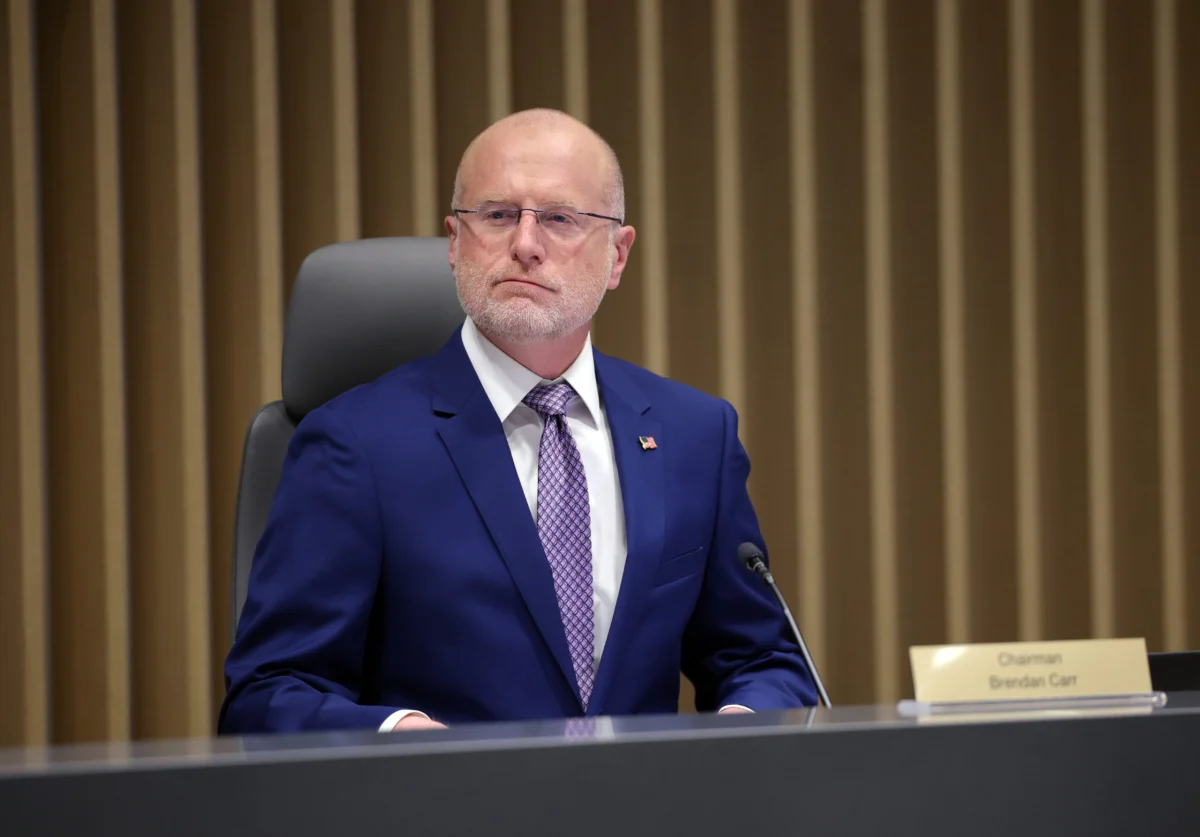
The Federal Communications Commission (FCC) is facing intensified scrutiny following reports that high-ranking officials received luxury gifts from Paramount Global while the agency was actively deliberating on multi-billion-dollar transactions involving the media conglomerate. According to a detailed investigative report released by ProPublica on Wednesday, Republican FCC commissioners Brendan Carr and Olivia Trusty accepted high-value tickets to the Kennedy Center Honors, an elite cultural event televised annually by CBS, a subsidiary of Paramount. The revelation has raised significant questions regarding the intersection of corporate hospitality and federal regulatory integrity, particularly as Paramount navigates a complex transition of ownership and massive industrial consolidation.
The controversy centers on the valuation of these gifts and their timing relative to critical regulatory milestones. Ethics disclosures revealed that Commissioner Olivia Trusty received tickets valued at approximately $12,000. While Commissioner Brendan Carr has not yet filed his most recent ethics disclosure, he was observed attending the event in a private box alongside David Ellison, the CEO of Skydance Media and the architect of the Paramount-Skydance merger. Based on Kennedy Center pricing guidelines for premium seating and corporate sponsorship tiers, the estimated value of the tickets provided for such seating arrangements is approximately $125,000 each.
The Regulatory Context of the Paramount-Skydance Merger
The FCC’s oversight of Paramount has been particularly consequential over the last 18 months. The primary focus of this oversight has been the acquisition of Paramount Global by Skydance Media, a deal that fundamentally reshapes the landscape of American media. Because Paramount owns a vast network of broadcast television stations through its CBS subsidiary, any change in ownership requires the FCC’s formal approval to transfer broadcast licenses. These licenses are considered public assets, and the Commission is mandated by law to ensure that their transfer serves the "public interest, convenience, and necessity."
The Commission recently signed off on the transfer of these licenses to Skydance, effectively greenlighting the merger. Observers noted that the approval came within days of a major programming shift at CBS, specifically the announcement that the network would be canceling The Late Show with Stephen Colbert. While the network maintains that programming decisions are independent of regulatory cycles, the proximity of the two events has fueled speculation regarding the internal pressures facing the broadcaster during its transition.
Beyond the initial merger approval, the FCC is currently reviewing a secondary but equally sensitive request involving Paramount Skydance’s capital structure. The company has petitioned the Commission for permission to allow Middle East-based investors to hold a majority of the economic shares in the new entity. Under current regulations, foreign ownership of US broadcast entities is subject to strict limits and requires specific waivers from the FCC. While the proposal stipulates that voting control would remain firmly with David Ellison, the financial influence of foreign capital in a primary American news and entertainment provider remains a point of significant regulatory debate.
A Timeline of Corporate Consolidation and Regulatory Intersections
The timeline of these events suggests a period of intense activity for both the regulator and the regulated. The gift of the Kennedy Center Honors tickets occurred during a pivotal window when Paramount was engaged in a high-stakes competitive battle with Netflix for control of Warner Bros. Discovery (WBD). This acquisition, which Paramount eventually secured, was a transformative move that consolidated two of the "Big Five" Hollywood studios.
The chronology of the FCC’s involvement highlights several key phases:
- Early 2023: Paramount Global and Skydance Media begin formal negotiations for a merger, necessitating preliminary discussions with the FCC regarding license transfers.
- Late 2023: Paramount enters a bidding war with Netflix over the assets of Warner Bros. Discovery, a move aimed at scaling its streaming and content production capabilities.
- December 2023: The Kennedy Center Honors take place. Commissioners Carr and Trusty attend as guests of Paramount/CBS.
- Early 2024: The FCC formally reviews and approves the Skydance-Paramount license transfers.
- Mid-2024: Paramount successfully integrates WBD assets, while the FCC begins its review of the foreign investment petition.
- Late 2024: ProPublica releases its investigation into the gifts, coinciding with a wave of shareholder lawsuits challenging the terms of the Skydance deal.
Analyzing the Ethics of "Bipartisan Traditions"
In defense of the commissioners, proponents of the status quo point out that attendance at the Kennedy Center Honors has long been a bipartisan tradition within the FCC. The ProPublica report acknowledges that CBS has historically offered tickets to FCC commissioners as a gesture of "corporate compliments." Data indicates that seven out of the last ten commissioners to serve over the previous decade have attended the event.
This list includes Carr’s predecessor and the current FCC Chair, Jessica Rosenworcel, as well as Anna Gomez, the lone Democratic commissioner currently serving. Records show that while Gomez did not attend the 2025 event, she has participated in the past. This historical precedent is often used to argue that the gifts are social in nature rather than transactional. However, the escalating value of these gifts—moving from standard seat tickets to $125,000 private boxes—has shifted the conversation from one of social tradition to one of potential ethical violation.
Under federal ethics guidelines, executive branch employees are generally prohibited from accepting gifts from "prohibited sources"—entities that do business with or are regulated by the employee’s agency. While there are exceptions for widely attended gatherings or events with a clear social or commemorative purpose, the high monetary value of the Paramount gifts complicates the application of these exceptions.
Financial Data and the Valuation of Influence
The financial stakes of the Paramount-Skydance deal are massive, which contextualizes why even a $125,000 gift is viewed with suspicion. The merger is valued at approximately $8 billion, involving a complex cash-and-stock arrangement. For a company seeking to secure regulatory favor for a deal of this magnitude, the cost of a luxury box at a gala represents a negligible fraction of the total transaction value.
Supporting data regarding the Kennedy Center Honors illustrates the exclusivity of the event:
- General Admission Tickets: Range from $500 to $5,000 depending on the proximity to the stage.
- Corporate Sponsorship Packages: These often start at $50,000 and can exceed $250,000, providing access to private boxes and "after-party" receptions with the honorees.
- The "Ellison Box": The seating of Commissioner Carr with David Ellison is particularly noteworthy. Industry analysts suggest that direct access to a primary regulator in a private, social setting provides an opportunity for "informal lobbying" that is not captured in official agency logs.
Official Responses and Public Sentiment
While the FCC has not issued a formal collective statement regarding the ProPublica report, individual offices have offered brief clarifications. Representatives for Commissioner Trusty emphasized that her attendance was disclosed in accordance with federal law and followed established protocols. Commissioner Carr’s office has noted that his disclosure is forthcoming and will be filed within the permitted statutory timeframe.
Paramount Global has defended its practice of inviting regulators to the Kennedy Center Honors, describing it as a celebration of American culture and the arts. A spokesperson for the company noted that the event is a unique opportunity to showcase the "vital role of the broadcasting industry in the nation’s cultural fabric."
However, the response from consumer advocacy groups and legal experts has been less conciliatory. Groups such as Public Knowledge and the Free Press have called for a more stringent "firewall" between regulators and the companies they oversee. Legal experts have noted that the "new light" cast on these gifts is largely due to the concurrent lawsuits filed by Paramount shareholders. These lawsuits allege that the Skydance deal unfairly prioritizes the interests of Shari Redstone and David Ellison over minority shareholders. In this litigious environment, any evidence of cozy relationships between the company and its regulators can be used as leverage in court.
Broader Implications for Regulatory Integrity
The controversy surrounding the Paramount gifts arrives at a time of heightened sensitivity regarding the independence of federal agencies. As the FCC prepares for a potential change in leadership or policy direction following upcoming political cycles, the perceived impartiality of its commissioners is paramount.
The implications of this situation extend beyond a single merger. It raises fundamental questions about the "revolving door" and the social culture of Washington D.C., where high-stakes regulation and high-society socializing often overlap. If the public perceives that regulatory approvals are influenced by luxury perks, it erodes trust in the Commission’s ability to manage the airwaves in the public interest.
Furthermore, the involvement of foreign investors in the Skydance deal adds a layer of national security and economic sovereignty to the discussion. If the FCC is seen as being "too close" to Paramount, its eventual decision on the Middle East investment petition will be viewed through a skeptical lens, regardless of the technical merits of the case.
In conclusion, while the tradition of attending the Kennedy Center Honors may be bipartisan and long-standing, the specific circumstances surrounding the 2023-2024 cycle—marked by massive consolidation, foreign investment requests, and high-value luxury seating—have transformed a social tradition into a significant regulatory scandal. The FCC now faces the challenge of reaffirming its commitment to transparency and objective oversight in an era where the lines between the regulators and the regulated continue to blur. Progress on the Paramount-Skydance merger will likely continue, but it will do so under a cloud of scrutiny that may prompt calls for reform in how federal commissioners interact with the industries they are sworn to govern.