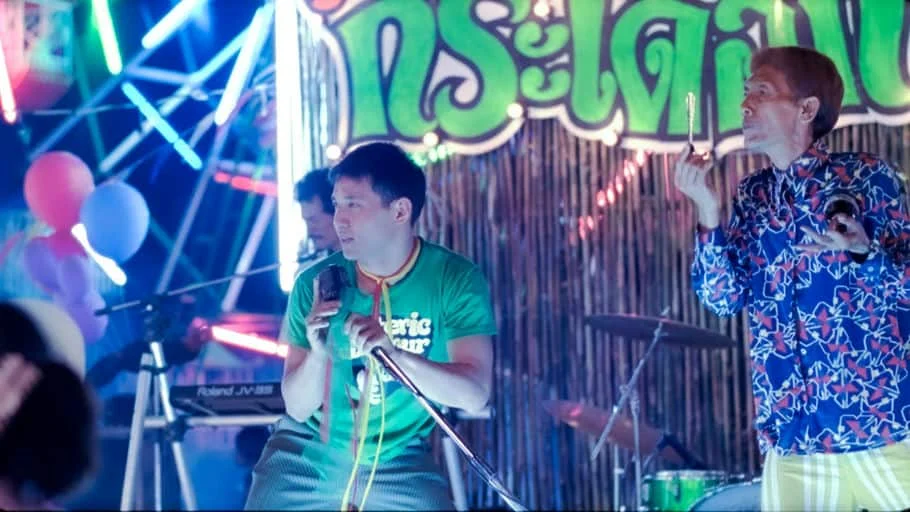
Pen-ek Ratanaruang’s 2001 feature film, Mon-rak Transistor, known internationally as Transistor Love Story, has solidified its position as a defining work within Thai national cinema. More than two decades after its initial release, the film continues to resonate, recently screening as a special selection at the prestigious New York Asian Film Festival (NYAFF). This reappraisal offers a timely opportunity to revisit a pivotal work that not only garnered significant international acclaim but also helped to herald a new generation of Thai filmmaking, often referred to as the Thai New Wave. Its selection as the first Thai film for the Directors’ Fortnight at the Cannes Film Festival and subsequently as Thailand’s submission for the Academy Award for Best Foreign Language Film underscored its critical importance and artistic merit on the global stage. Domestically and regionally, the film was celebrated with a Best Actor prize for Supakorn Kitsuwon at the Asia-Pacific Film Festival and a Best Actress prize for Siriyakorn Pukkavesh at the Thai national awards, cementing its status as a touchstone of its era.
The Genesis of a Modern Classic: Contextualizing the Thai New Wave
Mon-rak Transistor emerged during a transformative period for Thai cinema. The late 1990s and early 2000s witnessed the rise of the "Thai New Wave," a movement characterized by a departure from conventional genre filmmaking towards more auteur-driven, artistically ambitious, and often socially reflective narratives. Prior to this, Thai cinema had largely been dominated by commercial comedies, horror films, and action features, with limited international recognition. Directors like Nonzee Nimibutr (Nang Nak, 2499 Antapan Krong Muang), Wisit Sasanatieng (Tears of the Black Tiger), and Apichatpong Weerasethakul (Mysterious Object at Noon, Blissfully Yours) began to challenge established norms, exploring diverse themes, experimenting with narrative structures, and developing distinct visual styles.
Pen-ek Ratanaruang, already an acclaimed filmmaker with works like Fun Bar Karaoke (1997) and 6ixtynin9 (1999) under his belt, was a key figure in this cinematic renaissance. His films often blend dark humor with poignant social commentary, exhibiting a unique blend of surrealism and grounded realism. Mon-rak Transistor represented a significant evolution in his filmography, bringing his signature style to a story deeply rooted in Thai culture while achieving universal resonance. The film’s success, both critically and at the box office, signaled a burgeoning confidence and artistic maturity within the Thai film industry, demonstrating that Thai stories could captivate international audiences without sacrificing their cultural specificity.
A Narrative Odyssey: Pan’s Journey from Rural Dreamer to Urban Drifter
The narrative of Mon-rak Transistor centers on Pan, a young man from rural Thailand blessed with a captivating singing voice but plagued by a streak of misfortune and a profound naiveté. His life begins with an idyllic romance: he wins the heart of Sadao, marries her, and presents her with a transistor radio as a wedding gift – a symbol of connection to the wider world and a harbinger of his musical aspirations. For a brief period, their world is painted with the vibrant hues of happiness and marital bliss.
However, Pan’s life takes a dramatic turn when he is conscripted into the army. A local singing contest reignites his dreams of stardom, leading him to make a fateful decision: he deserts the military, believing the bustling metropolis of Bangkok holds the key to his musical ambitions. This decision marks the beginning of Pan’s precipitous decline. Instead of fame, he encounters a world of exploitation, starting with a crooked manager who preys on his aspirations. His journey through the urban underbelly and the harsh realities of rural labor takes him through a series of menial jobs, back-breaking work in cane fields, involvement in petty crime, and ultimately, imprisonment.
Meanwhile, back in their quiet village, a pregnant Sadao patiently waits. Her constant presence, often depicted beside the transistor radio Pan gave her, serves as an emotional anchor for the film, a poignant counterpoint to Pan’s increasingly dark and convoluted odyssey. Adapted from a novel by Wat Wanlayangkoon, the film is a masterclass in tragicomedy, seamlessly weaving moments of genuine humor with profound cruelty and sorrow. It captures the essence of life’s unpredictable turns, where hope and despair often exist in the same breath, reflecting the struggles and resilience of ordinary people caught in extraordinary circumstances.
The Cultural Heartbeat: Luk Thung Music as a Narrative Vein
Central to Mon-rak Transistor‘s emotional depth and cultural authenticity is its profound integration of luk thung, the heartbroken country music of rural Thailand. More than mere background music, luk thung functions as a narrative device and a powerful expression of the characters’ inner lives and the broader social landscape. Originating in the mid-20th century, luk thung ("children of the field") music is deeply rooted in the lives of Thailand’s working class and agricultural communities. Its lyrics often recount tales of rural hardship, unrequited love, migration to the city for work, and the longing for home and simpler times.
In Mon-rak Transistor, luk thung songs burst organically from the action, defining Pan’s character, propelling the plot, and articulating emotions that characters often cannot voice aloud. The opening sequences are infused with an exuberant, almost musical-like quality, where songs define the joyful, innocent world of Pan and Sadao. As Pan’s journey darkens, the melancholic undertones inherent in luk thung come to the forefront, underscoring his alienation, his dashed dreams, and Sadao’s enduring sorrow.
The film’s dedication to the late Suraphol Sombatcharoen, often hailed as "The King of Luk Thung," further emphasizes the genre’s significance. His iconic song, "Mai Leum" (Don’t Forget), becomes a recurring motif, a haunting melody that symbolizes the unbreakable bond between Pan and Sadao, and Sadao’s unwavering hope for his return. The music, a blend of original compositions by Amornbhong Methakunavudh and Chartchai Pongprapapan, alongside classic luk thung tracks, elevates the film from a simple narrative to a rich cultural tapestry, allowing an international audience to glimpse the soul of rural Thailand.
Masterful Direction and Stellar Performances
Pen-ek Ratanaruang’s directorial prowess is on full display in Mon-rak Transistor, particularly in his audacious command of tone and pace. The film initially presents itself as a breezy, colorful musical romance, brimming with the infectious energy of luk thung. However, Ratanaruang subtly, yet decisively, pulls the rug out from under the audience, transitioning the narrative into a grounded drama steeped in crime, misfortune, and existential despair. This dramatic tonal shift, from lighthearted exuberance to profound darkness, could easily unravel in lesser hands, but Ratanaruang maintains a delicate balance, grounding even the broadest slapstick moments in genuine emotion.
The film eschews a rigid three-act structure in favor of a loose, episodic, almost fable-like shape. This structural choice proves to be the film’s secret weapon, allowing Ratanaruang to navigate seamlessly between moments of comedy, sudden violence, and quiet heartbreak without jarring the viewer. The pace remains fresh and engaging throughout its 129-minute runtime, contributing to the film’s folk tale quality, which perfectly complements its tragicomic heart.
The performances are pivotal in anchoring this complex narrative. Supakorn Kitsuwon delivers a remarkable portrayal of Pan. His character is a hopeless romantic, a dreamer who makes a complete mess of his life, yet Kitsuwon imbues him with an undeniable charm and vulnerability that ensures the audience’s enduring sympathy. His Best Actor prize at the Asia-Pacific Film Festival was a well-deserved recognition of this nuanced performance. Siriyakorn Pukkavesh, as Sadao, provides the film’s emotional core. Her patient suffering and quiet resilience lend weight and a poignant ache to the comedy, making her Best Actress award at the Thai national awards a testament to her powerful, understated performance.
The supporting cast further enriches the film’s texture. Somlek Sakdikul creates a memorably repellent character in the sleazy manager Suwat, embodying the corrupting forces Pan encounters. Porntip Papanai brings a bruised warmth and complexity to Dao, the rival singer who briefly crosses Pan’s path, adding another layer to his fragmented journey. This ensemble collectively ensures that even the most outlandish moments remain rooted in something lived-in and true, enhancing the film’s raw authenticity.
Cinematic Craftsmanship: Visuals, Editing, and Sound
The technical craftsmanship of Mon-rak Transistor is integral to its immersive quality and thematic resonance. Chankit Chamnivikaipong’s cinematography is particularly noteworthy, adeptly shifting between the sun-drenched, vibrant colors of the rural village and the harder, often grittier textures of Bangkok’s urban sprawl and the desolate cane fields. This visual contrast not only delineates Pan’s physical journey but also reflects his internal world, mirroring the loss of innocence and the harsh realities he confronts. The cinematography imbues the film with a storybook glow, enhancing its fable-like atmosphere while maintaining a sense of grounded realism.
Patamanadda Yukol’s editing is equally crucial to the film’s success. Her skillful handling of the episodic structure ensures a fluid and engaging viewing experience. She guides the viewer through the film’s significant tonal shifts – from joyous musical numbers to moments of stark violence and profound sadness – without any abruptness or disruption to the narrative flow. This seamless transition is fundamental to the film’s ability to maintain its unique tragicomic balance and sustain interest across its varied chapters.
The music, as previously highlighted, performs an enormous amount of work. Beyond the integral luk thung songs, the original score by Amornbhong Methakunavudh and Chartchai Pongprapapan subtly underscores the emotional arc of the story. The sound design meticulously integrates these musical elements with ambient sounds and dialogue, creating a rich auditory landscape that complements the visual storytelling. The songs, far from being mere decorative elements, are deeply embedded in the narrative, carrying the unspoken emotions and dreams of the characters, acting as a lyrical extension of their experiences.
Festival Acclaim and Lasting International Impact
The journey of Mon-rak Transistor through the international film festival circuit marked a significant moment for Thai cinema. Its selection for the Directors’ Fortnight at the 2002 Cannes Film Festival was a landmark achievement. The Directors’ Fortnight, a parallel section to the main Cannes competition, is renowned for showcasing innovative and emerging filmmakers, and its recognition of Mon-rak Transistor signaled a new era of global visibility for Thai films. This prestigious platform immediately elevated the film’s profile, introducing Pen-ek Ratanaruang’s distinctive voice to a wider international audience.
Following its Cannes debut, the film continued its successful festival run, culminating in its submission as Thailand’s official entry for the Academy Award for Best Foreign Language Film. While it did not receive a nomination, the submission itself was a testament to its critical standing and the burgeoning confidence of the Thai film industry in presenting its artistic output on the world stage. The accolades continued with Supakorn Kitsuwon’s Best Actor award at the Asia-Pacific Film Festival, underscoring the film’s regional impact and the strength of its performances. Domestically, Siriyakorn Pukkavesh’s Best Actress prize at the Thai national awards further cemented its critical success within Thailand.
The international reception of Mon-rak Transistor was largely positive, with critics praising Ratanaruang’s unique vision, the film’s blend of genres, and its profound emotional resonance. It helped to open doors for subsequent Thai films and filmmakers, fostering a greater appreciation for the country’s cinematic diversity and artistic depth. Its success contributed to a global conversation about the vibrancy of Southeast Asian cinema, encouraging distributors and programmers to look beyond established film-producing nations.
Enduring Legacy and Contemporary Relevance
More than two decades on, Mon-rak Transistor retains its power and relevance. Its recent screening as a special selection at the New York Asian Film Festival is a clear indication of its enduring legacy and its continued ability to captivate new generations of viewers. The NYAFF, known for its dedication to showcasing the best of contemporary and classic Asian cinema, provides an ideal platform for audiences to rediscover or experience for the first time this seminal work.
The film’s refusal to be confined to a single genre—its seamless blend of comedy, romance, musical, drama, and crime thriller elements—speaks to its artistic ambition and Ratanaruang’s rare command of tone. It is a film that is both funny and devastating, earning every emotional beat. Its exploration of universal themes such as the pursuit of dreams, the harsh realities of life, the resilience of love, and the consequences of one’s choices, ensures its timeless appeal.
Mon-rak Transistor is not merely a cinematic artifact; it is a warm, sad, and thoroughly entertaining piece of cinema that stands as a compelling entry point into the rich and diverse landscape of Thai filmmaking. Its enduring appeal lies in its profound humanity, its cultural specificity, and its artistic boldness, confirming its status as a masterpiece that continues to resonate with audiences worldwide. As new viewers encounter Pan’s bittersweet odyssey, the film reaffirms its position not just as a landmark of the Thai New Wave, but as a significant contribution to world cinema.