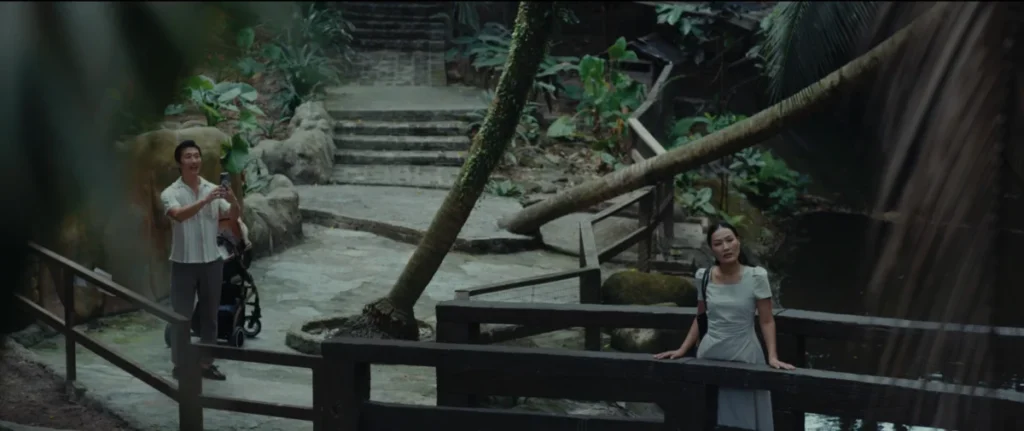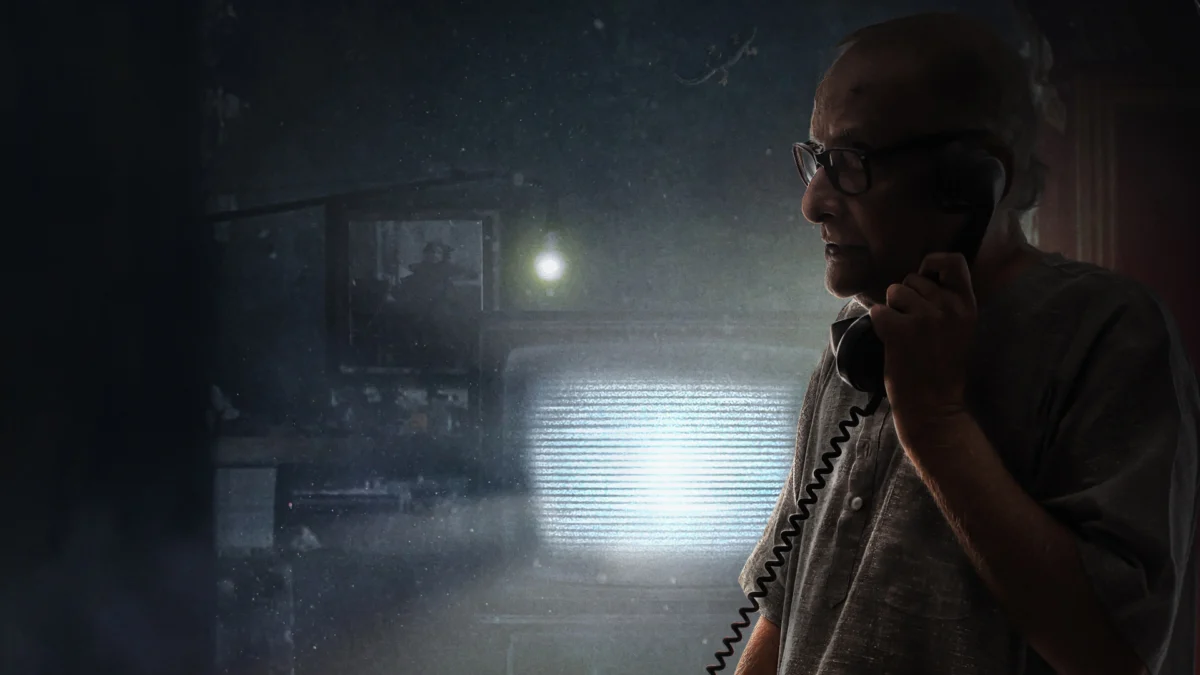
Samik Roy Choudhury’s highly anticipated Bengali psychological mystery thriller, "Beline," made its theatrical debut in India on March 29, 2024, following a protracted development period that began as early as 2015, with principal photography finally commencing in 2021. Produced by Harit Ratna and Manisha Ratna under the Dristishree Arts banner, the film marks a significant entry into the Bengali cinematic landscape, offering a nuanced exploration of isolation, voyeurism, and the human psyche. Choudhury, who not only directed but also penned the intricate story, screenplay, and dialogue, brings a rich background in visual effects from Hollywood, having contributed to critically acclaimed productions such as "Life of Pi," "Night at the Museum: Battle of the Smithsonian," and "The Mummy: Tomb of the Dragon Emperor." His transition from VFX technical director to a multifaceted filmmaker is evident in "Beline," showcasing a meticulous approach to storytelling and visual narrative, building upon his previous directorial efforts, including the feature film "D Major" and a series of short works.
Director’s Vision and Background: From Hollywood VFX to Bengali Thriller
Samik Roy Choudhury’s journey to "Beline" is characterized by a blend of technical expertise and narrative ambition. His extensive career as a VFX technical director in Hollywood provided him with a profound understanding of visual storytelling and the intricate mechanics of film production on a grand scale. Working on projects like Ang Lee’s "Life of Pi," known for its groundbreaking visual effects and immersive storytelling, undoubtedly honed his eye for detail and his capacity to envision complex cinematic worlds. Similarly, his involvement in blockbuster franchises like "Night at the Museum" and "The Mummy" exposed him to the demands of large-scale productions and the art of crafting compelling visual spectacles.
This technical foundation, however, appears to have served as a springboard for deeper narrative exploration rather than an end in itself. Choudhury’s directorial foray into feature films began with "D Major," and he has also helmed several short films, each serving as a laboratory for developing his unique voice and thematic preoccupations. "Beline" represents the culmination of this evolving artistic journey, a project reportedly nurtured for nearly a decade, from its conceptualization around 2015 to its eventual shooting in 2021. This extended gestation period speaks volumes about Choudhury’s commitment to his vision, allowing for a meticulous refinement of the script and an in-depth exploration of its psychological complexities. His decision to take on multiple roles—story writer, screenwriter, and dialogue writer—underscores his comprehensive artistic control and personal investment in shaping every facet of the film’s narrative. This hands-on approach is crucial for a psychological thriller where subtle nuances in character motivation and plot progression can significantly impact the audience’s experience.
Thematic Core: Auditory Voyeurism and the Anatomy of Isolation
At the heart of "Beline" lies an unsettling premise: the inadvertent intrusion into private lives through an accidental phone call. The narrative centers on an elderly man, living a life defined by monotonous routine and profound solitude. His days are largely spent in a repetitive cycle of basic sustenance, simple indoor games, occasional neighborhood strolls, and, most significantly, an almost obsessive consumption of Bengali television serials. These on-screen characters have, for him, transcended their fictional boundaries, becoming surrogate members of his household, filling the void left by a life devoid of meaningful human connection. This initial portrait of isolation is further complicated by subtle hints of unextinguished sexual curiosity, particularly concerning his domestic worker, suggesting a deeper, unaddressed yearning for intimacy that belies his outwardly placid existence.
The catalyst for change arrives unexpectedly in the form of a wrong number—a young woman’s accidental call to his landline. What begins as a trivial misdial gradually morphs into an invasive, all-consuming obsession. The old man, initially a passive recipient of her unwitting confidences, begins actively listening to her conversations with her live-in partner. He becomes an unseen, unheard eavesdropper, meticulously piecing together the fragments of their troubled relationship. The film masterfully portrays his descent into a vicarious existence, as he absorbs their arguments, suspicions, sexual frustrations, and increasingly disturbing behaviors. In a poignant manifestation of his isolation and his reliance on fictional proxies, he constructs an imagined reality of the couple, superimposing the faces of actors from his beloved television serials onto their voices.
This auditory voyeurism becomes the central mechanism of "Beline," distinguishing it from visual forms of surveillance. The protagonist never physically trespasses into the couple’s home, yet the telephone acts as a conduit, allowing him to breach the sanctity of their private world. Listening transforms from a casual act into an addiction, systematically displacing his friends, daily responsibilities, and virtually every other aspect of his former life. The film is particularly potent in illustrating the insidious ease with which benign curiosity can escalate into a debilitating obsession, especially when it offers a tantalizing escape from the crushing weight of isolation. The telephone, an instrument designed for connection, paradoxically becomes a tool for profound disconnection, pulling the protagonist deeper into his own psychological labyrinth.
Social Commentary: Patriarchy, Sexuality, and Toxic Masculinity in Bengali Society
Beyond its exploration of individual psychology, "Beline" leverages its premise to deliver incisive social commentary, particularly on themes prevalent within Bengali society. Roy Choudhury uses the overheard relationship as a microcosm to critique patriarchy, the often-constrained position of women, and the insidious nature of toxic masculinity. The conversations the old man intercepts are replete with markers of a deeply dysfunctional dynamic: suspicion, possessiveness, unequal expectations, and an escalating undercurrent of emotional and eventually physical violence. These elements feel disturbingly realistic, resonating with the uncomfortable truths of many relationships, particularly those shaped by traditional societal norms.
A notable aspect of the film is its unusually frank depiction of female sexuality, encompassing desire and even masturbation, a topic rarely addressed with such openness in mainstream Bengali productions. The film steers clear of gratuitous titillation, instead presenting sex scenes that are deliberately awkward and discomforting. This artistic choice serves a crucial narrative function: these scenes expose emotional unease, incompatibility, and the broader context of unfulfilled desire within the relationship, rather than offering mere erotic spectacle. By doing so, "Beline" challenges conventional cinematic portrayals and prompts a more thoughtful consideration of intimacy and its discontents within a societal framework that often polices female desire. The film’s boldness in tackling these sensitive subjects positions it as a significant, albeit potentially uncomfortable, voice in contemporary regional cinema, pushing boundaries in a manner that invites critical discourse.
Narrative Architecture and Psychological Unraveling
Roy Choudhury’s storytelling prowess is evident in the film’s narrative architecture, which gradually builds mystery through fragmented revelations. Rather than offering explicit explanations, he strategically places crucial pieces of information within the frame and relies on the audience to assemble them, fostering an active engagement with the unfolding psychological drama. The director’s control over the narrative is generally compact, even as the escalating tension makes the eventual destination more discernible.
However, the film is not without its narrative complexities, particularly concerning its central twist. As the story progresses, the repeated connections—between the broken television set, the couple’s escalating crisis, instances of violence, expressions of sexuality, and undertones of revenge—begin to subtly, and perhaps eventually overtly, guide the audience toward a particular conclusion. The narrative eventually provides too many signals that what the protagonist hears and imagines cannot be accepted at face value, making the eventual revelation somewhat anticipated. Despite this, the twist is not merely a device for shock value; it functions as a logical explanation, providing coherence to the disparate images, sounds, and narrative details introduced from the very beginning. This careful integration ensures that even if anticipated, the revelation serves to deepen the understanding of the protagonist’s psychological state and the film’s overarching themes.
Stellar Performances Anchor the Narrative
The success of "Beline" hinges significantly on its central performances, which imbue the complex psychological narrative with authenticity and emotional weight.
Paran Bandopadhyay delivers an impressive and transformative performance as the elderly protagonist. Long associated with comic roles in Bengali cinema, Bandopadhyay sheds his familiar persona to embody a character steeped in profound loneliness, insatiable curiosity, unfulfilled desire, and escalating psychological instability. His portrayal is nuanced, capturing the subtle shifts from benign eavesdropping to a consuming obsession. He masterfully conveys the man’s gradual descent into a fabricated reality without necessarily eliciting overt sympathy from the audience, making his journey disturbing yet entirely believable. His performance is a testament to his versatility and depth as an actor, showcasing a range that transcends his public image.
Sreya Bhattacharya is equally compelling in a multifaceted role that demands a delicate balance of vulnerability, overt sexuality, simmering frustration, and palpable fear. She navigates the complexities of the young woman’s character with remarkable restraint, avoiding excessive theatricality. Her portrayal highlights the character’s unique form of isolation—emotional neglect and incomplete sexual fulfillment—despite being in a live-in relationship. Bhattacharya’s ability to convey these intricate emotional layers is crucial in making the overheard relationship feel authentic and deeply troubled.
Tathagata Mukherjee provides a convincing counterweight as the young woman’s partner, embodying the toxic masculinity and possessiveness that fuel the couple’s discord. His performance, alongside Bhattacharya’s, creates the intense, believable tension necessary for the old man’s obsession to seem plausible, even as the audience begins to question the objective reality of what he is hearing. The dynamic between Bhattacharya and Mukherjee is vital in constructing the auditory world that becomes the protagonist’s entire universe.
Technical Brilliance: Crafting an Immersive Auditory Experience
The technical craftsmanship in "Beline" is instrumental in enhancing its psychological depth and immersive quality.
Supriyo Dutta’s cinematography makes exceptionally effective use of the protagonist’s confined interior space. The interplay of light and shadow, combined with the strategic positioning of figures in the foreground and background, meticulously contributes to the sense that his home is not merely a physical dwelling but a direct projection of his fractured state of mind. The visual language reinforces his isolation and the increasingly claustrophobic nature of his obsession.
Tapan Seth’s art direction similarly supports the character’s profound isolation through meticulous attention to detail within the domestic environment. The worn television, the antiquated landline telephone (a crucial narrative device), and the familiar yet isolating domestic setting all serve to underscore his detachment from the outside world and his reliance on these objects for connection and escape.
Sanglap Bhowmik’s editing is notably lean and precise, deliberately avoiding unnecessary explanations that might burden the narrative. This restraint is paramount for a mystery that hinges on the intricate relationship between what is heard, what is visually shown, and what the protagonist subjectively imagines. The editing skillfully maintains suspense and ambiguity, allowing the audience to piece together the psychological puzzle.
Perhaps the most critical technical element, given the film’s central theme of auditory voyeurism, is the music by Tamal Kanti Haldar, coupled with the sound design and mixing by Abhik and Ayan. Since listening is more important than physical observation in "Beline," voices, the distinctive rings and clicks of the landline telephone, and ambient sounds emanating from beyond the visible space are elevated from mere background elements to essential narrative tools. The intricate soundscape constructs the world the protagonist inhabits and obsesses over, making the unheard palpable and powerfully intrusive. The meticulous attention to sonic detail creates an almost tactile sense of presence, drawing the audience into the protagonist’s aural prison.
Broader Impact and Implications
"Beline" arrives at a time when regional cinema, particularly in Bengal, is increasingly experimenting with genre and narrative structures. It stands out as a bold example of a psychological thriller that prioritizes character depth and thematic exploration over conventional jump scares or overt plot mechanics. While the film’s weakness—the potential for its central twist to be anticipated—is acknowledged, the director’s unwavering attention to detail, the consistency of its storytelling, and the sheer strength of its central performances largely compensate for this minor flaw.
The film’s deliberate awkwardness in its treatment of sex and its unflinching gaze at toxic masculinity and patriarchy mark it as a thought-provoking and, at times, uncomfortable viewing experience. It challenges audiences to confront uncomfortable truths about human nature, societal norms, and the profound consequences of isolation and unfulfilled desire. "Beline" is more than just a genre film; it is a thoughtful exploration of universal human conditions—loneliness, the allure of voyeurism, the destructive forces of patriarchy, and the insidious path to self-destruction.
Its impact lies in demonstrating that a compelling and deeply resonant psychological thriller can emerge from a minimalist setup: a handful of characters, a confined domestic setting, and the profoundly unsettling act of listening to conversations never intended for one’s ears. "Beline" is a testament to the power of sound in cinematic storytelling and a significant contribution to Bengali cinema, pushing boundaries and inviting deeper reflection on the hidden anxieties of modern life. It solidifies Samik Roy Choudhury’s reputation as a director unafraid to delve into the darker recesses of the human mind, leaving a lasting impression on its viewers.