Zulian Tjuatja’s third narrative short film, "The Dumpling Club," has garnered significant attention for its poignant exploration of grief, the enduring power of cultural heritage, and the intricate threads of human connection. The 20-minute production, a compelling work of independent cinema, was recently spotlighted as part of Asian Movie Pulse’s esteemed "Submit Your Film Initiative," an platform dedicated to showcasing emerging talent and diverse storytelling within the Asian film landscape. The film centers on the journey of an Asian American man grappling with loss as he endeavors to translate a treasured cookbook inherited from his parents, a narrative device that skillfully intertwines personal mourning with a broader quest for identity.
The Genesis of a Personal Narrative: From Community to Screen
The origins of "The Dumpling Club" are deeply rooted in director Zulian Tjuatja’s personal experiences and his immersion within a vibrant community. Approximately three and a half years prior to the film’s conception, Tjuatja relocated to Washington, D.C., a city known for its rich international tapestry. Seeking to forge new connections, he began attending language-exchange meetings, a common avenue for newcomers to integrate and expand their social circles. It was within Washington’s diverse international community that he discovered a Chinese-speaking group, a melting pot of Chinese expatriates, Chinese Americans, and other Asian Americans keen on enhancing their linguistic proficiency, alongside individuals drawn to Chinese culture through professional or academic pursuits.
This fortuitous encounter proved pivotal. Among the group’s members was Siwei Kwok, who would eventually embody the protagonist of "The Dumpling Club." As their friendship deepened, Siwei shared with Tjuatja the profoundly personal story of his parents’ passing and his subsequent, earnest attempts to reconnect with his ancestral background. Tjuatja openly acknowledges the profound influence of this friendship, stating, "A lot of ‘The Dumpling Club’ is based on his real life." This commitment to authenticity extended to the very fabric of the production, with the film being shot inside Siwei’s actual childhood home. Rather than requiring the performers to adopt entirely fictional personas, Tjuatja crafted characters that resonated with their innate personalities and lived experiences, blurring the lines between fiction and reality to achieve a raw, empathetic portrayal.
Tjuatja recognized a profound resonance in Siwei’s aspiration to improve his Mandarin, viewing it as a heartfelt tribute to his parents. This quest echoed Tjuatja’s own life journey, where learning Chinese had similarly served as a conduit for establishing a stronger connection to his own roots and heritage. This shared, deeply personal experience became the powerful catalyst for Tjuatja to pen the screenplay, placing Siwei’s story at the very heart of the film’s narrative. The collaborative spirit, born from genuine friendship and shared cultural understanding, became an invisible, yet potent, force guiding the film’s development.
Food and Language: Dual Gateways to Cultural Identity
Central to Tjuatja’s vision for "The Dumpling Club" is the symbiotic relationship between cooking and language—a connection he deemed fundamental from the project’s inception. He articulates this philosophy succinctly: "Food and language, to me, are the two most important gateways to any culture." This perspective underscores the film’s thematic depth, positioning these everyday elements as powerful conduits for personal and collective identity, capable of bridging vast cultural divides.
Tjuatja posits that these elements possess an unparalleled ability to foster personal connections, even among individuals from vastly different backgrounds. He recalls a vivid personal anecdote from a visit to Greece, where his most enduring memories revolved around the sensory experiences of spanakopita and moussaka, the charm of Athens’ street cats, and meaningful conversations with local vendors, despite the absence of a shared verbal language. He suggests that once common ground is established through the universal languages of food or shared linguistic effort, the path to developing deeper, more meaningful relationships becomes significantly smoother and more accessible.
This profound insight informs Siwei’s emotional and cultural journey throughout "The Dumpling Club." The act of translating his inherited family recipes is not merely a practical exercise; it is a profound act of archaeological discovery, allowing him to unearth layers of his family’s history and traditions. However, the film subtly argues that the mere recreation of these dishes, while significant, is insufficient in itself. The food truly acquires its full meaning and emotional resonance only when Siwei begins the act of preparing and, crucially, sharing these culinary creations with others. This communal act transforms individual grief into shared healing, solitary effort into collective celebration, and inherited recipes into living heritage.
The Mystery of the Family Cookbook: A Symbol of Intergenerational Connection
The enigmatic cookbook, a central prop and narrative device in "The Dumpling Club," draws inspiration from Tjuatja’s own childhood. His ethnically Chinese family, having emigrated from Indonesia to the United States, relied heavily on Chinese-language cookbooks published in the 1980s. These books typically featured recipes in Chinese, often accompanied by English translations, yet conspicuously lacked visual aids such as photographs. As a child, Tjuatja found these books imbued with a sense of mystery, perceiving them as repositories of his parents’ lives and experiences that remained largely inaccessible to him.
He consciously sought to imbue the film’s cookbook with this same sense of mystery and untold stories. Crucially, for the narrative to unfold as intended, the cookbook needed to be written entirely in Chinese, providing Siwei with a compelling and practical reason to enroll in language classes. The search for such a specific prop proved unexpectedly challenging. Most suitable cookbooks were either bilingual, thus defeating the narrative purpose, or long out of print. After considerable effort, Tjuatja eventually located an appropriate vintage cookbook on eBay, acquiring it for a sum he considered a worthwhile investment, recognizing its indispensable role in the film’s authenticity and plot.
Tjuatja acknowledges the contemporary paradox: in an age of instant digital translation applications, Siwei’s practical problem could have been resolved immediately. However, allowing the character to translate recipes via a smartphone would have negated the narrative necessity of the language classroom, thereby dismantling the film’s central emotional and communal story arc. This deliberate choice highlights the film’s focus not on technological solutions, but on the human process of connection, effort, and discovery.
From Classroom to Community: Visualizing Transformation
The narrative arc of "The Dumpling Club" skillfully illustrates a gradual, yet profound, transformation of space and relationship. Initially, the language classroom appears as an awkward, impersonal setting, populated by individuals who are, as yet, strangers to one another. However, as Siwei progressively finds comfort and confidence within this environment, the same space subtly but surely evolves into a burgeoning community.
Tjuatja masterfully portrays this evolution through a restrained yet effective visual strategy, primarily employing consistent fixed camera positions. Rather than relying on dynamic close-ups or tracking shots that follow characters, he adopts a more observational perspective. These repeated angles allow the audience to immediately recognize the setting, thereby shifting their focus to the subtle shifts in atmosphere, the evolving dynamics, and the deepening relationships among the characters within that familiar space. This observational approach invites viewers to actively engage in discerning the emotional and social transformations unfolding onscreen.
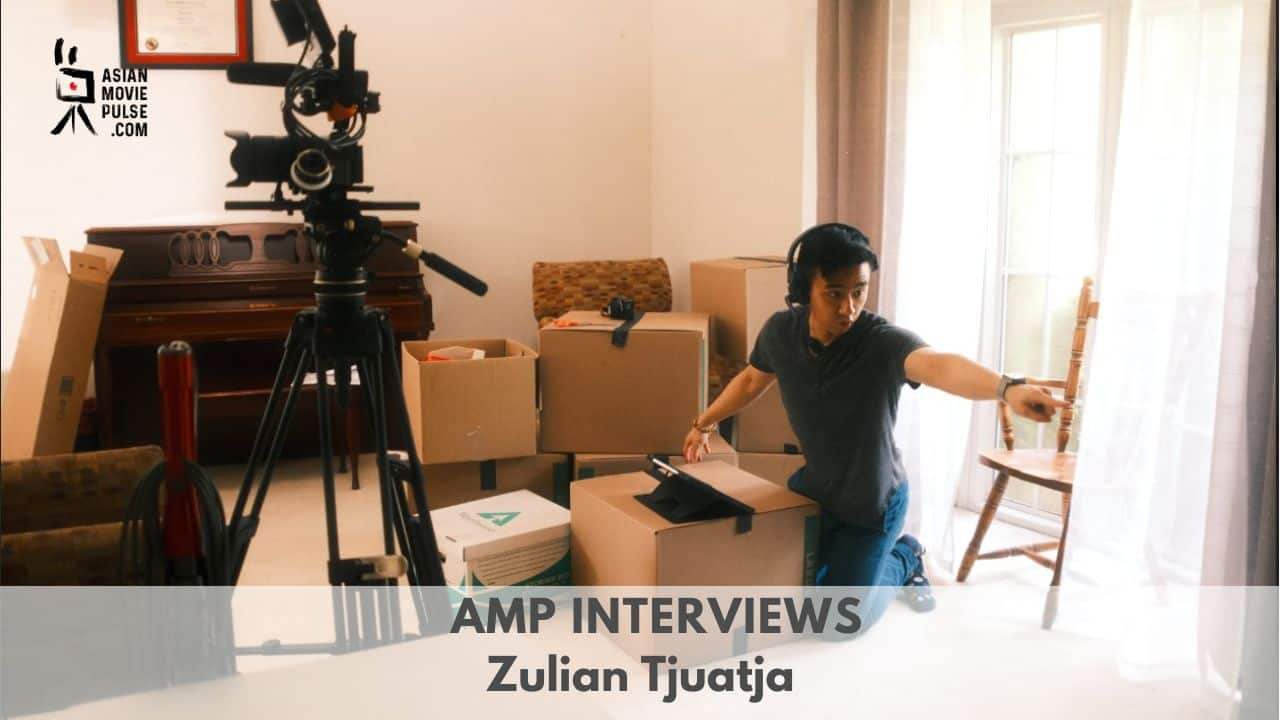
A parallel transformation unfolds within Siwei’s house. At the film’s outset, the home functions as a poignant relic of his past life, a silent, constant reminder of his parents’ absence and his profound grief. However, by the time Siwei extends an invitation to his classmates to share a meal, the house has metamorphosed into a warm, active, and communal space—a testament to his healing and newfound connections. This change is further articulated through subtle, yet impactful, visual details. Boxes, initially cluttering the home and symbolizing his unsettled grief, gradually disappear from the frame, while the lighting progressively brightens, mirroring Siwei’s internal process of coming to terms with his loss and embracing new possibilities.
Casting for Authenticity: Friends and Non-professional Actors
A defining characteristic of "The Dumpling Club" is its commitment to authenticity, significantly bolstered by Tjuatja’s unconventional casting choices. With the exception of two performers in minor roles, Sophia and Zach, the cast comprised individuals without prior acting experience. The majority were people Tjuatja had met and befriended within Washington’s diverse Chinese American community, lending an unparalleled layer of genuine connection and naturalism to the film.
Jess An, who portrays Jenny, the empathetic teacher, was another member of the language-exchange group. Originally from Beijing, Jess frequently assisted beginners in grasping fundamental Chinese concepts during their meetings, her patience and innate willingness to teach earning her the affectionate moniker "Teacher Jess" among the group. Tjuatja recognized her natural personality and teaching demeanor as ideal for the role, seamlessly integrating her real-life attributes into her character. In a serendipitous turn of events following the production, Jess transitioned from her nonprofit sector position in Washington to become a full-time Chinese-language teacher, an unexpected development that, for the director, powerfully underscored the profound impact that participating in the film had on her life.
Chris, who appears as one of Siwei’s classmates, is a half-Chinese, half-Salvadoran friend of the filmmaker. Beyond his on-screen presence, Chris also composed the film’s evocative soundtrack, continuing a creative collaboration that spans all of Tjuatja’s films. Other cast members, including Grace and Jessica, were individuals Tjuatja encountered while working on a documentary about Washington’s broader Chinese American community. This documentary led him to a church in Chinatown, where he cultivated friendships with several younger members of its congregation, further expanding his network of collaborators.
Working with friends and non-professional actors was partly a pragmatic decision dictated by the constraints of a low-budget independent production. However, more significantly, it was a deliberate artistic choice that directly contributed to the film’s authentic performances and its palpable sense of genuine community, allowing the characters’ natural rapport to shine through on screen.
An Observational Visual Style: Echoes of Master Filmmakers
Tjuatja and his cinematographer, Andrew Huang, meticulously crafted an observational visual style for "The Dumpling Club," where the camera functions as an objective, unobtrusive witness rather than an active director of the viewer’s gaze. Tjuatja characterizes the film as a story where "how events happen is more important than the events themselves." This philosophy translates into a deliberate use of static shots and repeated compositions, strategies designed to encourage the audience to keenly observe the subtle, gradual shifts in the characters’ emotional states and their surrounding environment. This approach aligns with the film’s thematic emphasis on introspection and the slow process of healing and connection.
The observational style also proved highly practical for a production filmed within a tight three-day schedule. By carefully selecting and adhering to a limited number of camera angles, the team was able to work with remarkable efficiency without compromising their artistic intentions or the film’s visual integrity.
During pre-production, Tjuatja and Huang engaged in extensive discussions regarding the film’s color palette and overall aesthetic. They drew principal cinematic inspiration from acclaimed directors Hirokazu Koreeda and Edward Yang, particularly admiring their observational approaches and their willingness to allow situations to unfold naturally within the frame, a technique that often imbues their films with a profound sense of realism and emotional depth. This influence is evident in "The Dumpling Club’s" quiet contemplation and its emphasis on understated human drama.
A Filmmaker’s Multifaceted Role: Writing, Directing, and Editing
Beyond his roles as writer and director, Zulian Tjuatja also undertook the demanding task of editing "The Dumpling Club." He views writing, directing, and editing as the three most direct conduits for shaping the final artistic outcome of a film, hence his desire to retain comprehensive control over each stage of the creative process. This holistic involvement is a hallmark of many independent filmmakers, allowing for a singular artistic vision to permeate every aspect of the production.
The editing process also served as a valuable opportunity for Tjuatja to further refine and enhance his filmmaking skills. Post-production for "The Dumpling Club" spanned an approximate three to four months, a testament to his meticulous approach and his unwavering commitment to crafting a version that fully satisfied his artistic intentions.
Sound design proved to be a particularly demanding aspect of post-production. Although a dedicated sound crew was initially slated to handle specific elements, several components of the soundscape did not materialize as planned. Consequently, Tjuatja personally took on a significant portion of the remaining sound work, demonstrating his dedication and adaptability in overcoming production challenges. Despite the extended timeline necessitated by these unforeseen hurdles, he prioritized devoting the necessary time and effort to the film, refusing to release a product that he felt did not accurately represent his artistic vision.
Looking Towards the Horizon: A First Feature and Evolving Artistry
Zulian Tjuatja’s creative momentum shows no signs of abating. He has already completed post-production on another short film, shot in Japan near the end of 2025. He describes this upcoming project as a significant departure from "The Dumpling Club," characterized by a more philosophical approach and a structure akin to a parable, signaling his readiness to explore new thematic and stylistic territories. Concurrently, Tjuatja has entered pre-production on what he hopes will culminate in his first feature film, a significant milestone for any emerging director.
"The Dumpling Club," however, stands as a powerful testament to the intimacy and potency of the short film format. Its concise narrative allowed Tjuatja to skillfully transform deeply personal experiences, authentic friendships, and familiar spaces into a universal story about healing from loss and rediscovering connection. By intricately weaving together the threads of food, language, and community, the film presents cultural heritage not merely as a static inheritance from the past, but as a vibrant, evolving entity that continuously develops, deepens, and enriches lives whenever it is shared and celebrated with others. It is a quiet yet profound affirmation of the enduring human need for belonging and the transformative power of shared experiences.