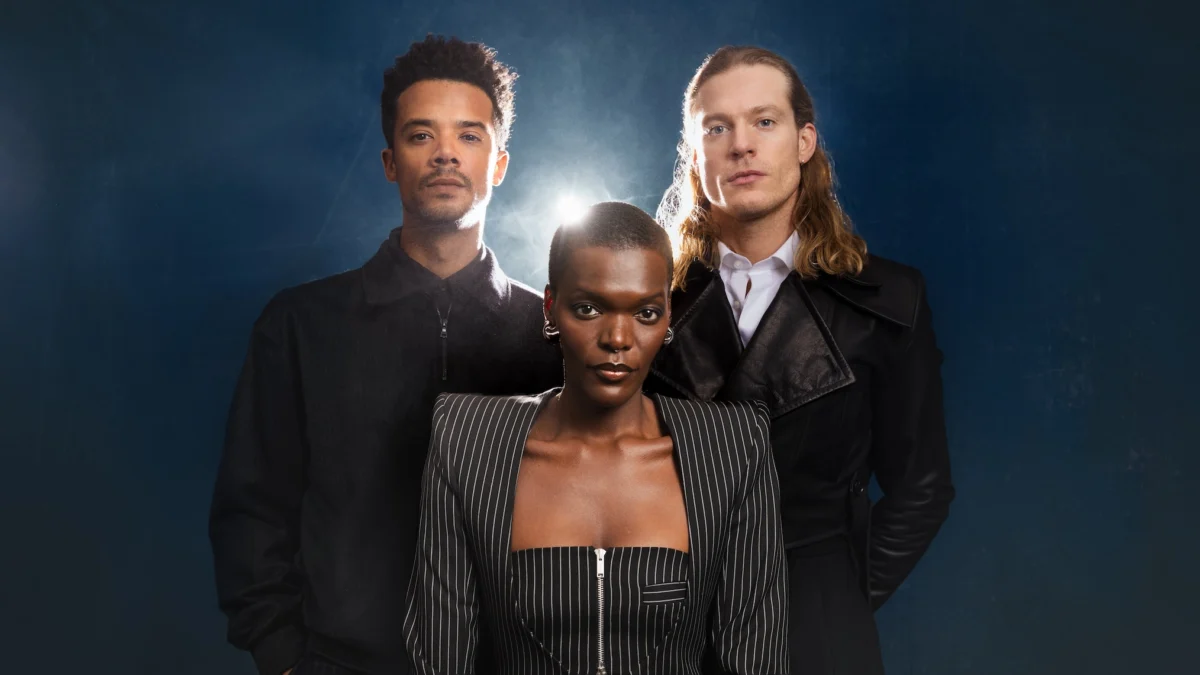
The Season 3 finale of AMC’s The Vampire Lestat has fundamentally altered the trajectory of the network’s Anne Rice Immortal Universe, transitioning from a localized, intimate character study into a global supernatural epic. Following the conclusion of the second season, which saw protagonist Louis de Pointe du Lac (Jacob Anderson) finally embrace his vampiric nature, the third season has culminated in a profound psychological evolution for Lestat de Lioncourt (Sam Reid). This shift was underscored by the July 19 finale, which revealed a world in ruins—a direct consequence of the reawakening of Akasha (Sheila Atim), the progenitor of the vampire species. Series creator Rolin Jones has confirmed that this season represents only the first half of a larger narrative arc, mirroring the two-part structure previously utilized for the adaptation of Interview with the Vampire.

The Evolution of Narratives and the Failures Album
The structural backbone of Season 3 was defined by Lestat’s attempt to reclaim his public image through the recording of his rock album, The Failures. This artistic endeavor served as a direct rebuttal to the portrayal of his character in Daniel Molloy’s (Eric Bogosian) best-selling memoir. However, the production of the album and the accompanying tour forced Lestat into a state of forced introspection, exacerbated by the appearance of hallucinatory figures from his past and the return of his mother, Gabriella (Jennifer Ehle).
According to showrunner Rolin Jones, the finale focused on the "heart and soul" of Lestat, depicting his first genuine act of self-forgiveness. This emotional breakthrough occurred against a backdrop of physical and psychological trauma. The season’s final moments revealed that Lestat had been recording his narration from a seemingly isolated living room, while the city outside lay in total devastation. This apocalyptic imagery serves as a bridge to the anticipated Season 4, which is expected to adapt the narrative beats of Anne Rice’s 1988 novel, The Queen of the Damned. Jones noted that the storytelling choices in Season 3—which some viewers found fragmented—were intentional, designed to set up a "puzzle" that will be completed in the next installment.

Chronology of the Finale: From Decapitation to Deification
The events leading to the finale were set in motion in the penultimate episode, where Louis and Lestat were beheaded by the ancient vampire Armand (Assad Zaman) and the fledgling Daniel Molloy. While such an injury would be fatal to most vampires, the protagonists survived due to the potency of Akasha’s ancient blood, which Lestat had consumed centuries prior. This survival window, however, was limited to a matter of hours, creating a high-stakes race against time that played out across two distinct psychological landscapes.
While Louis was subjected to physical and emotional torture in a butcher shop, Lestat entered a "fever dream" state known as the Long Table. In this subconscious realm, he was confronted by nightmare versions of those he had wronged or lost, including his first fledgling Nicki (Joseph Potter) and his maker Magnus (Damien Atkins). The dream sequence served as a crucible for Lestat’s character development, forcing him to acknowledge his role in cycles of generational trauma. A pivotal moment occurred when Lestat challenged the perspective of these nightmare figures, signaling a shift from self-loathing to self-actualization.

The appearance of Paul (Steven G. Norfleet), Louis’s deceased brother, provided the final catalyst for Lestat’s return to consciousness. Paul served as a surrogate for Louis’s unspoken feelings, assuring Lestat of Louis’s love—a sentiment Louis had struggled to verbalize due to the trauma associated with Paul’s suicide. This sequence also offered a provocative theological commentary, with the narrative suggesting a female personification of the divine, a theme that resonates with the show’s ongoing exploration of gender and power.
The Butcher Shop and the Dynamics of Power
Simultaneously, the finale explored the depths of Armand’s resentment. Holding Louis’s head on a spike, Armand attempted to coerce an apology for the decades of emotional neglect he felt he had suffered during their relationship. This scene subverted the typical power dynamics of the series, revealing Armand in his "full chaotic form." Assad Zaman, who portrays Armand, described the character as being in a permanent "survival mode," a psychological state stemming from his origins in childhood sexual slavery.

The resolution of this conflict was not found in forgiveness, but in a brutal acknowledgment of shared history. Louis addressed the parallels between his past as a pimp and Armand’s history of subjugation, recognizing the toxic "dom-sub" dynamic they had inhabited. This moment of clarity led Armand to brand Louis’s chest with the letter "A"—a gesture Jacob Anderson interpreted as a "Scarlet Letter" intended to mark Louis for Lestat. This act of branding highlights the lingering possessiveness and trauma that continue to define the trio’s interconnected lives.
Supporting Data: The Rise of Akasha and the Gender Paradigm
The introduction of Akasha represents the most significant expansion of the show’s lore to date. As the original vampire, Akasha possesses telepathic abilities and a level of power that dwarfs that of the series’ established characters. Her philosophy, as established in the source material and hinted at in the show, is rooted in the eradication of male violence. Akasha seeks to establish a matriarchal world order by eliminating the majority of the male population, viewing herself as both a creator and a destroyer.

Actress Sheila Atim, who portrays the Queen, emphasized that the show is ramping up its exploration of "female rage." This thematic shift follows three seasons dominated by male perspectives and male-driven violence. The "slow zoom out" described by Sam Reid suggests that the arrival of Akasha will force the characters to move beyond their internal dramas and face an ancient, existential threat.
Data from the production indicates that the series intends to honor the structure of Anne Rice’s original chronicles while modernizing the sociopolitical subtext. The transition from the "microcosm of immortal life" to a global scale is a deliberate move to keep the narrative fresh. The destruction seen in the finale’s closing shot serves as empirical evidence of Akasha’s power, setting the stage for a Season 4 that creator Rolin Jones envisions as an "Old Testament" style reckoning.

Broader Impact and Implications for the Immortal Universe
The Season 3 finale has significant implications for the future of AMC’s franchise. By leaning into the rock-star persona of Lestat and the apocalyptic arrival of Akasha, the show has moved away from the gothic romance of the first two seasons into the realm of supernatural horror and epic fantasy. This shift is likely to expand the show’s audience base while continuing to cater to long-time fans of Rice’s work.
The inclusion of the Talamasca—a secret society that monitors paranormal activity—and the mention of characters like Merrick Mayfair suggest that the series is increasingly weaving together different threads of the Anne Rice universe. This interconnectedness is a hallmark of modern franchise building, positioning The Vampire Lestat as the centerpiece of a larger cinematic world.

Furthermore, the show’s unflinching look at flawed characters and generational abuse continues to set it apart from other entries in the vampire genre. By humanizing its monsters, the series provides a profound examination of the human condition. The finale argues that even for those with infinite time, the struggle to be "better" is a constant, grueling process. As the characters prepare for the judgment of Akasha, the central question remains: can these immortals justify their existence to their creator?
With Season 3 now available in its entirety on AMC+, the focus shifts to the official renewal and production of Season 4. The narrative seeds planted in the "Failures" album—specifically the tracks yet to be played—promise a detailed account of the "Great Conversion" and the global havoc that has already begun to unfold. The "boring cut," as jokingly referred to by Jacob Anderson, is a thing of the past; the future of the Immortal Universe is one of biblical proportions, feminine fury, and the high-stakes evolution of its most beloved monsters.