Two and a half decades after its initial theatrical debut captured global audiences and dominated the Academy Awards, Ron Howard’s biographical drama A Beautiful Mind is returning to cinemas. Fathom Entertainment has officially announced a special, limited-engagement theatrical re-release of the 2001 classic, scheduled for November 22 and November 23, 2026. This silver-anniversary event gives both longtime admirers and a new generation of filmgoers the rare opportunity to experience the four-time Oscar-winning picture in a theatrical setting. To commemorate the milestone, the re-release will feature an exclusive, in-depth introduction and commentary by renowned film critic and historian Leonard Maltin, offering fresh insight into the cultural and cinematic legacy of the film.
The Genesis and Production History of a Modern Classic
Based on the critically acclaimed 1998 biographical book of the same name by Sylvia Nasar, A Beautiful Mind explores the extraordinary, turbulent life of John Forbes Nash, Jr., a brilliant mathematician whose academic genius was overshadowed by a harrowing descent into schizophrenia. Developed by producers Brian Grazer and Ron Howard under their Imagine Entertainment banner, the film adaptation was written by screenwriter Akiva Goldsman, who navigated the complex task of translating abstract mathematical concepts and deeply internal psychological struggles into a compelling cinematic narrative.

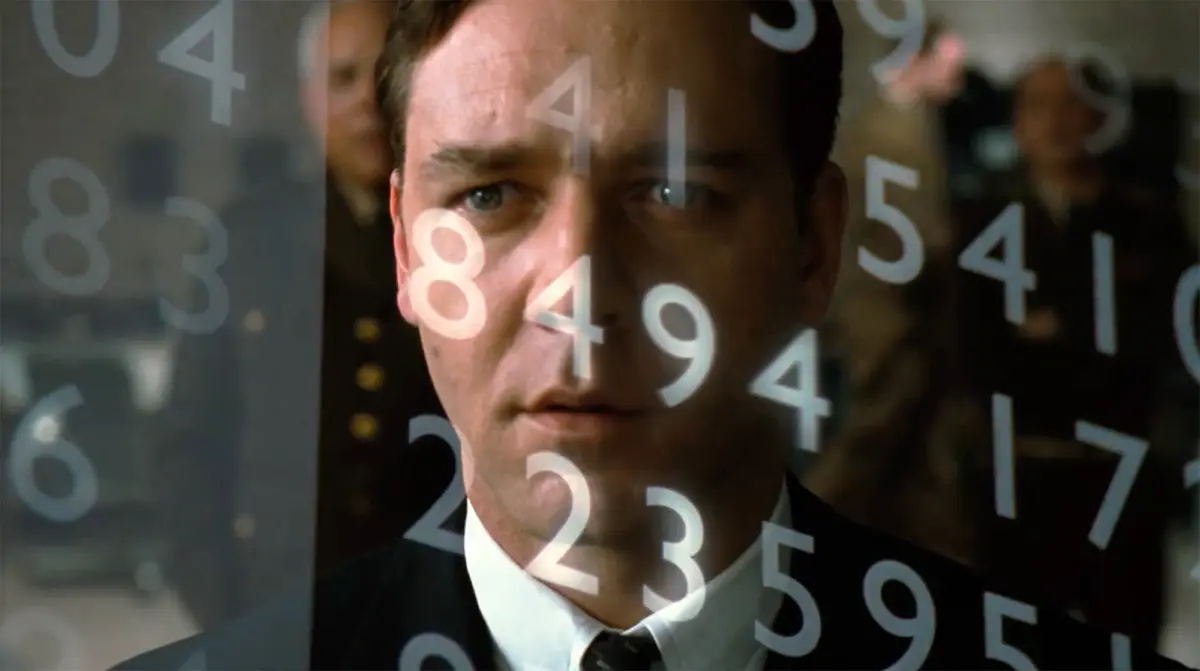
When the film first entered development, the creative team faced intense scrutiny regarding how to accurately and respectfully portray the subjective reality of mental illness. Howard, directing his 15th feature film following the massive success of 2000’s How the Grinch Stole Christmas, employed innovative visual and narrative techniques to place the audience directly inside Nash’s perspective. This creative choice proved instrumental in making the audience share the protagonist’s confusion, fear, and eventual realization regarding the hallucinations that populated his everyday existence.
Casting played an equally vital role in the film’s enduring legacy. Russell Crowe, coming off his monumental success in Ridley Scott’s Gladiator, took on the demanding lead role of John Nash, delivering a nuanced performance that balanced intellectual arrogance with profound vulnerability. Jennifer Connelly was cast as Alicia Nash, John’s fiercely loyal and resilient wife whose unwavering support anchors the narrative. The stellar supporting ensemble featured Ed Harris as the enigmatic government agent William Parcher, Paul Bettany as Nash’s collegiate roommate and confidant Charles Herman, alongside Christopher Plummer, Adam Goldberg, Judd Hirsch, Josh Lucas, and Anthony Rapp.
A Phenomenal Box Office Run and Historical Oscar Sweep
Upon its initial release by Universal Pictures and DreamWorks Pictures in December 2001, A Beautiful Mind became both a critical darling and a major commercial powerhouse. The film resonated deeply with holiday audiences, legs carrying its box office run well into 2002. Globally, the feature accumulated an impressive $316 million against its reported $58 million production budget, proving that sophisticated, character-driven adult drama could thrive commercially in a multiplex environment dominated by escapist franchises and action spectacles.

The film’s momentum culminated during the 74th Academy Awards ceremony held in March 2002. A Beautiful Mind secured eight nominations and walked away with four of the industry’s most prestigious accolades: Best Picture, Best Director for Ron Howard, Best Adapted Screenplay for Akiva Goldsman, and Best Supporting Actress for Jennifer Connelly. In addition to these victories, Russell Crowe received a nomination for Best Actor, James Horner was recognized for his evocative original score, and Winona Sanders and Daniel C. Striepeke earned a nod for Best Makeup. Furthermore, the film captured four Golden Globe Awards earlier that year—Best Motion Picture – Drama, Best Actor in a Motion Picture – Drama, Best Supporting Actress, and Best Screenplay—cementing its status as the definitive awards-season champion of its cycle.
The Cultural Impact and Legacy of John Nash’s Story
Beyond its box office receipts and trophy haul, A Beautiful Mind played a significant role in public discourse surrounding mental health awareness. At the turn of the 21st century, major cinematic depictions of psychiatric disorders remained relatively rare, often sensationalized or stigmatized. By centering a narrative on a Nobel Prize-winning laureate who managed his schizophrenia without completely relinquishing his academic contributions, the film offered a humanizing portrayal of mental illness.
John Forbes Nash, Jr. himself—who tragically passed away alongside his wife Alicia in a car accident in May 2015—was famously gracious about the cinematic adaptation of his life. While the film took artistic liberties for dramatic pacing and narrative clarity, Nash acknowledged its emotional truth and its ability to introduce his mathematical theories and personal struggles to millions of people worldwide. The Game Theory concepts pioneered by Nash in his 1950 doctoral dissertation continue to influence economics, political science, evolutionary biology, and computer science to this day, making the biographical film an important educational and historical artifact.

Fathom Entertainment Re-Release Details and Industry Implications
The upcoming 2026 re-release organized by Fathom Entertainment highlights a broader industry trend: the increasing viability of eventized, theatrical retro-screenings. As streaming services dominate home entertainment, theatrical distributors have found considerable success in offering curated, premium cinematic experiences for classic films that benefit immensely from collective audience viewing, large screens, and state-of-the-art sound systems.
The special two-night engagement on November 22 and November 23, 2026, will utilize Fathom’s expansive network of digital cinema locations across the United States. Tickets are already available through major ticketing platforms and the official Fathom Entertainment website. Industry analysts view such targeted theatrical windows not merely as nostalgic cash grabs, but as vital cultural touchstones that preserve film heritage and introduce older masterpieces to younger demographics who missed their original theatrical runs.
As audiences prepare to return to theaters this November to witness Russell Crowe’s iconic performance, James Horner’s haunting score, and Ron Howard’s steady directorial hand, A Beautiful Mind remains a testament to the resilience of the human spirit. Twenty-five years after its debut, the film’s core message—that true strength lies in the capacity to endure, to love, and to question the very fabric of one’s own perception—retains its timeless resonance.