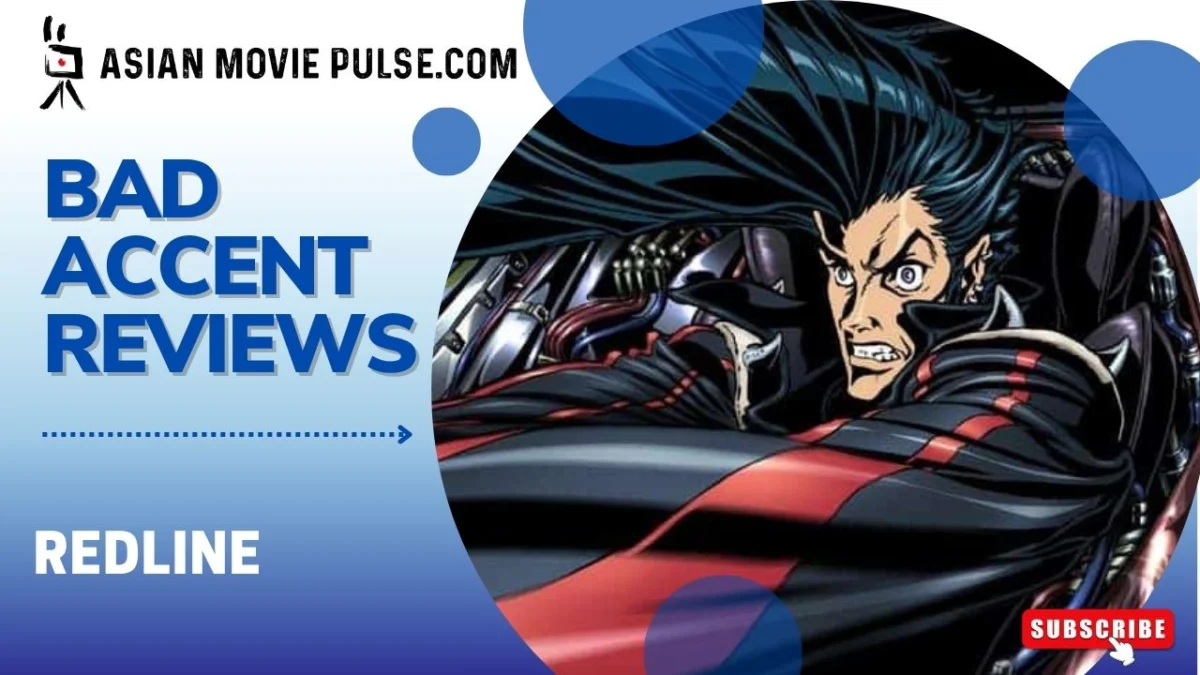
The question of "Redline’s" unparalleled visual dynamism has resurfaced in critical discourse following its recent return to the Fantasia International Film Festival, marking fifteen years since its original, acclaimed screening at the same prestigious event. This re-evaluation, notably highlighted by a "Bad Accent Video Review" from Asian Movie Pulse, underscores the enduring impact and cult status of Takeshi Koike’s science-fiction animated masterpiece. The film, a monumental undertaking by the renowned studio Madhouse, represents a pinnacle of traditional hand-drawn animation, demanding seven years of meticulous labor and over 100,000 individual frames to bring its high-octane vision to life.
The Resurgence of a Cult Classic at Fantasia
The Fantasia International Film Festival, held annually in Montreal, Canada, is globally recognized as one of the leading genre film festivals, celebrated for its eclectic programming that spans international cinema, with a particular emphasis on East Asian films, animation, and independent works. Its consistent dedication to showcasing groundbreaking and often unconventional cinema makes it a natural home for a film like "Redline." The decision to re-screen "Redline" a decade and a half after its debut is a testament to its sustained critical relevance and its ability to captivate new generations of viewers. Festivals often revisit films that have achieved cult status or are considered seminal works within their genre, allowing for a retrospective appreciation and the opportunity for audiences who missed its initial run to experience it on the big screen.
For Asian Movie Pulse, a platform dedicated to covering Asian cinema, revisiting "Redline" offers a chance to contextualize its place within the broader landscape of anime and animation history. Their "Bad Accent Video Review" format suggests an informal yet insightful approach, aimed at engaging a diverse audience while delving into the film’s complex layers. Such critical re-appraisals are vital for maintaining a film’s cultural conversation, ensuring that its artistic and technical achievements are not forgotten but continually analyzed through contemporary lenses. The film’s return to Fantasia in 2024 (15 years after its 2009 debut) places it in a different cinematic environment, one where animation techniques have evolved rapidly, yet its hand-drawn splendor continues to stand out.
A Decade and a Half in the Making: The Genesis of "Redline"
The production of "Redline" is a story almost as epic as the race it depicts. Initiated in the early 2000s, the project was a labor of love and an audacious gamble by Madhouse, a studio famed for its diverse output ranging from critically acclaimed dramas like "Perfect Blue" to action-packed series such as "Death Note." The decision to commit seven years and an estimated budget of over $30 million (figures often cited in industry discussions) to a single, feature-length, traditionally animated film was extraordinary, especially as the industry was increasingly moving towards digital animation techniques.
The core of "Redline’s" legend lies in its staggering commitment to traditional cel animation. The claim of "more than 100,000 hand-drawn images" is not merely a marketing boast; it signifies an unparalleled dedication to frame-by-frame artistry. Each character movement, every intricate background detail, and the explosive effects were meticulously drawn and colored by hand. This process, while incredibly time-consuming and expensive, yields a distinct visual fluidity and organic texture that is difficult to replicate with computer-generated imagery alone. For context, many feature-length animated films, even those primarily hand-drawn, often utilize a combination of traditional and digital methods, or employ techniques to reduce the number of unique drawings per second. "Redline’s" unwavering commitment to 24 frames per second, hand-drawn, for the entirety of its 102-minute runtime, sets it apart as a modern marvel of animation production.
The film officially premiered in Japan in October 2009 and subsequently embarked on an international festival tour, beginning with its original Fantasia screening. Its global debut allowed it to quickly garner a reputation among animation enthusiasts and critics for its groundbreaking visuals and uncompromising style, setting the stage for its eventual cult status.
The Artistic Vision of Takeshi Koike and Katsuhito Ishii
At the heart of "Redline’s" distinctive aesthetic and narrative power are the creative forces of director Takeshi Koike and creative director/writer Katsuhito Ishii. Koike, known for his unique, highly stylized character designs and kinetic action sequences, brought a specific visual language to "Redline." His earlier works, such as segments in "The Animatrix" (specifically "World Record") and his directorial role in "Lupin the 3rd: The Woman Called Fujiko Mine" series, showcased his ability to blend gritty realism with exaggerated, fluid motion, often employing thick lines and striking color palettes. In "Redline," Koike’s signature style is amplified to its maximum potential, pushing the boundaries of what hand-drawn animation could achieve in terms of speed, detail, and visual impact.
Katsuhito Ishii, a celebrated live-action film director ("The Taste of Tea," "Funky Forest: The First Contact"), served as the creative director and was instrumental in crafting the film’s distinctive narrative and world-building. His collaboration with Koike ensured that the film’s frenetic visuals were grounded in a coherent, albeit eccentric, universe. Ishii’s influence can be seen in the film’s quirky humor, its memorable characterizations, and the underlying themes of rebellion and individual freedom. The synergy between Koike’s visual genius and Ishii’s narrative inventiveness created a unique cinematic experience that defies easy categorization. Their partnership was crucial in balancing the film’s relentless pace with moments of character development and thematic depth, preventing it from becoming a mere spectacle of action.
Unpacking the Visual and Auditory Spectacle
Animation: A Hand-Drawn Marvel in a Digital Age
The "extraordinary animation" of "Redline" is its most defining characteristic. In an era increasingly dominated by CGI, "Redline" stands as a defiant testament to the power of traditional animation. The decision to render every frame by hand allowed for an unparalleled level of artistic control and detail. The film’s aesthetic is a vibrant blend of retro-futurism and punk rock energy, with each frame bursting with color and dynamic movement. The character designs are bold and distinctive, from Sweet JP’s iconic pompadour and leather jacket to the diverse and outlandish appearances of his competitors. The alien landscapes and advanced machinery are rendered with intricate precision, creating a tangible, lived-in universe despite its fantastical elements. The "explosive" quality of the visuals comes from the sheer density of information in each shot – the debris flying, the engines roaring with visible heat, the distortion of speed, all meticulously animated. This dedication ensures that even in the fastest sequences, clarity and detail are maintained, drawing the viewer deeper into the adrenaline-fueled chaos.
The Rhythmic Pulse: Editing and Soundtrack
Complementing the visual feast is the film’s "frantic editing," which works in tandem with the animation to convey an overwhelming sense of speed and urgency. The cuts are sharp, precise, and strategically timed, mimicking the rapid-fire sensory overload of a high-speed race. This editing style is not just about pace; it’s about immersing the audience in JP’s experience, making them feel every near-miss and every acceleration.
The "rock-heavy soundtrack," composed by James Shimoji, is another critical component of "Redline’s" sensory assault. The music is a pulsating, high-energy mix of electronic beats, rock riffs, and funk influences that perfectly syncs with the on-screen action. Shimoji’s score doesn’t just accompany the visuals; it drives them, providing a relentless rhythmic pulse that intensifies the feeling of a race against time and overwhelming odds. The iconic main theme, with its driving bassline and soaring synthesizers, has become synonymous with the film’s identity, cementing its reputation as an auditory as much as a visual masterpiece. The synergy between the editing, sound design, and music creates an immersive experience that few other animated films have achieved.
Eccentricity in Voice and Narrative
The "eccentric voice performances" further flesh out the vibrant cast of characters. The Japanese voice cast, featuring acclaimed actors like Takuya Kimura as Sweet JP and Yu Aoi as Sonoshee McLaren, brought depth and personality to their roles, embodying the unique quirks and motivations of their respective racers. These performances contribute significantly to the film’s charm and its ability to balance intense action with moments of unexpected humor and genuine emotion.
The narrative follows rockabilly racer Sweet JP, a perpetually unlucky but fiercely determined competitor known for his vintage car and his honest approach to racing, often eschewing the performance-enhancing modifications favored by his rivals. He enters the galaxy’s most dangerous competition, the "Redline" race, which is held only once every five years. The critical twist, and the source of the "political satire," is that the current Redline is controversially set on Roboworld, a militarized planet ruled by a totalitarian regime. The Roboworld government views the race as an affront to its sovereignty and is prepared to use extreme measures, including deploying advanced weaponry and military forces, to destroy the drivers before they reach the finish line.
This premise allows for a scathing commentary on militarism, state control, and the clash between individual freedom and oppressive power structures. JP and the other racers, despite their diverse backgrounds and rivalries, become symbols of defiance against a system that seeks to quash independent spirit. The satire extends to corporate greed and media manipulation, as the race is broadcast across the galaxy, becoming a spectacle that various factions attempt to exploit. The film, beneath its flashy exterior, champions the purity of competition and the human (or alien) drive for self-expression, even in the face of existential threats.
The Enduring Legacy and Critical Re-evaluation
"Redline’s" return to Fantasia International Film Festival and its re-evaluation by critics like Asian Movie Pulse solidifies its status as a significant work in 21st-century anime. Its "extraordinary animation" has not only withstood the test of time but arguably shines even brighter in retrospect, given the continued shift towards digital production. Industry experts and animation historians often cite "Redline" as a benchmark for traditional animation, a bold declaration that handcrafted artistry still holds immense power in a technologically advanced medium.
The Fantasia Festival organizers, by re-screening the film, implicitly acknowledge its "enduring legacy" and its sustained appeal to both cinephiles and genre enthusiasts. This decision can be interpreted as a nod to the film’s timeless qualities, its ability to resonate across generations, and its proven capacity to draw audiences. The consistent demand from fans, coupled with the film’s artistic merits, likely played a significant role in its programming.
Upon its initial release, "Redline" received widespread critical acclaim for its visuals but also faced discussions regarding its narrative depth in comparison to its spectacle. However, over time, its unique blend of frantic action, distinct character design, and underlying thematic elements, including its political satire, have cemented its reputation as a "masterpiece." Its influence can be subtly observed in various subsequent animated projects that have attempted to replicate its kinetic energy or its unique visual style, though few have matched its sheer artistic commitment. The film’s challenging production, which pushed the limits of what Madhouse could achieve, serves as a testament to the dedication required to produce animation of such caliber. It underscores the reality that such ambitious projects often require immense financial and human resources, making them rare feats in the animation industry.
"Redline" and the Future of Hand-Drawn Animation
"Redline" exists as a powerful argument for the continued relevance and artistic potential of hand-drawn animation in an increasingly digital world. While the economic realities of producing a film of its scale and detail remain daunting, "Redline" serves as an inspirational touchstone for animators and filmmakers. It demonstrates that the unique texture, fluidity, and expressive power of hand-drawn techniques can create an immersive and visceral experience that digital methods, while efficient, sometimes struggle to replicate.
The film’s influence extends beyond its immediate visual impact. It challenges perceptions of what an "anime movie" can be, pushing boundaries in narrative structure, pacing, and thematic exploration within the action-racing genre. Its legacy encourages future generations of animators to experiment, to embrace labor-intensive processes for artistic gain, and to prioritize vision over convention.
Festivals like Fantasia play a crucial role in preserving and promoting such cinematic achievements. By offering "Redline" another run on the big screen, they not only celebrate its past achievements but also introduce it to new audiences who may not have had the chance to experience its breathtaking visuals as originally intended. This continued exposure is vital for ensuring that "Redline" remains a vibrant part of the animation conversation, inspiring creators and captivating viewers for decades to come, thereby solidifying its place not just as a cult classic, but as a foundational work in the annals of modern animation. Its existence is a testament to the enduring power of artistic ambition and the timeless appeal of a truly unique vision.