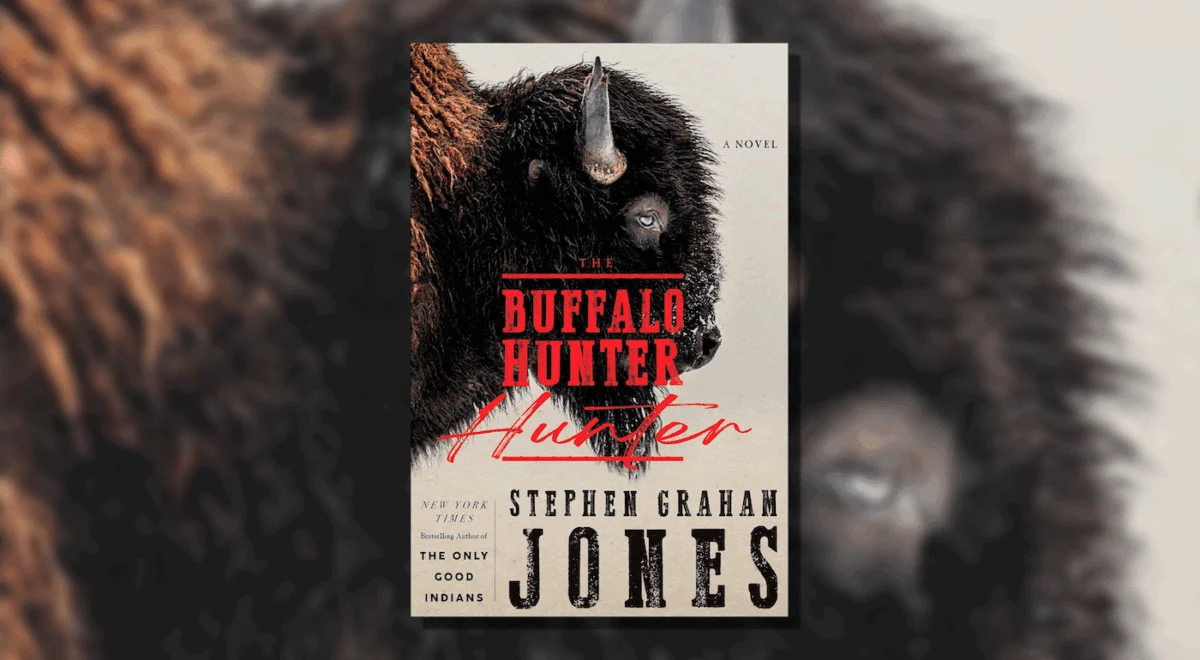
The much-anticipated conclusion to Stephen Graham Jones’s critically acclaimed novel, The Buffalo Hunter Hunter, has arrived, bringing with it a chilling exploration of ancestral guilt, supernatural retribution, and the enduring echoes of historical trauma. This final installment, encompassing Chapters 23 and 24, delivers a powerful and unsettling resolution to a narrative that has captivated readers since its initial publication in 2025. This analysis delves into the intricate tapestry of the novel’s ending, examining the key events, thematic resonance, and the profound implications of its climactic moments.
The Shadow of the Past: Arthur Beaucarne’s Journal and its Curses
The narrative’s descent into the past is marked by Arthur Beaucarne’s final journal entry, dated "The Absolution of Three-Persons, June 2, 1912." This entry paints a vivid and disturbing picture of a man consumed by a supernatural dread. The cracking of black-yolked eggs at mass, a symbol of ungodly corruption, sets a tone of inevitable doom. Beaucarne’s admission of precracking a normal egg for display underscores his desperate attempt to maintain a facade of normalcy in the face of encroaching horror. The presence of the dead – his son and grandsons, local figures like postmaster Clarkson and Sheriff Doyle, and the spectral remnants of the Blackfeet slain at Marias – in the pews signifies the inescapable weight of his past actions. His flight into the parsonage and the description of him as a "leper" preacher highlight his self-imposed isolation and the profound spiritual decay he experiences.
Beaucarne’s belief that his pipe has been empty since January 23, 1870, a date tragically significant for its proximity to the Marias Massacre, anchors his torment to this historical atrocity. His desperate act of hiding the journal before the arrival of "Good Stab" foreshadows the enduring nature of the curse and the cyclical violence that defines the novel. The chilling realization that Good Stab’s fangs confirm his earlier fears suggests a tangible manifestation of the supernatural forces at play, forces deeply rooted in the historical injustices committed.
A Modern Reckoning: Etsy Beaucarne and the Legacy of Sin
Fast forward to "The Beaucarne Manuscript, 12 January 2013," where Arthur Beaucarne’s great-great-great-granddaughter, Etsy Beaucarne, faces her own academic and personal crises. Her transcription of the journal, intended as a pathway to tenure at the University of Wyoming, is met with dismissal and skepticism from her tenure committee. Their condescending remarks about genealogical terms and the suggestion that the journal is mere fiction inspired by Bram Stoker’s Dracula highlight the academic world’s detachment from the visceral realities of history and the potential for the supernatural to permeate everyday life.
Etsy’s professional failure coincides with personal tragedy. Her father’s impending deathbed in Denver adds a layer of emotional urgency to her already precarious situation. The revelation of her ancestry provides a crucial piece of the narrative puzzle. The son of Arthur Beaucarne, Benjamin Flowers, was born to Ada Neismith after the Marias Massacre. The surname "Flowers" itself is a product of a misheard name, "Beaucarne" becoming "Bouquet" and then "Flowers," a linguistic echo of the fractured lineage and the obscured truths of her family history. This detail, passed down through generations, underscores the subtle but persistent ways in which the past continues to shape the present.
Etsy’s burning of the journal copy, a symbolic act of relinquishing the past, is met with a terrifying vision. Through the snowstorm, she glimpses a figure she believes to be Arthur Beaucarne, her "tresayle" (a term the narrative later clarifies as a misapplication, highlighting the academic’s struggle with precise lineage). This spectral encounter, resulting in her breaking a glass sliding door, marks the moment the supernatural actively intrudes into her life, confirming the journal’s horrific authenticity and her inescapable connection to Arthur’s curse.
The Escalation of Terror: Taz, Cremains, and a Nachzehrer
The subsequent days, leading up to "20 January 2013," are fraught with escalating dread. The disappearance of Etsy’s cat, Taz, her father’s death, and the arrival of his cremains all converge to create an atmosphere of profound grief and unsettling premonition. The discovery within her father’s belongings – letters from her mother, his last cigarettes, his wedding band, Zane Grey novels, and his Bible containing tucked letters – hints at a life lived with unspoken burdens.
The call from librarian Lydia Ackerman, revealing that the journal’s buckskin wrapping is composed of human skin, sends a fresh wave of horror through Etsy. Ackerman’s inquiry about the disposition of the original journal raises practical and ethical dilemmas, juxtaposed against the immediate emotional turmoil. The arrival of her father’s cremains adds a somber, finality to the week’s events, yet the true horror is yet to unfold.
The unopened letter bearing the Blackfoot nation’s logo, delivered without postmark or stamp, carries an ominous weight. Etsy’s intuition that it was meant for her, delivered in person while her father lay dying, suggests a supernatural courier and a message long overdue. She hesitates to open it, a testament to the growing dread surrounding her.
The true nature of the supernatural intrusion is revealed with the appearance of "Good Stab." Etsy’s hallucination of mice, induced by Benadryl, gives way to the terrifying reality of Good Stab, now adorned with a buffalo’s head, tapping on her laptop. Her scream and subsequent locking herself in her bedroom underscore the sheer terror of this encounter.
Etsy’s subsequent journal entry, devoid of pretense, chronicles her terror. Good Stab has returned Taz, a chilling act of control. More disturbingly, he has orchestrated a "family reunion" by transforming Arthur Beaucarne into a nachzehrer, a revenant that rises from the grave to torment the living. The description of Arthur as a "giant prairie dog weeping blood" is a grotesque and potent image, symbolizing his corrupted state and his eternal suffering. Good Stab’s disappearance, leaving Arthur and his buffalo mask behind, shifts the burden of action onto Etsy. She is left to confront the "Rodent of Unusual Size," sensing its hellish existence and questioning whether her challenge is to either reverse its transformation or end its torment.
A Journey to Nittowsinan: Confrontation and Confession
Etsy’s response is one of desperate pragmatism. Sedating Arthur with smoke from her father’s cigarettes, she smuggles him, Taz, and supplies from a hardware/ranch superstore into her Subaru. Her journey through the snowstorm to Wyoming, specifically to Nittowsinan – the site of the Marias Massacre anniversary – is a pilgrimage of reckoning.
Upon arrival, she finally reads the unopened letter: Arthur’s confession. It reveals his pivotal role in the massacre, his persuasion of the scout Joe Cobell to initiate the attack on Heavy Runner’s camp, making him directly responsible for the slaughter. This confession provides the missing piece of the puzzle, explaining the genesis of the curse and the reason for Arthur’s tormented existence.
Etsy’s method of "killing" Arthur is as brutal as it is cathartic: a nail gun, cable saw, and ignited spray foam. His burning body plunging off the bluff, followed by his prairie dog head, mirrors the soldiers’ actions against Heavy Runner’s people. The arrival of Blackfeet riders for the memorial, with Good Stab among them, creates a charged atmosphere. Etsy’s internal monologue reveals her earlier act of destroying Arthur’s original journal by pouring her father’s alkaline cremains over its acidic pages, a symbolic erasure of the tangible evidence of his sin. She raises a fist in farewell to Arthur’s tormentor/confessor, a silent acknowledgment of their shared struggle.
Good Stab’s response is enigmatic. He does not return the salute, but the sight of a yellow hard hat hanging from his saddle reveals his identity as the workman who discovered Arthur’s journal. The snowstorm that swallows him signifies the end of his immediate presence, but the lingering question remains: is the nachzehrer gone, or is it the Blackfeet themselves who are now central to the ongoing narrative of reckoning?
Thematic Echoes and Literary Devices
The novel masterfully employs several literary devices to enhance its thematic depth.
Seven Deadly Sins and Counting: Gluttony and Guilt
Arthur’s preoccupation with gluttony, stemming from a past act of hunger, is highlighted as a driving force behind his actions. As a prairie dog, his gluttonous consumption of Etsy’s couch suggests a primal, unthinking hunger that mirrors his earlier sin. This ties directly into the concept of original sin and the cyclical nature of transgression.
What’s Cyclopean: The Nuances of Language
The word "catachresis" – the use of an almost-right word – is central to the narrative. The misapplication of "tresayle" for "great-great-great-grandfather" by Etsy’s tenure committee member, and the original mishearing of "Beaucarne" as "Bouquet," then "Flowers," illustrate how language can both obscure and reveal truth, and how misinterpretations can have lasting consequences.
The Degenerate Dutch: Cultural Commentary
The phrase "I give myself permission… It’s what we white folk do" reflects a critical commentary on privilege and entitlement, particularly in the context of historical land acquisition and colonial attitudes.
Libronomicon: Objects as Narratives
The inclusion of Zane Grey westerns and the Bible used as a "file cabinet" highlights how everyday objects can carry profound personal and historical significance. These items are not just possessions but repositories of memory and unspoken stories.
Weirdbuilding: The Unanswered Questions
Etsy’s initial disappointment that the journal doesn’t reveal Arthur’s fate is a clever narrative device. It initially frames her search for answers, only for the supernatural to provide a more visceral, horrifying form of revelation.
Madness Takes Its Toll: The Blurring of Reality
The distinction between hallucination and reality becomes increasingly blurred for Etsy. The description of being "committed" for writing about vampiric prairie dogs and being labeled "hysterical" speaks to the societal tendency to dismiss or pathologize experiences that defy conventional understanding.
Anne’s Commentary: A Theological and Genealogical Examination
Anne’s commentary provides a crucial lens through which to understand the novel’s complex theological and genealogical underpinnings. Her insight that Good Stab might not kill Arthur outright, but instead transform him into a nachzehrer, speaks to a profound understanding of supernatural lore and its potential for eternal torment. The idea that Arthur might suffer "for much if not all eternity on this earth, just in case the Christian Hell is a myth" adds a layer of existential dread.
Anne’s exploration of suicide as a mortal sin, and the superstition that suicides may become vampires, directly addresses Arthur’s potential choices and their dire consequences, regardless of the afterlife’s existence.
The detailed analysis of the term "tresayle" is particularly illuminating. Anne’s correction of the tenure committee’s misinterpretation highlights the academic’s struggle with accurate terminology and further emphasizes the disconnect between academic rigor and the visceral reality of ancestral connection. Her correction that "tresayle" refers to a great-great-grandfather, and that "quatrayle" is the term for a great-great-great-grandfather, directly recontextualizes Arthur’s relationship to Etsy. This genealogical correction underscores the novel’s exploration of lineage and the subtle ways in which historical accuracy can be distorted.
Anne’s commentary on Arthur’s failed attempt to dissuade Ada Murray from pregnancy, using the excuse of his "intended vocation" and the potential for STDs, provides a darkly humorous yet poignant insight into his past justifications and his disregard for consequences.
The extended discussion on Rodentia and the prairie dog transformation is a deep dive into the symbolic significance of this choice. Anne conjectures that the black-tailed prairie dog, a keystone species, represents community and social interaction. Arthur’s transformation into a solitary prairie dog, forced to cannibalize its own kind, becomes a potent metaphor for his isolation and his punishment for past sins. This psychological torment, mirroring Good Stab’s own suffering as an outcast forced to feed on his own people, is a central element of the novel’s moral landscape. The connection to Blackfeet mythology, where prairie dogs are tricksters and symbols of community, further enriches the narrative’s cultural context.
Ruthanna’s Commentary: The Unflinching Realism of the Weird
Ruthanna’s perspective offers a counterpoint, focusing on the visceral and unflinching realism that grounds the novel’s supernatural elements. Her appreciation for "weird bloody guts over mimetic ones" resonates with the graphic and visceral nature of Etsy’s final confrontation with Arthur. The image of Etsy killing her "giant prairie dog vampire tresayle" with hardware store supplies in a blizzard is a testament to the novel’s unique blend of the mundane and the horrific.
Ruthanna’s analysis of Etsy’s academic plight, her father’s dying wishes, and the journal’s disruptive arrival highlights the pressures and limitations of academia. The criticism of Etsy for not using her "year added to her tenure clock" for her wife’s pregnancy underscores the impersonal and often unforgiving nature of academic institutions.
The journal’s impact on Etsy, pushing her "over the edge," is presented not as a descent into madness but as a direct confrontation with the overwhelming weight of collective guilt. The idea that the guilt for America’s genocidal campaigns is "collective" and that Etsy is "living on stolen land, that her ancestors helped to steal" is a powerful indictment of historical responsibility.
The question of Arthur’s labeling of his sections as "absolution" and Good Stab’s as "confession" prompts a deeper examination of repentance and forgiveness. Ruthanna suggests that perhaps neither character truly achieves absolution, highlighting the ongoing struggle with sin and its consequences.
The final interpretation of Good Stab’s actions, transforming Arthur into a nachzehrer as a form of punishment, aligns with Anne’s commentary. Ruthanna emphasizes that Good Stab, like his "mentor" Cat Man, inflicts a punishing shape on his victims, suggesting a pattern of inflicting suffering as a form of retribution. The implication that Good Stab’s own experience of becoming a giant rodent did not end his suffering but merely transformed it, explains his continued human form and his integration into Blackfeet ceremonies.
The lingering question of Arthur’s regrowth and the unresolved nature of the theft of land and life underscore the novel’s conclusion. Ruthanna emphasizes that "nothing is really over—not the theft of land and life, not any of the three bloodsuckers, and not Etsy’s need to deal with the fallout of the past month. There’s no easy wrap-up. Just the continuing tangle of sin, and guilt, and confession, and inadequate absolution." This sentiment encapsulates the novel’s profound and unsettling finality.
Looking Ahead
The conclusion of The Buffalo Hunter Hunter leaves readers with a lingering sense of unease and contemplation. The novel’s exploration of history, guilt, and the supernatural promises to resonate long after the final page is turned. Future installments in "Reading the Weird" will continue to delve into the darkest corners of literature, with upcoming features on Nadia Bulkin’s "Things to Know Before You Go" and a deep dive into H. G. Wells’s classic, The Island of Dr. Moreau.