Sophia Maddox’s life was shaped by a profound absence, a void her father, Daniel Arguelles, carried throughout his years. He would often share with his daughter the poignant longing of never knowing his own father, a man whose identity remained shrouded in mystery. These childhood bedtime stories, filled with a father’s yearning, laid the foundation for a discovery that would irrevocably alter their family’s narrative, unearthing a truth far darker and more complex than either could have ever imagined. Four years ago, a serendipitous match on a genealogy website delivered a shocking revelation: the paternal grandfather Sophia had never known, the father her own father desperately sought, was none other than Charles Manson, the infamous cult leader and architect of some of the most horrific crimes of the 20th century.
The weight of this discovery was so immense that Arguelles, wrestling with the sheer darkness of the truth, found himself unable to share it with his daughter for two agonizing months. “When my dad found out, he couldn’t bring himself to tell me for two months because it was so dark,” Maddox recounted in an interview with The Guardian, articulating the profound emotional chasm this revelation created. This deeply personal journey of reckoning with her lineage forms the core of Maddox’s compelling documentary, “My Grandfather Charles Manson,” which recently premiered on Hulu. The film meticulously chronicles Maddox’s unflinching exploration of her feelings as she confronts the reality of being biologically linked to one of history’s most notorious criminals. From the outset, the documentary confronts this stark reality head-on, with Maddox’s voice echoing the raw vulnerability of her situation: “I come from a murderer. Who the fuck would accept me?”
Unpacking the Legacy of Evil and Inherited Trauma
What begins as an almost philosophical inquiry into the nature of evil, as Maddox seeks to understand her grandfather by interviewing former members of the Manson Family cult, rapidly transforms into a profound examination of generational trauma. The documentary evolves into a therapeutic process, an act of untangling the threads of a legacy inherited from figures marked by profound flaws and devastating actions. This introspective process is rendered with an almost unnerving intimacy, as if viewers are granted a front-row seat to a series of deeply personal therapy sessions, a candid glimpse into Maddox’s internal struggle. The decision to document this intensely private exploration for a public audience, Maddox explained, stemmed from an innate desire to be seen and heard.
“I grew up kind of lonely and when you grow up pretty isolated and lonely, you want to be heard and seen,” Maddox stated. “I think it nurtures you to want to tell people and shout from the rooftops who you are and what your story is. That’s just how I was built and raised, to be a storyteller, and maybe hopefully this allows someone else to feel a little less lonely.” This inherent drive to connect and share, to transform personal pain into a narrative that might resonate with others, underscores the documentary’s purpose.
A Generation Removed from the Shadow of Manson
At 26 years old, Sophia Maddox was born long after the chilling reign of terror orchestrated by the Manson Family and the subsequent, widely publicized trials that seared their names into the collective American consciousness. Her awareness of Manson’s crimes was a gradual awakening. Initially, she stumbled upon the term "Helter Skelter" after listening to The Beatles’ White Album, a chance encounter that led her to a teenage internet search. However, the true gravity of his actions, the sheer horror of the Tate-LaBianca murders, only truly registered a few years later after she watched Quentin Tarantino’s visceral depiction in “Once Upon a Time in Hollywood.” This cinematic experience, while fictionalized, provided a potent, albeit disturbing, visual and emotional context for the darkness her family was now inextricably linked to.
The chilling events of August 1969 remain etched in historical memory. Charles Manson, the charismatic and manipulative leader of the Manson Family, a cult composed primarily of young, impressionable women, commanded his followers to commit a series of brutal murders. The first infamous spree targeted the Los Angeles home of actress Sharon Tate, who was eight and a half months pregnant, and her husband, director Roman Polanski. In a horrifying act of violence, Tate, along with Jay Sebring, Abigail Folger, and Wojciech Frykowski, were brutally murdered. The following night, the Manson Family extended their violence to the home of supermarket executive Leno LaBianca and his wife Rosemary, who were also subjected to a savage attack and killed. The coordinated brutality and the seemingly senseless nature of the killings sent shockwaves across the nation, cementing Manson’s image as a figure of pure malevolence. Manson himself, along with key followers Susan Atkins, Patricia Krenwinkel, and Leslie Van Houten, were convicted of murder and conspiracy. Charles “Tex” Watson, another perpetrator, was convicted later. Charles Manson died in prison in 2017 at the age of 83, leaving behind a legacy of profound trauma and unanswered questions.
Juxtaposing Light and Darkness: A Visual and Emotional Divide
The documentary masterfully employs a visual and emotional dichotomy, juxtaposing poignant home videos of a doting father, Daniel Arguelles, laughing and cherishing his young daughter, with archival footage of Manson. These clips showcase Manson’s unsettling public persona: his fervent pronouncements, his wild, piercing gaze, and the indelible symbol of a swastika carved into his forehead – a stark visual representation of his descent into radical ideology and violence. The physical resemblances between Manson and Arguelles are striking; they share a similar sharp facial structure and intense brown eyes, a visual echo that adds another layer of complexity to Maddox’s exploration.

Beyond the superficial physical traits, Maddox grapples with deeper, more troubling parallels. She confronts the echoes of childhood trauma, the specter of mental health struggles, and a certain unpredictable volatility that she recognizes in both her father and her infamous grandfather. Arguelles, whom Maddox consistently describes as a loving and attentive father, was conceived during a brief encounter and raised by his mother and stepfather. His childhood was marked by the stringent discipline of a military reform school, a formative experience that undoubtedly shaped his emotional landscape.
“My grandma, God bless her, rest in peace – I knew her as a kid, and she kept the secret to her grave,” Maddox revealed, referring to her father’s mother. “But when she was a mother to my father, she didn’t treat him the way he deserved to be and I think it was because of who his dad was… the biggest trauma that I could think of with my dad was how no one validated his experiences in childhood, and so that’s why he felt the need to tell me about them when I was a kid.” This acknowledgment points to a cycle of emotional neglect and unaddressed pain that appears to have been passed down through generations.
Navigating the Ethical Minefield: Empathy for Victims, Humanity for Ancestor
Maddox’s journey is not just about confronting her own identity; it’s also about navigating the profound ethical complexities of her situation. She grapples with the difficult task of honoring the victims of Charles Manson’s horrific crimes while simultaneously attempting to humanize a figure who has been, for decades, a symbol of unadulterated evil. The documentary’s co-director, Alexandra Orton, sheds light on the societal fascination with such figures, noting, “I’ve made a lot of true-crime documentaries and I think society has this fascination with making monsters that are superhuman that could be in a superhero movie as the villain. But if you want to understand how to stop bad things from happening, you have to understand that every monstrous thing is done by a human being.” This perspective underscores the film’s objective: to move beyond sensationalism and delve into the human element, however dark, that underlies such acts.
The therapeutic process is explicitly acknowledged within the film, with Maddox quoting her therapist: “My therapist has been great for me and in the movie, she says that inheriting sensational wounds is not how you break generational traumas. I just had to find out what I had to break.” This statement encapsulates the film’s central thesis – that breaking cycles of inherited pain requires confronting the wounds, not merely acknowledging their existence.
The Unspoken Language of Trauma and the Hope for Reconciliation
The ultimate realization Maddox reaches on screen is a profound understanding of how trauma, unlike evil itself, can be transmitted across generations. This inherited trauma, she posits, is what her father passed down to her. Arguelles himself struggled immensely with the revelation of his paternal lineage and the unsettling similarities he shared with Manson. His poignant confession within the documentary, “I never knew him, but I know him. I am him, but I’m not him,” captures the disorienting nature of this discovery. Despite his personal turmoil, Arguelles, himself a creative individual, supported his daughter’s endeavor to explore their shared history through film, albeit with underlying concerns for her emotional well-being.
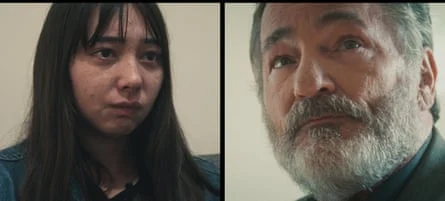
The documentary captures a particularly difficult and emotionally charged confrontation between Maddox and her father, a scene that highlights the deep-seated tensions and the profound impact of their shared legacy. This confrontation, which Maddox chose to film, resulted in a period of estrangement, with the father and daughter not speaking for some time. Yet, even amidst this painful rift, Maddox’s capacity for empathy and her deep-seated love for her father shine through. “You know, for all the vulnerability and openness that I have, I really learned it from my dad because he was quite lonely too… I learned how to be vulnerable and open because my dad was to me growing up,” she reflected, drawing a direct line between her father’s emotional honesty with her and her own ability to be vulnerable.
Maddox expresses a sincere hope for future reconciliation with her father, a desire for him to eventually watch the documentary and understand that alongside the inherited trauma, he also imparted valuable qualities to her. “I hope he feels seen,” she said, her voice imbued with a deep sense of longing. “I hope he feels seen because he lived a lot of his life with people turning a blind eye. I also hope he’s proud of me, that I’ve dug deep into our generational trauma, our mental health generational trauma as well, and I hope he can see that if I am able to get past it, he can too.” This earnest hope for her father’s healing and understanding underscores the documentary’s ultimate message: that even in the shadow of immense darkness, the pursuit of self-understanding and the courage to confront inherited pain can pave the way for healing and a brighter future.